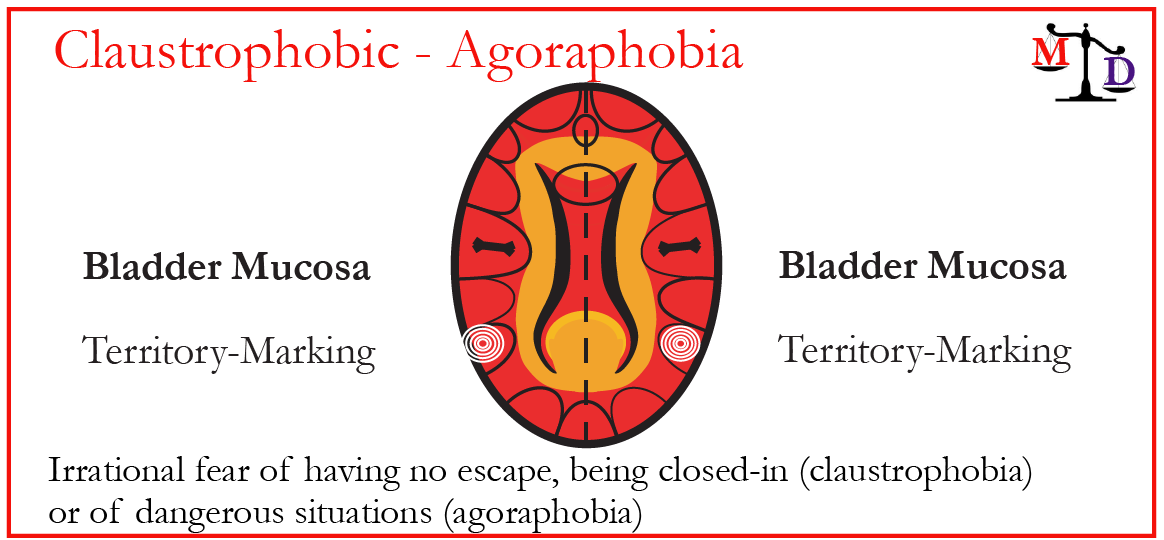
Bladder muscle and Sphincters
Anatomy
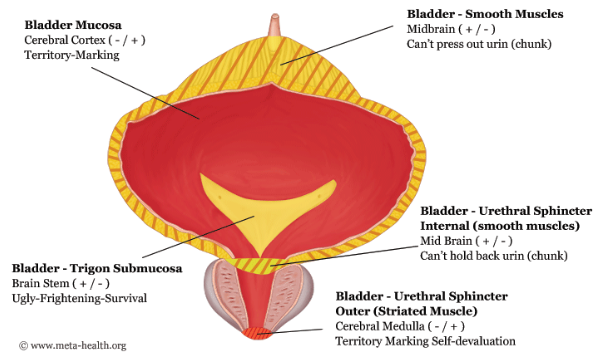
The wall of the urinary bladder is composed of smooth muscle to enable the expelling of urine. This is initiated by signals of the stretch receptors in the trigon region. Antagonists of the bladder muscle are the sphincters:
- The inner bladder sphincter (Musculus sphincter vesicae) consists of smooth muscle. It opens by a parasympathetic relaxation signal
- The urethral sphincter (Musculus urethralis) consists of striated skeletal muscle. It enables the voluntary control of urination.
- The pelvic floor muscles (Musculus pubococcygeus, PC-muscle) takes part in controlling excretion. It is innervated both somatic (voluntary) and sympathetic.
graphic source
Brain
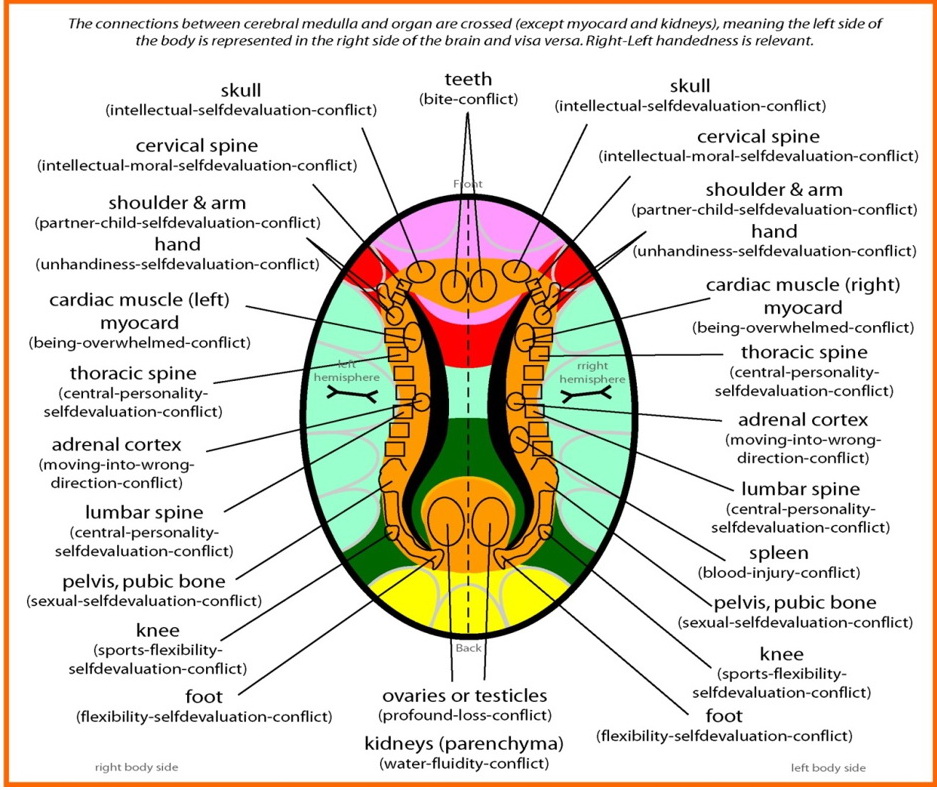
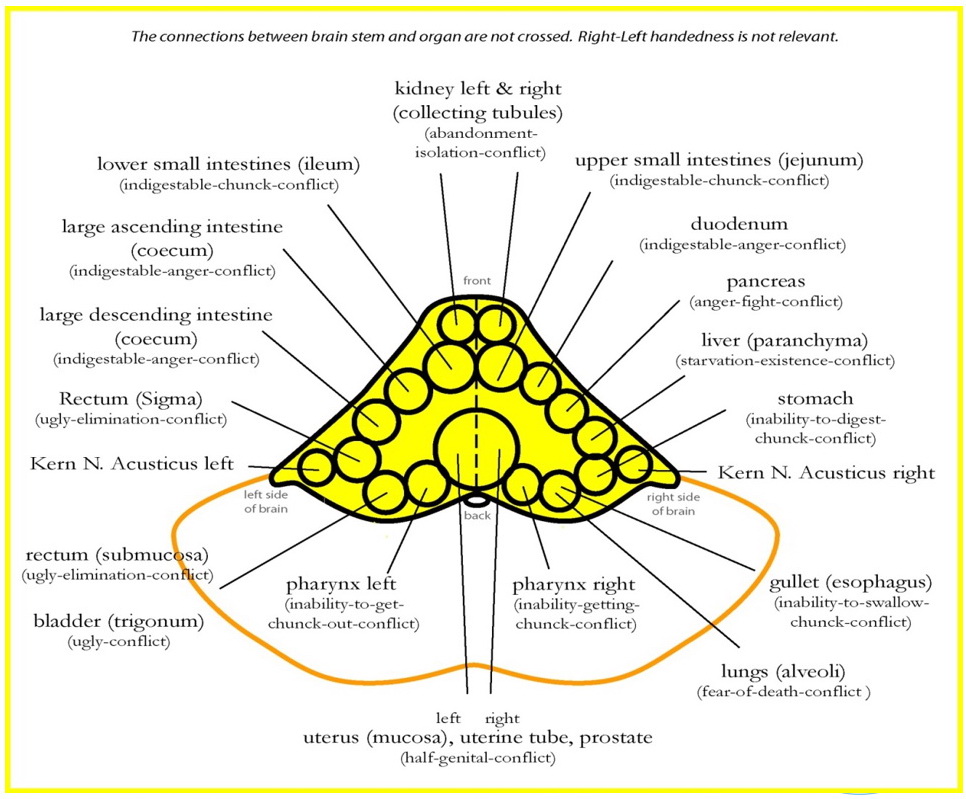
brain parts
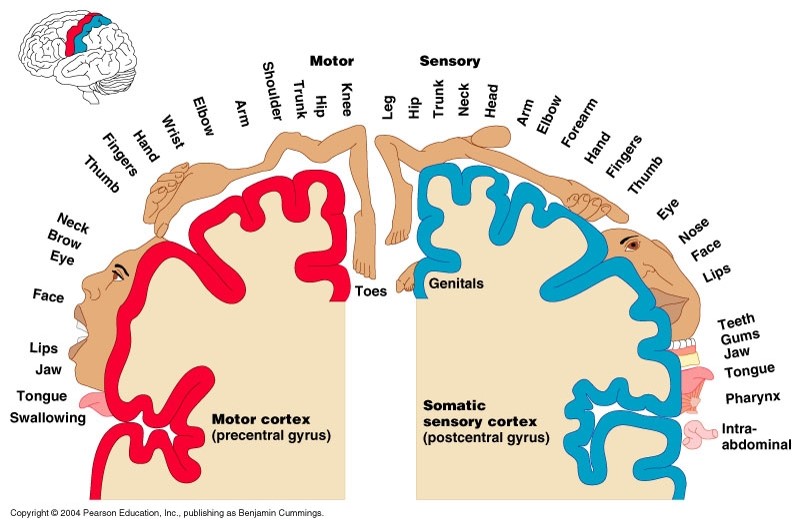
cortex areas
Relay:
1. Cerebral Cortex( – / + ) motoric area/fissura sylvii, for innervation of urethral sphincter & PC muscle
2. Cerebral Medulla ( – / + ) central left & right in area of the pelvic relays, for supply of urethral sphincter & PC muscle
3. Midbrain (+/-) posterior left, for smooth muscles & internal sphincter
compare Brain Stem
Mind
Theme:
1. CC: Urine control, Territory-Marking
2. CM: Self-Devaluation regarding Urine control, Territory-Marking
3. MB: Excretion, expelling “ugly waste”
Emotions, Thoughts:
1. (Cerebral Cortex) self-consciousness, anger
- Hey, this is my space!
- Where is my place here?
- Leave me alone!
2. (Cerebral Medulla) self-doubt, frustration - I can’t prevail.
- I must be able to hold this!
- They don’t accept me.
3. (Midbrain) intoxication, guilt, indignation - I need to pee!
- I must get rid of this!
META-Meaning:
Now, I am able to communicate my needs and my boundaries clearly.
I feel in the right place.
I am my place!
I feel exactly when the time is right to relieve myself.
Organ
Stress Phase Symptoms:
1. CC& 2. CM: The urethral sphincter opens (paralysis) and weakens with prevailing stress, leading to urinary incontinence (also bedwetting). Possibly muscle dystrophy and necrosis.
3. MB: The smooth bladder muscle helps the themes of the mucosae (territory-marking, excretion) by hypertonus and hypertrophy, a trabecular bladder can develop. Strong urge to urinate even at low contents level.
Regeneration Phase Symptoms:
1. CC: Often the control is regained by shoves.
2. CM: The necrosis refills and the muscle is able to close again. At this stage the muscle may become thicker than it was before, which can lead to rigidation tension or an occlusion. Ischuria possible, especially if connected to active need to hold back (inner sphincter in stress phase)
3. MB: Tonus normalisation. Hypertrophy can remain.
Healing Peak
1. CC: Short slackening/paralysis, like in bedwetting
2. CM: Short spasms of the striated muscles
3. MB: Spasms of the smooth muscle, bladder colic
After the healing peak, there is a decline in symptoms.
Biological Meaning:
The weakening and the paralysis of the sphincter in stress phase and healing peak leads to increased involuntary urination to help territory-marking and excretion.
Social
Examples:
- An elderly woman needs to join a nursing home and has to leave many belongings behind. Before she feels at home there, she is incontinent. Because she enjoys the care by the nurses, there is a certain secondary gain through her symptoms.
- A woman is irritated about smelling cat’s excrements in the house. It is winter time and the cats don’t want to go out as they are used to. When the woman enters the house, she immediately feels the urge to urinate. (Klapp)
- A CEO and mother had a very stressy time promoting the company and caring for her children. When the company moves, she has to change her office, and also some of her tasks are transferred to others. She feels upset, disappointed and mistreated by her partners. She becomes incontinent. Eventually she decides to be “bought out”, which resolves the conflict. (Joborn, MHU archiveli>
- The “teacher’s bladder” with reduced sensitivity and muscle tonus as well as expanded bladder walls is a condition seen mostly in women who are used to retain their urine during daytime.
Additional Information
Constellations:
1. Territory-Marking Constellation (CC-Relays of Urothelium both sides & Sphincter Innervation): when territorial relays are affected, manic and depressive states; Claustrophobia, Agoraphobia, fear of displacement, possibly racism. Positive: justice
2."Charisma Megalomania" (CM- Sphincter relays both sides): person can conquer and possess a place, be at home everywhere
Differential Diagnosis:
Bladder – Trigon Mucosa (Brain Stem, +/-): enhanced sensitivity and frequent urination in stress phase (excretion, ugly), swelling and purulent inflammation in regeneration phase.
Urothelium(in bladder and urinary vessels) (Cerebral Cortex, -/+) stress phase (boundaries): Numbness, widening and ulceration (thereby frequent urination of small amounts, incontinence); Regeneration phase: hypersensitivity, pain, virus infection, cell growth
Incontinence can be caused by pressure from other organs (like the uterus) on the bladder due to weakened ligament structure.
In any Regeneration phase after healing peak, but especially for the Kidney Collecting Tubules, we have increased (quantity of) urination.