Nasal and Sinus Mucosa/ Ectodermal origin, Social Smelling
Anatomy
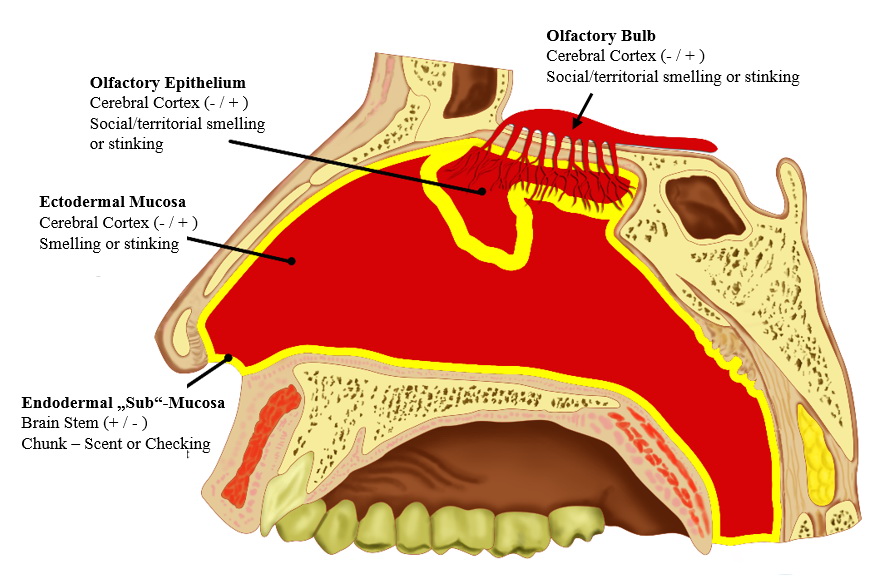
The nasal cavity, it’s vestibule and the air-filled sinuses are lined with a mucosa. This membrane consists of squamous epithelium which transitions into columnar respiratory epithelium, a ciliated (lash-like) tissue with abundant seromucinous glands, which maintains the nasal moisture and protects the respiratory tract from foreign objects. The mucosa of the upper nasal cavity contains the smell receptors.
The nasal mucosa has two tissue layers: underneath and built into the ectodermal layer there is endodermal tissue with a relay in the brain stem.
Brain
Relay
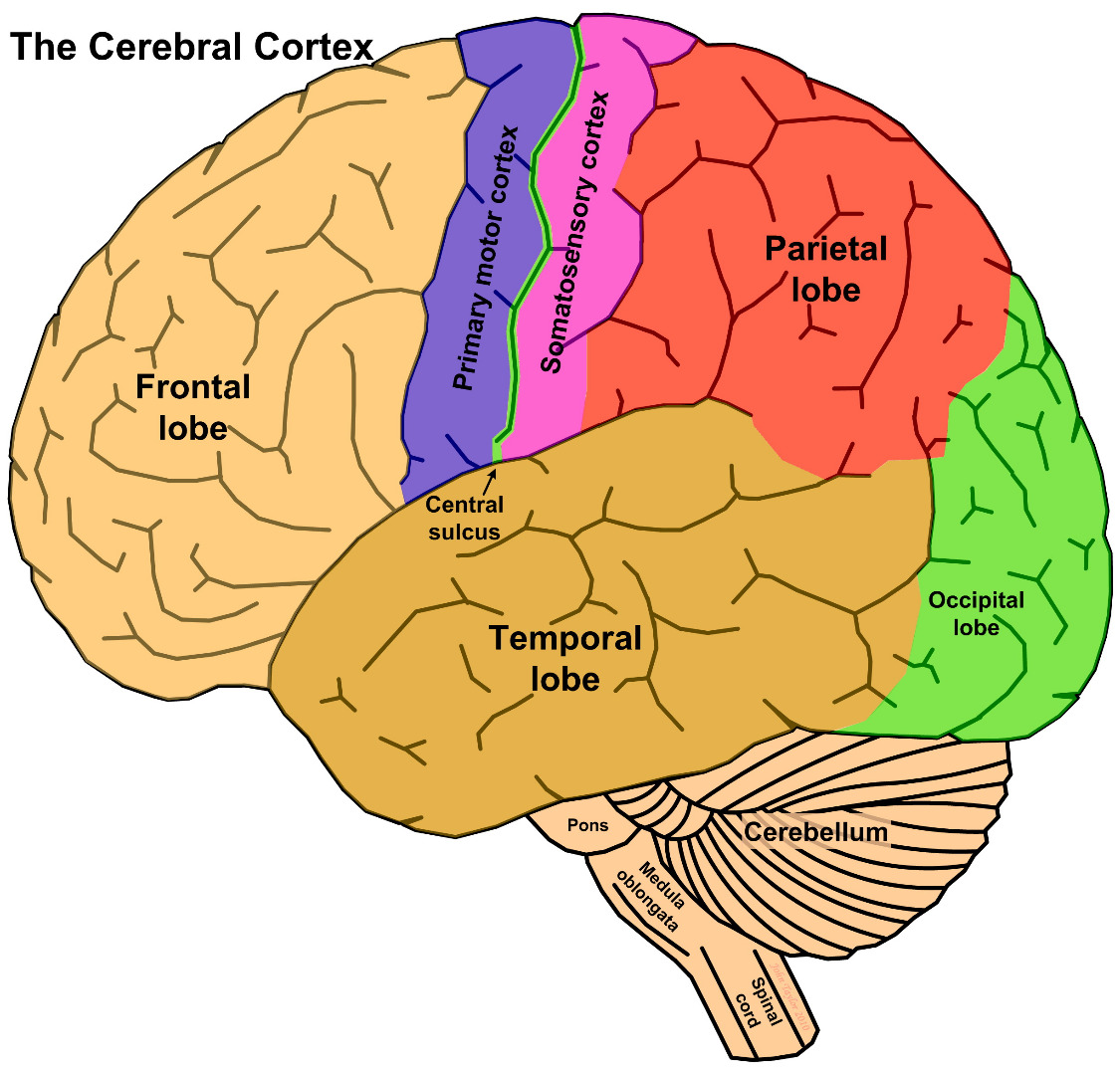
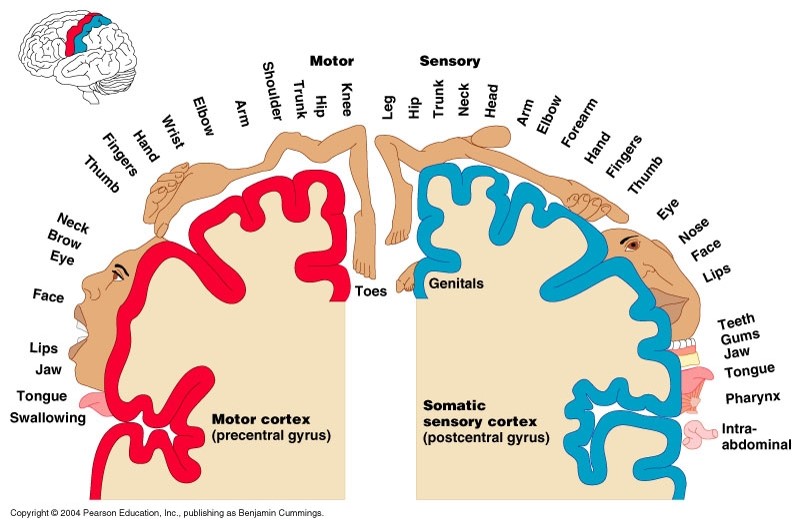
Cerebral Cortex ( – / + ) sensory area lateral left & right, brain-organ relation crossed over
Mind
Theme
Smelling (social) & Evaluation, Recognition, “Stinking” conflict
Emotions, Thoughts
Uncertainty or Disgust
- This stinks.
- I can’t smell him/her or this situation anymore.
- Something gets strongly on my nerves.
- I lost track of this (person or situation).
- I can’t recognize what she wants.
META-Meaning
- My nose provides me with all the air and information I need.
- When I don´t like what I smell, I now can change it or create a distance.
Organ
Sensitivity changes according to “Outer Skin”/epidermis pattern with hyperesthesia in regeneration phase.
Stress Phase Symptoms
Function reduction of smell for certain qualities (hyposmia, anosmia), tissue reduction (ulcer, necrosis) without bleeding.
Regeneration Phase Symptoms
Inflammatory swelling of the mucosa, often accompanied/triggered by virus, high fever >39,5″C / 103F is possible. Hyperesthesia, itch, sneezing. Nosebleed with fresh blood can appear.
Possible diagnoses: common cold, viral rhinitis, influenza
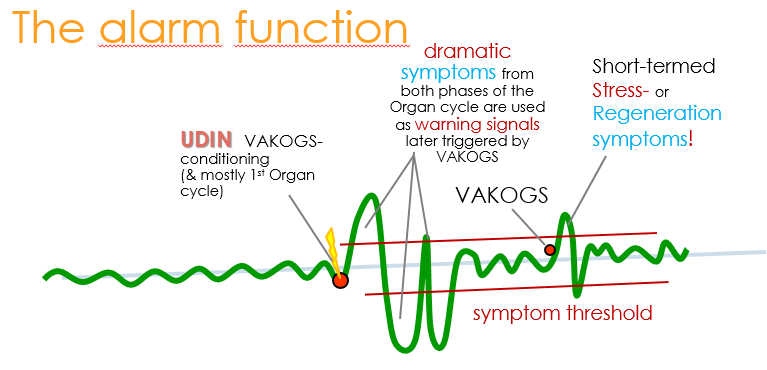
Nose itch and running nose in allergic rhinitis (hay fever) are warning signals, triggered by the allergen present in the UDIN moment.
Healing Peak
Temporary loss of the smelling sense and a short loss of consciousness (absence, passing out).
Biological Meaning
By the decreased sense of smell in the stress phase, the impact of the social conflict is reduced.
Social
Different kinds of conflicts can be experienced regarding this tissue:
- Conflict of not recognizing somebody and losing control of the situation
- Scent conflict:
- A real stink, from which the patient feels „impaired” can trigger a scent conflict. Or an excessive air pollution by exhaust fumes, smoking…
- In a figurative sense: „It stinks to me what I had to experience ”
- Scent-oriented separation conflict:
- Separation from a person, who was recognized by its scent.
- Common amongst small children, when one parent is not found present
Examples
- A little girl loses her mother in the shopping mall. After having been found, she needs to sneeze on their way home.
- A boy is sent to the countryside over the holidays, but feels abandoned because his friends are not there. After this experience, he has hay fever. After renegotiation and reimprinting of the scene, the symptoms are no longer triggered. (Klapp)
- A cook gets a nose bleed after a conflict on his workplace has been resolved.
Additional Information
The nasal mucosa is often related to the laryngeal and bronchial mucosa as part of an overarching response of the oropharyngeal-bronchial region (territorial or fright).
Constellations
Smelling (olfactory relays of both hemispheres active): Hypersensitivity to certain smells, smell hallucinations, smell paranoia. Manic and depressive moods are possible when the smelling relates to a territorial issue.
Differential Diagnosis
Nasal Mucosa of endodermal origin(BS +/-) stress phase (survival-/prey-related scent conflict): enhanced olfactory sense, later cell proliferation/polyps; in regeneration these are degraded with bacterial/mycobacterial activity. Purulent rhinitis.
Olfactory Nerve (CC -/+ and BS +/-) changes in perception without reactions in the mucosa.