Nose – Para Nasal Sinus Mucosa
Anatomy
Paranasal sinuses are air-filled spaces communicating with the nasal cavity within the bones of the skull and face. Humans possess a number of paranasal sinuses divided into subgroups that are named according to the bones within which the sinuses lie. The biological role of the sinuses is debated but a number of possible functions have been proposed:
- Decreasing the relative weight of the front of the skull and especially the bones of the face. The shape of the facial bones is important as a point of origin and insertion for the muscles of facial expression.
- Increasing resonance of the voice.
- Providing a buffer against blows to the face.
- Insulating sensitive structures like dental roots and eyes from rapid temperature fluctuations in the nasal cavity.
- Humidifying and heating of inhaled air because of slow air turnover in this region
Humans have a number of paranasal sinuses, namely: - the frontal sinuses (sinus frontalis);
- the maxillary sinuses (sinus maxillaris);
- the sphenoidal sinuses (sinus sphenoidales)
- and the ethmoidal sinuses (cellulae ethmoidales).
Brain
Relay
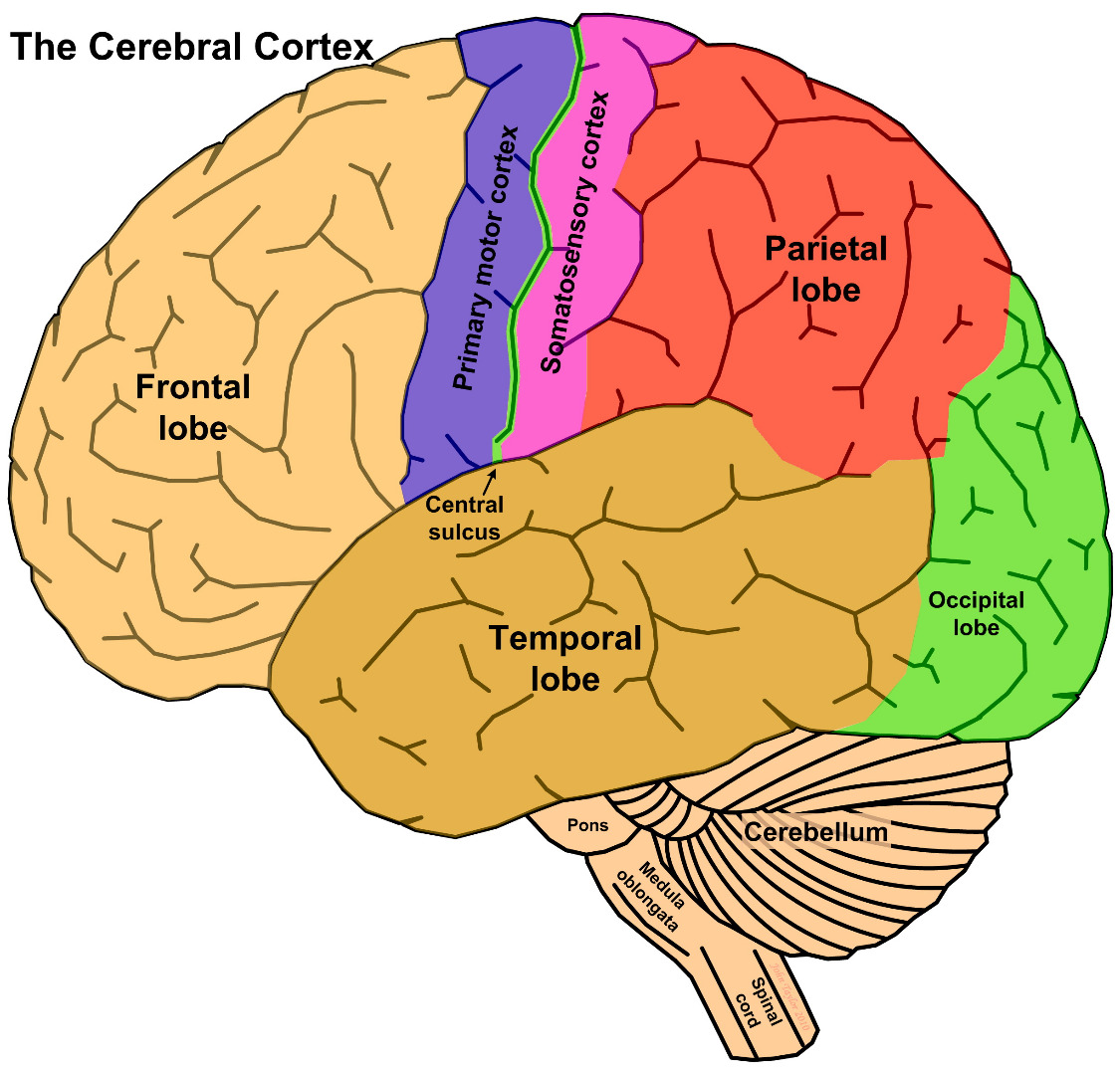
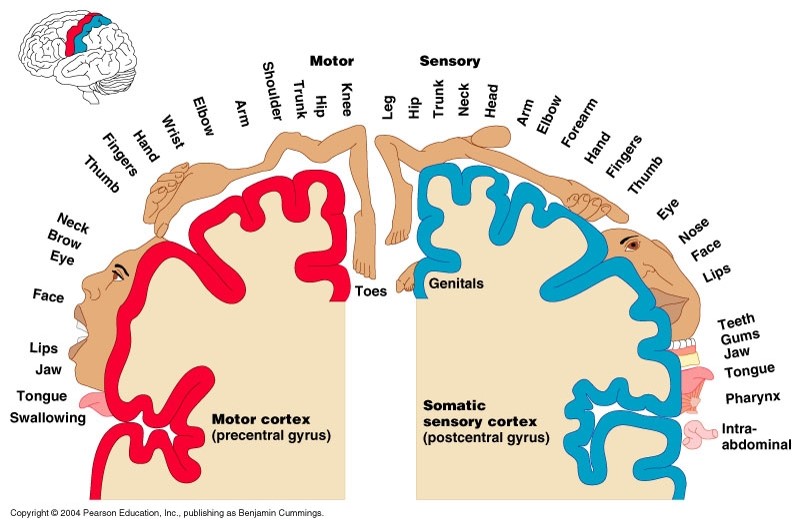
Cerebral Cortex ( – / + ) sensory area lateral left & right, brain-organ relation crossed over
Mind
Theme:
Smelling (social)
Emotions, Thoughts:
- This stinks.
- I can’t smell him/her or this situation anymore.
- Something gets strongly on my nerves.
- I lost track of this (person or situation)
META-Meaning:
My nose provides me with all the air and information I need.
When I don´t like what I smell, I now can change it or create a distance.
Organ
Stress Phase Symptoms
Painless ulceration/reduction of squamous epithelium, often without bleeding (it may remain unnoticed in the absence of clinical signs).
Regeneration Phase Symptoms
Sinusitis with intense swelling of the mucosa in the ulcer area (with or without viruses, bacteria or pus present). Congestion of the sinuses can produce headaches. After the Healing Peak, the nose runs with serous secretion.
Healing Peak
Sneezing is seen as part of the healing peak
Biological Meaning
By reducing the function of smell, suffering of a helpless or “stinking” situation is lessened.
Social
Examples
- Searching/recognizing-conflict:
- When one’s looking for someone/something but doesn’t find it.
- Small children often have a runny nose (chronic). Often they are searching for mum who had left them home. They try to catch her scent in the air in order to find her.
- Scent-oriented separation conflict:
- Separation from a person, who was recognized by its scent.
- Common amongst small children, when one parent is not found present
- Undercooling conflict/Common cold-conflict:
- All the creatures need warmth to survive. Severe hypothermia is a life-threatening condition. The cold air enters the nose during breathing, which may present a conflict trigger when cold air is believed to be a threat.
- Scent conflict:
- A real stink, from which the patient feels „impaired” can trigger a scent conflict. Or an excessive air pollution by exhaust fumes, smoking…
- In a figurative sense: „It stinks to me what I had to experience ”
Additional Information
Constellations
Smelling (olfactory relays of both hemispheres active): Hypersensitivity to certain smells, smell hallucinations, smell paranoia. Manic and depressive moods are possible when the smelling relates to a territorial issue.
Differential Diagnosis:
Nasal and Paranasal Mucosa / Endodermal (Brain Stem +/-). enhanced olfactory sense, later cell proliferation/polyps in stress phase, in regeneration these are degraded with bacterial/mycobacterial activity. Purulent rhinitis.