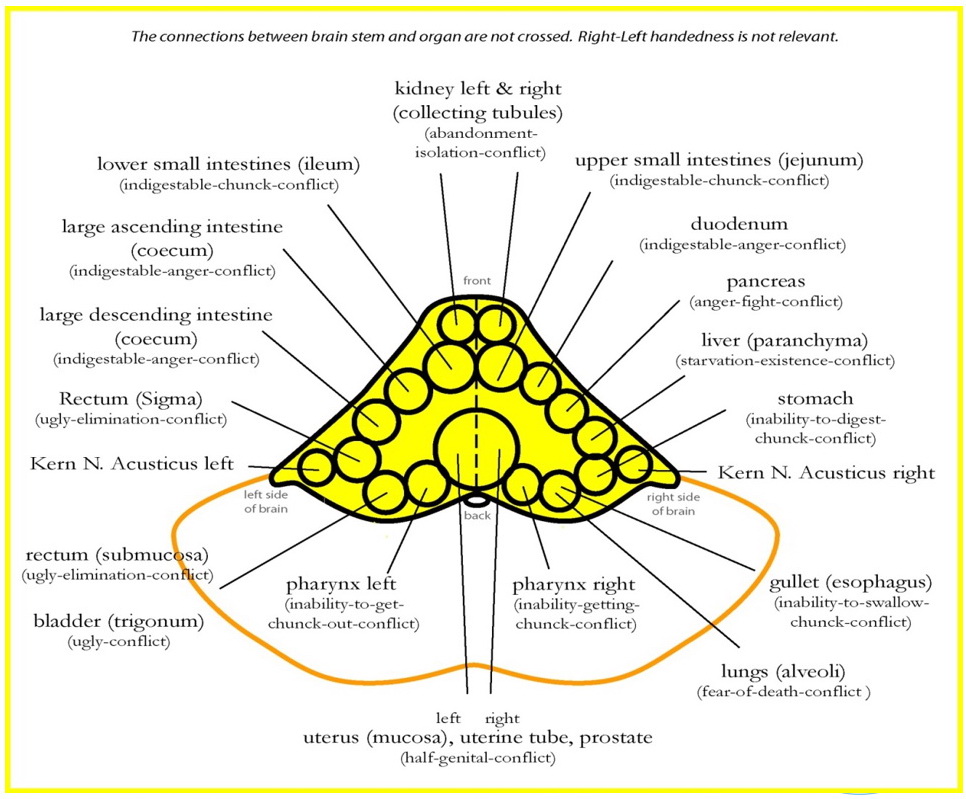
Eyes – Eyelids
Anatomy
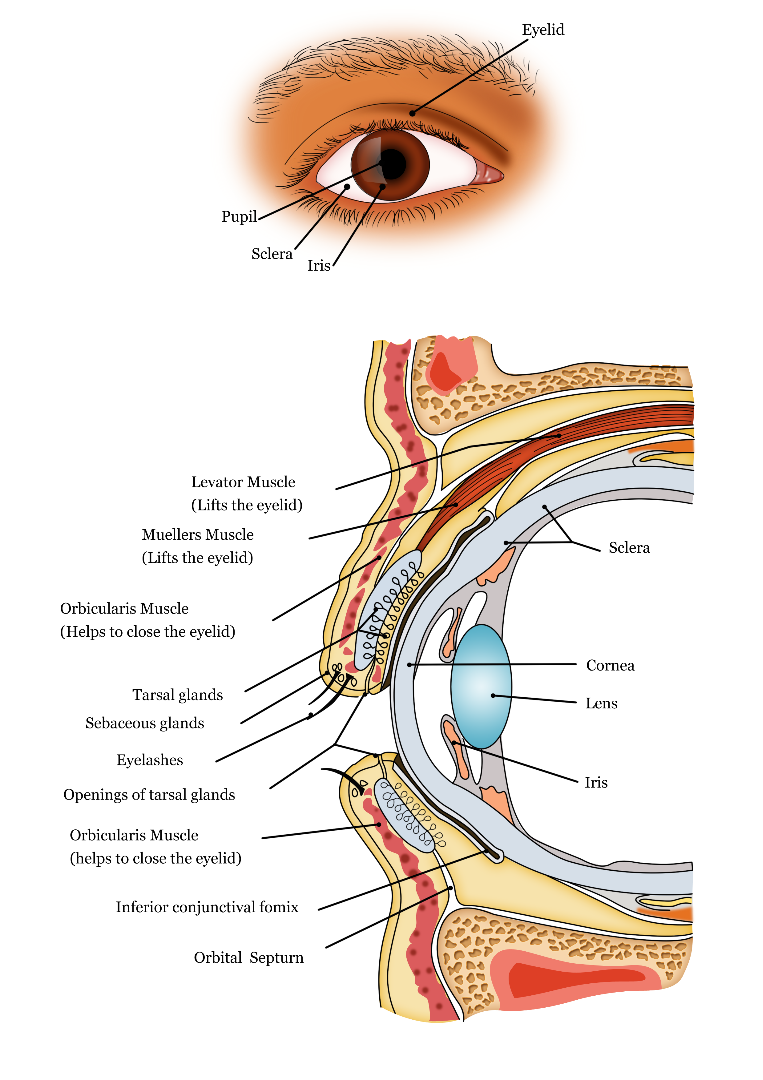
An eyelid is a thin fold of skin that covers and protects the eye. With the exception of the prepuce and the labia minora, it has the thinnest skin of the whole body. The tarsus is a plate of cartilage inside the eyelid.The levator palpebrae superioris muscle retracts the eyelid to “open” the eye. This can be either voluntarily or involuntarily. The human eyelid features a row of eyelashes which serve to heighten the protection of the eye from dust and foreign debris, as well as from perspiration. Its key function is to regularly spread the tears and other secretions on the eye surface to keep it moist, since the cornea must be continuously moist. They keep the eyes from drying out when asleep. Moreover, the blink reflex protects the eye from foreign bodies.
Brain
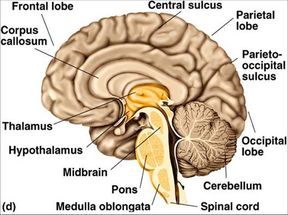
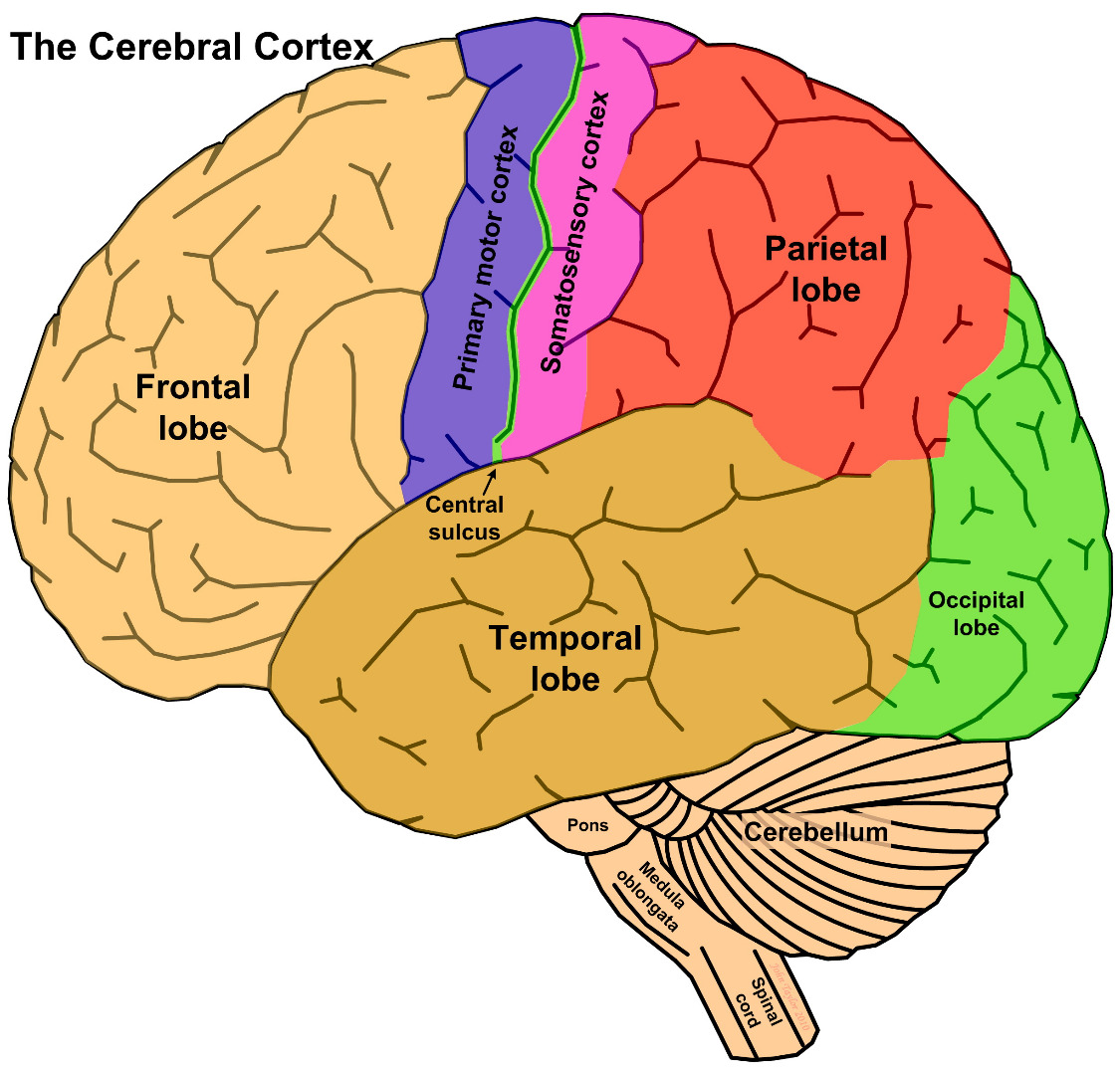
Relays
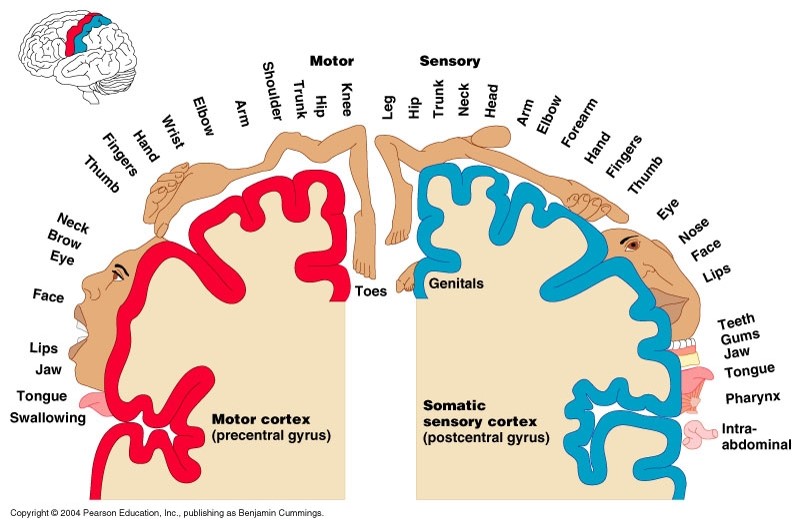
1. Cerebral Cortex ( – | + ) in epidermis and eyelashes, muscle innervation
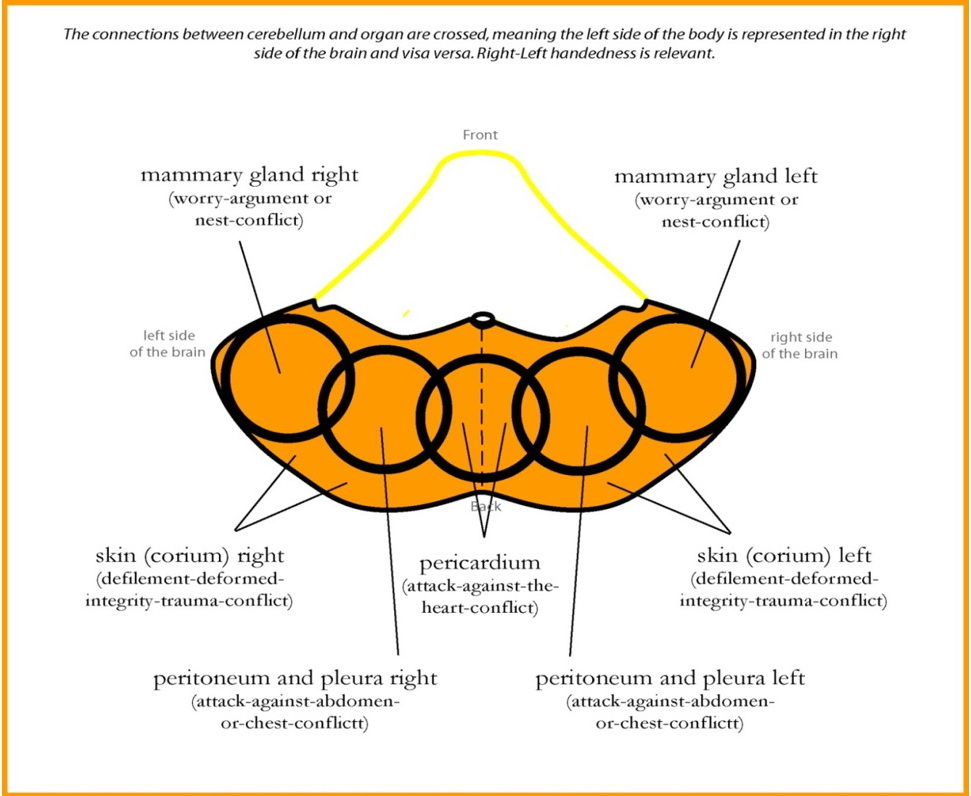
2. Cerebellum (+/-) dorsal in dermis, sebaceous and Meibom glands
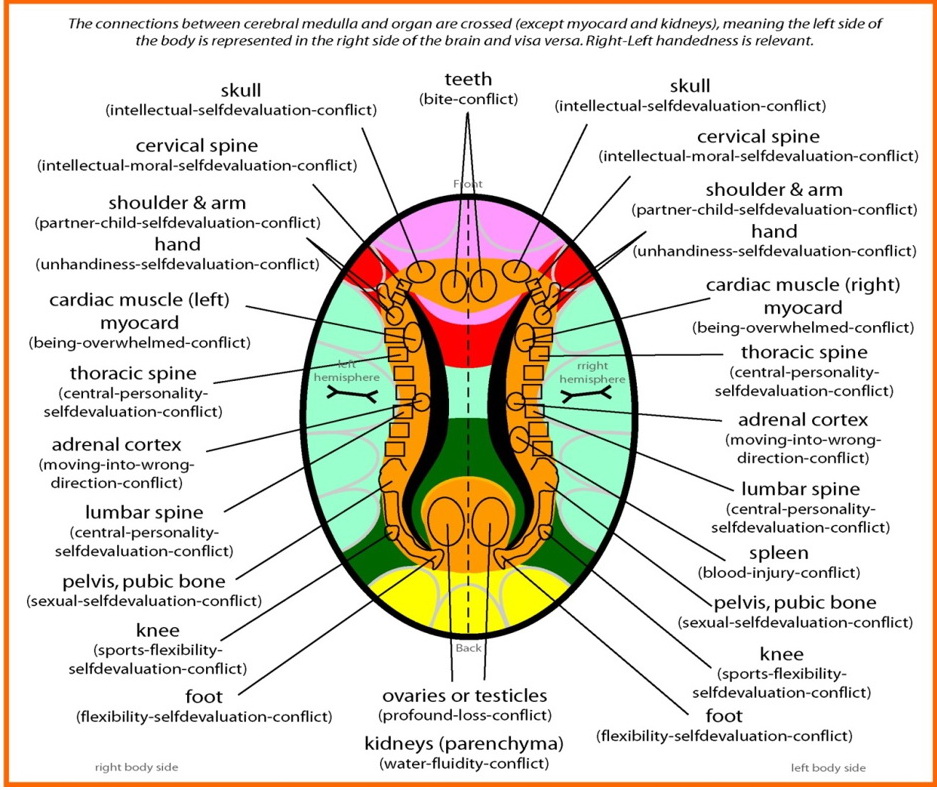
3. Cerebral Medulla (-/+) “skull area” for muscles and cartilage
4. Midbrain/Brain Stem (+/-) posterior central, for involuntary muscle innervation