
Pleura
Anatomy
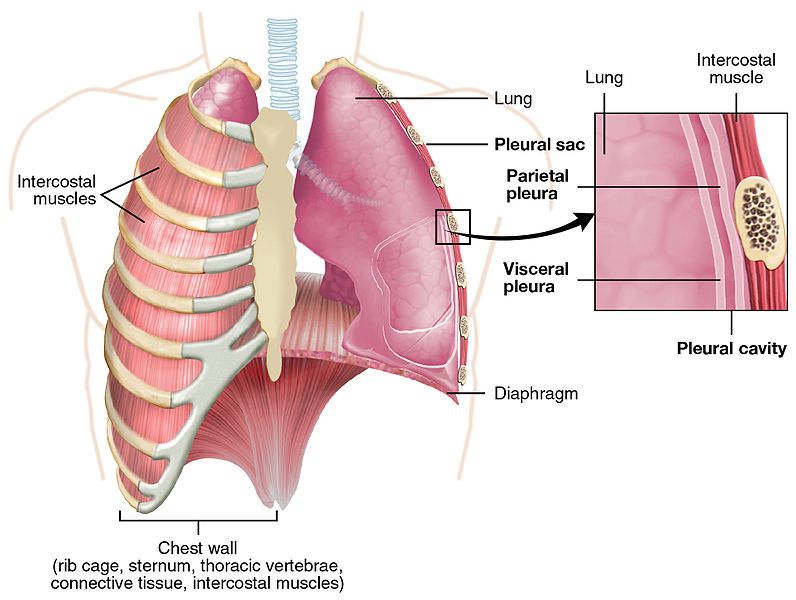
The lungs in the respiratory system are surrounded by two serous membranes, the pleurae. The outer pleura is attached to the chest wall and is known as the parietal pleura; the inner one is attached to the lung and other visceral tissues and is known as the visceral pleura. In between the two is an actual thin space known as the pleural cavity or pleural space. The parietal pleura is highly sensitive to pain; the visceral pleura is not. Pleural fluid serves several functions. It lubricates the pleural surfaces and allows the pleural layers to slide against each other easily during respiration. Pleural fluid also provides the surface tension that keeps the lung surface in close apposition with the chest wall. This allows optimal inflation of alveoli during respiration. It also directly transmits pressures from the chest wall to the visceral pleural surface (and hence the lung). Therefore movements of the chest wall during breathing are coupled closely to move
The visceral pleura receives its blood supply from the bronchial circulation, which is the same as the lungs. The parietal pleura receives its blood supply from the intercostal arteries, which is the same as the overlying body wall.
The visceral pleura is not innervated, and the parietal pleura is innervated by the intercostal and phrenic nerves.
Brain
Relay:
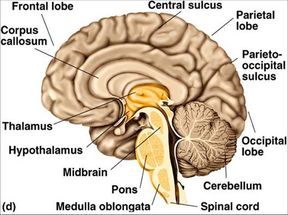
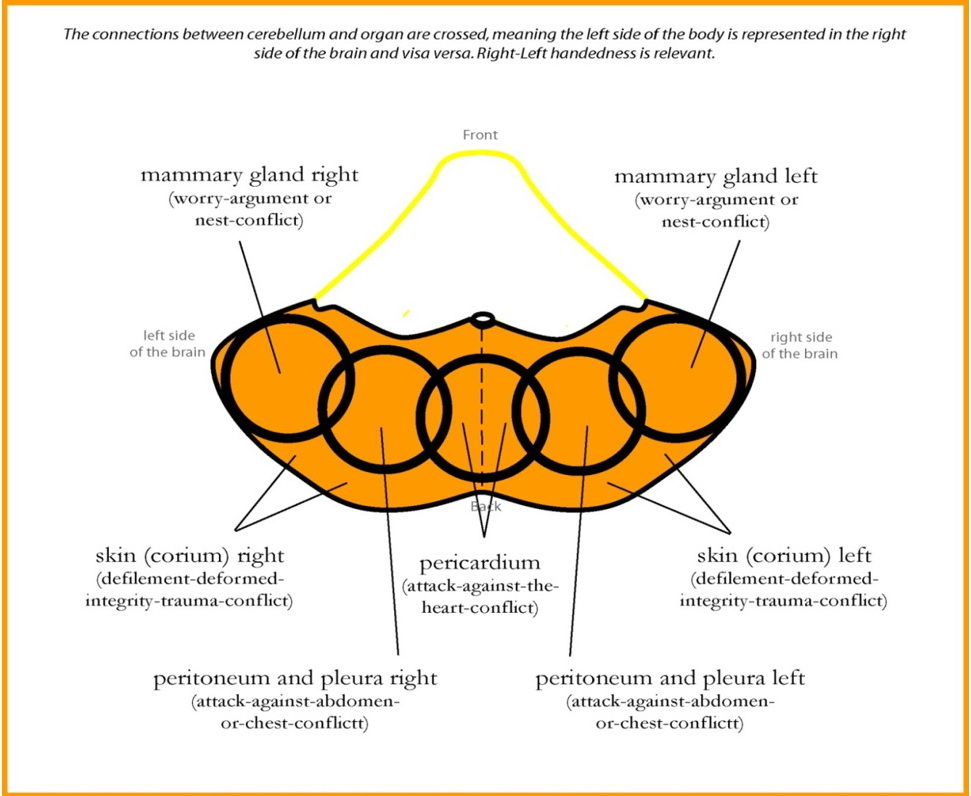
Cerebellum ( + / – ) both sides besides pericardium relay
Mind
Theme:
Attack against lungs or chest
Emotions, Thoughts:
A real or an associative attack against the chest. (can even be triggered by surgery)
Fear, panic, pain
- This hurt my lungs!
- I can´t let you open me up!
- That blow hit me hard in the chest!
This could even be felt for another person.
META-Meaning:
My lungs are well-protected and have room to breathe freely
Organ
Stress Phase Symptoms:
In the stress phase a compact mesothelioma of the pleura grows (as a benign or a malign tumor originated from the mesothelium). These tumor can extend as a surface area or forming big compact single tumors depending on how the attack has been sensed.
Regeneration Phase Symptoms:
Purulent processes with light fever (pleuritis) and microbial activity can lead to pleural empyema. In Regeneration Phase A a pleural effusion can develop especially if there is water retention at the same time KCT syndrome)which causes breathlessness (dyspnea) After expired tuberculosis, inclusions of calcium can appear.
Biological Meaning:
The stress phase reaction is meant to enhance the protective function of the pleural tissue.
Social
Examples
- An elderly boat builder who sanded glass fiber reinforced plastic on a regular basis, gets the diagnosis “lung fibrosis” because of dyspnea. He experiences the therapy as taking away his life quality. Nature and his cabin by the sea are healing resources for him. (Klapp)
- A woman with a diagnosis of lung cancer fears the surgery and develops a fibrous tumor of the pleura.
- After having had a dramatic lung tuberculosis (regeneration phase of lung alveoli/death fright), a patient gets a pleural effusion.
Additional Information
Asbestos and glass fibres are considered to trigger pleural mesothelioma. (Inspiration of micro-traumatizing dust in construction workers – experienced as attack from inside)
Constellation
Emotional Burnout: together with another active relay in the cerebellum, the sensation and expression of emotions is reduced drastically (altruism).
Differential Diagnosis:
Bronchial Mucosa and Muscle (Cerebral Cortex, -/+) with hyperventilation in stress phase (competition/social fear), painful swelling and inflammation (pneumonia) in the regeneration phase.
Heart/Myocardium (Cerebral Medulla, -/+) with dyspnea in regeneration phase and healing peak after overwhelm
Heart/Pericardium (Cerebellum, +/-) with dyspnea in regeneration phase after fear of attack to the heart
Lung Alveoli (Brain Stem, +/-) with possible hyperventilation in stress phase (death fright), pulmonary fibrosis and dyspnea after recurring regenerations.
Bronchial Goblet Cells (Brain Stem, +/-) with tumor (adenoma) in the stress phase, bloody cough in regeneration phase and cystic fibrosis after recurring conflicts.
