
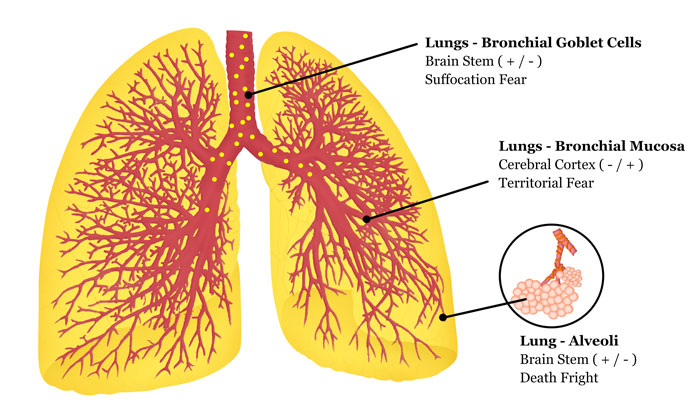
Lungs – Alveoli
Anatomy
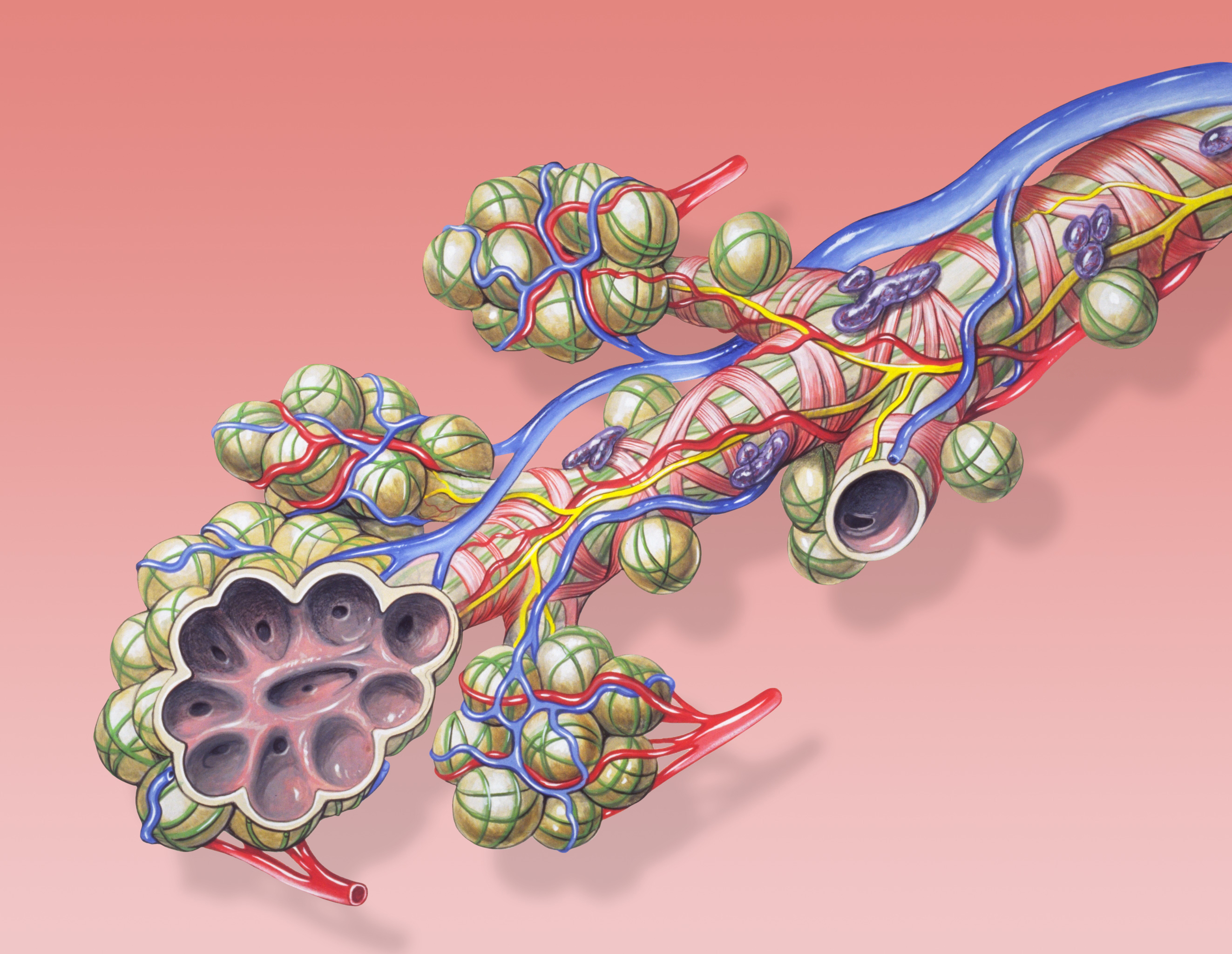
Alveoli are hollow cavities. In the lung parenchyma of the respiratory system, the alveoli are the terminal ends of the respiratory tree, which outcrop from either alveolar sacs or alveolar ducts, which are both sites of gas exchange with the blood as well. The alveolar membrane is the gas-exchange surface. Carbon dioxide rich blood is pumped from the rest of the body into the alveolar blood vessels where, through diffusion, it releases its carbon dioxide and absorbs oxygen.
A network of capillaries surrounds each alveolus for the process of diffusion to occur. Diffusion is the passive movement of molecules or particles along a concentration gradient, or from regions of high concentration to regions of lower concentration such as the exchange of oxygen and carbon dioxide between the blood and alveoli.
The alveoli contain some collagen and elastic fibres. The elastic fibers allow the alveoli to stretch as they are filled with air during inhalation. They then spring back during exhalation in order to expel the carbon dioxide-rich air.
The alveoli consists mostly of thin-walled Type I alveolar cells for gas exchange. Type II alveolar cells produce surfactant (surfactants are compounds that lower surface tension. Surfunctant decreases surface tension in the fluid lining the alveoli. Reduced surface tension prevents smaller alveoli from collapsing and also makes it easier to inflate the lungs).
Brain
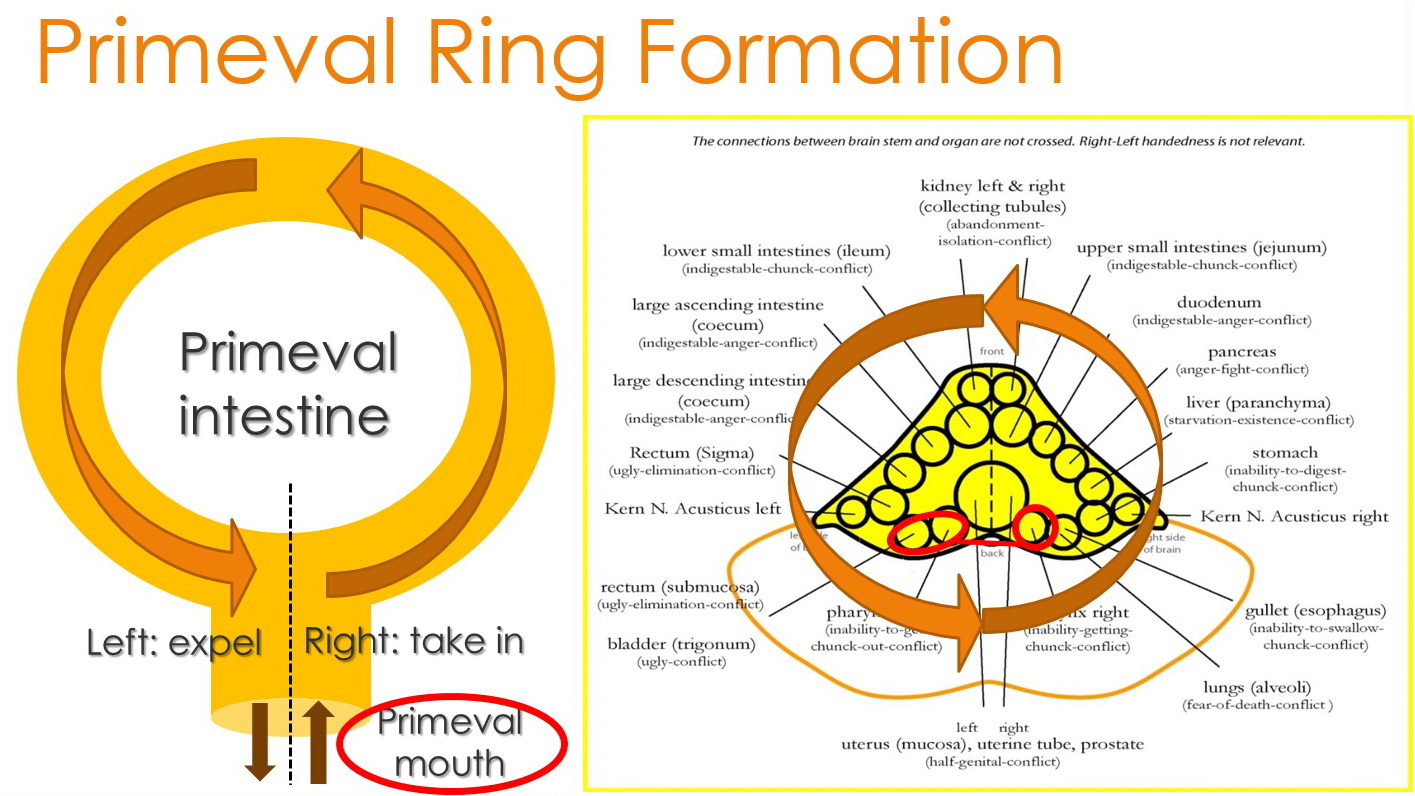
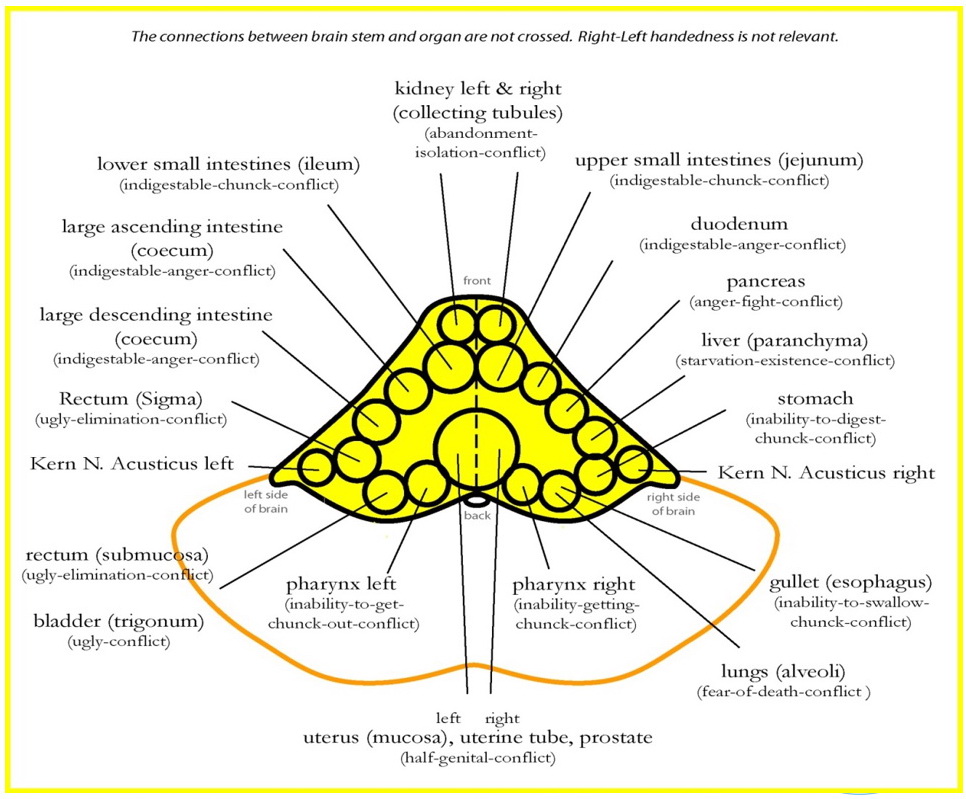
In the Brain Stem, the primeval ring structure is reflected: organ tissue relays with assimilative and digestive functions from oesophagus to small intestines are situated in the right brain stem, while excretory organs from caecum to rectum are relayed in the left brain stem. Medial on both sides are the relays of mouth/pharynx, middle ears and lacrimal glands, as well as the pineal and pituitary glands and the thyroid.
Relay:
Brain Stem ( + / – ) posterior both sides next to pharynx relays
Mind
Theme:
Death Fright
- suffocation and fear of death
- Deep shocking fear of the person’s own death (or other close family or friends)
Emotions and Thoughts:
Encompassing fright through an accident, diagnosis shock or other deeply rooted life-threatening situations or news.
- I am suffocating.
- I can’t breathe!
- I won’t survive this.
- I have gasped in fear.
- I don’t want to die!
META-Meaning:
- I am breathing in the Deep Breath of Life.
- Now, I can decide to release my fear and let the universe resolve all that.
- I am alive now!
Organ
Stress Phase Symptoms:
Hyperventilation, adenomatous proliferation of the alveoli – the diagnosis from a benign lung alveoli tumor up to a malignant lung carcinoma.
According to ”Eybl” (”Die seelischen Ursachen der Krankheiten”) one single round focus appears when the conflict is felt for another person, and as multiple foci when oneself is concerned.
Regeneration Phase Symptoms:
1. The tumor degrades through encapsulation. It can be diagnosed as a benign tumor, without any cell division/in case of just a little cell division. Than it remains in its original state or becomes calcified/fibrosed.
2. The tumor degrades through an inflammatory, purulent process, under certain circumstances with cavern-formation and possibly with hemoptysis (coughing up blood). The conventional medical diagnoses can be pneumonia or tuberculosis.
3. Self-dissolution (autolysis) of the tumor without the presence of bacteria (and without any inflammation).
Pneumocystis carinii-pneumonia (PCP) may also cause lung lesions amongst immunodeficient patients (multiple ’lung cell-changes’ because of death fright). In this case, triggers are fungal infections, and further research is needed if this is a toxic cause or a regeneration phase symptom.
In case of frequent conflict repetitions, pulmonary fibrosis, pulmonary sarcoidosis, bronchiectasis (sac-like widening of the airways) or pulmonary emphysema can appear.
Biological Meaning:
The increased cell proliferation of alveoli (in stress phase) can be interpreted as a biological attempt for providing a larger surface area for the gas exchange.
Social
Examples:
- A mother worries for her child who is sick and fears his death. After the situation is cleared, she gets a strong cough with blood and purulent mucus. (Klapp)
- The patient who is a strong smoker gets the diagnosis “lung cancer”. When asked about the emotion felt in the tissue, he names “fear to die” (Kopp, MHU archive)
- After a fall into the rope when climbing, a young woman gets chills and a strong cough from deep inside.
Additional Information
Lung metastases can be observed to be following a cancer diagnosis or an encompassing trauma.
Presumed causes of lung cancer in conventional medicine are: Smoking, pollutants (asbest, diesel exhaust fumes, arsenic, etc.), low-vitamin diet, genetic factors. As this can not be verified in all lung cancer cases, we have to distinguish: physically harmful substances as asbestos or glassfiber of course create damage when they reach the alveoli, leading to a repair process. Recurring repairs can lead to lung fibrosis or stimulate lung cancer on a physical level.
Even poisons as arsenic or diesel fumes can create physical damage. In the cases of smoking and diet though, a cancer cause lies more in the belief that the substance were harmful. Nevertheless, both belief and suboptimal nutrition can weaken the organism and influence it´s reactions.
Genetic or epigenetic factors can be explained as trauma and reaction patterns handed down through generations. As death-fright strikes on a very deep level, when the trauma hadn´t reached a soul-ution or a total resolution, the biologically meaningful response can be expressed in the genetic blueprint.
Constellations
Brain Stem Constellation possible: perplexity, lethargy, passiveness, reduced movement. Purpose: new orientation
Differential Diagnosis:
Bronchial Mucosa (Cerebral Cortex, -/+) with painful bronchitis (non-purulent) or bronchial carcinoma in the regeneration phase after a social/competition fear.
Pharyngeal Arches (Cerebral Cortex, -/+) with slight dragging pain between cervical lymph and mediastinum in stress phase (Frontal fear/Powerlessness); possibly cysts in the mediastinum in the regeneration phase
Bronchial Goblet Cells (Brain Stem, +/-) with tumor (adenoma) in the stress phase (suffocation fear), bloody cough in regeneration phase and lung fibrosis after recurring conflicts. Genetic: cystic fibrosis/mucoviscidosis.
An interstitial oedema in the lungs can evolve by heart insufficiency, when liquid from the lung capillaries leaks into the interstitium.
