Uterus
Anatomical overview
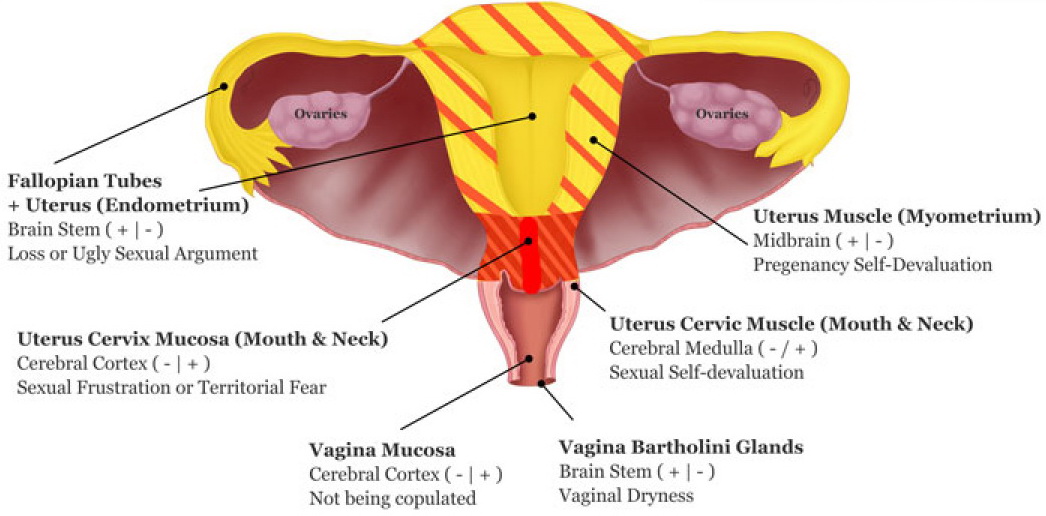
The uterus or womb is the major female reproductive organ. It is pear-shaped and situated above the pelvis floor between urinary bladder and intestines. One end the cervix opens into the vagina; the other is connected on both sides to the fallopian tubes. The uterus consista of 3 layers: perimetrium (a serous membrane), myometrium (a thick layer of smooth muscle) and endometrium (the inner lining).
The main function of the uterus is to accept a fertilized ovum which becomes implanted into the endometrium and derives nourishment from blood vessels which develop exclusively for this purpose. The fertilized ovum becomes an embryo, develops into a fetus and gestates until childbirth. Due to anatomical barriers such as the pelvis, the uterus is pushed partially into the abdomen due to its expansion during pregnancy.
In birth the smooth muscle press the fetus in peristaltic waves through the cervix and vagina. The Endometrium or placenta is expelled after the baby.
Correction: there is no striated muscle in the cervix, but the wall consists of connective tissue (governed by the cerebral medulla) with longitudinal smooth muscle fibres.
Brain
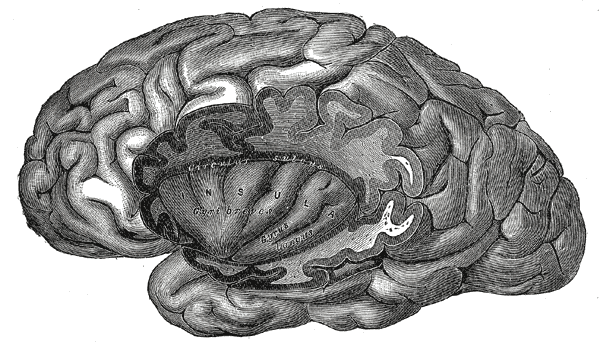
Relay
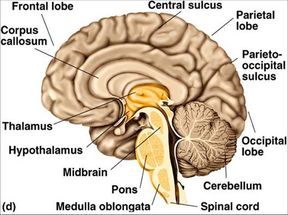
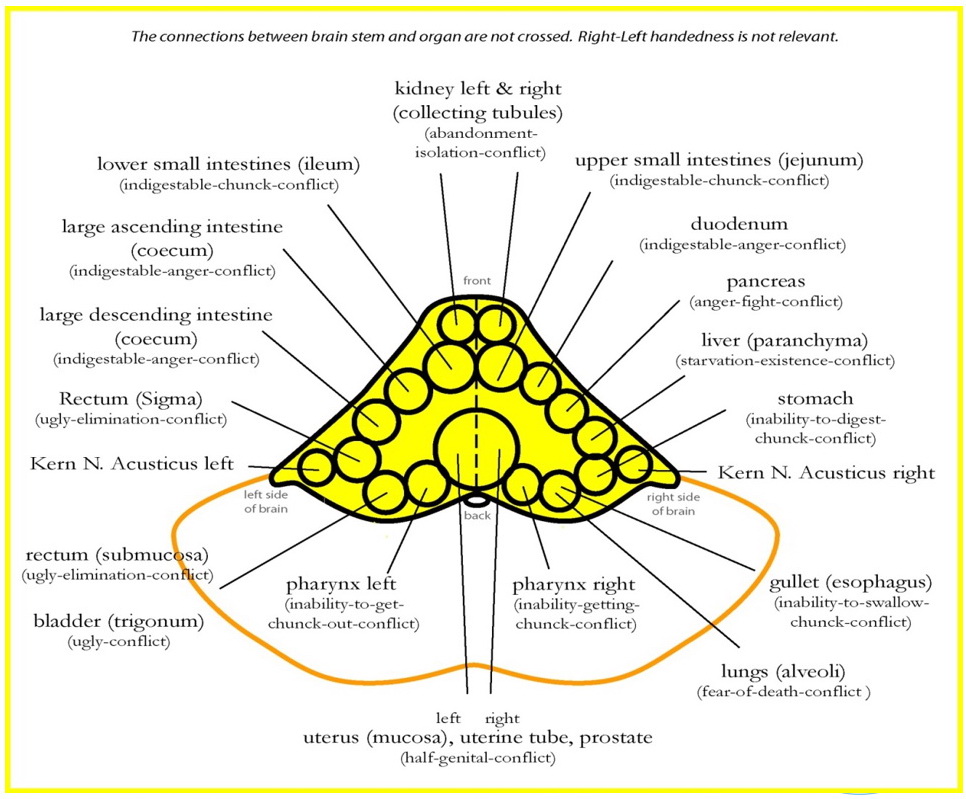
Brain Stem (+/-): Endometrium, Fallopian tubes and
Midbrain (+/-): Myometrium
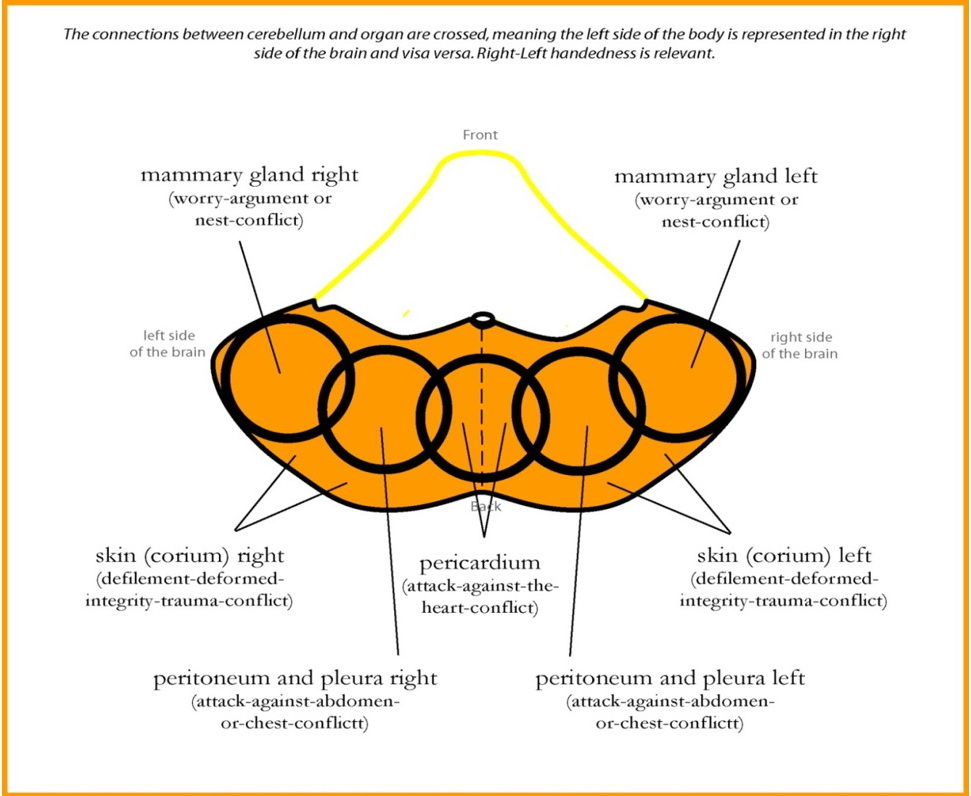
Cerebellum (+/-): Perimetrium
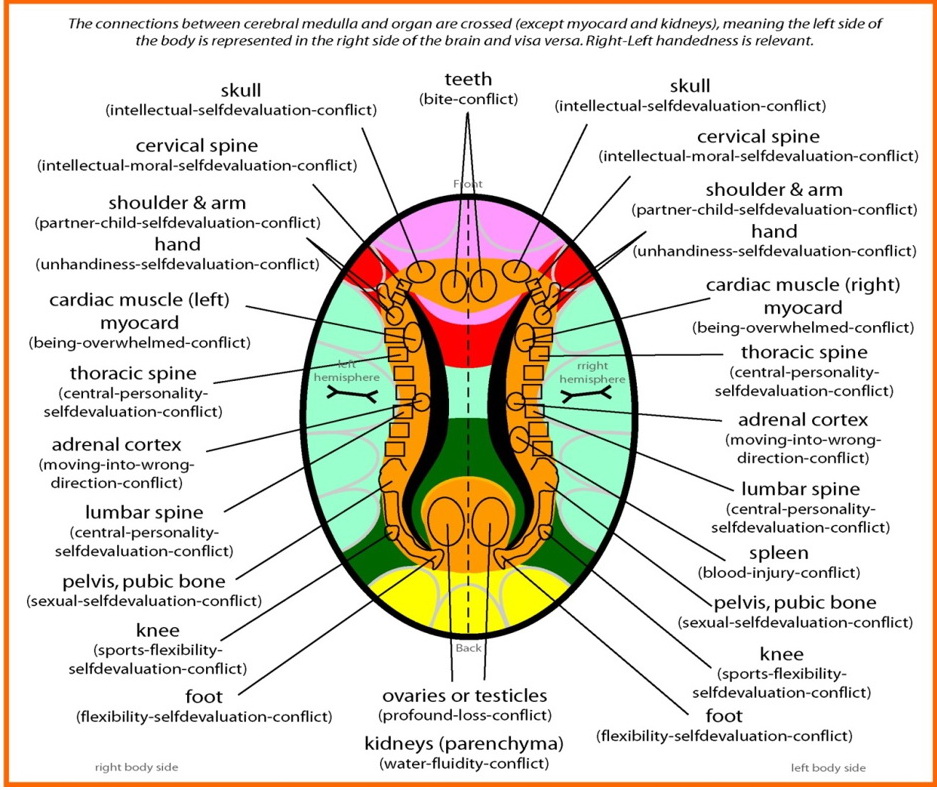
Cerebral Medulla (-/+): Cervix wall