
Prostate – Glandular Tissue
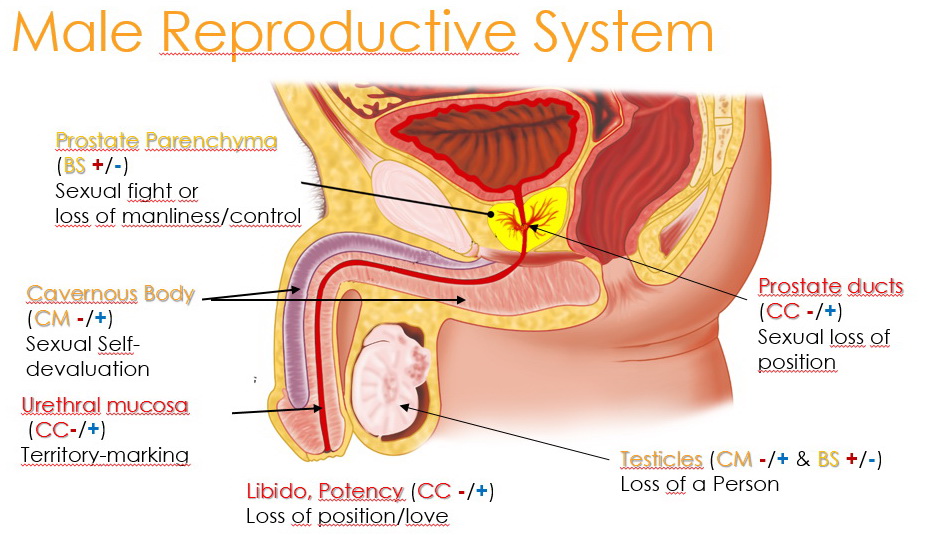
Anatomy
The prostate is an accessory exocrine gland of the male reproductive system that produces and stores a slightly alkaline fluid with enzymes and nutrients to sustain the sperm cells. It gives the ejaculate it’s typical odour which is aphrodisiac. This secrete constitutes 10-30% of the volume of the ejaculate, otherwise consisting of secretes from the seminal vesicles and the bulbourethral gland, and of the semen from the epididymis.
The 30-50 tuboalveolar glands of the prostate alternate with smooth muscle cells that contract during ejaculation, expelling the semen. Their function is steered by testosterone and the autonomous nervous system.
The prostate also produces prostate-specific antigen (PSA), en enzyme to alter viscosity and agility of the semen. In tumors of the prostate gland the PSA-levels are usually elevated.
Brain
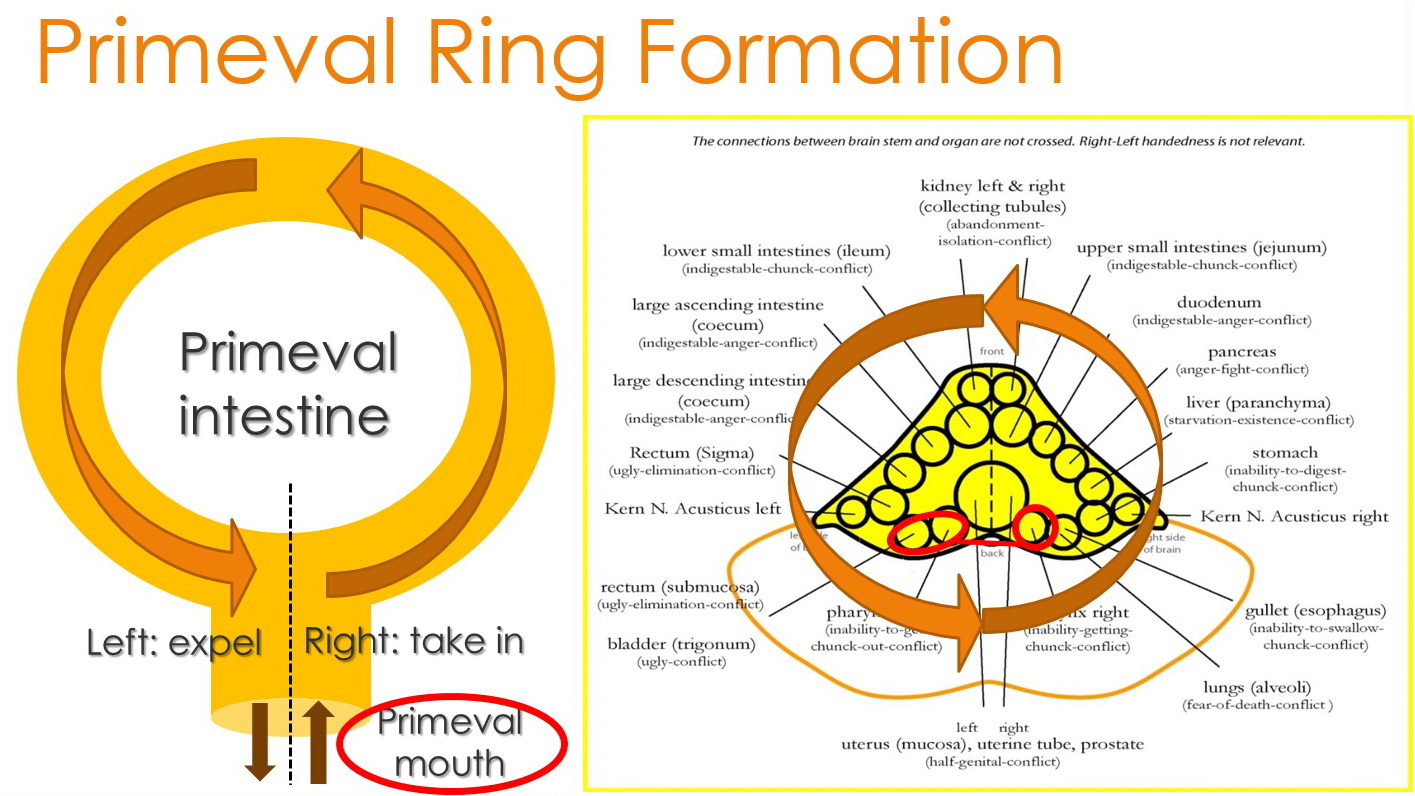
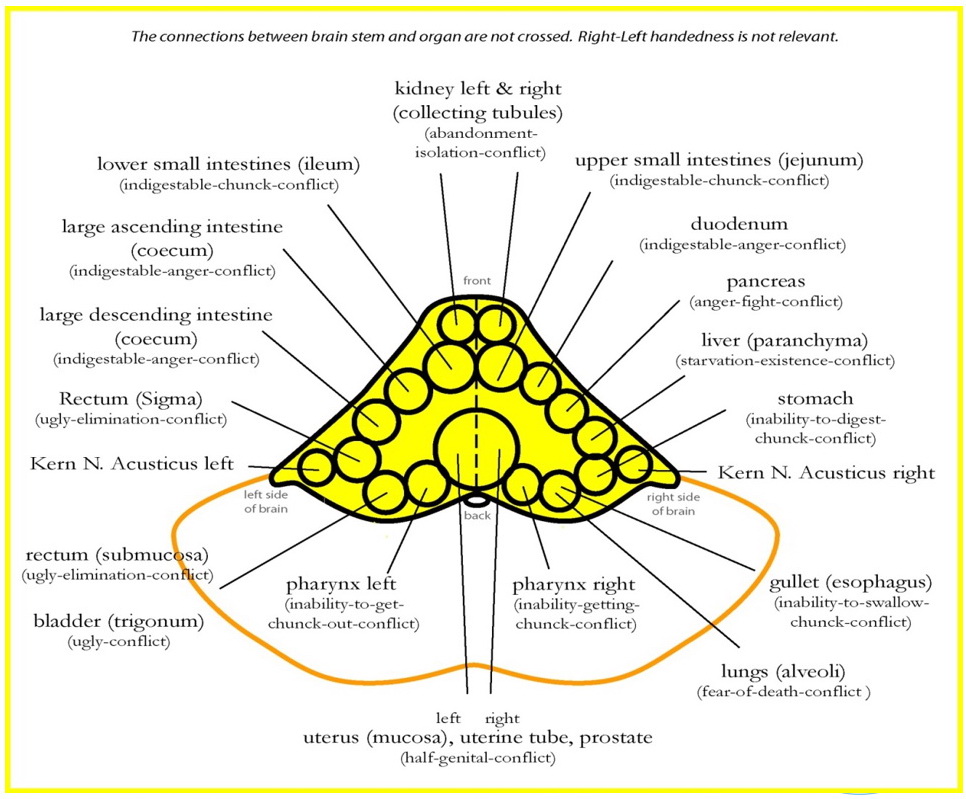
In the Brain Stem, the primeval ring structure is reflected: organ tissue relays with assimilative and digestive functions from oesophagus to small intestines are situated in the right brain stem, while excretory organs from caecum to rectum are relayed in the left brain stem. Medial on both sides are the relays of mouth/pharynx, middle ears and lacrimal glands, as well as the pineal and pituitary glands and the thyroid.
Relay:
Brain Stem ( + / – ) central, for glandular epithelium
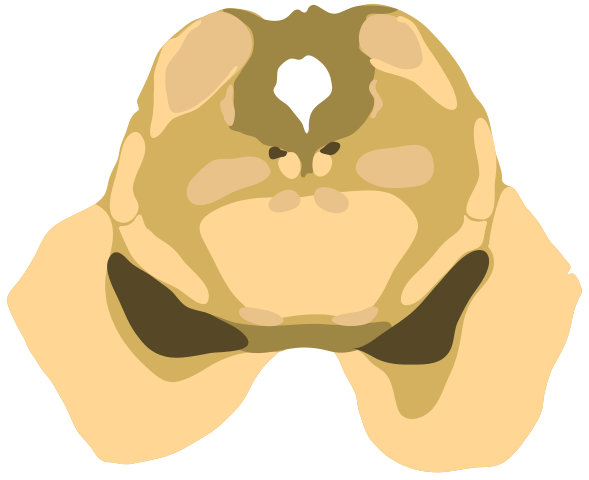
Midbrain ( + / – ) central, in smooth muscle cells
Mind
Theme:
- family survival
- male control, being in charge
- often sexual aspect!!!Emotions and Thoughts:
Worry, anger - I am not the master in my own home!
- I am not man enough to push this through.
- the family will die out!
- My woman is disappointed with me.!!!META-Meaning:
I am feeling strong, powerful and independent inside.
Wisdom and love give me my position
Organ
Stress Phase Symptoms:
Enhanced production of secrete and PSA; proliferation in the secretory part of prostate gland as slow compact tumor growth, which can impair the urethra and lead to oliguria.
Possible diagnoses: benign prostate hyperplasia (BPH), prostate carcinoma, prostate cancer
Regeneration Phase Symptoms:
Degradation of the enhanced function and the tumor as inflammatory purulent processes, often accompanied by light fever and nightly sweating. Bloody, smelly urine. PSA marker-levels begin to normalize. Pain in the perineal region and lower back can occur. The tumor can also be residual and is then encapsulated.
Possible diagnoses: prostatitis, gonorrhea, benign prostate hyperplasia
Biological Meaning:
More secrete is produced in order to improve both sexual attraction, and motility of the sperm, which increases the probability of procreation.
Social
Examples:
- A man thinks that he cannot have grandchildren, because children are single.
- After retirement the man feels not in charge of the family anymore.
- Son tells father that he is homosexual
- Man feels pushed out of his company and is not in charge anymore.
- Ugly genital (sexual or semisexual) conflict (similar to territory conflicts):
Additional Information
Prostate tumors can lead to erectile dysfunction, as vessels and nerves being responsible for penile erection are located directly next to the prostate.
Constellations:
Brain Stem Constellation possible: perplexity, lethargy, passiveness, reduced movement. Purpose: new orientation
Differential Diagnosis:
Elevated PSA levels can be caused by physical pressure, like after sex, cycling or a colonoscopy.
Urethra/Ejaculatory Duct Mucosa(Cerebral Cortex, -/+): swelling, pain, oliguria in regeneration phase A (after a boundaries/position-marking conflict)
Urethral Sphincter Muscle (Cerebral medulla/Cortex -/+) in stress phase (control) prevents urination
Kidney Collecting Tubules(Brain Stem, +/-): oliguria/water retention in stress phase (abandonment)
Neural lesionsHernia) or medication (antidepressiva) also can cause urinary retention.
Penis – Cavernous bodies (CM -/+) Stress (sexual self-doubt): erectile dysfunction; Regeneration phase: due to scarring possibly pain during erection
