
Fallopian Tubes
Anatomy
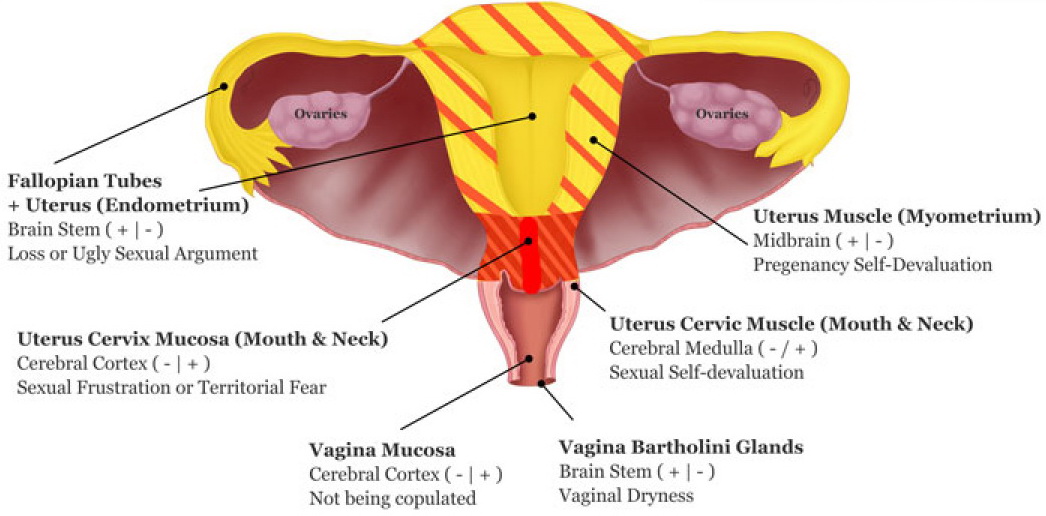
The Fallopian tubes (oviducts) are two very fine tubes in the reproductive system leading from the ovaries into the uterus.There are two Fallopian tubes attached to either side of the cornual end of the uterus and each terminating at or near one ovary forming a structure called the fimbria. The Fallopian tubes are not directly attached to the ovaries but open into the peritoneal cavity (essentially the inside of the abdomen); they thus form a direct communication between the peritoneal cavity and the outside via the vagina.
There are two types of cells within the simple columnar epithelium of the Fallopian tube. Ciliated cells predominate throughout the tube, but are most numerous in the infundibulum and ampulla. Estrogen increases the production of cilia on these cells. Interspersed between the ciliated cells are peg cells, which contain apical granules and produce the tubular fluid. This fluid contains nutrients for spermatozoa, oocytes, and zygotes. The secretions also promote capacitation of the sperm by removing glycoproteins and other molecules from the plasma membrane of the sperm. Progesterone increases the number of peg cells, while estrogen increases their height and secretory activity. Tubal fluid flows against the action of the ciliae, that is toward the fimbrial end.
The fallopian tubes have a serosa, a smooth muscle layer and connective tissue with blood and lymph vessels as well as an innermost mucosa. This chapter is about the mucosa.
Brain
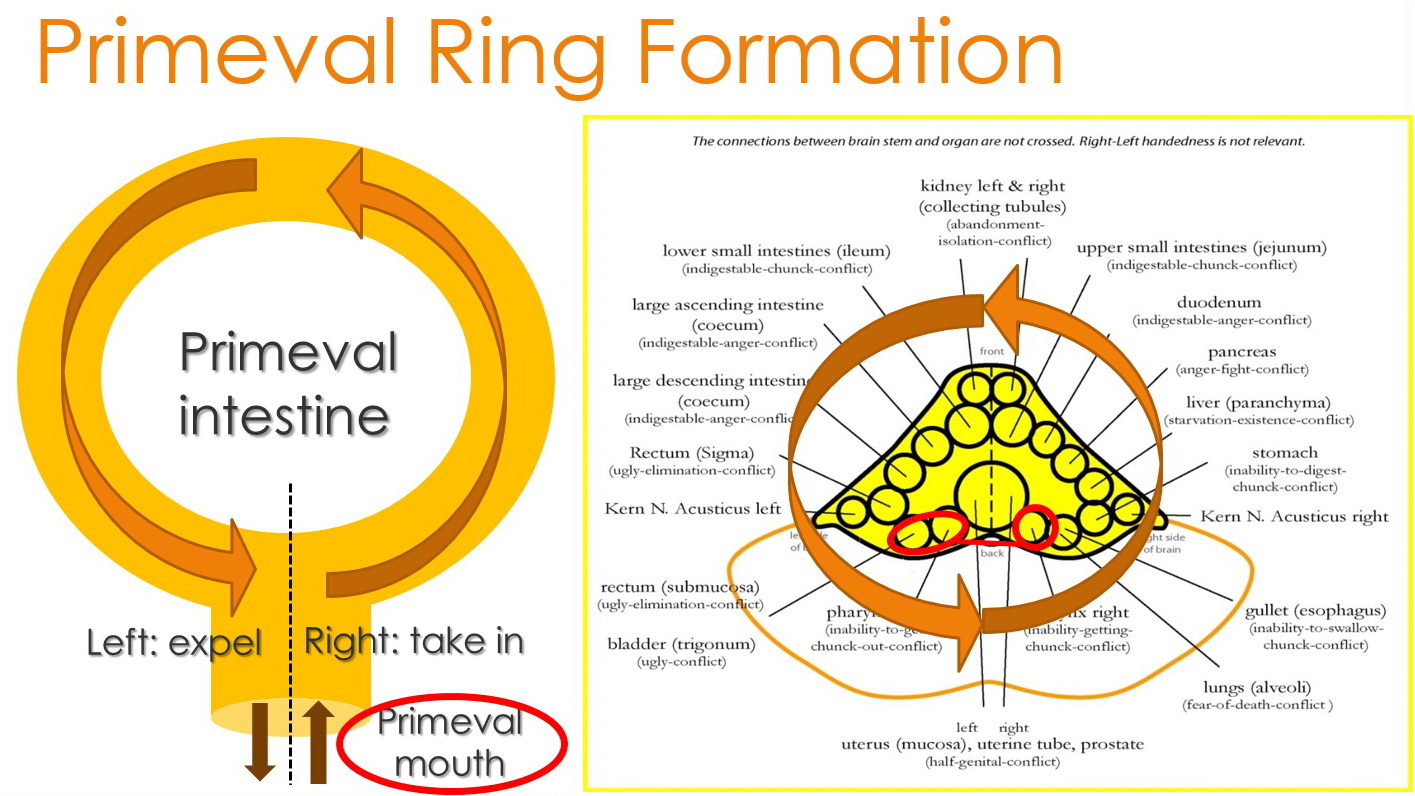
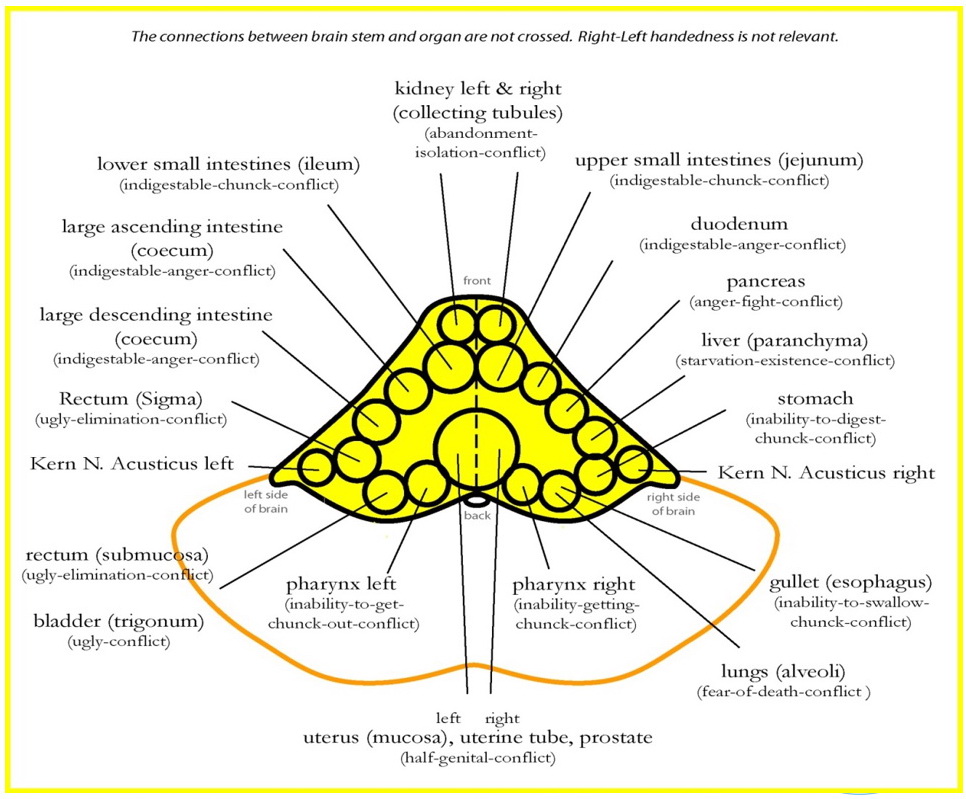
In the Brain Stem, the primeval ring structure is reflected: organ tissue relays with assimilative and digestive functions from oesophagus to small intestines are situated in the right brain stem, while excretory organs from caecum to rectum are relayed in the left brain stem. Medial on both sides are the relays of mouth/pharynx, middle ears and lacrimal glands, as well as the pineal and pituitary glands and the thyroid.
Relay:
Brain Stem ( + / – ) dorso-medial
Mind
Theme:
- Sexual Trauma, Fight
- Loss of a Person
Emotions and Thoughts:
Grief, despair, hate
- I can’t believe what he did to me/us!
- I am getting raped!
- What will I do without him?
- i canot get over that he is gone!
META-Meaning:
The universe and life provide all the means to heal and to perceive perfection.
Organ
Stress Phase Symptoms:
Increased secretion of tubular fluid. Later, a compact adenoma of secretory quality forms, which can produce a temporary or total obstruction of the uterine tube which causes infertility.
Regeneration Phase Symptoms:
Inflammatory purulent decomposition of the cell growth, leading to purulent discharge from the vagina, or into the peritoneal cavity. The Fallopian tubes reopen. Possible diagnoses: salpingitis, urogenital tuberculosis, tubo-ovarial abscess.
Infertility is often attributed to obstruction due to scarring after recurring inflammations in the Fallopian tubes.
Healing Peak:
Chills, fluctuating temperature
Biological Meaning:
Increased secretion during the stress phase facilitates the transport and nourishment of the sperm, thus getting pregnant more easily.
Social
Examples:
- An actress witnesses an act of pedophilia behind the scene and develops tubal cancer.
- A woman feels forced to cover her workmates for discrediting a new young colleague. They spread the claim that she had a sexual relationship with their married boss. After the woman needed to leave the department, the client developed salpingitis.
- The infertile client repeatedly experienced ugly scenes with men since she was abused as a child.
- After several miscarriages the client had a tubal pregnancy.
Additional Information
Before and during menopause the texture and activity of the mucosa changes.
A tubal pregnancy can happen because of a reduced number of ciliated cells due to hormonal influences (reduced oestrogen), or due to scarring after recurring conflicts.
Embryos have two ducts to let gametes out of the body; the Müllerian duct develops in females into the Fallopian tubes, uterus and vagina, while the Wolffian duct develops in males into the epididymis and vas deferens.
Normally, only one of the pairs of tubes will develop while the other regresses and disappears ”in utero”. The homologous organ in the male is the rudimentary appendix testis.
Constellations:
Brain Stem Constellation possible: perplexity, lethargy, passiveness, reduced movement. Purpose: new orientation
Differential Diagnosis:
Ovaries – interstitium oestrogen production (Cerebral Medulla, -/+): reduced production, infertility in stress phase (loss of a person), cysts in regeneration phase, at the end increased hormone levels.
Ovaries – germ cells (Brain Stem, +/-): Teratoma in stress phase (Loss of a dear person)
Uterus – Endometrium (Brain Stem, +/-) Stress phase (sexual fight or loss) : increased secretion and cell growth; regeneration phase: inflammation and degradation (fungal infection), strong menstrual bleeding
Pituitary anterior lobe – production of gestagen (Brain Stem, +/-) Stress phase (priority, pregnancy): increased production of gestagen, inhibition of ovulation, infertility
Pituitary anterior lobe – production of FSH (Brain Stem, +/-) Stress phase (wish to reproduce): increased production, maturing of germ cells, increased fertility
