Skin – Overview
Anatomy
The skin is the largest organ of the integumentary system. It is made up of several layers of ecto- and mesodermal tissue, and guards the underlying muscles, bones, ligaments and internal organs.The skin interfaces with the environment and thus protects from external factors. It plays a key role in protecting against drying out, in insulation, temperature regulation, sensation, and the production of vitamin D folates.
Severely damaged skin may heal by forming scar tissue, which can then show discolouration and depigmentation. The thickness of skin also varies in different locations: the skin located under the eyes and around the eyelids is the thinnest skin in the body at 0.5 mm thick, and is one of the first areas to show signs of aging such as “crows feet” and wrinkles. The skin on the palms and the soles of the feet is 4 mm thick and the thickest skin in the body. All mammals have some hair on their skin, even marine mammals which appear to be hairless.
See the skin layers in these pictures:
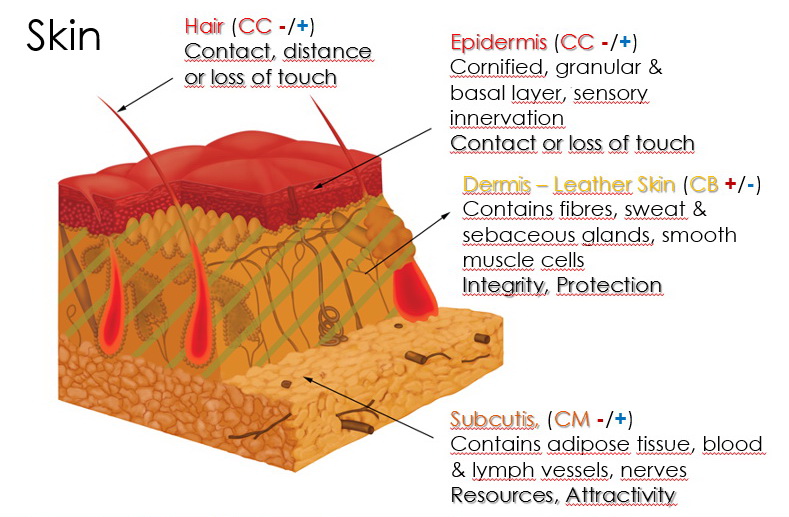
{img fileID=”362″ thumb=”box”}
Graphic: wikipedia, authors Madhero88 and M.Komorniczak
Brain
Relay
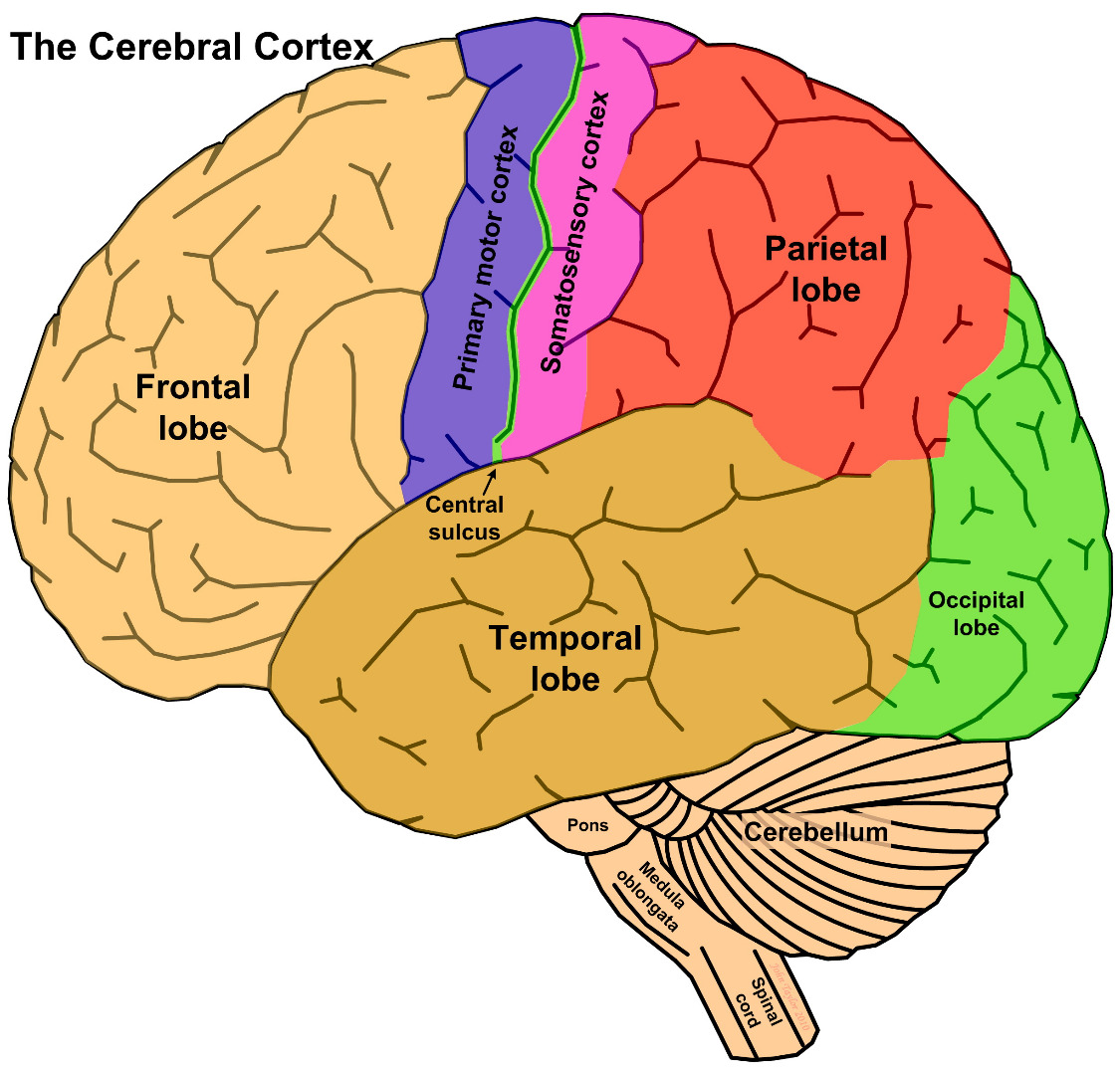
Cerebral Cortex (-/+) for Epidermis incl Hair & Nails
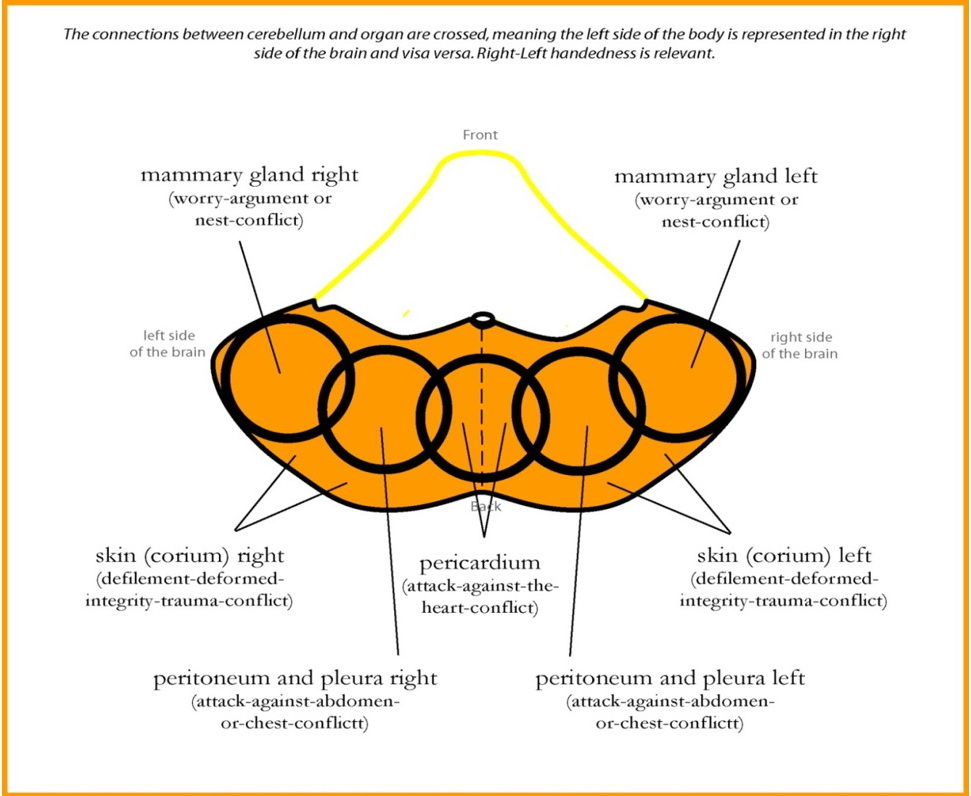
Cerebellum (+/-) dorsal for Dermis incl Sebaceous Glands, Sweat Glands
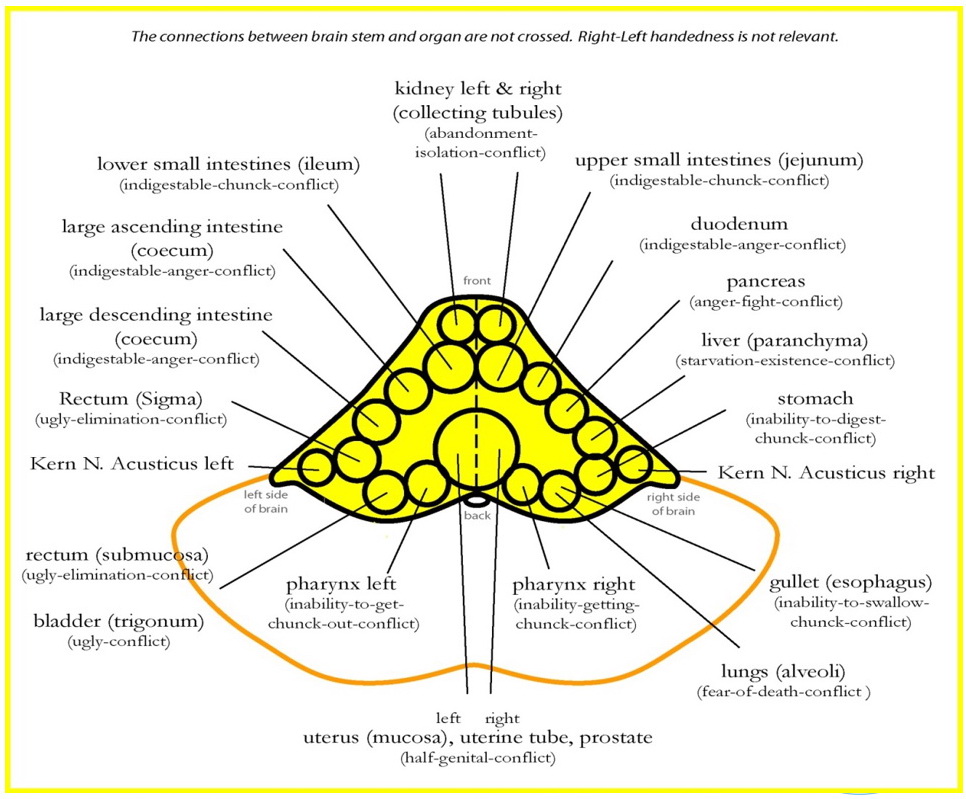
Midbrain (+/-) dorsal for smooth muscle cells of the Dermis
compare Brain Stem
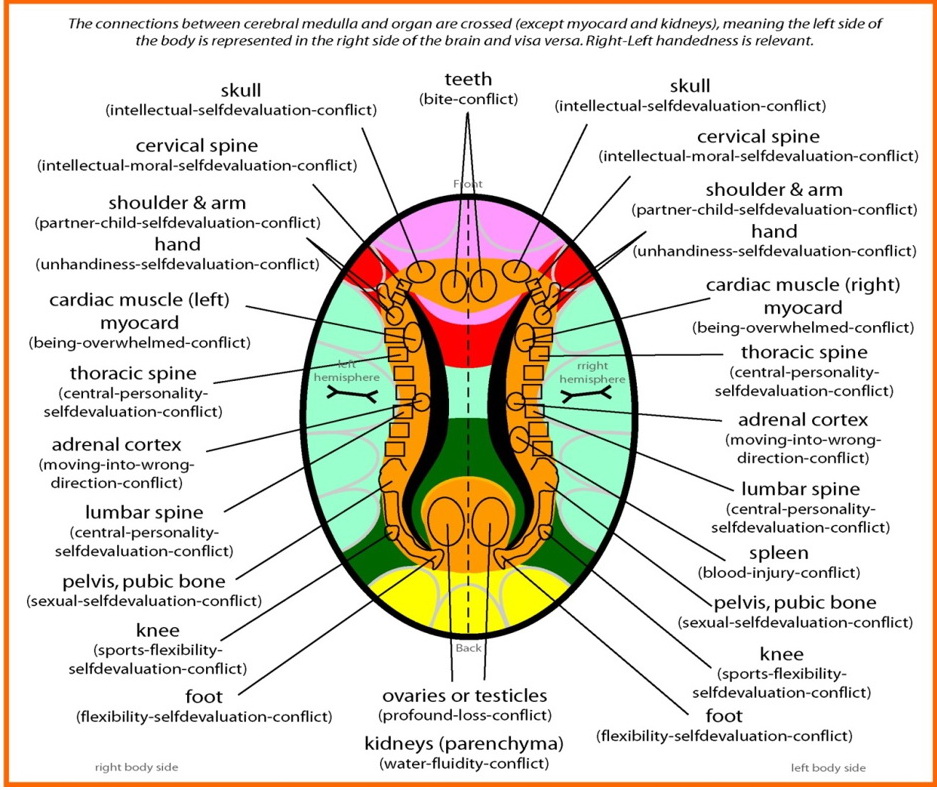
Cerebral Medulla (-/+) for Subcutaneous Fatty Tissue, Capillaries
META-Organ Tissues
Tissue chapters, main brain relay and biological themes:
- Epidermis (CC -/+): Contact, separation & distance
- Dermis (CB +/-): Integrity, protection
- Subcutaneous Fatty Tissue (CM -/+): Resourcefulness, attractivity
- Hair (CC -/+): Contact, separation & protection
- Nails (CC -/+): Contact, separation & protection
Association Areas
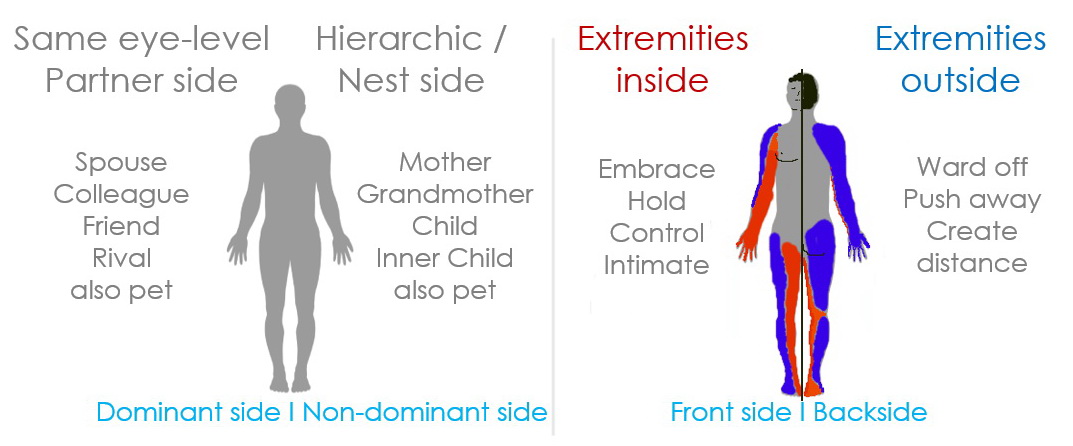
Skin affections have conflict themes according to their locality. This can be directly connected to the place where the conflict – e g attack or loss of touch – is experienced, or connected to these associations: