Thyroid Gland – Thyroglossal Duct
Anatomy
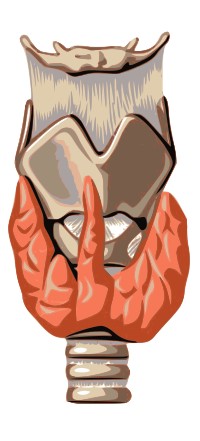
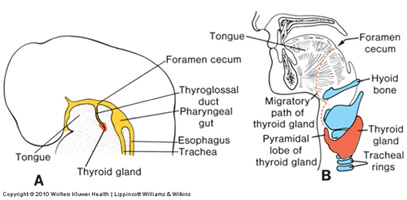
Embryologically, thethyroid develops from the “head gut” (derived from endoderm), and travels through the thyroglossal duct to it’s remaining place. This duct from the base of the tongue down the anterior part of the neck closes and recedes after this process. If this happens incompletely, a thyreoglossal cyst remains. In invertebrates, this glandular tissue of the head gut secretes mucus for the assimilation of food.
Ectodermal tissue invaded mouth, parts of the digestive tract, and the anus after the splitting up of the pharynx (see primeval ring formation reflected in the brain stem). Exocrine glands secrete through excretory ducts derived from ectoderm. The human thyroid does not contain such excretory ducts, however the typical reaction pattern of ectodermal tissues remains.
The residues of the excretory duct of the right thyroid gland show as so-called cervical fistulae on the right part of the body, while the residues of the left thyroid gland ducts show as anal (perianal) fistulae.
Brain
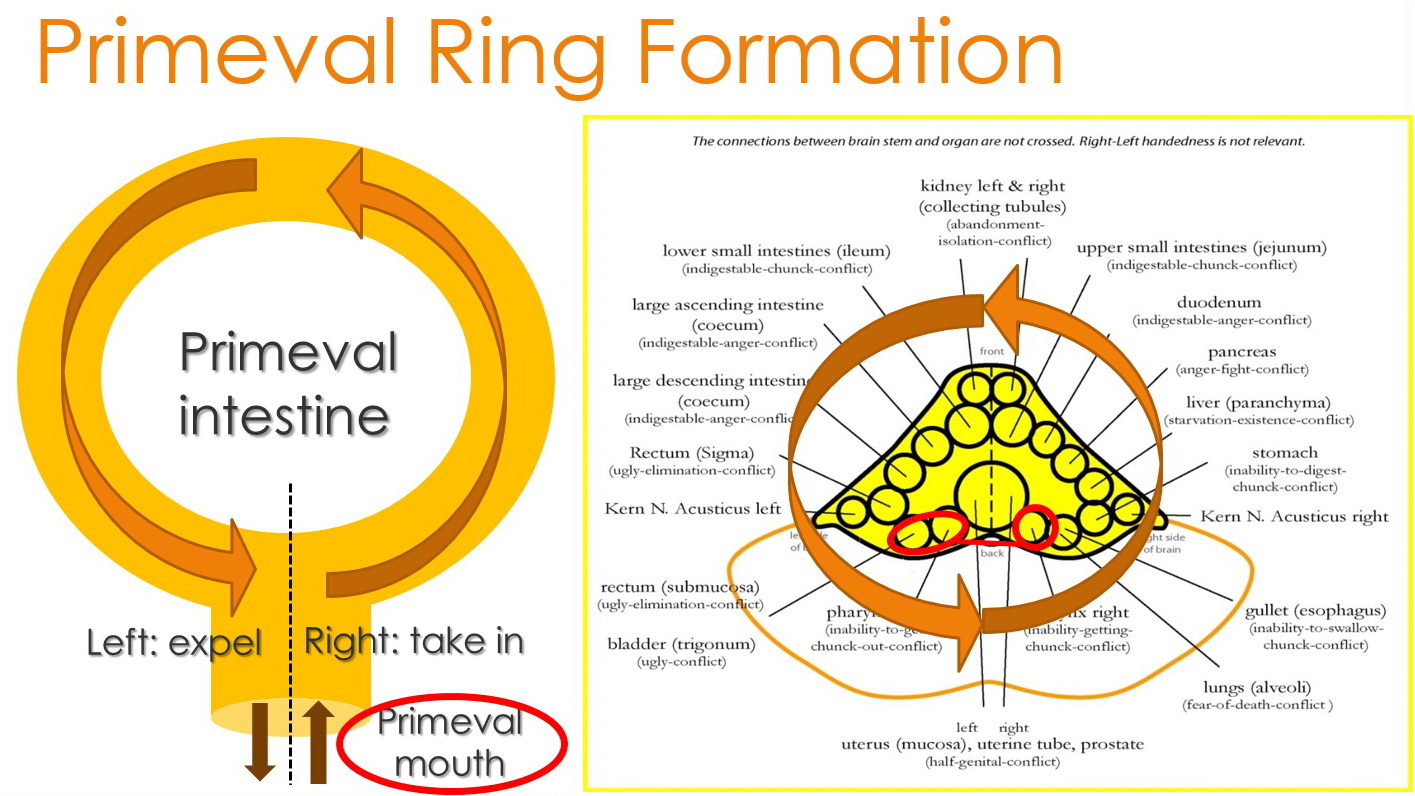
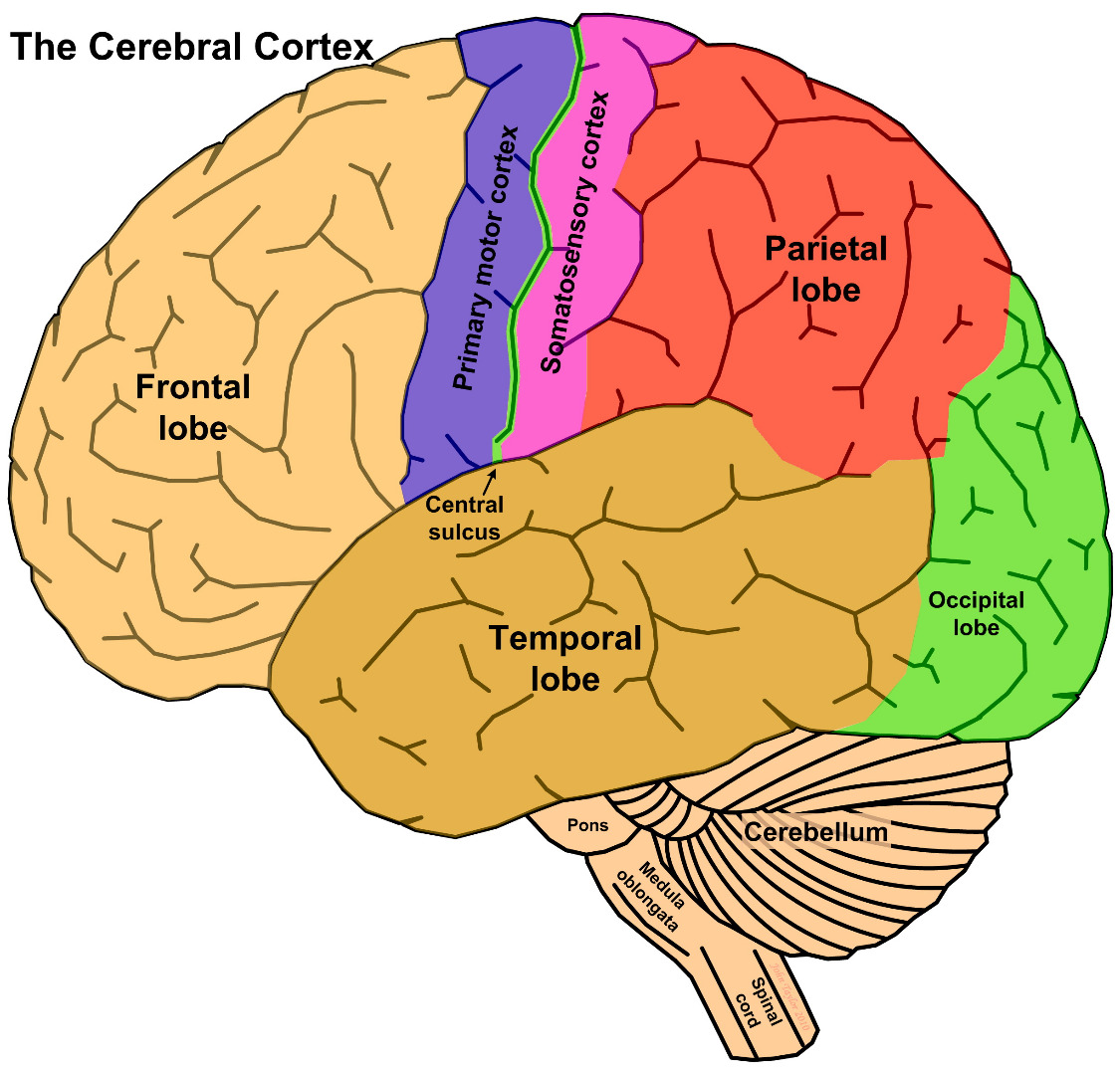
Relay:
Cerebral Cortex ( – / +) frontal lobe left & right, premotoric sensory cortex beside pharyngeal arches relays
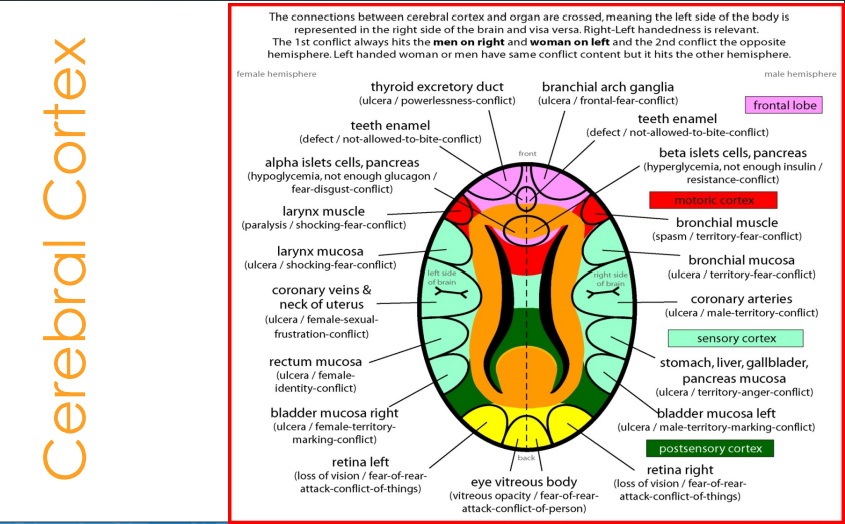
Mind
Theme:
1. Feeling powerless or helpless
2. Frontal fear
Emotions and Thoughts:
1. Helplessness, fear of losing control, wanting to be in control, vulnerability,
- I’m unfit, incapable, ineffective, helpless
- What should I do?
- Why isn´t anybody helping?
- They don’t mind me at all!
2. Fright, freeze - This will overrun me.
- I see it coming!
- How can I survive this?
- I have to give up.
META-Meaning:
I am leaving this now (physically or to another level)
Now, I can support myself and I am open to be supported.
Organ
Sensitivity changes according to Inner Skin Pattern with hyperesthesia in stress phase
Stress Phase Symptoms:
Slight dragging pain in the anterior part of the neck, temporary elevated release (but not overproduction) of thyroid hormone and increased metabolism. Weight loss possible, as well as tremor. In longer stress phase tissue loss in the thyroid, underfunction.
Possible diagnose: Thyreoiditis de Quervain
Regeneration Phase A:
Inflammation, growth of cysts or goiter, no pain, possibly underfunction of hormone release into the bloodstream. Cysts can become big and rupture in case of stress-active water retention during this phase.
Because of the evolutionary relevance of the locations of thyroid gland ducts pharyngeal and anal regions, see ring formation in the brain stem)) there can be cervical fistulas / cervical cysts (right thyroid gland ducts) or anal cysts / anal fistulas (left thyroid gland ducts). Under adverse conditions, a squamous cell carcinoma in the thyroid can grow fast..
Possible diagnoses: thyreoditis, euthyroid struma, benign goiter, thyroglossal cyst, thyroid carcinoma, Non-Hodgkin carcinoma, SCTC.
Healing Peak:
Panic attack, short (seconds) hyperesthesia and gush of hormone release. A thyroid fistula is the opening of a cyst to the surface.
Regeneration Phase B:
Normalization of hormone level, regression of cysts, scarring, “cold nodules” without hormonal activity, goiter can remain. Possible diagnoses: euthyroid struma, benign goiter, thyroglossal cyst
Biological Meaning:
The short-termed increase of hormone release in stress phase is meant to help decisiveness and initiative.
Social
Examples Helplessness:
- The 45-year-old daughter wants to help her mother with getting a chance to try some alternative medical treatments. However, the mother agrees to have a surgery, contrary to the will of her daughter. The daughter feels herself powerless to help her mother and she is worried that everything will go wrong and she will lose her mother.
- As both of his parents fall ill, the son feels himself powerless to do everything (household, organization of the hospital-, rehabilitation visits) besides his work.
- The employee of a public institution is responsible for the organization of events. As there are a lot of of events planned on Christmas and on the New Year’s Eve, she feels herself powerless to organize everything alone.
Examples Frontal-Fear:
- A young boy gets scared on the way to home from school. Screaming in fright, he runs against a house wall. He experiences it as a frontal fear conflict.
- Female patient’s father stands with a gun in the hallway, threatening to kill himself.
- A young preceptress stands in the front of her class in the first school day, not knowing what to do with the school children. They don’t accept her as an authority so they’re doing what they want.
- A slightly older woman stands before a longer journey. She is afraid what is coming up on her.
- A young girl stands before a conversation with her girlfriend with whom she doesn’t get along lately. She is afraid of how her girlfriend will react, when she tells her that she’s disappointed in her.
- Being afraid of what is coming next – e.g. being afraid of a work that needs to be done or not being able to cope with (or to avoid) the requirements
- A serious diagnosis is often perceived as frontal fear, sometimes as both frontal fear and helplessness, which leads to an anxiety constellation.
Additional Information
Hypothyroidism with fatigue and weight gain can be caused by recurring processes or long-term stress. Hashimoto thyroiditis with swings in hormone activity is a pattern caused by chronic processes, often both thyroid themes and reaction types are involved.
Ten times more women than men have thyroid issues, younger women in particular are affected by it.
Possible Constellations:
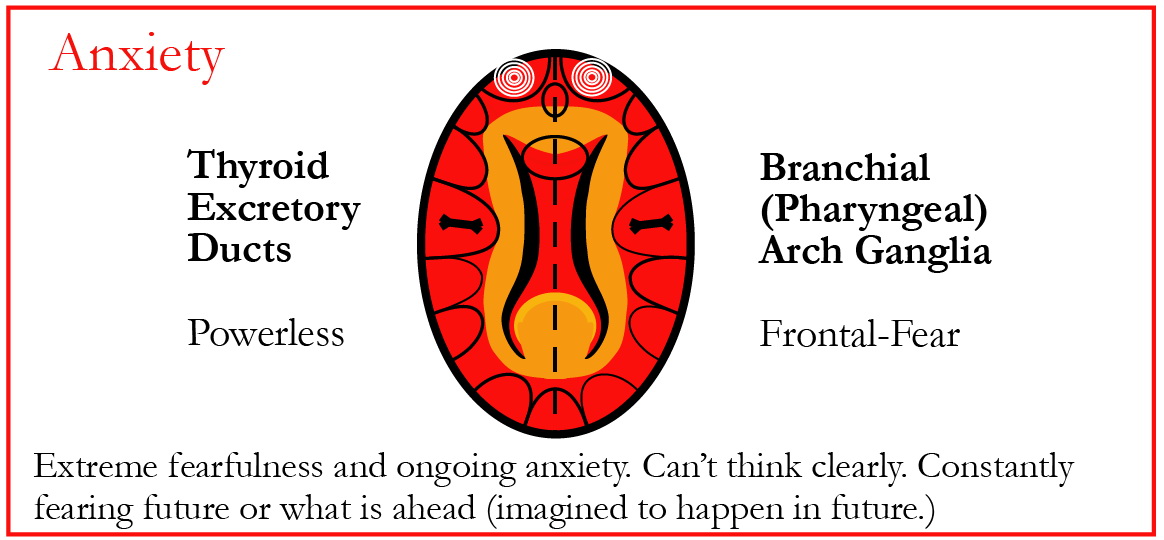
Anxiety: Together with Branchial Arch Ganglia
Powerlessness together with frontal fear puts a person in constant anxiety, retreating to a safe place and unable to expose themselves to the social and outer world. No sex hormone suppression in this constellation, because the relays don´t belong to the territorial/sexual area.
Graves´ disease with hyperthyroidism and bulging eyes (exophtalmus) can often be seen in this constellation. Exophtalmus is caused by inflammations and proliferation of fatty tissue behind the eye, hinting at chronic self-doubt and lack of resourcefulness concerning eyes & eyesight.
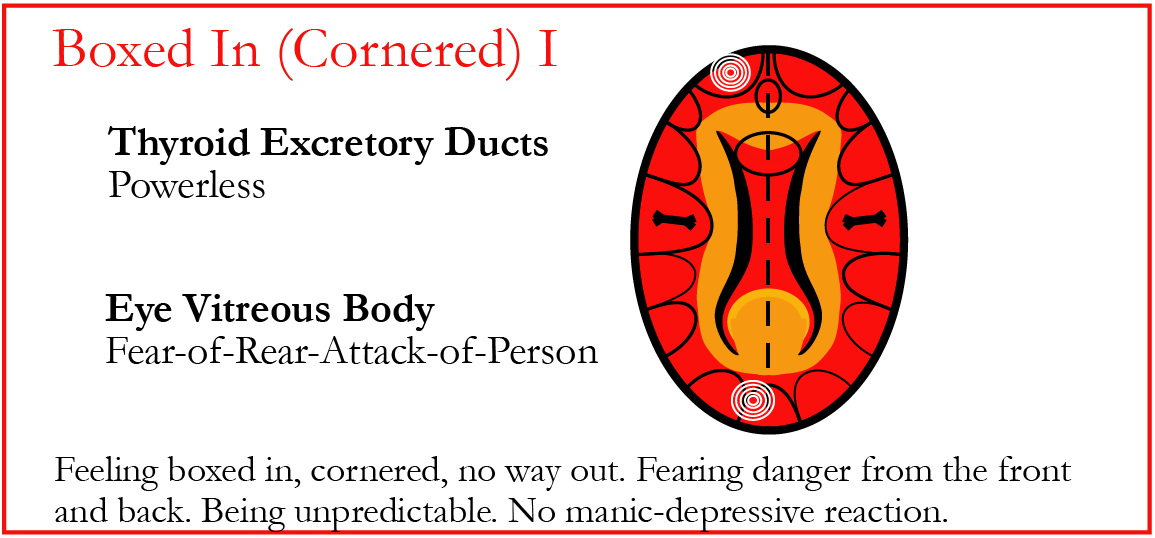
Cornered: Paranoia or Paralysis: Together with Retina Relay
Powerlessness or frontal fear together with “fear of attack from behind” results in that the person fears attack from all sides, which leads to paranoia and unpredictable reactions or (mental) paralysis as a freeze reaction. No sex hormone suppression in this constellation because the relays don´t belong to the territorial/sexual area.
These constellations dissolve as soon as one of the conflicts is resolved!
Differential Diagnosis:
Thyroid Follicular Epithelium (Brain Stem + / – ) stress (velocity)t: hyperthyreosis, increased metabolism; chronic: goiter, hypothyreosis
Pharyngeal Ducts (Cerebral Cortex -/+) stress (frontal fear or powerlessness): dragging pain in lateral areas of the neck; Regeneration phase: Non-Hodgkin cysts in lateral neck or down to mediastinum
Cervical Lymph Nodes and Vessels (Cerebral Medulla -/+) stress (self-doubt): low immune response; Regeneration phase: painful swelling of lymph nodes, Hodgkin lymphoma
Larynx Mucosa(Cerebral Cortex -/+) stress (fright or social fear): shallow breathing, apnea; Regeneration phase: hyperesthesia, dry cough, depressive moods
Adrenal Cortex (Cerebral Medulla -/+) stress (orientation): “stressed fatigue”, depleted energy
Pancreas Alpha Islet Cells (Cerebral Cortex -/+) stress (resistance to confrontation): hunger, binge-eating, weight gain