Pituitary Gland – Posterior Lobe
Anatomy
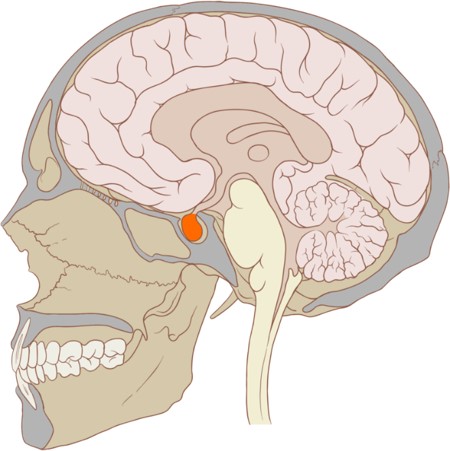
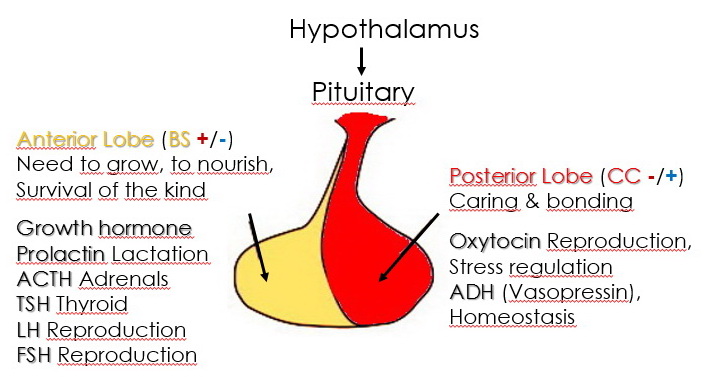
The pituitary is the master gland of the whole endocrine system.The posterior lobe or neurohypophysis consists of neural tissues (or neurosecretory cells); which are bridged between the hypothalamus and pituitary gland. Neurosecretory cells produce store and release two hormones:
- Antidiuretic (Vasopressin)
- Oxytocin
Function of Antidiuretic hormone (ADH) is maintaining homeostasis. It targets the Kidney Tubules and their relay in the Brain Stem. The hormone helps in reabsorbing water from primary urine into the blood, thus decreases the amount of urine and concentrates it. ADH also causes water retention in the tissues during a stress-active abandonment conflict, and effects vasoconstriction, which increases blood pressure. It influences male sexual behaviour. Study
Target of oxytocin hormone are female breasts and uterus. The hormone stimulates milk release from breasts and uterus contraction during childbirth. Oxytocin seems to be a “wellness and bonding hormone” as it plays a role in maternal behaviors, wound healing, social recognition and empathy, trust, fear, sexual arousal and orgasm. It regulates stress, and also works as a neurotransmitter.
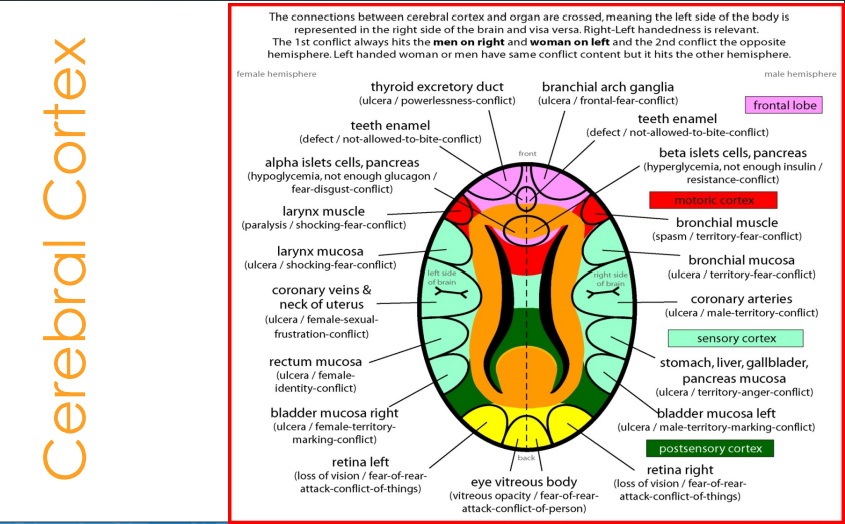
Oxytocin is involved in the processes of periinsular cortex relays of sexuality, social connections and belonging, as well as uterus muscle (MB +/-) and breast gland ducts (CC -/+)graphics: wikipedia, Henry Carter
Brain
Relay:
Cerebral Cortex (-/+)
Mind:
Theme:
Social bonding & reproduction, identity & thriving in community (Conflictive: not being allowed to bond, abandonment
Emotions and Thoughts:
Longing, loyalty, bonding
- Why can’t we be together?
- I miss your touch!
- This is not the right time/environment for us!
- I am left out on my own.
META-Meaning:
- I trust in the universe to show me all opportunities.
- I will find the right environment to thrive.
- I can be free and connected.
Organ
Stress Phase Symptoms:
In general stress, oxytocin is released in the brain to regulate and calm it. Thus, decrease in secretion of oxytocin by special social stress leads to low stress tolerance, anxiety, impaired bonding and social behaviour, a longer birthing process.
ADH however acts as counterpart and is in a “social stress” phase released into the blood stream, comparable to the “excretory duct” pattern in the Cerebral Cortex. From there, it effects the Kidney Tubules and water retention in the body, leading to high blood pressure, reduced urination, enlargement of oedema, and the will to survive under hostile conditions.
Regeneration Phase Symptoms:
New regulation of hormonal balance with enhanced production and release of oxytocin creates , social interest and attention and sexual stimulation, but also less tolerance to persons outside the own community, envy, aggression and anxiety. On physical level lowering of blood pressure and cortisol levels, quicker birthing process by stimulation of contractions of the uterus muscles, opening of milk ducts and induction of lactation, better wound healing with reduced inflammation.
Biological Meaning:
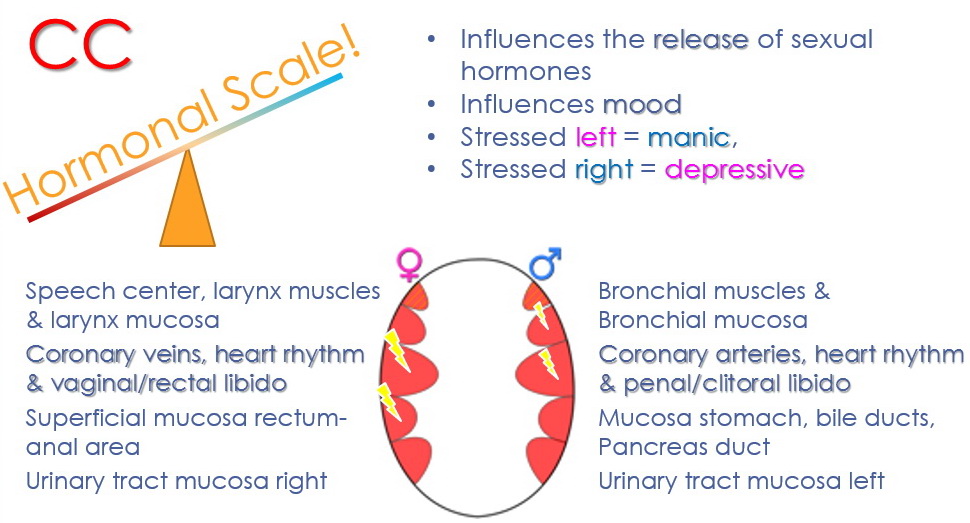
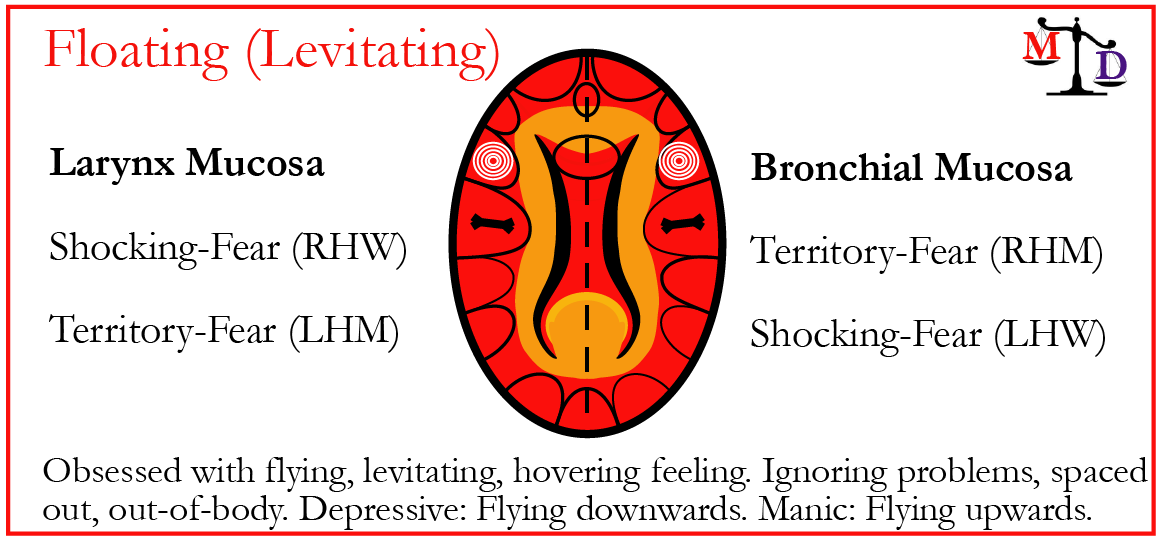
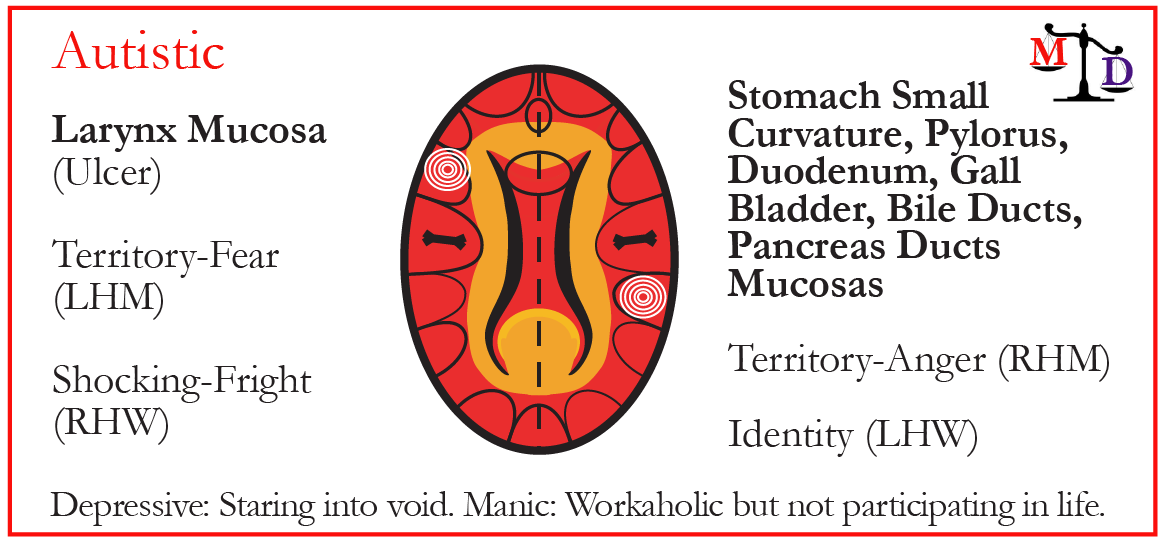
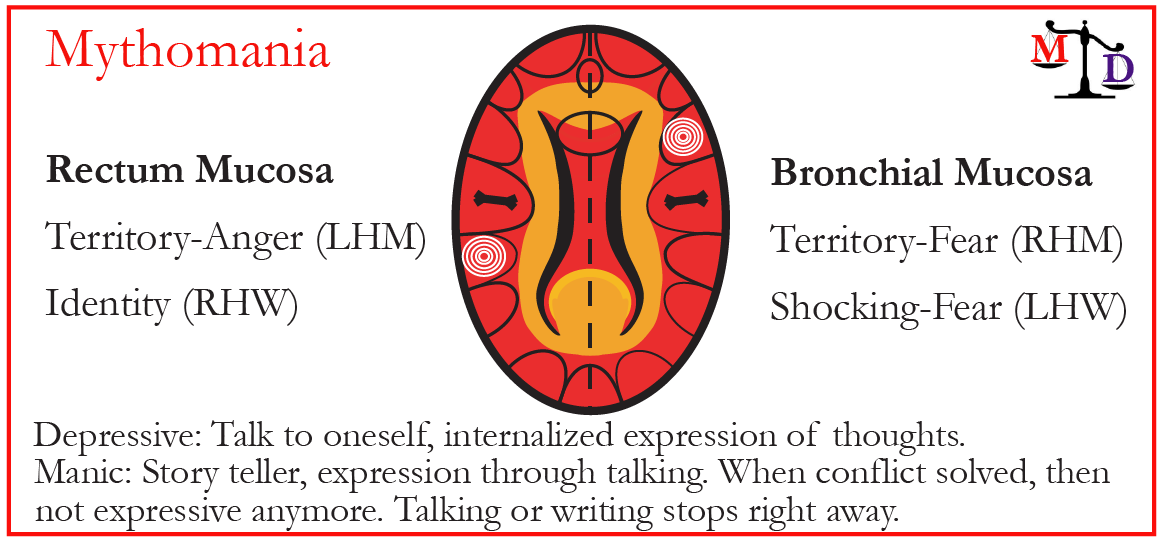
Stress resilience is found in the balance of belonging and social connection, with individuality, freedom and tolerance for others. This is mirrored in the biological strategies of the territorial relays of the Cerebral Cortex (insular region) and their constellations, affecting the “hormonal scale”:
Social
Examples:
- A woman who earlier had a breast tumor with contact theme, is fearful and aggressive towards immigrants and refugees in her country.
- After a big fight and reconciliation, the partners have the best sex ever.
- A single mother looks for a community that provides her an opportunity to make a living for her children and that allows her children to thrive. She fights for acceptance as an immigrant, but has no interest in seeking a new partner. (Klapp)
Additional Information
Oxytocin and ADH balance each other and balance our perception of community and individuality: while high levels of oxytocin make us more interested and caring for our partner or group, they also make us judge and react stronger against foreigners. ADH helps us to be cooperative in emergency, thus being capable for more acceptance.
The pituitary gland is represented by the 6th or third eye chakra, characterizing understanding, light and overview.
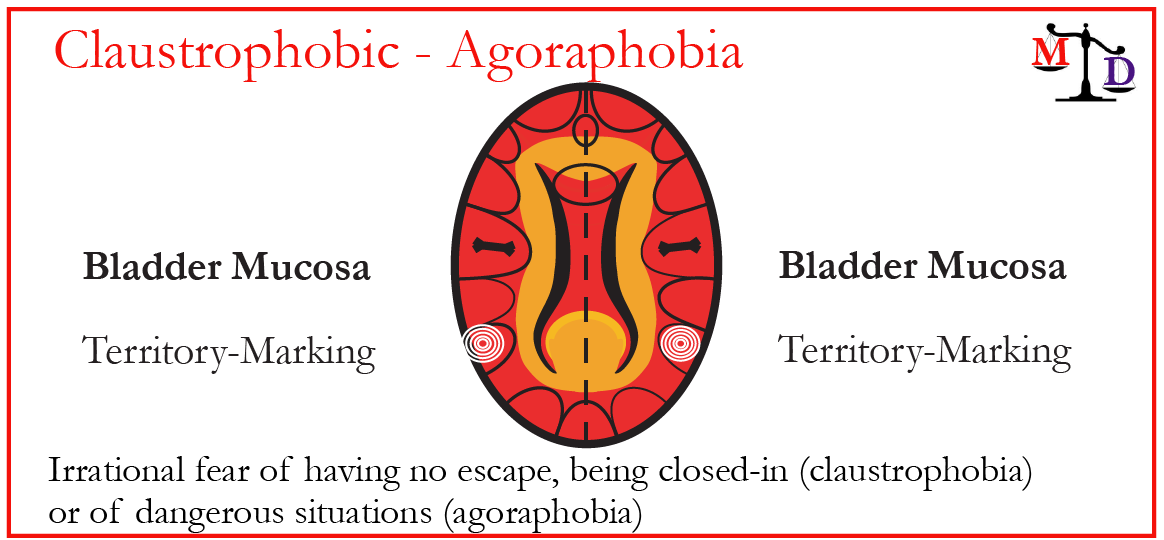
A lack of ADH leads to enhanced urination and much thirst, as the renal tubules do not work properly in their function of water reabsorption.This matches the diagnosis diabetes insipidus. The conflictive pattern can have to do with territory-marking.
Constellations
While different types of mania can be related to increased levels of testosterone, depression and schizophrenia are observed together with an excess of oxytocin rather than estrogen. Vasopressin, dependent on the receptor site in the brain, relates both to social fear or to aggression, modulating social behaviour between competition and cooperation.
Differential Diagnosis
Uterus Cervix wall (CM -/+) Stress (pregnancy self-devaluation)): weakening, abortion/premature birth possible
Uterus Myometrium (MB +/-) Stress (wish for pregnancy): reinforcement, fibroids (can remain after regeneration)
Mammary glands (CB +/-) Stress (worry, fight): enhanced secretion, lobular breast cancer; Regeneration phase: mastitis
Milk ducts (CC -/+) Stress (loss of contact): temporary enhanced lactation, ductal ulcus-carcinoma; Regeneration phase: mastitis, ductal tumor; residual calcifications possible
Kidney Collecting Tubules (BS +/-) Stress (abandonment): water retention, oedema; Chronic regeneration pattern: renal insufficiency (loss of function) possible