
Pineal Gland
Anatomy
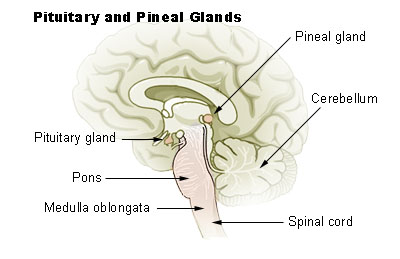
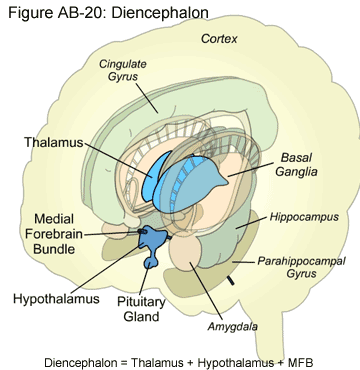
The pineal gland or epiphysis is situated in the diencephalon (part of the brain stem) behind the 3rd ventricle, where both halves of the thalamus meet. It is formed like a pine cone, and consists of pinealocytes (neurosecretory cells) and glia cells.
The pinealocytes register light, and produce melatonin when light is absent. Melatonin coordinates the cycle of day and night with the circadian rhythm of wake and sleep. Melatonin is also produced behind the retina of the eye (in the chorioid) and in the gut, which indicates the connection between those tissues. They are derived from the endoderm.
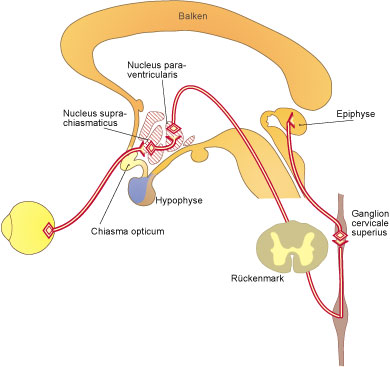
The pineal organ in fish and reptiles has the quality of a primitive sensory organ perceiving light. The equivalent in humans, the pineal gland, is steered by the cells of the retina which are sensitive to light, via the neurons of the hypothalamic tract.
Brain
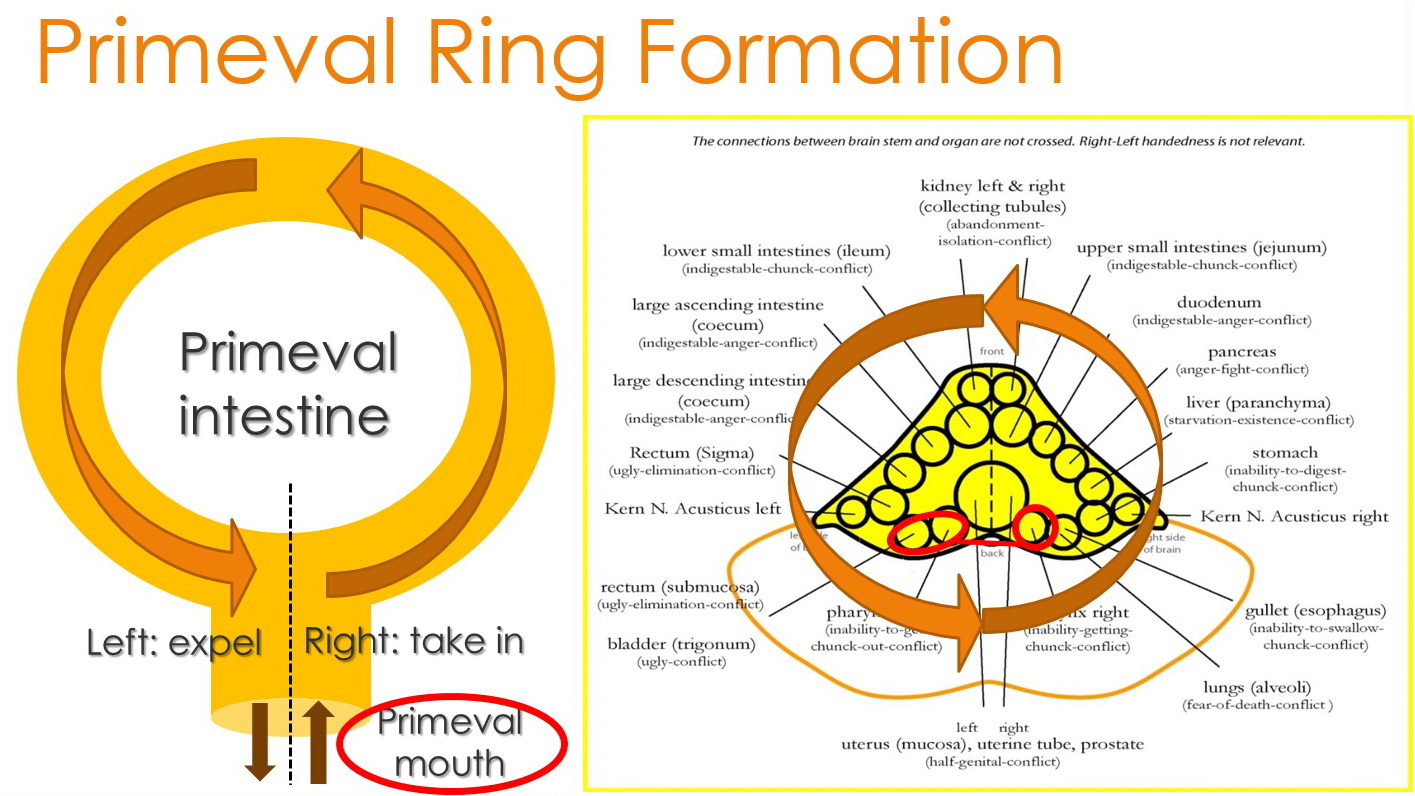
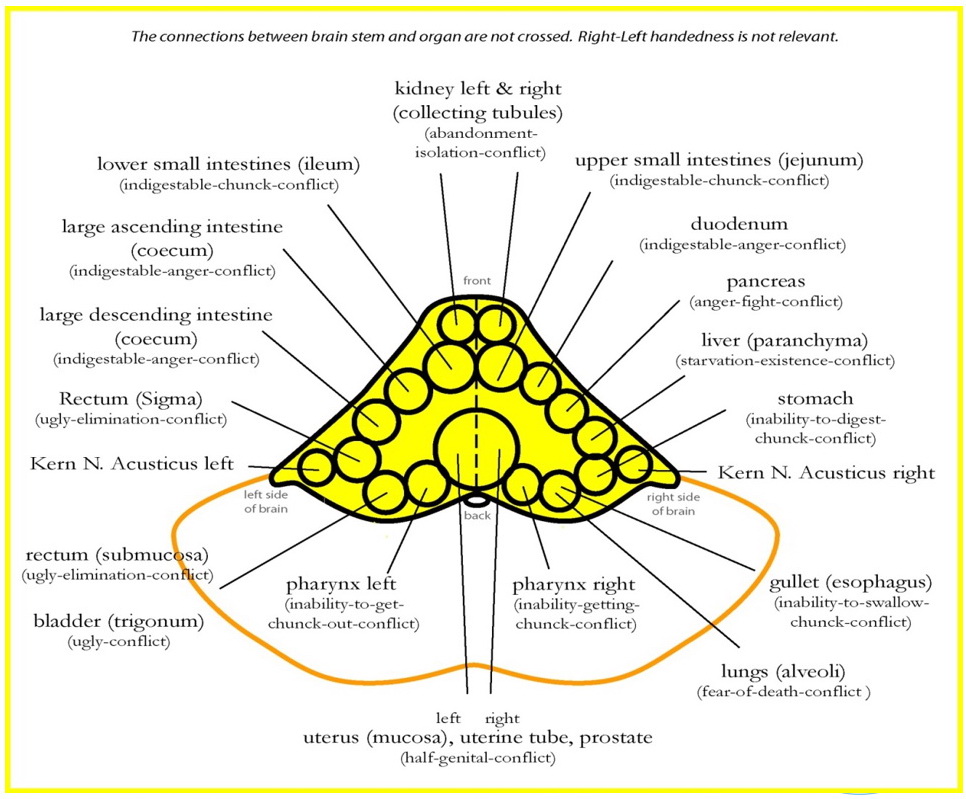
In the Brain Stem, the primeval ring structure is reflected: organ tissue relays with assimilative and digestive functions from oesophagus to small intestines are situated in the right brain stem, while excretory organs from caecum to rectum are relayed in the left brain stem. Medial on both sides are the relays of mouth/pharynx, middle ears and lacrimal glands, as well as the pineal and pituitary glands and the thyroid.
Relay:
Brain Stem (+/-) posterior medial
Mind
Theme:
Biological rhythm, Balance of activity and rest, resilience
(conflictive by “visual chunks”, too much light or darkness disturbing one’s natural rhythm)
Emotions and Thoughts:
Restlessness
- When will I see the light (at the end of the tunnel)?
- If I only could sleep!
- It’s too dark here!
META-meaning:
- I trust in the healthy change of light and darkness, yin and yang.
- I live in my own rhythm.
- Now, I can face the darkness without fear.
Organ
Stress phase:
Functional increase in photoreceptors or melatonin production by proliferation of pinealocytes. This leads to sleep disorders like insomnia, hypersomnia or narcolepsy.
Possible diagnoses: pinealoma, pineocytoma, pineoblastoma
Regeneration phase:
Decomposition of excess tissue in presence of microbes (typically mycobacteria), under low fever and nightly sweating. Rebalancing of hormone production. Bleeding into the brain might occur. Remnants of the process are caverns that fill up with calcifications. This leads to a calcified appearance of the gland in older age, when the process was chronic.
Scarring can produce pineal cysts which can inhibit the drainage of cerebrospinal fluid and create hydrocephaly.
Biological meaning:
The functional increase in stress phase is meant to help deal with opacity, and to bring the person back to their own natural rhythm.
Social
Examples:
- A man who eventually cares for himself and creates rest periods during the day, balances his emotions and appears rejuvenated.
- People who work in alternating shifts are proven to lose resilience. https://www.eurekalert.org/pub_releases/2015-01/ehs-rns010215.php
- The client remembers how he was sent to the dark basement as a child, which made him fear. Later in life, he became prone to sleep disorders and anxiety. (Klapp)
Additional Information
During the melatonin-induced slow wave sleep phase (SWS) the release of growth hormone is stimulated. Melatonin is an antioxidant and slows down ageing.
High melatonin levels during light deficiency, like in northern countries, can lead to sleep- and memory disorders, as well as to depressive moods (winter depression).
The pineal gland is represented by the 7th or crown chakra, which reflects the qualities of freedom and oneness.
Differential diagnosis:
Sleep disorders can be effected through iron deficiency.
Excessive need to sleep is a general symptom in intensive regeneration phases.
Sleeplessness is a general symptom in intensive stress phases.
Simultaneously experienced fatigue and unrest can be caused by stress-active adrenal cortex (CM -/+) in an orientaion conflict, or generally in very long stress phases (cachexia).
