Adrenal Gland – Medulla
Anatomy
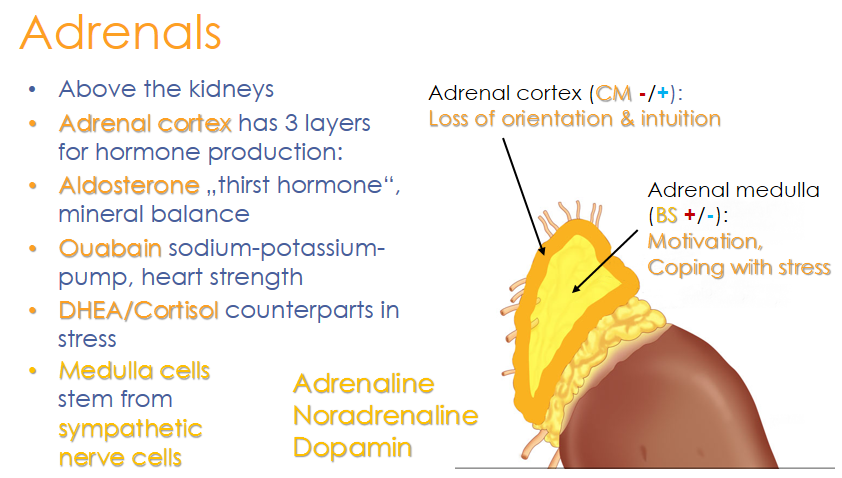
The adrenals are endocrine glands situated on the top the kidneys. Together with the kidney, each one is covered in a fatty capsule and the renal fascia. These glands consist of two parts: the adrenal cortex and the adrenal medulla.
The adrenal medulla is situated at the center of the adrenal gland. It consists of modified nerve cells of the sympathetic system, which can synthesize and store adrenaline, noradrenaline and dopamine. It is steered directly by the autonomous nerve system..
- Adrenaline increases heart rate and blood pressure, expands the bronchioles, and effects fast energy availability through lipolysis and biosynthesis of glucose. It draws blood from the extremities to the centre of the body, and inhibits digestion.
- Dopamine is an energizing neurotransmitter which increases emotional and mental reactions.
- Noradrenaline is synthesized out of dopamine. It is important for focussed attention; physiologically it effects vasoconstriction of arterioles and thereby elevates blood pressure.
Brain
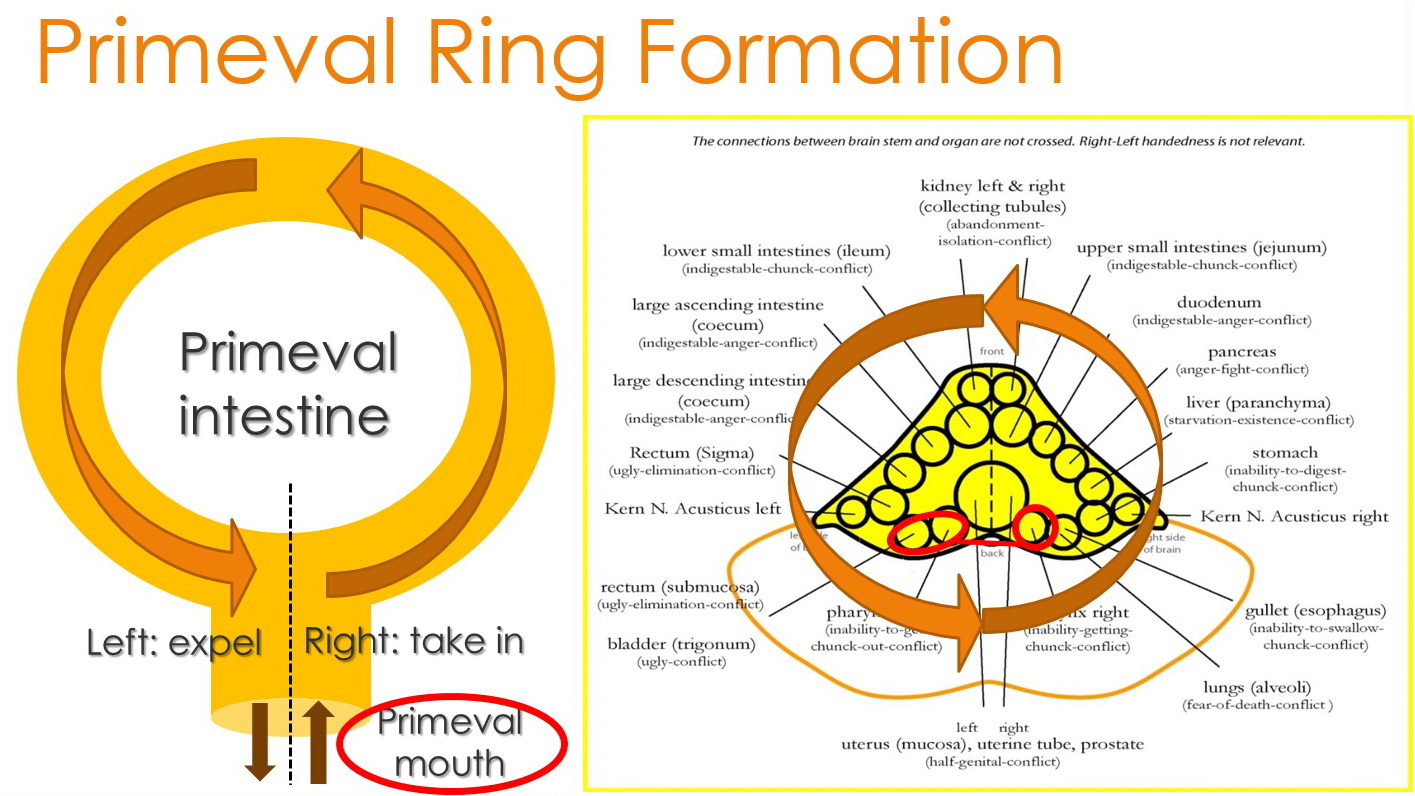
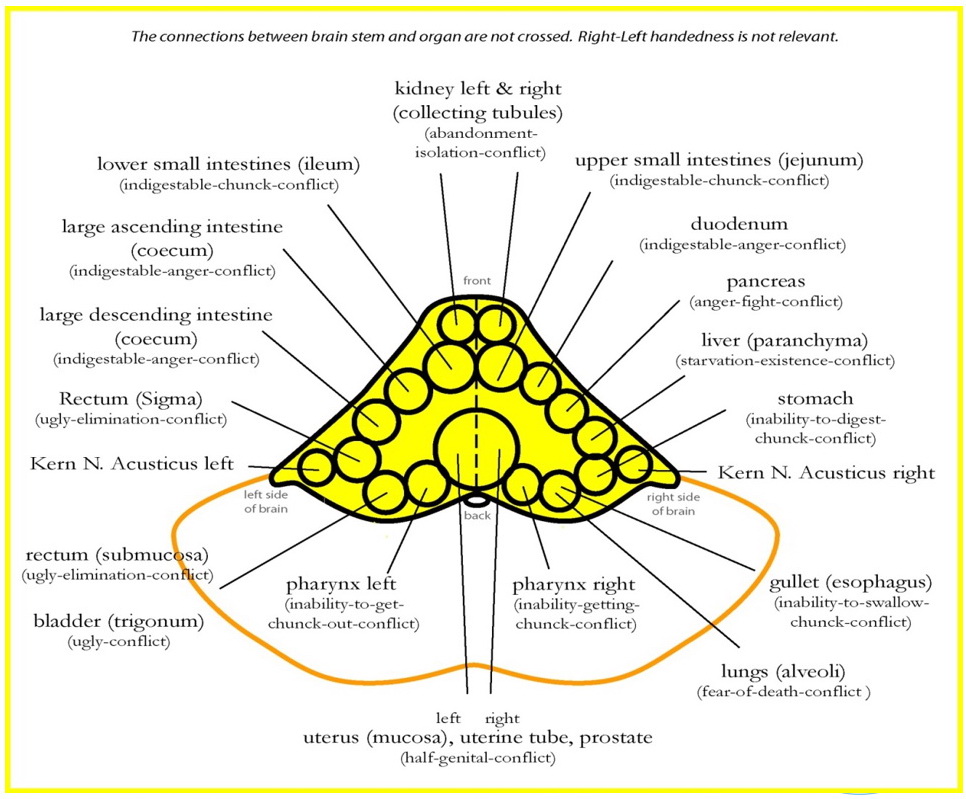
In the Brain Stem, the primeval ring structure is reflected: organ tissue relays with assimilative and digestive functions from oesophagus to small intestines are situated in the right brain stem, while excretory organs from caecum to rectum are relayed in the left brain stem. Medial on both sides are the relays of mouth/pharynx, middle ears and lacrimal glands, as well as the pineal and pituitary glands and the thyroid. The brain side-organ-connection is not crossed.
Relay:
Brain Stem ( + / – ) 2 relays: ventral to those of the oesophagus (right) and the bladder mucosa (left)
Mind
Theme:
Motivation and stress management concerning acquiring values (right) or avoiding danger (left)
Emotions and Thoughts:
Fear, survival instinct
- I am at my wits end
- Where is the way out?
- I have to make it no matter how!
- I will make it!
- I am going to crack any moment
META-Meaning:
- When I cease to struggle, I float!
- The only way out is up!
- I surrender to the order of life and the universe.
Organ
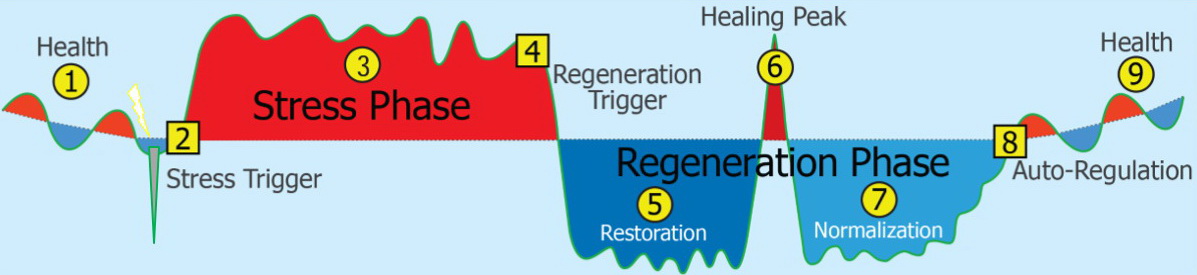
Stress Phase Symptoms:
Increased production of adrenaline, noradrenaline and dopamine, possibly elevated proliferation rate of the secreting calls of the adrenal medulla.
Main symptoms (fight or flight response): focused attention, fear or ecstasis, high blood pressure, high blood sugar, vertigo, headache, palpitations (tachycardia), sweating, pale skin, cold extremities
Adrenaline works temporary, and stimulates via the hypothalamus and pituitary the release of cortisol in the adrenal cortex.
Possible diagnoses: pheochromocytoma, neuroblastoma, ganglioneuroma
Regeneration Phase Symptoms:
Regulation of hormone production, proliferation stop and decomposition of exceed cells in presence of tubercle bacteria. The parasympathetic nervous system (rest & recover) inhibits activity and stimulates digestion and replenishment of energy storage. Heart and breath rates normalize, and the attention can lose it’s focus.
Biological Meaning:
The stress reaction of the adrenal medulla and sympathetic nerve system characterizes the general stress phase in the 2-phase-model.
Social
Examples:
- Before the oral exam, the candidate gets cold hands, heart palpitations and diarrhea.
- The hare being chased by the fox reaches peak velocity and saves his life by sidestepping and mobilization of all energy reserves.
- After a highly active and competitive period, an athlete experiences days where she hardly moves out of her bed, has no energy, eats and reads – she needs a sabbath.
Additional Information
Adrenaline works temporary, and stimulates via the hypothalamus and pituitary the release of cortisol in the adrenal cortex.
When the adrenal medulla is in the stress phase, it also affects the thyroid. In this phase the thyroidproduces more thyroxine to help the adrenals. If the adrenals become over-exhausted, the individual experiences complete powerlessness. Or if the adrenals run out there can be a dramatic experience of powerlessness, and then the reaction would be cell minus in the primeval thyroid ducts (now epithelium) releasing thyroxin into the blood.
Constellations
Brain Stem Constellation possible: perplexity, lethargy, passiveness, reduced movement. Purpose: new orientation
Differential Diagnosis:
Exhaustion and fatigue are parasympathetic symptoms of any deep regeneration phase, but mark also the cachexia in very long-termed stress phases in any tissue.
Pituitary Gland(Brain Stem, +/-) “Motivation stress” increases production of adrenocorticotropin (ADCT), which interacts with the adrenal cortex in the stress phase.
Adrenal Cortex(Cerebral Medulla, -/+) stress (lack of orientation): reduced cortisol and aldesterone cause “stressed fatigue”; Regeneration phase: surge of energy; Chronic: weakening of skin, muscles and bones
Thyroid gland (Brain Stem, +/-) “velocity stress”: increased thyroxine production, nervousness, weight loss; Regeneration phase: fatigue, depression, freezing, weight gain without appetite
Thyroid "Ductal Pattern" (Cerebral Cortex, -/+): Regeneration phase or prolonged stress (powerlessness) lead to decreased thyroxine levels and fatigue.
Kidney parenchyma (Cerebral Medulla, -/+) stress (drowning or overwhelm) produces very high blood pressure.
Myocardium (Cerebral Medulla, -/+) stress (overwhelm, overexertion) reduces heart performance; Regeneration phase: strong fatigue