
Rectum – Intestinal Mucosa
Anatomy
The rectum is the final straight portion of the digestive tract, the large intestine, terminating in the anus. The human rectum is about 12 cm long. Its caliber is similar to that of the sigmoid colon at its commencement, but it is dilated near its termination, forming the rectal ampulla to store feces before defecation.
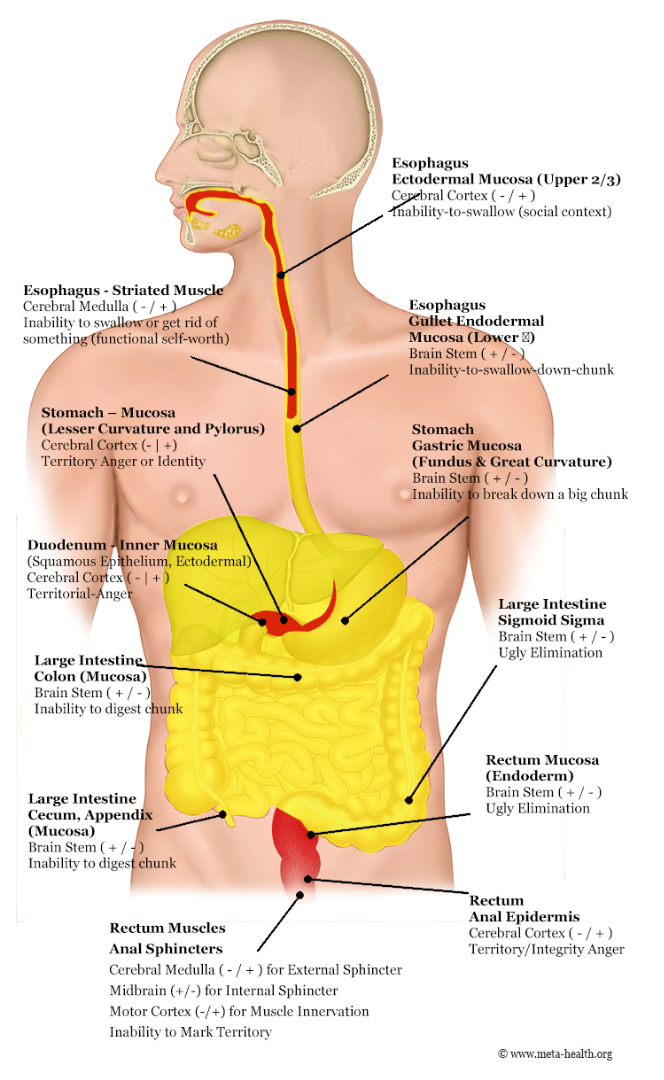
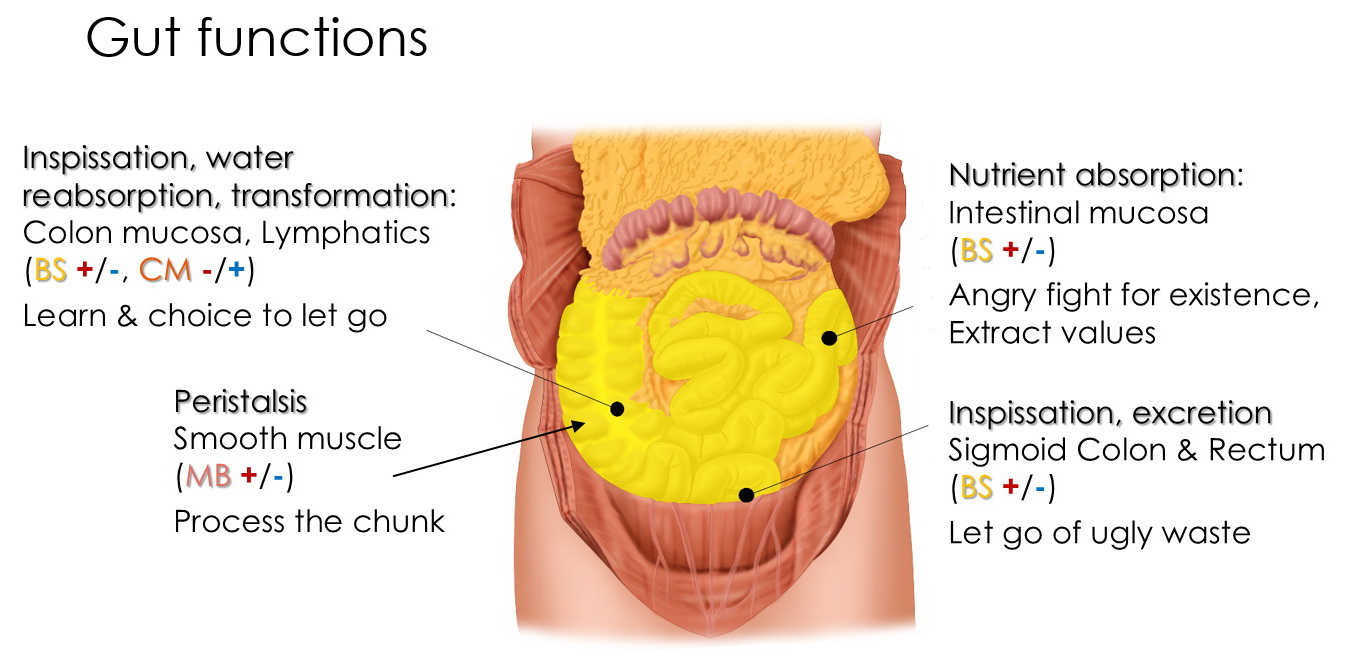
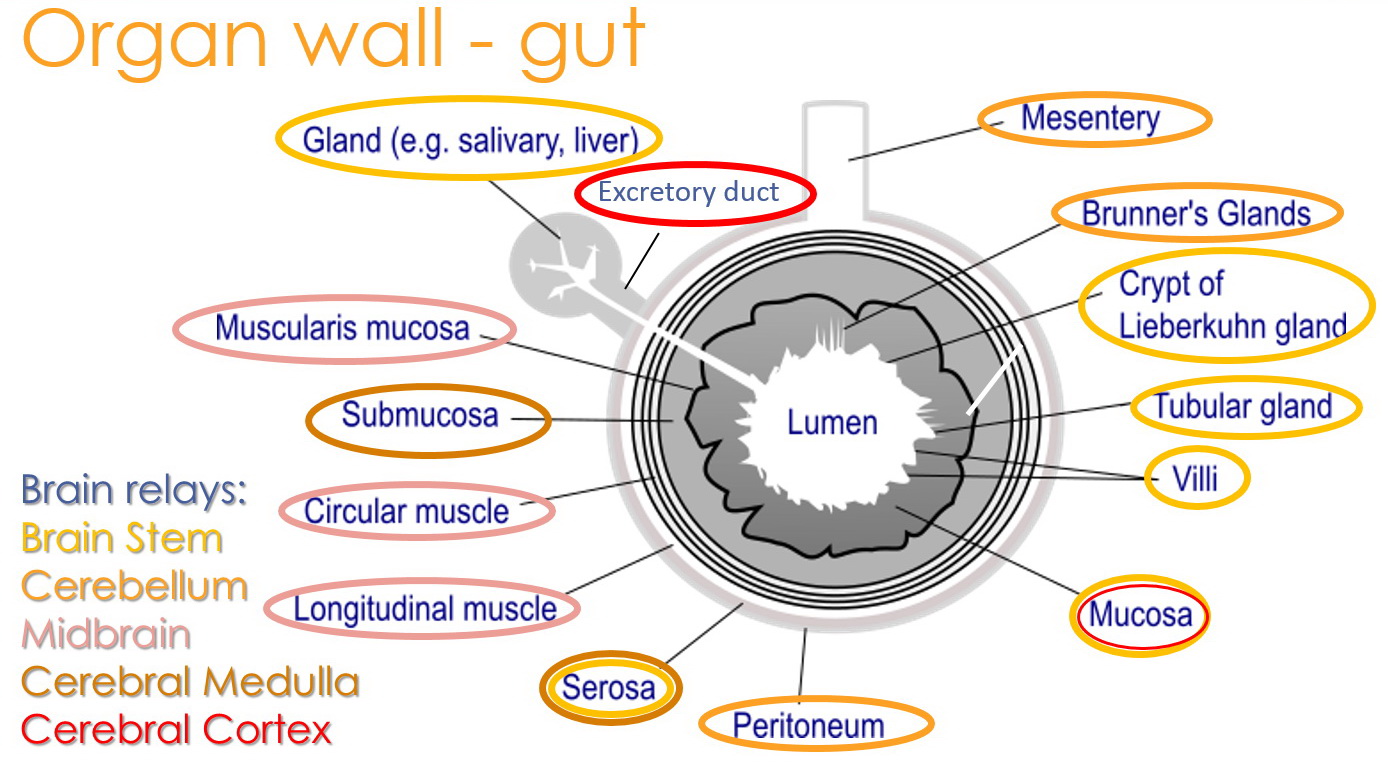
The rectum mucosa fulfills functions of water reabsorption and secretion to prepare the faeces for excretion. In her lower part and the anus it is covered by sensory innervated squamous epithelium. The intestine wall is composed of smooth muscle with inner circular and outer longiudinal fibres, and an outer serous layer of connective tissue.
Brain
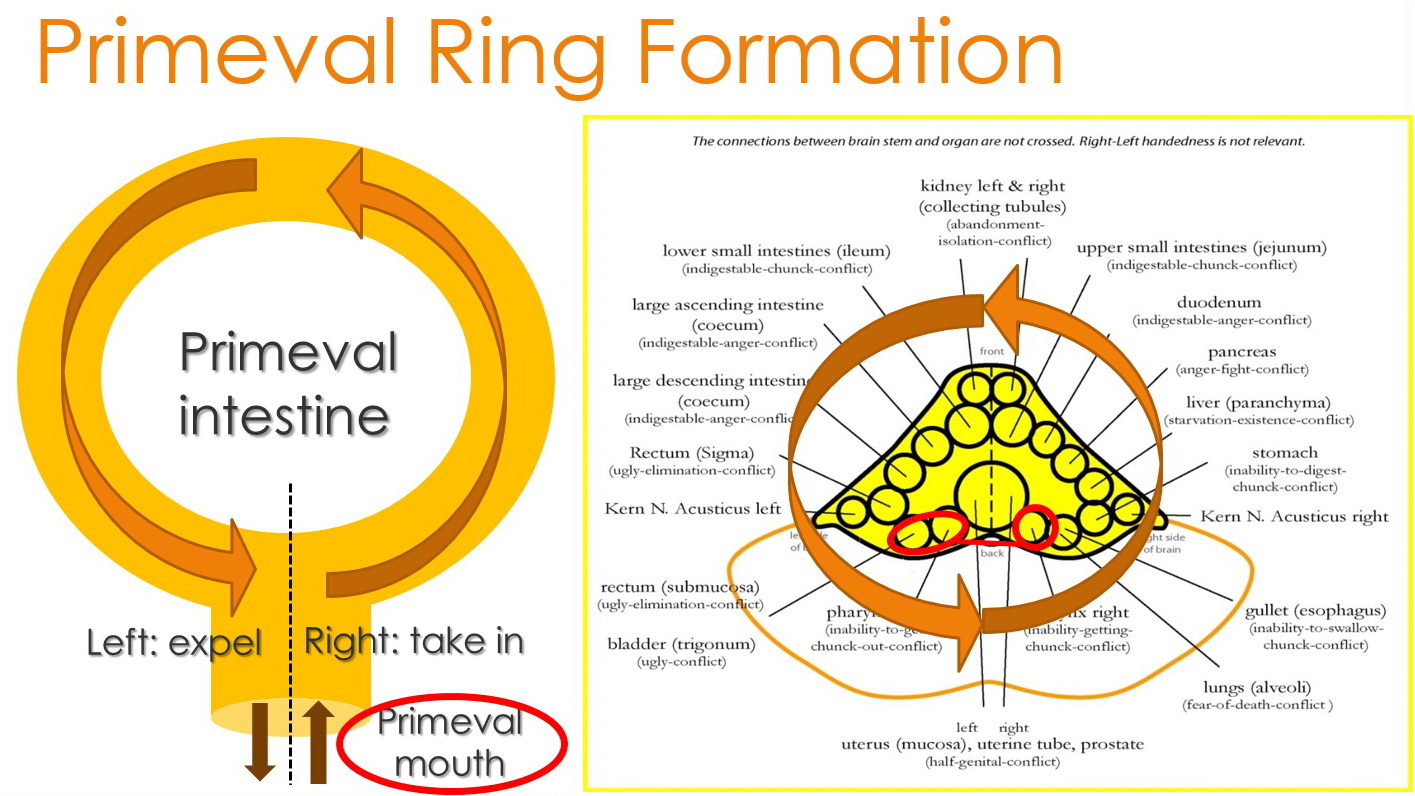
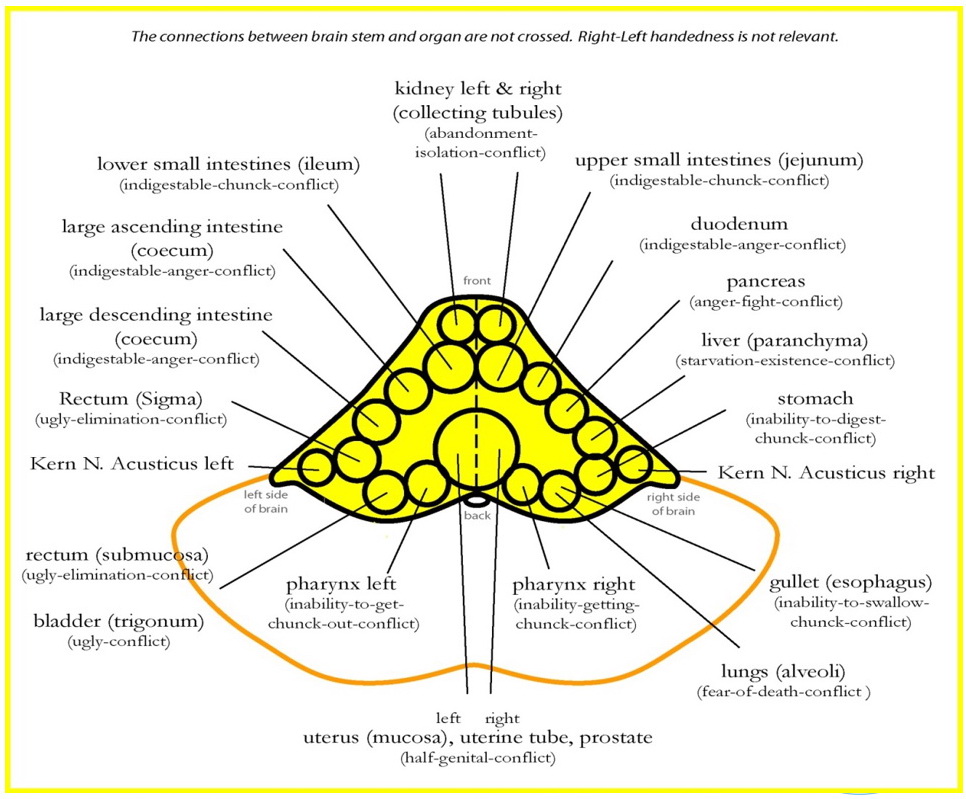
In the Brain Stem, the primeval ring structure is reflected: organ tissue relays with assimilative and digestive functions from oesophagus to small intestines are situated in the right brain stem, while excretory organs from caecum to rectum are relayed in the left brain stem. Medial on both sides are the relays of mouth/pharynx, middle ears and lacrimal glands, as well as the pineal and pituitary glands and the thyroid.
Relay:
Brain Stem ( + / – ) dorso-central left, between Sigma- and left Pharynx relays, for mucosa, and
Midbrain (+/-) dorso-central left, for smooth muscle
Mind
Theme:
(Reabsorption, secretion), Excretion
Association: Ugly Elimination Conflict
Side dominance is irrelevant here.
Emotions and Thoughts:
Grudge: Not being able to eliminate or not wanting to get rid of a chunk, mostly related to an ugly, insidious and/or malicious situation. (The further down the gut, the less useful and more dirty the situation was experienced, thus the stress on elimination.)
- What a shit!
- I need to get rid of it!
- It’s revolting.
- If I could just leave that behind!
META-Meaning:
- I can now decide to let go and leave that behind.
- There is nothing more to do, I’m free!
Organ
Stress Phase Symptoms:
Enhanced excretory functions, growth of a compact secretory tumor or a flat reinforcement of the intestine wall with reabsorptive quality. In the lower part of the rectum it may grow underneath the squamous epithelium. Tumors can lead to occlusion of the colon. As long as processes don’t affect sensory epithelium they do not involve pain. Possible diagnoses: hemorrhoids, mariscs, rectal polyps, adenocarcinoma, mucinous carcinoma, colorectal carcinoma.
Regeneration Phase Symptoms:
Function reduction and tumor decomposition showing microbial infection (fungi, mycobacteria), nightly sweat and low fever. Abscesses, purulent bleedings and shedding of mucosa are possible, however no pain unless sensitive epithelium is affected by the process. Possible diagnoses: Candida infection/thrush, mycosis, bleeding hemorrhoids, submucous abscess, ulcerative colitis.
Chronic processes can lead to dilation of the rectum wall (diverticulosis) which is mostly symptomless but can inflame (diverticulitis)
Biological Meaning:
Secretory function ensures the easier elimination of the faeces. Reabsorptive function serves for the better reabsorption of water, improving the defecation process.
Social
Examples:
- A woman who suffers psychologcally with mariscs, had a childhood with sexual abuse that she likes to block out. Her fear for disgust and rejection from potential partners manifest the conflict.
- A man fought all his life for bringing up a family and to establish a small business. After an ugly dissolution of a local club he engaged in, he develops a rectal cancer.
Additional Information
Constellations:
Brain Stem Constellation possible: perplexity, lethargy, passiveness, reduced movement. Purpose: new orientation
Differential Diagnosis:
Rectum – Anal Epithelium (Cerebral Cortex, -/+) Regeneration phase (after identity/rank conflict): hyperesthesia, itch, hemorrhoidal bleedings, rectum cancer possible
Anal Sphincter muscles (Cerebral Cortex, Cerebral Medulla -/+) Stress phase (identity, position): slackening, incontinence, muscle dystrophy; Regeneration: inflammatory repair, hypertonus, myosarcoma possible
