Liver, Gallbladder, Pancreas
Anatomical Overview
These exocrine glands belong to the digestive system and produce specific digestive juices which have a common duct into the duodenum.
Localization of the digestive organs:
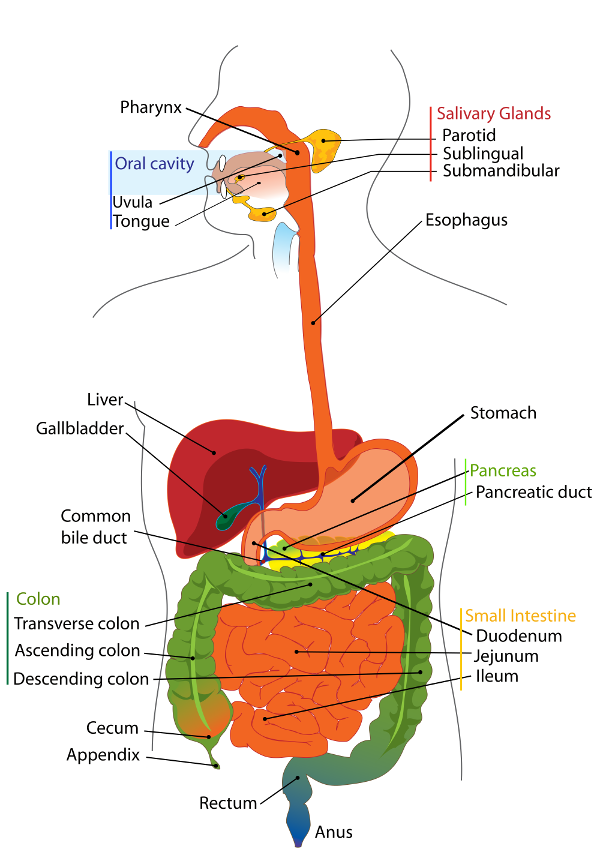
Digestive glands:
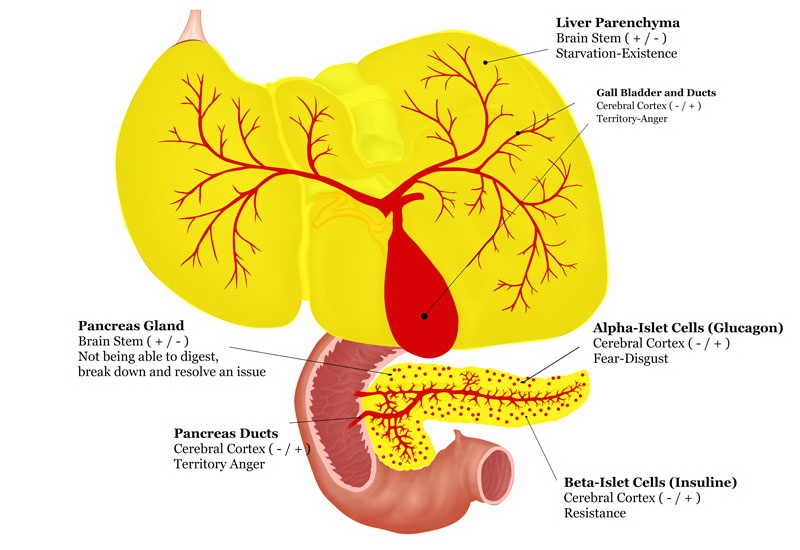
Liver
The liver is a roughly triangular organ that extends across the entire abdominal cavity just inferior to the diaphragm. Most of the liver’s mass is located on the right side of the body where it descends inferiorly toward the right kidney. The liver is made of very soft, pinkish-brown tissues encapsulated by a connective tissue capsule. This capsule is further covered and reinforced by the peritoneum of the abdominal cavity, which protects the liver and holds it in place within the abdomen. The liver consists of 4 distinct lobes – the left, right, caudate, and quadrate lobes.
The liver’s main functions are:
- bile production for digestion of fats
- blood proteine production
- Energy storage
- Detoxification
Gallbladder
The gallbladder is a 3-inch long pear-shaped sac located on the posterior border of the liver. Connected to the bile ducts of the liver through the cystic duct, the gallbladder receives bile transported from the liver for storage on a regular basis to prepare for the digestion of future meals. During digestion of a meal, smooth muscles in the walls of the gallbladder contract to push bile into the bile ducts that lead to the duodenum. Once in the duodenum, bile helps with the digestion of fats.
Pancreas
The pancreas is a 6-inch long heterocrine gland located inferior to the stomach and surrounded by the duodenum on its medial end. This organ extends laterally from the duodenum toward the left side of the abdominal cavity, where it tapers to a point.
The pancreas is considered a heterocrine gland because it has both endocrine and exocrine gland functions. Small masses of endocrine cells known as pancreatic islets alpha and betacell islets) make up around 1% of the pancreas and produce the hormones insulin and glucagon to regulate glucose homeostasis in the blood stream. The other 99% of the pancreas contains exocrine cells that produce powerful enzymes that are excreted into the duodenum during digestion. These enzymes together with water and sodium bicarbonate secreted from the pancreas are known as pancreatic juice.
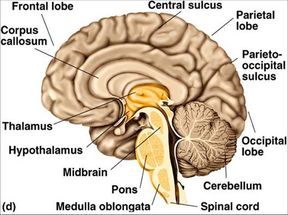
Brain
Relay:
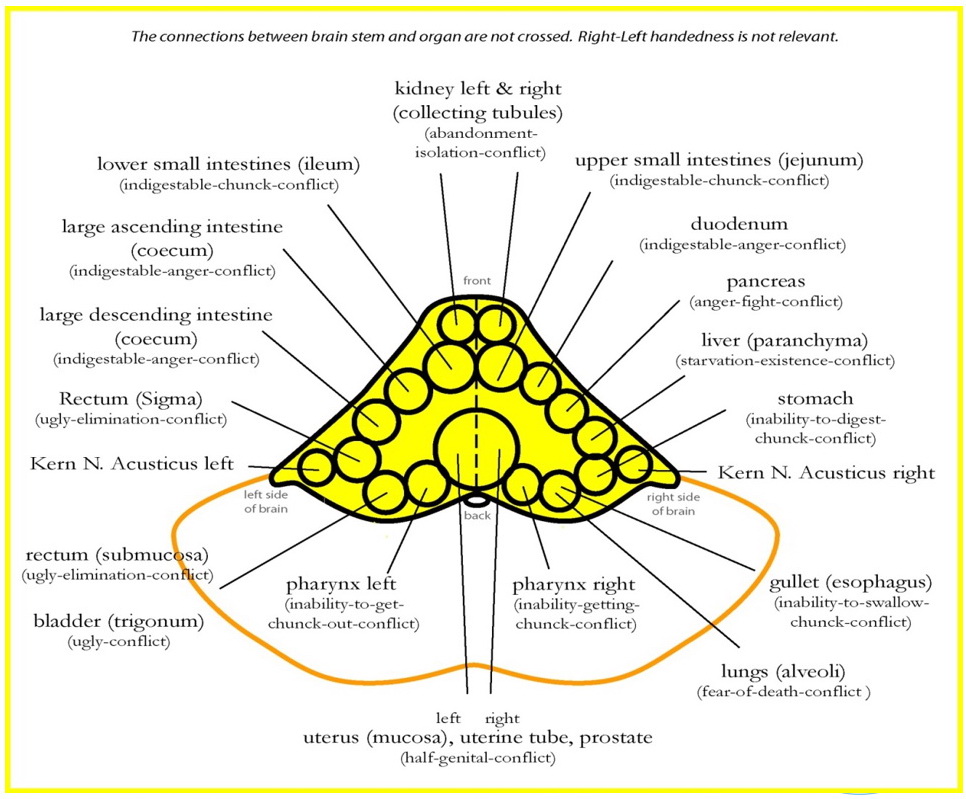
- Brain Stem (+/-): Exocrine tissue of Liver & Pancreas and
- Midbrain (+/0): Gallbladder smooth muscle
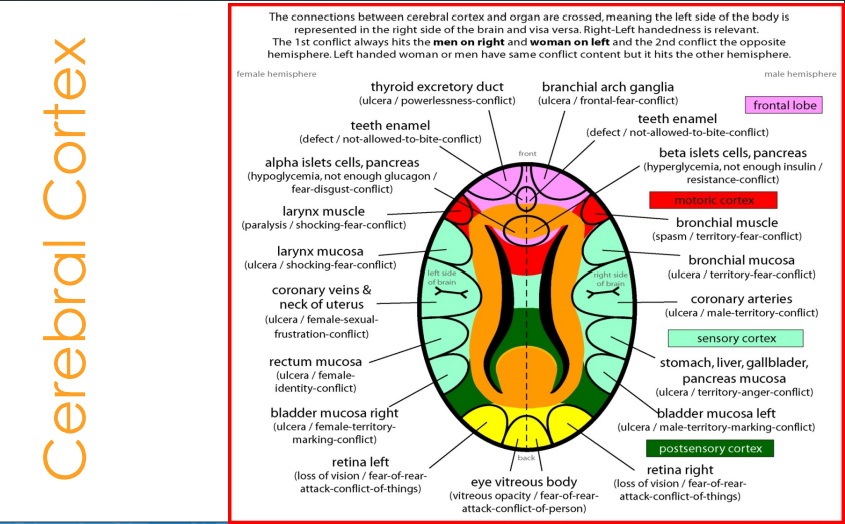
- Cerebral Cortex (-/+): Gallbladder lining & Intrahepatic Bile Ducts, Pancreas Ducts, Pancreas Alpha & Beta Islet Cells
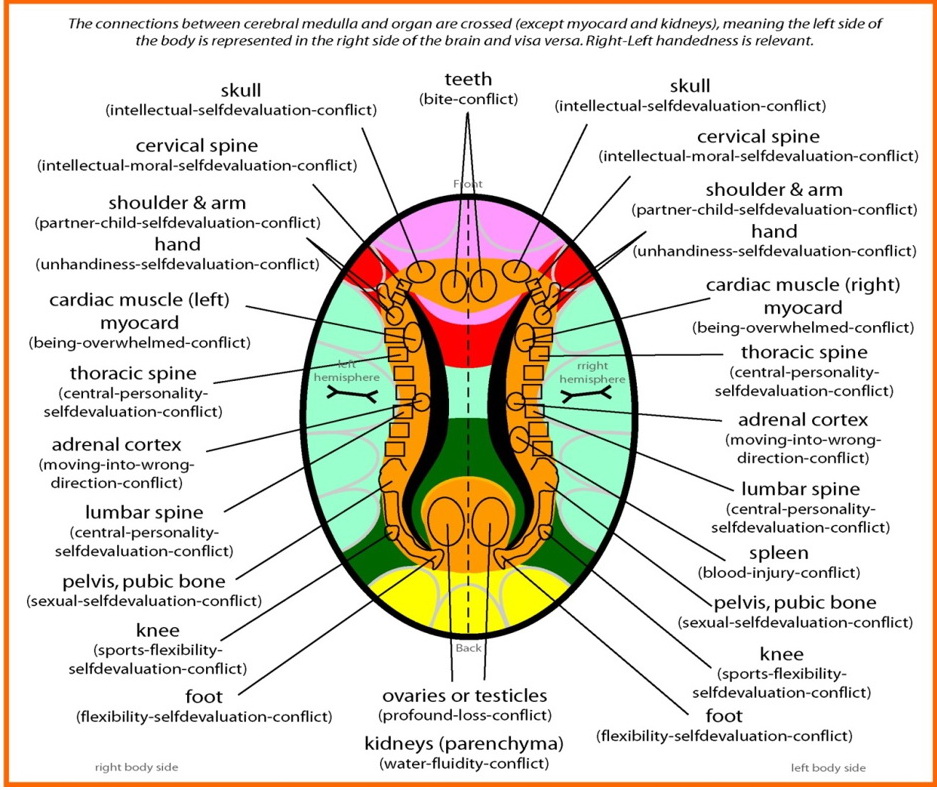
- Cerebral Medulla (-/+): Hepatic Arteries, Veins and Capillaries – Lymph vessels & Lymph nodes