Rectum – Mucosa (Squamous Epithelium)
Anatomy
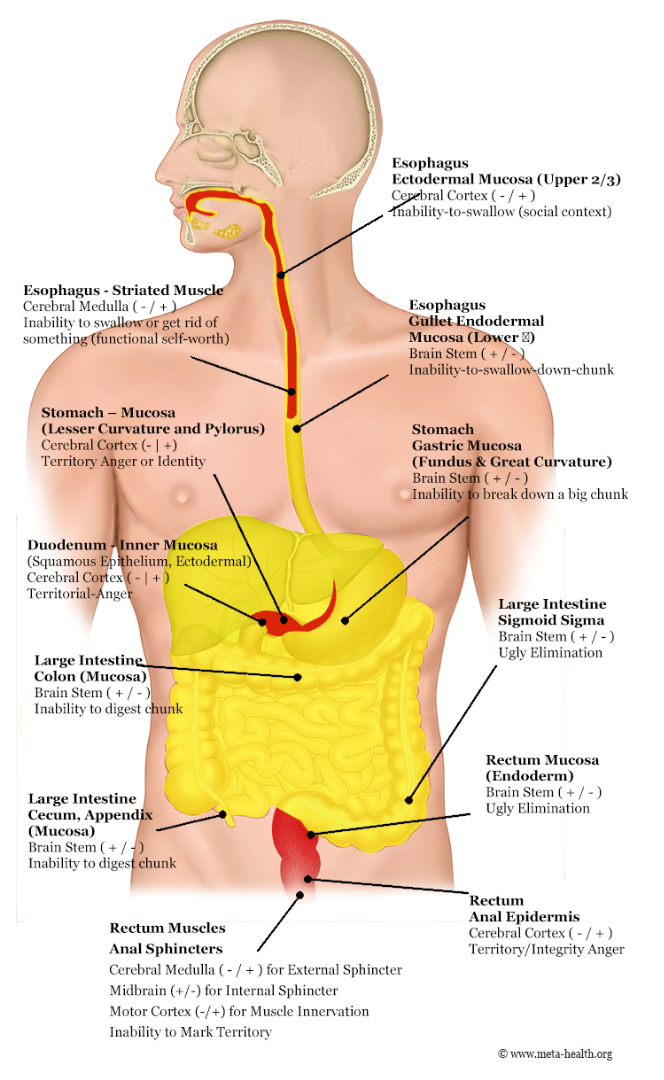
The rectum is the last, straight part of the colon in the digestive tract. It proceeds the sigma and ends at the anus. It’s diameter is first similar to the sigma, but is then expanded to form the rectal ampulla. It serves for storing the feces before excretion.
The inner lining of the rectal mucosa inside the anal canal consists of squamous epithelium that has grown from the outer skin into the rectum, and is covering the rectal (endodermal) mucosa. Sensitive innervation of the rectum is connected to this epithelium.
Brain
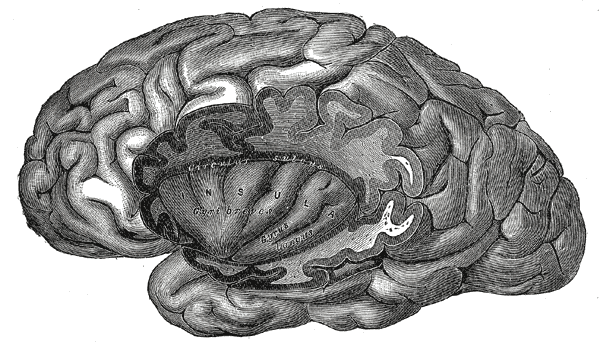
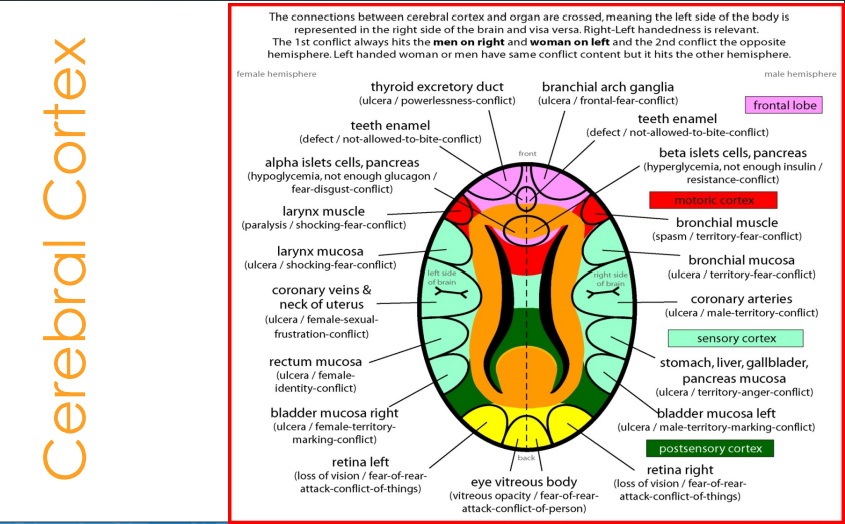
Relay:
Cerebral Cortex ( – / + ) insular region in left hemisphere, “8 o’clock”
Mind
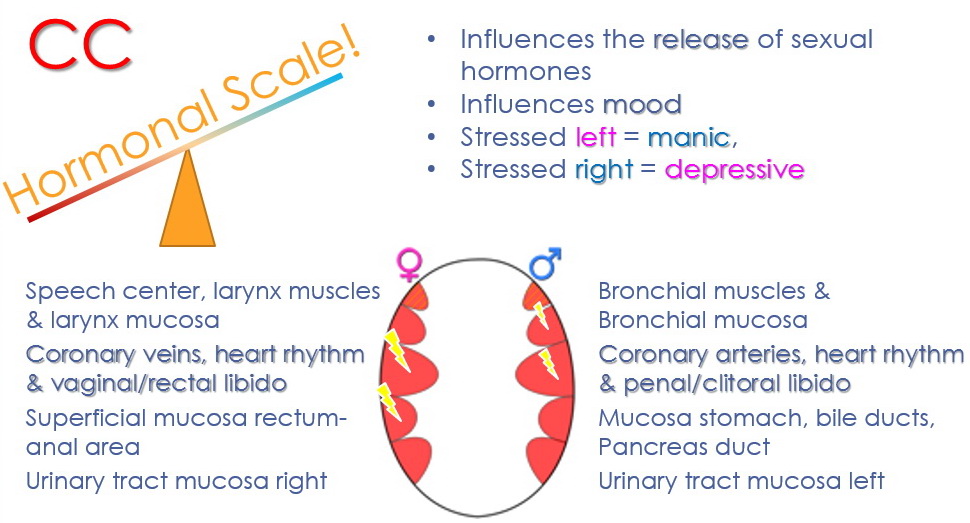
Stress reduces release of oestrogen and causes manic states
Theme:
1. Identity, decision (female perception)
2. Territorial anger (male perception)
depending on sex, side dominance, hormonal status and subjective association.
Emotions and Thoughts:
1. Uncertainty, indecision: Not knowing where one belongs, or the inability to define a position.
- Where do I belong?
- I’d want to be part of them!
- What is my function here?
- Who am I?
2. Anger and indignation because one’s position is neglected or challenged - This is none of your business!
- I have to defend my point!
- Only I may do this!
- She cheated on me!
META-Meaning:
- I find and fulfill my place in the world.
- I respect and I am respected.
- I always find a solution.
Organ
Sensitivity according to “Outer Skin”/Epidermis Pattern with hyperesthesia, itch or pain during Regeneration Phase.
Stress Phase Symptoms:
Widening of the anal canal, inconspicious ulceration of the rectum that rarely bleeds. Often combined with slackening of the anal sphincter, stool incontinence.
Regeneration Phase Symptoms:
Hyperesthesia, swelling and replenishment of the epithelium, burning sensation and bleeding. Itch (pruritus) especially after Healing Peak. Possible diagnoses: hemorrhoids, anal carcinoma. Severe blood loss can lead to anaemia.
A partial prolapse of rectal mucosa is possible in connection to weakened connective tissue.
Healing Crisis:
Often inconspicious, but absence is possible. When the striated sphincter muscle also is affected there can be rectal spasms (tenesmus).
Biological Meaning:
The expansion of rectal mucosa and slackening of the sphincter during stress phase promote defecation, facilitating the territorial marking process.
Social
Examples
- A young woman got unvoluntarily pregnant and can’t identify with her role as mother and the changes in her body. She gets stool incontinence.
- The client got hemorrhoids and rectal bleedings after having resolved a conflict with her father. Stress trigger was his usual reaction “oh it’s you”. Having worked on an inner solution, she could communicate and express herself, getting into mythomania. (Gardner)
- a youth who gets mobbed at school is incontinent without being aware of it (hypesthesia in stress phase)
Additional Information
This relay belongs to the “territorial relays” in the peri-insular cerebral cortex, with the theme of social position and affiliation. Special rules apply for the meaning of side dominance. Conflicts affect the sexual and social “hormonal scale” and can promote manic or depressive episodes (see “territorial constellations” related to the function of the neurohypophysis).
Constellations:
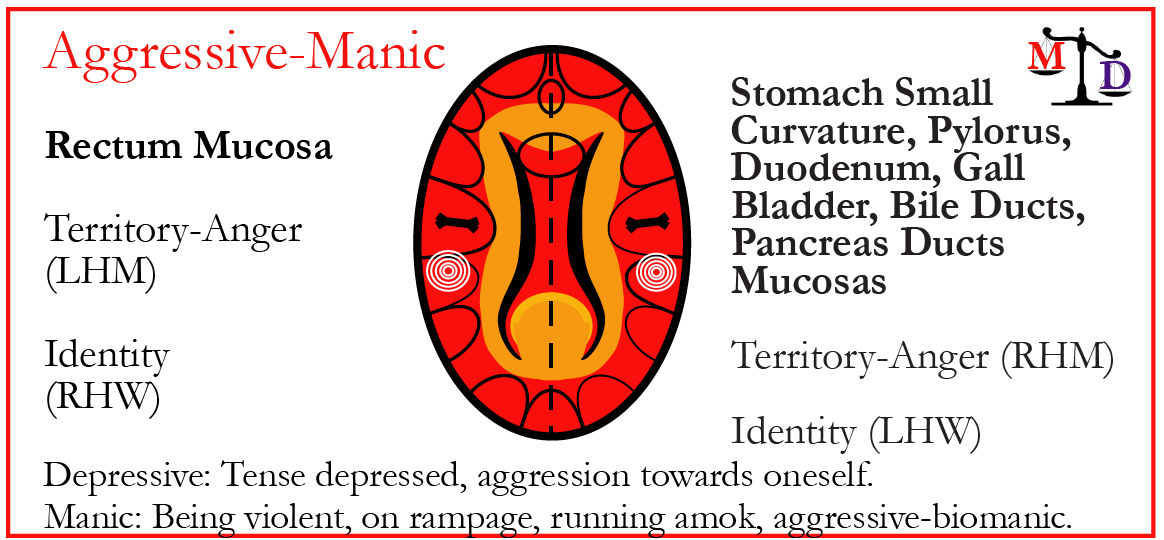
Aggressive: If one of the following brain relays is also active: stomach small curvature, pylorus, duodenum, gall bladder, bile ducts, pancreas ducts mucosae (opposite relays on either side of the brain). Leads to aggressive and violent behaviour or even thoughts of killing someone else. (Suicidal thoughts, however, belong to the postmortal or suicidal constellation of coronary veins and arteries.) The aggressive constellation can show both manic (violence against another person) and depressive (violence against oneself) states. More balanced, it promotes courage and pro-active behaviour.
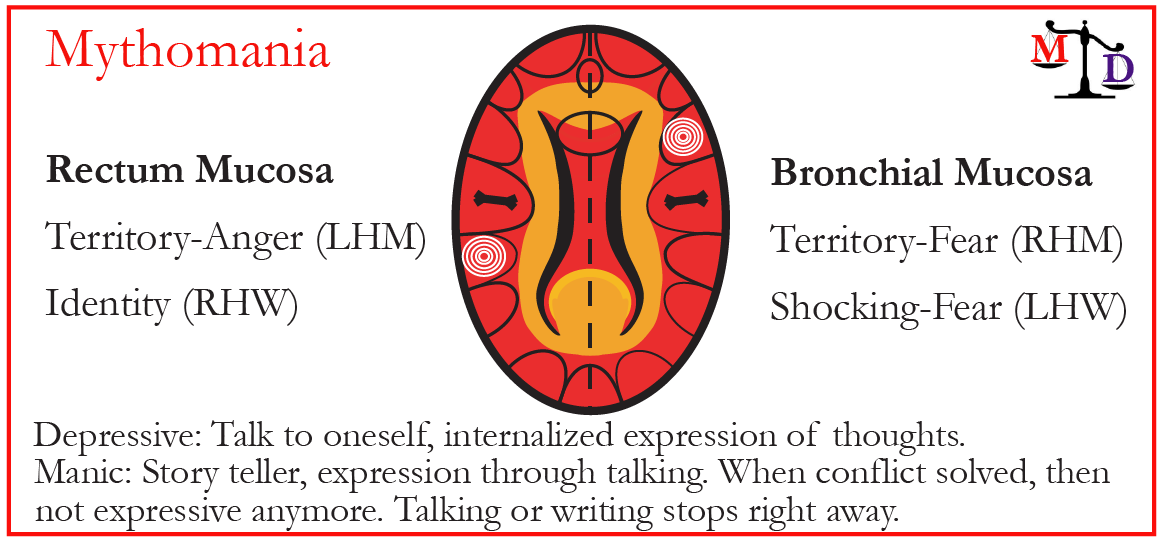
Mythomania: If Bronchial Mucosa relay also is active: The mytho- (talkative) constellation can be both manic and depressive, externally-directed (talking) or internally directed (self-talk, writing). Positive: communicator!
When Mythomania and Aggressive Constellations are simultaneously active, they create
the “Paparrazzi”-Constellation: aggressive talk or writing.
Differential Diagnosis:
Rectum – Anal Sphincters (Cerebral Medulla -/+, Midbrain +/-): The sphincter muscles often react together with the anal epithelium in an identity or territory-marking conflict with muscle relaxation in the stress phase to help marking out the own place.
Rectum – Mucosa (Brain Stem +/-) with rectal polyps or adenoma in the stress phase (grudge), submucosal abscesses / haemorrhoids or mycosis in the regeneration phase.
Submucosa/ lymphatic tissue (Cerebral Medulla -/+) stress (choice, decision): immune insufficiency, leaky gut; regeneration phase: Inflammatory and edematous in the first phase. Diagnoses may be lymphoma, inflammatory fibroid polyps, perineurioma and leiomyoma.