
Myocard – Atria and Sinoatrial Node
Anatomy
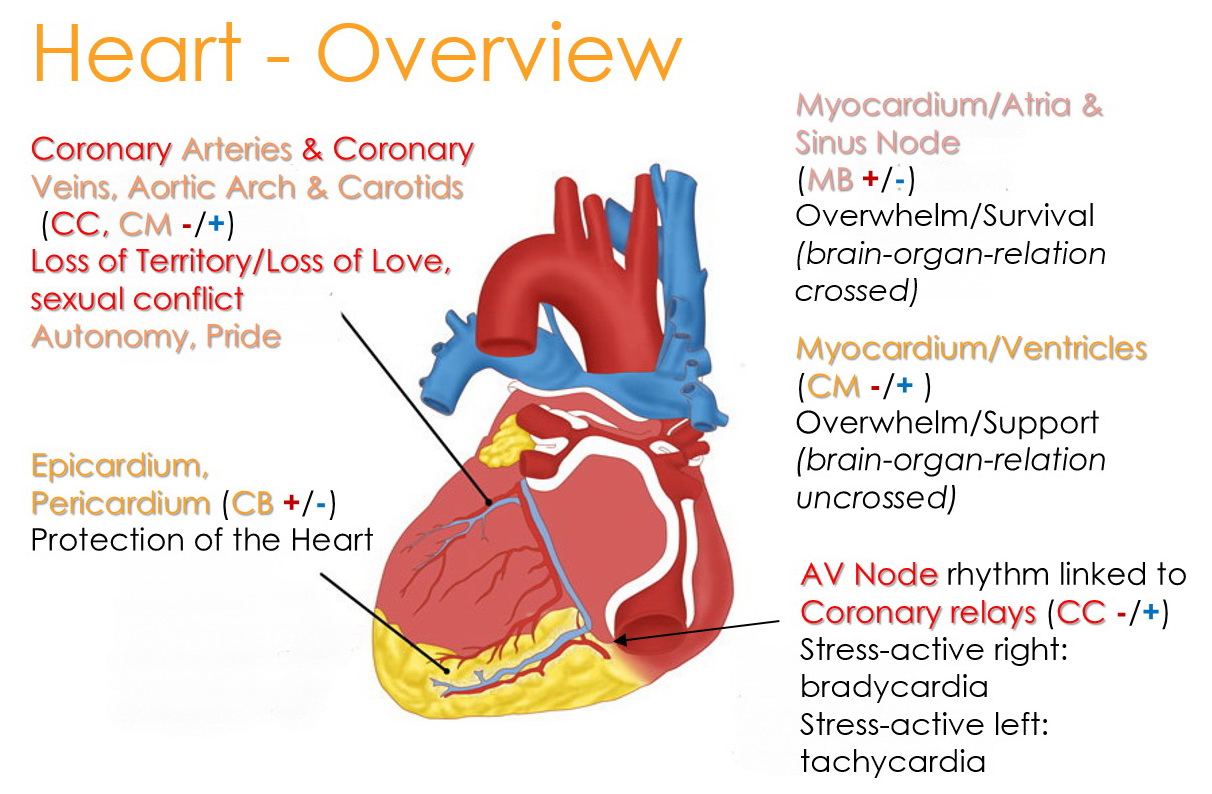
Cardiac muscle is a blend of striated and smooth muscle in the heart, with involuntary innervation by the cardiac plexus. It’s blood supply is secured by the coronary arteries in a circulation separate from the systemic circulation.
The heart muscle cells are multinuclear, whereas smooth muscle cells are mononuclear.
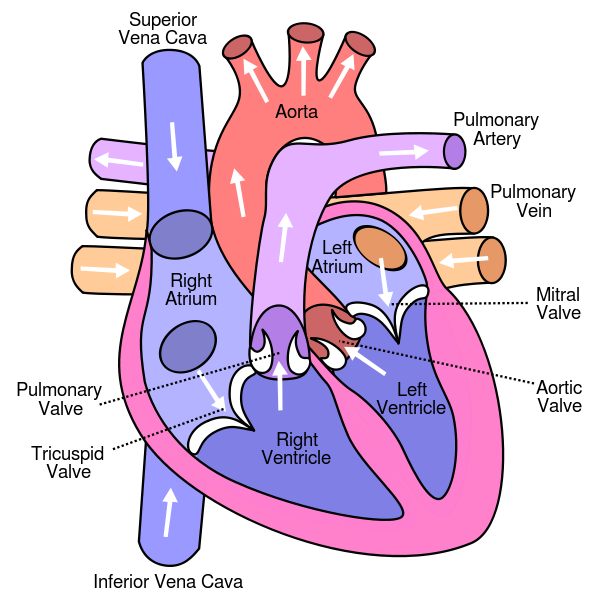
The heart chambers ventricles) are filled from the atria by coordinated contractions while the valves prevent reverse flow. The right ventricle pumps deoxygenated blood via the lung artery into the lungs, whereas the left ventricle supplies the systemic circulation with oxygenated blood. The expulsion is called systole, the filling phase diastole.
The coordination of contractions in atria and ventricles is effected by an autonomous center of excitation and conduction which is influenced by the autonomous nervous system and by hormones.
The sinoatrial node (SA-node) is situated in the right atrium nearby the junction of the superior caval vein. It consists of specialized muscle cells capable of spontaneous depolarization, which can excite autonomously and thereby generate the rhythm of contractions. The sympathetic nervous system and adrenal medulla hormones speed up the sinus rhythm, the vagus can inhibit it (vagus brake). Conduction and coordination with the ventricles is carried out via the atrio-ventricular node (AV-node) which is influenced by the relays of the coronary arteries (slow rhythm) and coronary veins (fast rhythm).
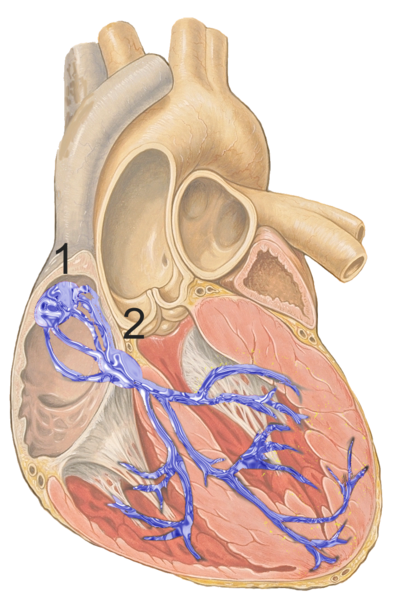
graphic: wikipedia, Patrick J Lynch
The myocardium of atria and ventricles show different reaction patterns and conflict themes. The atrial myocardium has a relay in the midbrain, the ventricular myocardium in the cerebral medulla.
Brain
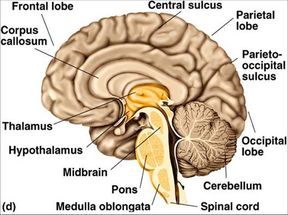
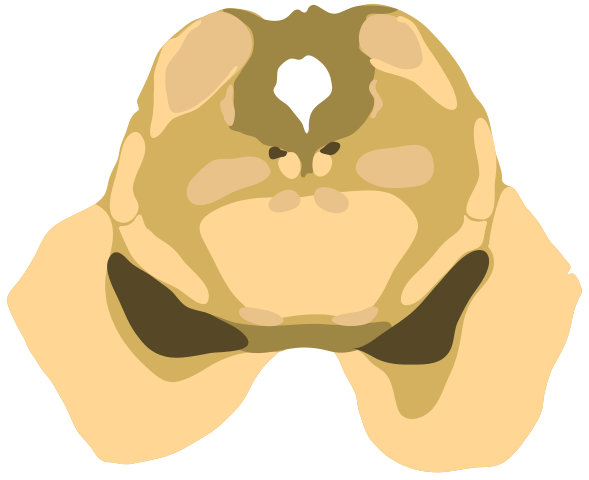
graphic: wikipedia, Kevin Dufendach
Relay:
Midbrain/Plexus Cardiacus ( + / – ), frontolateral left & right
compare Brain Stem 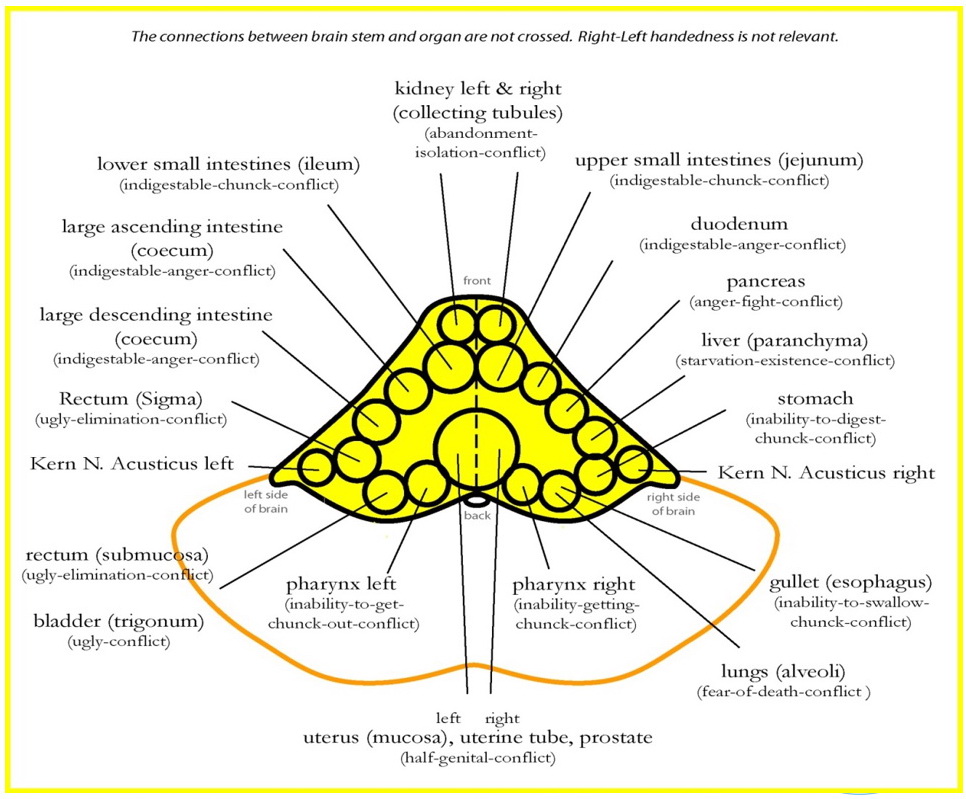
Mind
Theme
Overwhelm (not being able to secure survival/ the blood flow in the heart)
Emotions, Thoughts
Anxiety often because of other heart problems.
META-Meaning
My heart works easily and faithfully. Everything goes like a dance!
Organ
In embryonic development, the heart has made a turn so that curiously, brain stem innervation crosses over. The sinus node, innervated by fibres from the left plexus cardiacus, stimulates the right atrium and the right ventricle.
Stress Phase Symptoms
Forced rhythm through the sinus node, contractility of cardiac muscle, especially in the atria. The atrial wall thickens.
Regeneration Phase Symptoms
Tonus normalization of cardiac muscle especially in the atrium, often accompanied by vagotonic tachycardia (fibrillation), while thickening of the muscle remains.
Healing Peak
Atrial tachycardia, atrial fibrillation or atrial flutter, accompanied by restlessness, but no myocardial infarction!
Biological Meaning
Support of the cardiac muscle during stress reaction is like a “double safety”. Another meaning is the increase in strength which lasts after regeneration.
Social
Examples
- Due to a connective tissue disease, patient had dilated aorta and dilated heart chambers. Since it has been operated, he is constantly worrying about heart problems, measuring his pulse and listening to his own heart beat to check if it’s still beating normally. Thereby, he develops atrial tachycardia and partial atrial fibrillation.
- Patient’s mother has died from heart attack. Since then, she has been constantly worrying about having a heart disease. Thereby, she develops atrial tachycdia, accompanied by an unpleasant feeling in heart area.
Additional Information
Differential Diagnosis
Coronary Arteries and AV node (Cerebral Cortex, Plexus Cardiacus, -/+) with heart arrythmia and angina pectoris in the stress phase (loss of love/status); and bradycardia, possibly heart arrest, absence, heart pain in the healing peak
Coronary Veins(Cerebral Cortex, Plexus Cardiacus, -/+) with painful angina pectoris in the stress phase (loss of love/status); and absence, tachycardia or ventricular fibrillation in the regeneration phase
Endocardium (Cerebral Medulla, Plexus Cardiacus, -/+) with reduced heart performance due to valve insufficiency in stress phase (performance self-devaluation), painful endocarditis in regeneration phase
Myocardium/Ventricular (Cerebral Medulla, Plexus Cardiacus, -/+) with reduced heart performance due to local paralysis in the stress phase (overwhelm), myocardium infarction in healing peak
Pericardium (Cerebellum, Plexus Cardiacus, +/-) with feeling of pressure or “armored heart” in stress phase (protection of the heart), cardiac insufficiency due to effusion in regeneration phase
