
Blood Vessels – Arteries
Anatomy
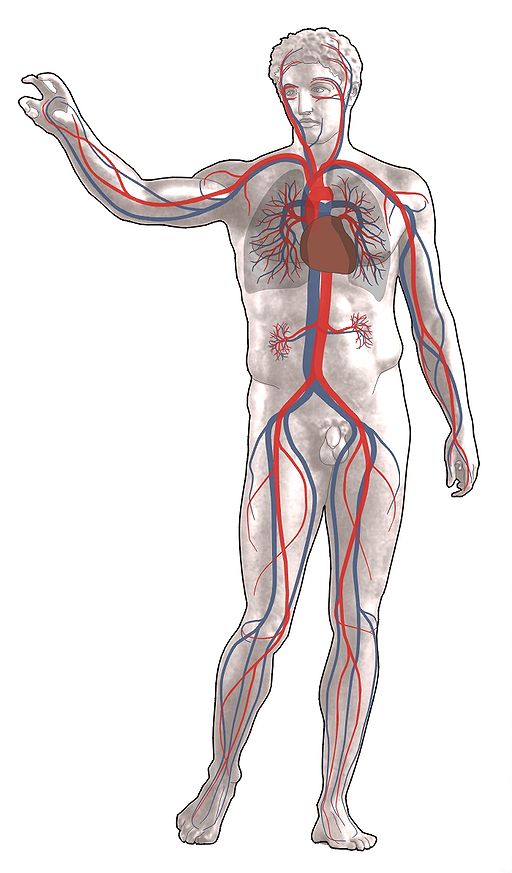
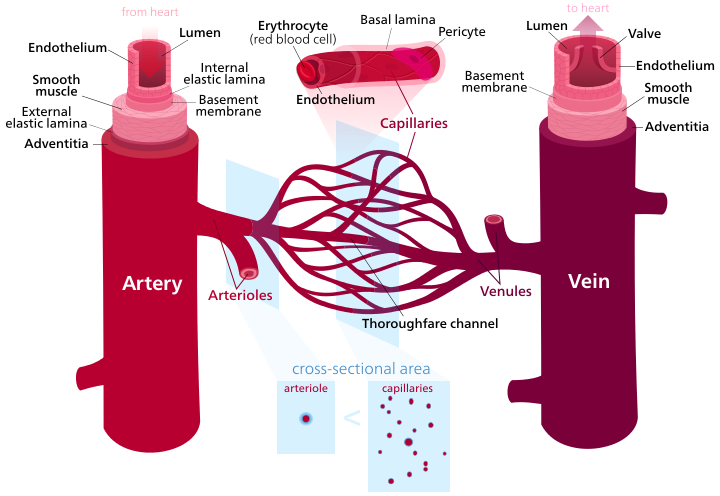
Arteries are muscular blood vessels that carry bloodaway from the heart. Their vessel walls consist of connective tissue and a layer of smooth muscle which adjusts their width to control blood flow – here, the autonomous nervous system and the reaction of the periosteum are involved. All arteries with the exception of the pulmonary and umbilical arteries carry oxygenated blood.
Brain
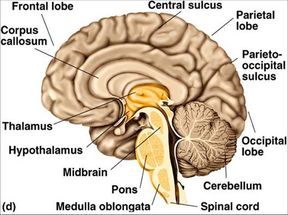
Relay
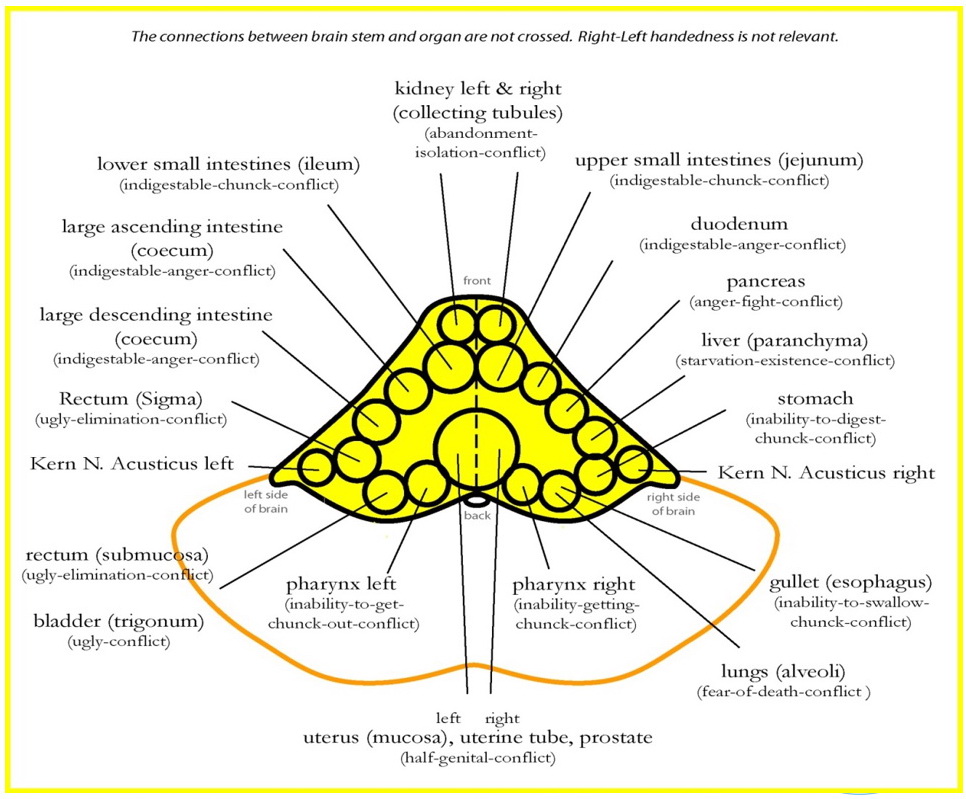
Cerebral Medulla ( – / + ) for adventitia & intima, relay according to location in the body
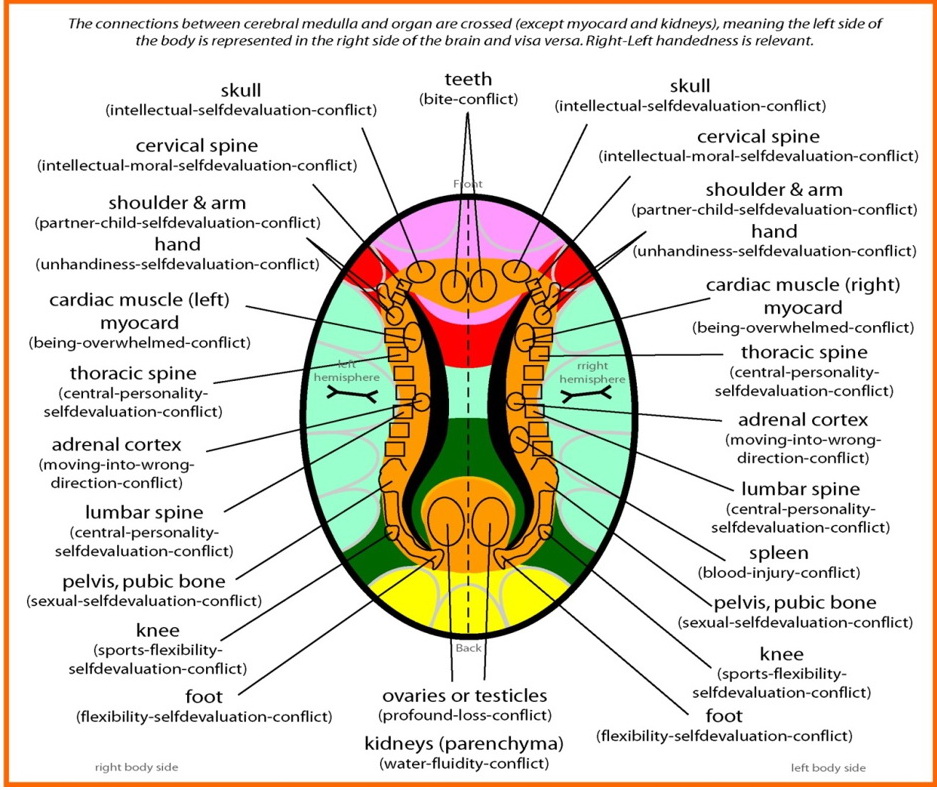
Midbrain (+/0) for smooth muscle layer
compare Brain Stem
Mind
Theme
Functional self-worth (like not being able to sufficiently transport information or nourishment) relating to the affected localisation or it´s interpretation.
These conflicts are often secondary, i e initiated by processes in other organs.
Blood is associated with themes of identity, and this reflects the power of conflicts connected to the circulatory system.
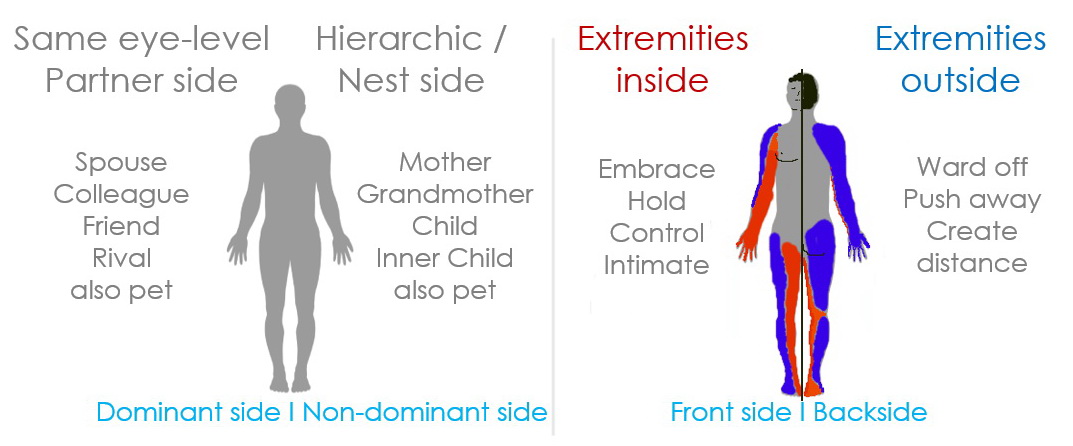
Association according to location and side dominance:
Emotions and Thoughts
Self-doubt, worry
- I´m not in flow.
- I´m not able to support myself (perhaps with respect to a certain conflict expressed in organ affection).
- I can´t transmit that.
- I´m not in charge!
META-Meaning
- I feel in perfect flow.
- All organs and cells in my body are well-nourished and communicate fluently.
- I am who I am!
Organ
Stress Phase Symptoms
Weakening of artery walls by reduced nutrition/trophic, possibly necrosis. Reduced generation of elastic and collagen fibres, thereby an increased risk of artery rupture. To prevent perforation, the smooth muscle (tunica media) reacts with contraction and thickening in the affected location. If this does not happen, aneurysm (sagging of vessel wall) appears.
Regeneration Phase Symptoms
The damage or necroses are repaired with the help of cholesterol, which can be accompanied by painful inflammation and lead to plaque formation as well as lipid or calcium deposition in arterial walls, especially in long-lasting or recurring conflicts, which is diagnosed as arteriosclerosis. This, as well as intense swelling in regeneration phase A when combined with KCT syndrome, can lead to vascular occlusion. In prolonged regeneration phases with missing signal of completion, the ongoing proliferation of tissue can be diagnosed as angiosarcoma and hemangiosarcoma.
Healing Peak
Tthe smooth muscle layer of the arteries often reacts with spontaneous spasms.
Biological Meaning
The biological advantage in the cerebral medulla´s relays lies in the end of the regeneration phase, when the affected structures are stronger/harder as before to prevent the same conflict type happening again. Nevertheless, the process leads to more rigidity and less flexibility.
Social
Examples
- A heavy smoker was told by his physician that if he continues smoking, he will get presenile gangrene (Buerger’s disease, smoker’s leg), thereby his leg must be amputated. (Hence, he adopted this belief and suffered a functional self-devaluation of the blood vessels…)
- A diabetic patient has abnormal blood sugar levels. He heard for the first time, that such bad blood sugar levels (HbA1c of 10.5) can lead to the development of circulatory disorders and peripheric neuropathy of the legs. (Hence, he adopted this belief and suffered a functional self-devaluation of the blood vessels…)
Additional Information
- The affected side refers to a conflict concerning sibling/partner/colleague (right body half for right-wired persons and left for left-wired persons) or concerning mother/child/inner child (left body half for right-wired persons and right for left-wired persons). For heart region, see also Coronary Arteries (Cerebral Cortex,-/+)
- Relation between resting amygdalar activity and cardiovascular events: a longitudinal and cohort study about psychosocial stress connected to cardiovascular disease and arterial inflammation: chronic amygdala activity leads to increased bone marrow activity (production of haematopoietic stem cells, as well as pro-inflammatory cytokines) which potentiates atherosclerosis. This describes chronic re-triggering of stress and repair, as well as sensitization for potential stressors.
Differential Diagnosis
Periosteum(connected to trophic innervation of blood vessels) (CC, -/+): hyperesthesia and hypoperfusion (cold extremities) in stress phase (deep, indignating pain), possibly flowing pain in regeneration phase.
Veins (CM -/+) transport deoxygenated blood from capillaries towards the heart (Exception: lung & umbilical veins). Stress (self-doubt regarding movement): weakening, varicosis; Regeneration phase: phlebitis, thrombosis possible
Arterial high blood pressure can have different causes: - Kidney Parenchyma(Cerebral Medulla, -/+): water/drowning conflict in stress phase
- Right Chamber Myocardium (Cerebral Medulla, -/+) overwhelm conflict in regeneration phase
- Adrenal Cortex (Cerebral Medulla, -/+) orientation conflict in regeneration phase
- Pericardium (Cerebellum, +/-) in stress phase (protection of the heart)
