Blood
Anatomy
Blood and lymph are body fluids channeled by the circulatory system.
Their functions are
- Transportation of oxygen to the cells (by erythrocytes)
- Transportation of nutrients and energy to the cells (by plasma)
- Transportation of metabolic products and carbondioxid from the cells (by plasma)
- Distribution of hormones and informational substances (proteins)(by plasma)
- Self-healing facilitation by coagulation and transformation of wound tissue (by platelets and fibrinogen)
- Maintaining inner integrity by recognition of damaging substances and regulation of the microbiome (by leukocytes, lymphocytes)
- Regulation of the body temperature
Blood Components
Blood consists of plasma which is water with proteins, glucose and electrolytes, similar to extracellular fluid and lymph. Blood plasma carries the blood cells
A) Erythrocytes (red blood bodies) are built in the red bone marrow. The colour stems from haemoglobin, a iron-containing protein which helps in gas transport, especially oxygen from the lungs to the cells.
B ) Leukocytes (white blood bodies): different types of cells with immune functions. Leukocytes are present in blood, lymph and stations throughout the body, where they control environment and microbiome, e.g. by phagocytosis.
C) Lymphocytes are built by stem cells in the bone marrow and maturated partly in the thymus. They identify cells foreign to the organism.
D) Thrombocytes (platelets) derive from megakaryocytes in the bone marrow and are stored in the spleen.. They travel to injuries, attach to the tissue, are activated by fibrinogen and clot the blood to plug the wound and prevent blood loss.
Blood is the prominent way to steer the body’s adaptation and healing processes.
Blood distribution is dependent on the functions of the heart and the blood vessels. It is locally influenced by the periosteumsensitivity
Blood consistency is generally dependent on sufficient water intake, kind of nutrition, kidney, spleen and digestive functions, oxygenation, and hormonal factors.erythrocyte, platelet, leukocyte
picture: wikipedia, NCI-Frederick
Brain
brain parts
Relay
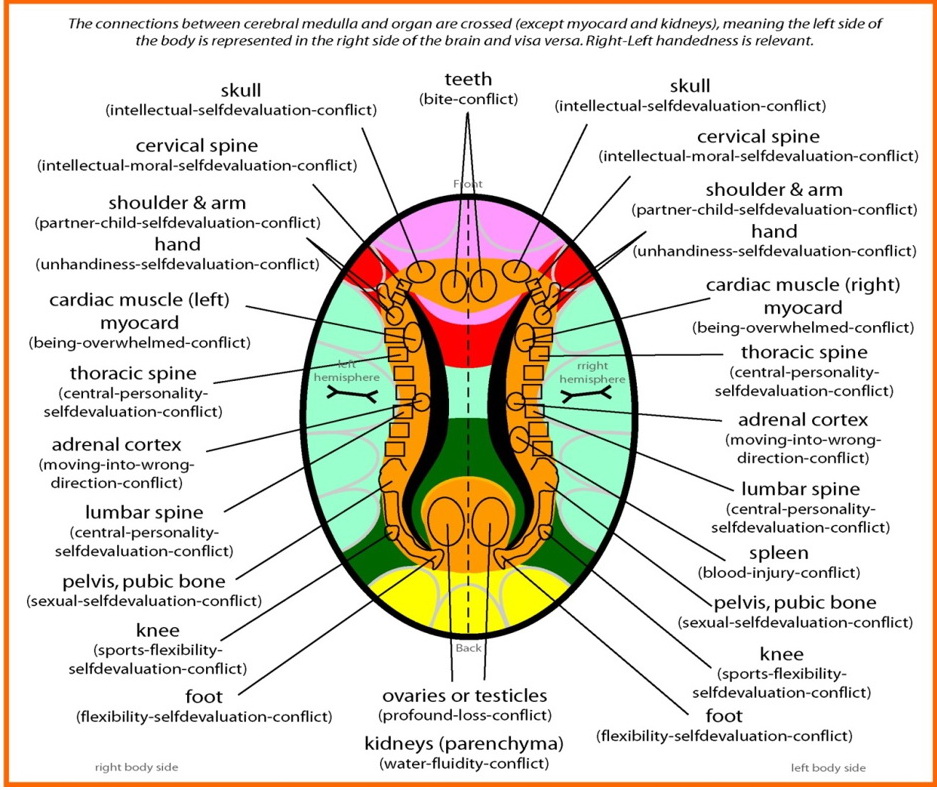
Cerebral Medulla ( – / + ) location dependent on affected area
Cerebellum ( + / – ) location dependent on affected area
Mind
Theme
Depending on the specific function of the respective components and the imagery of the person, typical conflict themes are:
- Self-definition, own identity and belonging
- Self-defense
- Self devaluation concerning healing and integrity
Emotions and Thoughts
Shock, overwhelm
- My blood froze in my veins
- This is invading me!
- This i just too much for me!
- I´m too weak for to heal that.
META-Meaning
- I can deal with this.
- I am good enough!
- My healing capacity is infinite.
- I trust in the universe (God, angels…) watching over us.
- Now I can take care of myself.
Organ
Stress Phase Symptoms
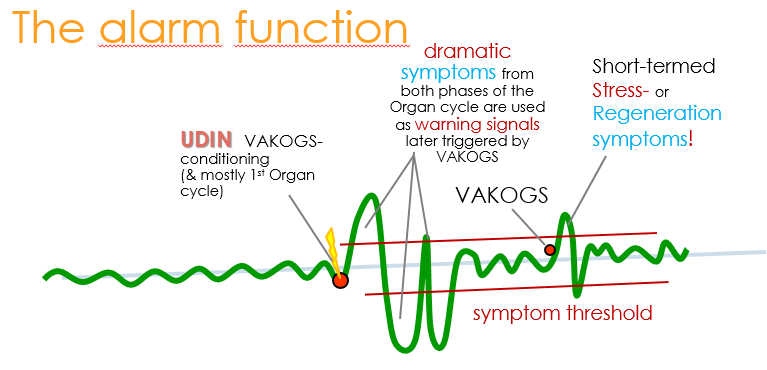
In general, stress brings forth a temporary change in distribution of blood. A mobilizing sympathetic response leads to blood supply to the extremities, while an immobilizing parasympathetic shock response focuses the blood in the inner organs. The following changes are due to special stress regarding the specific conflict theme.
A) Decreased production of erythrocytes leads to fatigue and reduced performance because of insufficient oxygen in the tissues, anemia (anaemia)
B ), C) Production and maturation of white blood cells is reduced. Possible diagnoses: Leukopenia, Lymphocytopenia, immune deficiency, AIDS
D) Big wound: thrombocytes & monocytes from the spleen and the peripheral blood-stream travel to the location of the perceived injury for wound-healing,thereby thrombocytopenia, dizziness & nausea.
Hemophilia refers to a “hanging stress phase” or a passed-on UDIN concerning blood and not being able to heal.
If the "survival-against attack" theme prevails, the stress reaction will rather be a stronger answer in function and number of cells (such as immune cells marking or neutralizing what is recognized as foreign and invading). A “cytokine storm” with exaggerated inflammation due to immune functions is thus a stress response, as is sepsis! It is triggered by an overwhelm of foreign “toxic” information or substance.
Regeneration Phase A
Dilution of the blood and pseudo-anemia with augmented plasma level, severe fatigue
Regeneration Phase B
Proliferation of blood- and immune cells, possibly diagnosed as
A) polycythemia .
B ) leukocytosis, leukemia
C) lymphoma
D) thrombocytosis
Other stress factors or unfavourable conditions contribute to the non-functional quality of white blood cells in leukemias and lymphomas.
Biological Meaning
By the weakening of function and fatigue in stress phase, the individual is put to rest so they need to find their values inside.
By the strengthened function after completed regeneration phase, the personality, performance or self-defense capacities have grown.
Social
Examples
- A young girl witnessed her brother die. She developed anemia and began to see him and other dead relatives.
- Female patient was shocked by the diagnosis of leukemia. She had a highly elevated white blood cell count.
- A hemophilic has several ancestors who bleeded to death during wars.
Additional Information
- Basophils, a type of leukocytes, produce histamine which signals blood vessels to widen in order to locally increase blood flow. Histamine is connected to allergic or exaggerated reactions interpreted as the body’s alarm function.
- Relation between resting amygdalar activity and cardiovascular events: a longitudinal and cohort study: Chronic amygdala activity (chronic stress, which in this study is unspecified) leads to increased bone marrow activity (production of haematopoietic stem cells, as well as pro-inflammatory cytokines) which potentiates atherosclerosis. This describes chronic re-triggering of stress and repair, as well as sensitization for potential stressors. The immune-cell producing plus-reaction in the bone marrow may also indicate a “survival-stress reaction” like in the “old brain” with the biological meaning of enhanced protection!
- Protein malnutrition decreases the production of blood cells in the bone marrow, inducing structural alterations interfering with both innate and adaptive immunity. (“Protein Malnutrition Induces Bone Marrow Mesenchymal Stem Cells Commitment to Adipogenic Differentiation Leading to Hematopoietic Failure“)
Differential Diagnosis
Blood vessels (Cerebral medulla, -/+), with bleeding and hematomas by weak vessel walls in stress phase (self-doubt).
By every inflammatory process (i e Regeneration Phase A), white blood cell count is increased (leukocytosis).
Leukemia can be the reaction upon radiation, chemotherapy or antibiotics
Anaemia can be due to deficiency in vitamin B12, iron, or blood loss (e.g. by strong menstruation)
Immune deficiency can be caused by functional loss or overexertion in any lymphoid tissue, as well as by medication, malnutrition, and radiation.
Bleeding tendency can also be caused by medication, vitamin-K-deficiency, alcoholism, chemo- and radiotherapy.