Pancreas – Beta Islet Cells
Anatomy
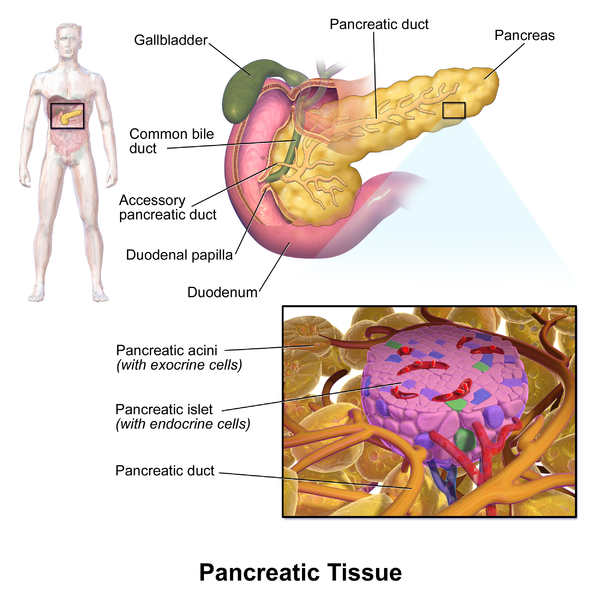
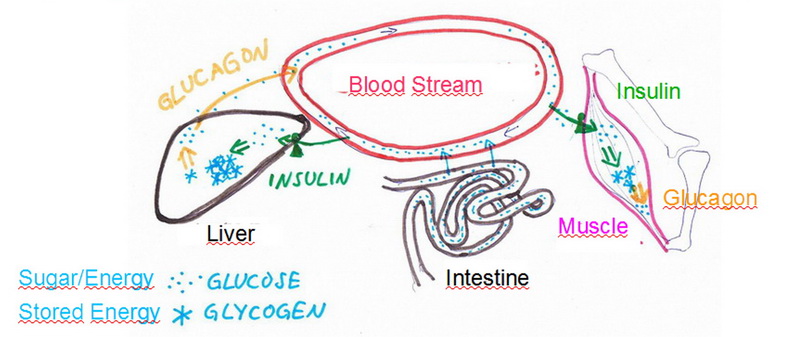
Beta cells are endocrine cells in the islets of Langerhans in the pancreas. These 65-80% of the islet cells synthesize the peptide hormone insulin which transports glucose out of the bloodstream into the tissues and cells via a lock-and-key mechanism. It is also necessary to transform glucose into glycogen, the form in which it can be stored. By the function of insulin, the blood sugar level is lowered.
Glycogen is stored especially in the liver and in muscle tissue. From there, it can be released and accessed with the help of glucagon, a hormone produced in the Alpha cells of the islets of Langerhans. Insulin also promotes fat storage and counteracts Fat reduction (lipolysis).
Insulin is released into the bloodstream in intervals of about 5 minutes, with peaks after food intake.
Brain
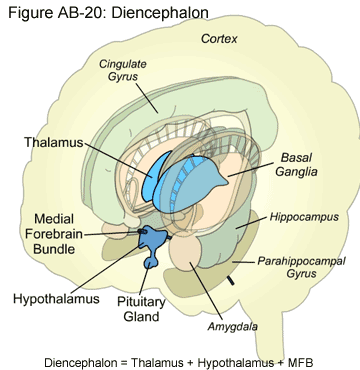
The diencephalon is situated between midbrain and central cerebrum.
Relay:
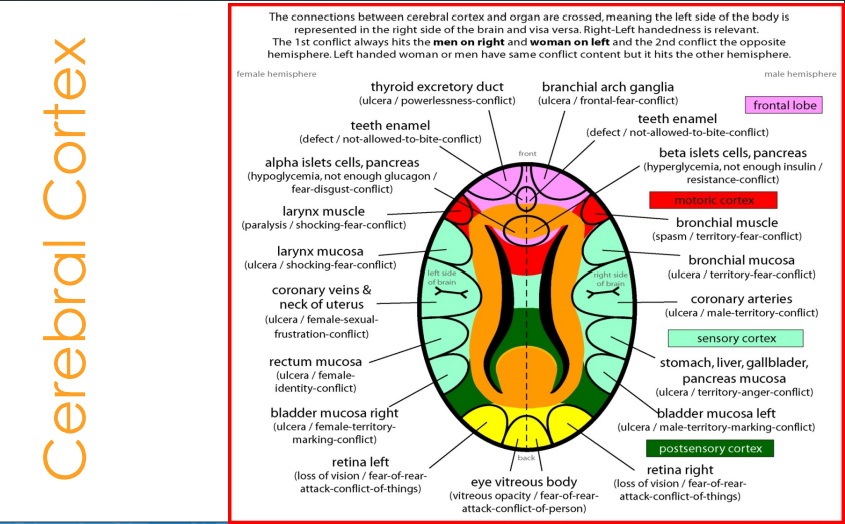
Cerebral Cortex ( – / + ), diencephalon right side
Mind
Theme:
inner resistance, avoiding confrontation
Also: overpowered, not able or allowed to move
High blood sugar is a biological strategy to create warmth in the body, as a survival mechanism in cold or states of freeze Study
Emotions, Thoughts:
Disgust, Fear, Humiliation, Resentment
Female nuance:
- Yuck!
- I’m going to throw up!
- I can’t even look there.
- I can’t look away there.
- I am disgusting.
Male nuance: - Why don’t I have the courage to do this?
- Don´t you dare bother me with that!
- I´m not doing that, no way!
- Leave me alone!
- Stay where you are!
META-Meaning:
- Now I’ll do it!
- Now, I will trust myself to react in a direct and relieving way
- Even when I got into this situation, I love and accept myself and my needs.
Organ
Stress Phase Symptoms:
Reduced insulin release and production in the Beta cells resulting in low sugar levels in the tissue and high levels in the blood, because the transport into the cells is restricted. Enhanced fat reduction (lipolysis) and formation of keton bodies leads to ketosis, i e the metabolism shifts into extracting energy from protein and fatty tissues. The blood sugar level is high.
Main Symptoms: frequent urination (polyuria), thirst, dry mouth, fruity odour from mouth and body, weight loss, weakness, fainting, spasms, neural dysfunctions, possibly depressive moods.
Possible diagnoses: Hyperglycemia, juvenile diabetes (type I), Diabetes mellitus, acute: diabetic coma, hyperglykemic coma, metabolic acidosis
Blood Sugar Test: - 40-70 mg/dl – Considered low blood sugar (hypoglycemia)
- 70-100 mg/dl – Considered normal
- 100-150 mg/dl – High level, usually after eating rich meal (hyperglycemia)
- 150-400 mg/dl – Very high levels (hyperglycemia)
Hemoglobin HbA1c Test: - 4% and 5.6% – Normal range
- 5.7% and 6.4% associated with increased risk of diabetes
- 6.5% or higher indicate diabetes
Regeneration Phase Symptoms:
Slow resumption of insulin production in the Beta cells. After long stress-activity, insulin insufficiency may remain.
Fluctuation in blood sugar levels is common.
.
Under unfavourable conditions (prolonged regeneration, chronic processes), an insulinoma can appear
Healing Peak:
Short-termed peak in hyperglykemia, followed by longer hypoglykemia. In extreme cases, hyperglykemic coma is possible.
Symptoms of hypoglykemia are attacks of sweating, trembling (tremor), fainting, dizziness (vertigo), loss of consciousness (absence, coma)
Lasting hypoglykemia has the risk of neural damage, because nerve cells are supplied directly by glucose.
Biological meaning
The organism forces a shift in metabolism and in lifestyle to resolve the conflict.
Social
Examples:
Inner resistance, disgust
- An older man (diabetes II) enjoys his home territory with his books and computer – he loves knowledge and science. His wife is interested in metaphysics and wishes she could share with him, but he thinks of these topics with disgust. However, both value good food which gives them life quality.
Humiliation and incapability for active solution - The client (diabetes II) with immigration background realizes the pattern to not being recognized and accepted according to his competence, and to not being capable to defend his position. By emotional release, active motion and changes in nutrition (green smoothies, low carb) he can manage the fluctuations. (Valentic, MHU archive)
- The young client (diabetes I) experienced humiliation in emotional situations. Through coaching, emotional release, mindfulness and change in nutrition he succeeds in getting rid of insulin injections. (Hunyadi)
- There is a family theme of girls being neglected for the client (diabetes I): her mother was abandoned by her partner, and the client has fix thoughts of staying alone. Already as a child she felt nonchalated by her father, later in life men won’t go in for a deeper relationship with her. Emotions of indignation and fear of abandonment are common to her. Reimprinting the pattern and her beliefs open her up for active changes. (Klapp)
Overpowered or not able to move - A girl sees her father having a seizure in the swimming pool. She tries to keep him afloat, but her strength is not enough. The father is saved by others, the girl got diabetes 1 from then on. (Frauenkron-Hoffmann)
Additional Information
Nerve cells and erythrocytes take up glucose independent on insulin. Therefore, the insulin-dependent cells take up more glucose during a prolonged regeneration phase, which leaves less for the nerve cells. In lasting hypoglykemia there is a risk that the nerve system gets damaged.
Insulin resistance:
When stress levels are high but there is no way to release it by motion or resolution, the blood sugar level gets generally elevated. Much insulin is produced to transfer the energy into the cells, but these tend to deactivate their insulin receptors when there is no need for more energy.
Thus, oversupply with inappropriate food promotes insulin resistance: the number of receptors is reduced, and even externally supplied insulin does not decrease the blood sugar level. Because of the inhibited utilization of glucose in muscle tissue, more insulin is released (hyperinsulinism) and receptors are reduced further.
Long-termed hyper- and hypoglykemia can influence blood vessel walls (angiopathy) and promote degeneration especially in the retina (diabetic retinopathy), kidneys (diabetic nephropathy) and extremities (diabetic foot syndrome).
Constellations
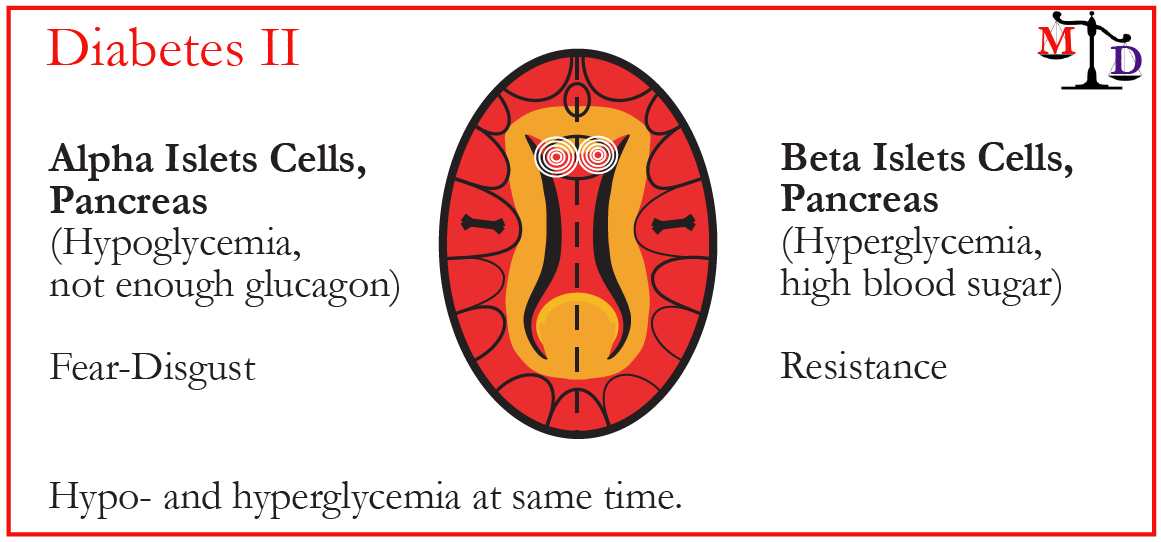
Diabetes II: simultaneous stress-activity in both sugar relays leads to hyper- and hypoglykemia, fluctuations in blood sugar levels, and manic or depressive moods (hormonal scale).
Differential Diagnosis:
Cause of hyperglykemia often is a lifestyle where stress is not released through motion.
Sympathomimetic drugs like cortison, antibiotics and catecholamines elevate the blood sugar by artificial stressing up the organism.
Pituitary Gland – Posterior Lobe (CC -/+) Stress (Bonding vs Individuality): loss of production/release of ADH, enhanced urination and much thirst, diabetes insipidus
Liver Parenchyma (BS +/-) Stress (starvation fear): enhanced neoglycogenesis, high fasting blood sugar, energy storage, obesity, fatty liver, liver cell carcinoma; Regeneration phase: indigestion, nightly sweating
Adrenal Medulla (BS +/-) Blood sugar level is elevated in every stress phase by adrenalin and noradrenalin.
Adrenal Cortex (CC -/+) Stress (orientation): drop of blood sugar, energylessness; Regeneration phae: elevated blood sugar, energy surge
Thyroid (BS +/-) Stress (velocity): nervousness, weight loss, tremor, hungry through enhanced metabolism