
Bladder – Submucosa & Trigon mucosa
Anatomy
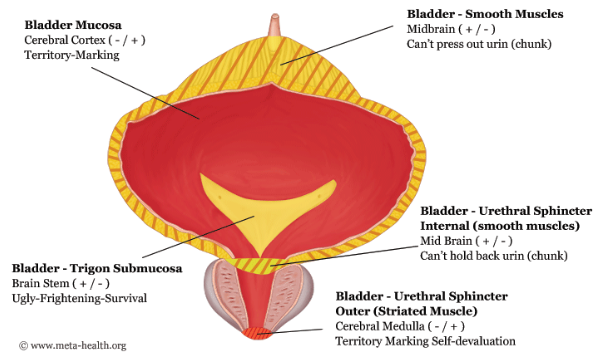
The urinary bladder stores the urine produced in the kidneys, before it is expelled. The bladder is a hollow and elastic organ embedded in the pelvic floor. It’s wall consists of smooth muscle lined by mucosa on it’s inside.
The trigon is a smooth triangular region of the internal urinary bladder formed by the two ureteral orifices and the internal urethral orifice. The area is very sensitive to expansion and once stretched to a certain degree the urinary bladder signals the brain of its need to empty. The mucosa in this region is connected to the Brain Stem.
Brain
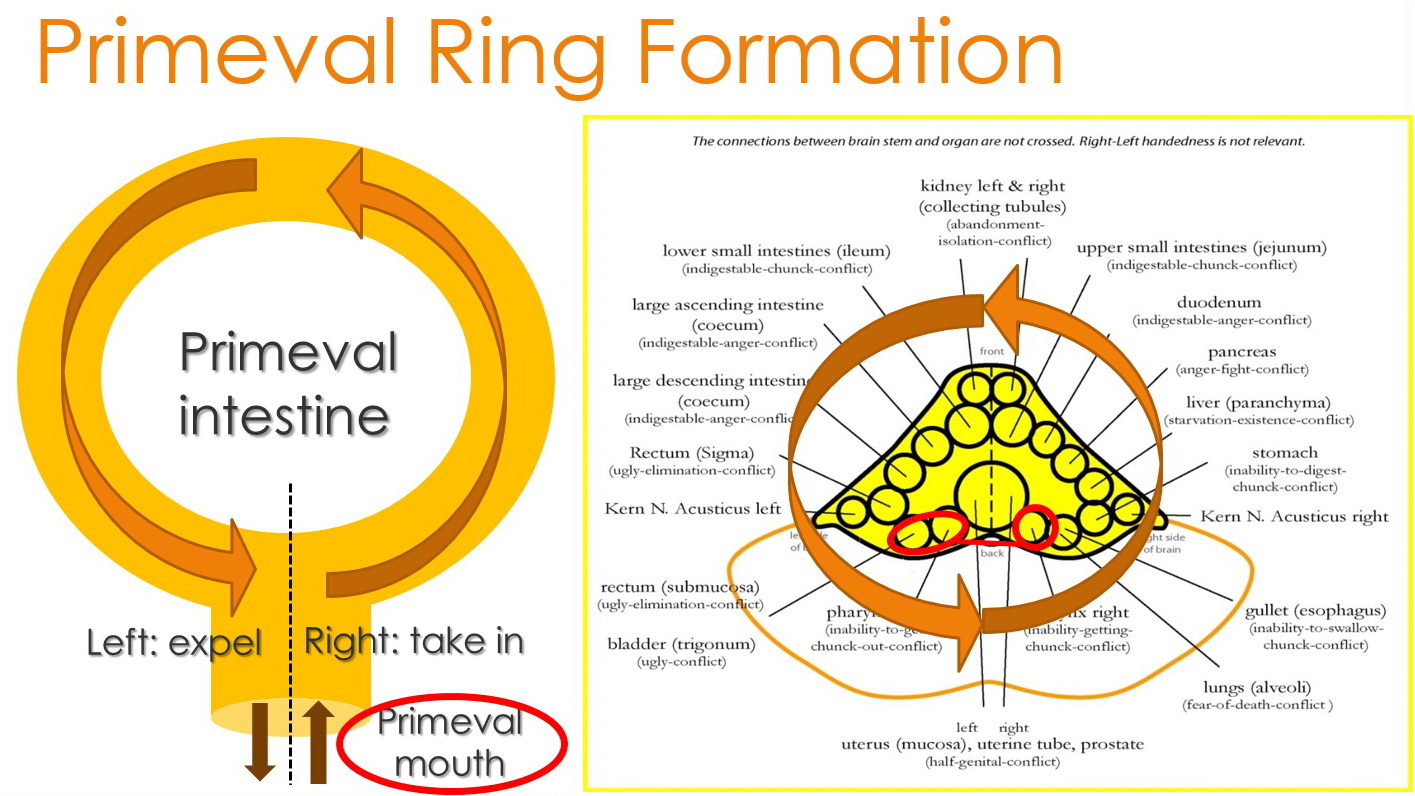
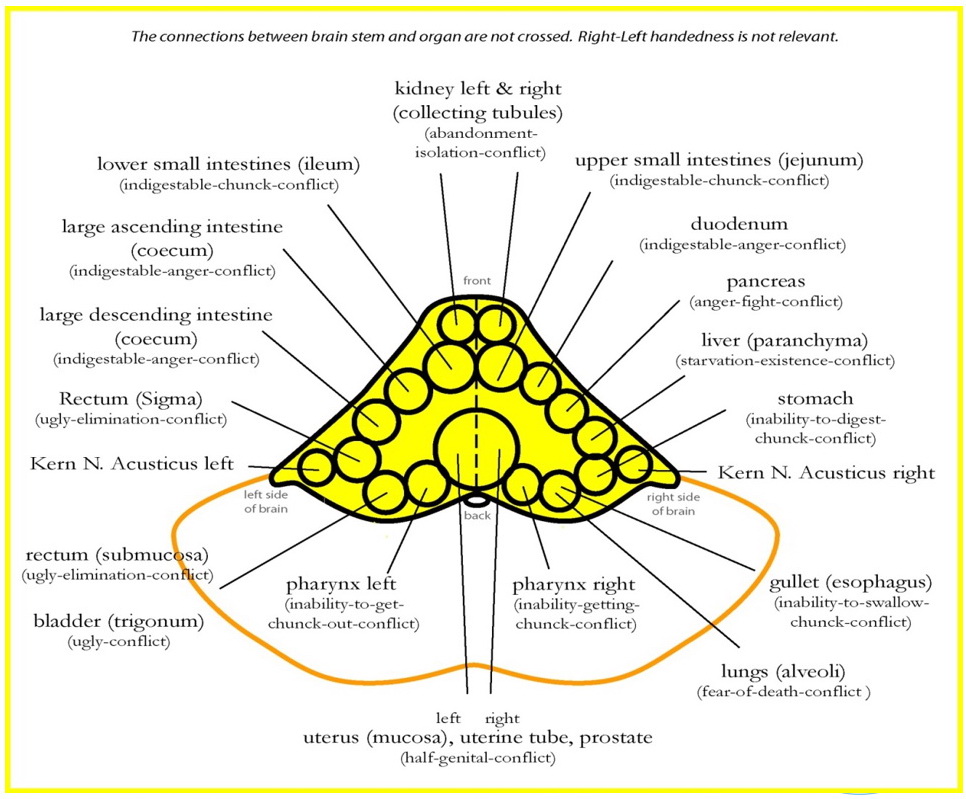
In the Brain Stem, the primeval ring structure is reflected: organ tissue relays with assimilative and digestive functions from oesophagus to small intestines are situated in the right brain stem, while excretory organs from caecum to rectum are relayed in the left brain stem. Medial on both sides are the relays of mouth/pharynx, middle ears and lacrimal glands, as well as the pineal and pituitary glands and the thyroid.
Relay:
Brain Stem ( + / – ) dorso-medial left hemisphere beside the Rectum Mucosa relay
Mind
Theme:
Excretion; Associated: Need to eliminate “ugly” waste
Emotions, Thoughts:
Repugnance
Something felt very messy, ugly or life-threatening.
- That was horrible!
- I have been abused!
- That can’t be real!
- How could they do that to me!
META-Meaning:
Now, I can allow myself to let that go.
Organ
Stress Phase Symptoms:
Enhanced sensitivity for the fill level (also by higher tonus of the smooth muscle layer), frequent urination (irritable bladder), increase of the secretory function of the mucosa, later tumor growth especially in the bladder trigonum or submucous in the rest of the bladder. Possible diagnoses: bladder polyps, adenocarcinoma.
Regeneration Phase Symptoms:
Purulent inflammatory reduction of cell proliferation with fungi or mycobacteria: then there are nightly sweating and blood or pus in the urine; Or the excess tissue is decomposed through autolysis without inflammatory signs; Or it can be encapsulated with connective/scar tissue and remain.
The process is painful only when the sensitive urothelium is affected. Bladder cysts can appear connected to different fungi or bacteria. Possible diagnoses: cystitis, abscess, candidosis, bleeding carcinoma.
In chronic processes, bladder stones (uroliths) can grow
Healing Peak
Chills, possibly bladder spasms during several hours
Biological Meaning:
The increase of secretory function in stress phase is helping to degrade and eliminate the conflict-creating substance or situation..
Social
Examples:
- A woman cares for her husband with a weak heart. She fights for his examination and medical care over months. After he dies in hospital she develops a bladder carcinoma.
- A woman was spat on and beaten in the street. She re-experiences that every night in her dreams. Simultaneously, she suffers from cystitis with fungal infection of the bladder.
Additional Information
Constellations:
Brain Stem Constellation possible: perplexity, lethargy, passiveness, reduced movement. Purpose: new orientation
Differential Diagnosis:
Bladder – Mucosa Urothelium) (Cerebral Cortex, -/+) stress phase (boundaries): numbness and ulceration, incontinence; regeneration phase: hyperesthesia and replenishment, virus infection, urothelium carcinoma
Bladder – Smooth Muscle (Midbrain, +/-) stress phase (excretion/position): irritable bladder, hypertonus, urge to urinate, hypertrophy; Regeneration phase: tonus normalization
Bladder – Urethral Sphincter (Cerebral Medulla, -/+) stress phase (boundaries/control): slackening, incontinence, necrosis; Regeneration phase: replenishment, hypertonus, urinary retention possible; Healing Peak: spasms
Kidney Collecting Tubules (Brain Stem +/-) Stress phase (abandonment): enhanced water reabsorption & retention, reduced urination, renal duct carcinoma possible; Regeneration phase: enhanced urination, oedema normalization, tumor decomposition with proteinuria, nightly sweating
Incontinence can be caused by pressure from other organs (like the uterus) on the bladder due to weakened ligament structure.
