
Pharynx Mucosa – Nasopharyngeal Zone
Anatomy
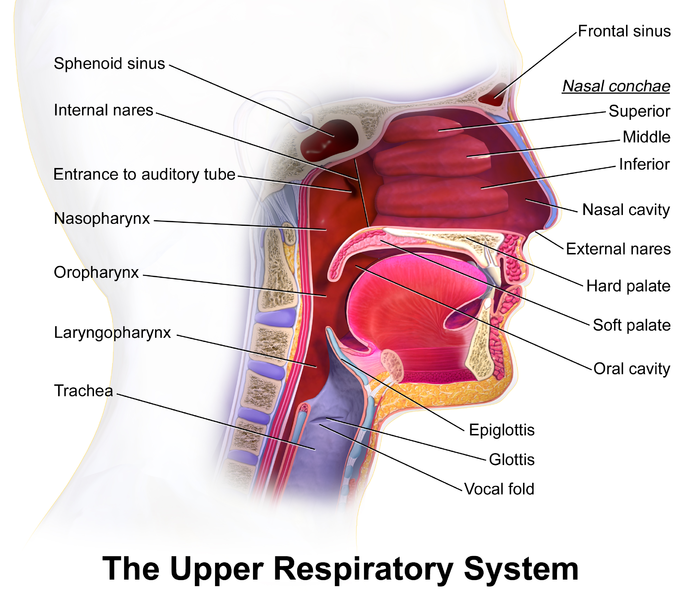
The nasopharynx (nasal part of the pharynx) belongs to the respiratory system. It is the uppermost part of the pharynx above the soft palate at the back of the nose. It connects the nose to the mouth, which allows a person to breathe through the nose, because the nasopharynx remains open when the surrounding muscles flex. The soft palate separates the nasopharynx from the oropharynx, which sits just below the soft palate. The nasopharynx is surrounded by the salpingopharyngeal fold and the tubal tonsils. It contains adenoid tissue and the openings to the Eustachian tubes leading to the ears. It provides a major drainage path for lymphatic fluids of nose and ears into the throat.
The nasopharynx is lined by respiratory ciliated epithelium. These are specialized cells for self-cleansing of the respiratory tract. The cilia move like ears in the wind and expel mucus and particles from the lungs. Sensory cells provoke a cough reflex. Embedded in the respiratory epithelium are goblet cells for moisturizing the breathed-in air.
Brain
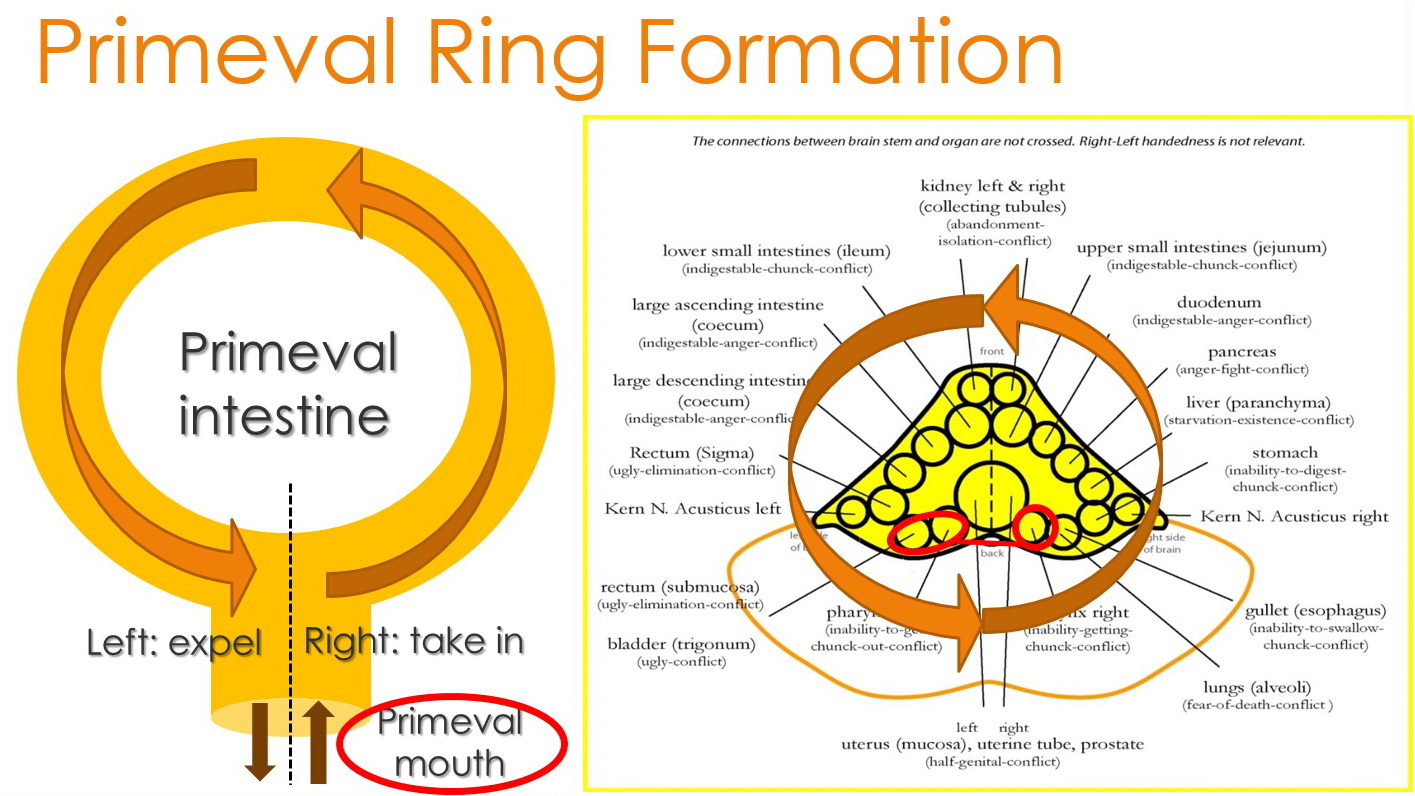
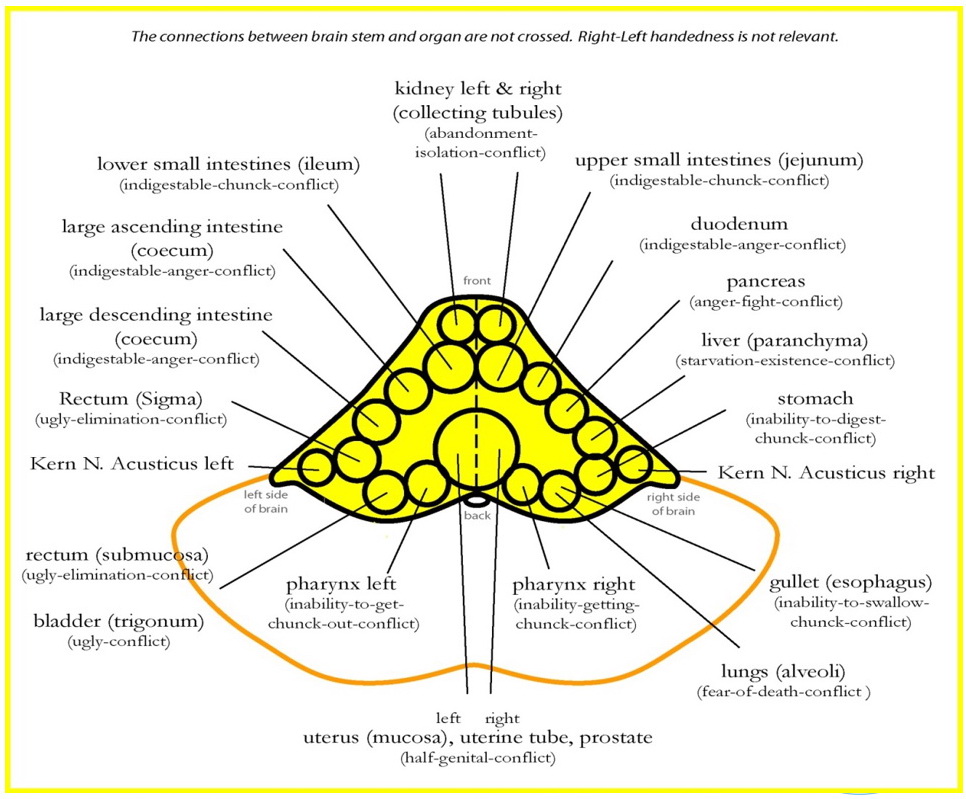
In the Brain Stem, the primeval ring structure is reflected: organ tissue relays with assimilative and digestive functions from oesophagus to small intestines are situated in the right brain stem, while excretory organs from caecum to rectum are relayed in the left brain stem. Medial on both sides are the relays of mouth/pharynx, middle ears and lacrimal glands, as well as the pineal and pituitary glands and the thyroid.
Relay
1. Brain Stem (+/-) for respiratory epithelium
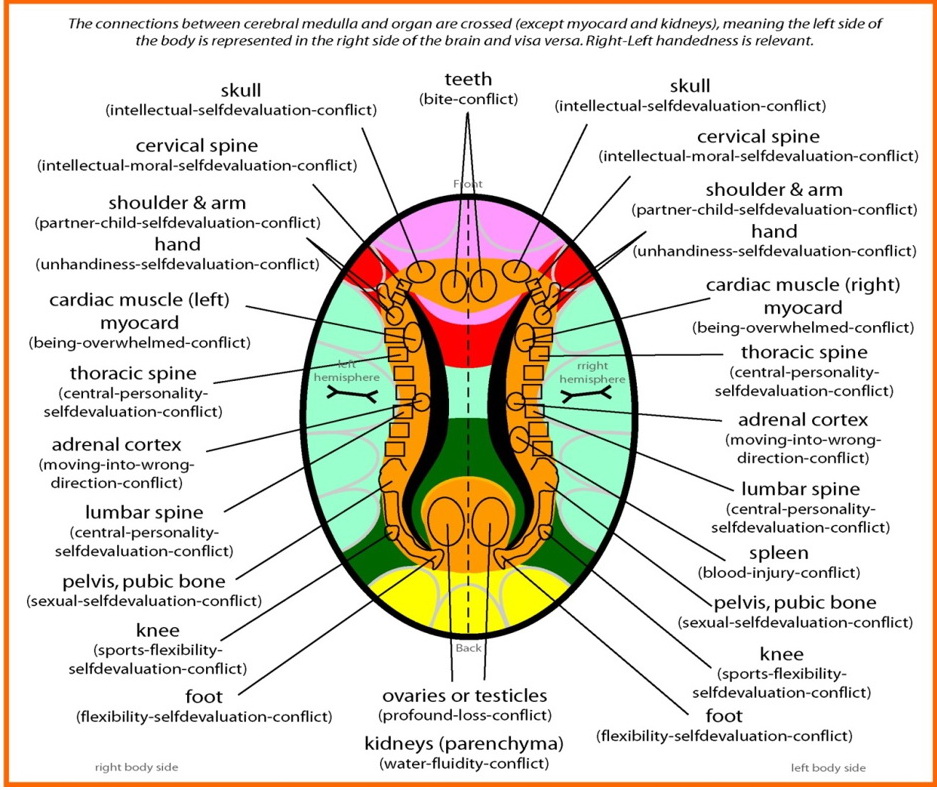
2. Cerebral Medulla (-/+) “cervical area” for lymphatic tissue.
Mind
Theme
1. (BS) Reaching/assimilating (right side) or getting rid of (left side) a morsel of air or information.
2. (CM) Ingesting (self-worth aspect): Not being able to ingest or to select what is beneficial.
Emotions and Thoughts:
1. (BS) Attention, greed, neediness
- I need to get that!
- I need to breathe!
- I was all focussed on reaching that!
2. (CM) Uncertainty, resistance, remorse - I don’t know if this is right.
- I should have prevented that!
- How should I know?
- I should have caught that!
META-Meaning:
- I am assimilating or letting go of it easily.
- I am able to chunk this down, evaluate and choose.
- There are always more opportunities!
Organ
Stress Phase Symptoms:
1. Functional improvement in the respiratory epithelium like enhanced sensory, motility function and mucus production for cleaning the respiratory tract. Increased cell proliferation in the adenoidal vegetation of the nasopharynx which can be diagnosed as benign (like polyps or papilloma) or malignant polyps or tumors (like adenoid-cystic carcinoma) of the nasopharynx.
2. Immune deficiency, degradation of lymphatic tissue
Regeneration Phase Symptoms:
Purulent tissue degradation with fungi (Candida albicans) or mycobacteria. Yellow discharge possibly draining into throat.
In chronic processes, the respiratory epithelium can transform by destruction of the ciliae and hyperplasia of the goblet cells (COPD).
The lymphatic tissue can show a proliferation diagnosed as lymphoepithelioma.
Biological Meaning:
1. (BS) Due to the functional improvement and the increased cell proliferation in stress phase, the chunk or air can be better moisturized in order to slide easily down the throat (right side of the nasopharynx), or to easily get rid of it (left side of the nasopharynx).
2. (CM) Functional gain, learning and maturation after completed regeneration.
Social
Examples:
- A woman wants to sell her car badly but negotiations don´t work out. She sneezes often.
- A father needs to buy a property and is sure to get it, but then the bank refuses to give a loan. He gets a prolonged purulent influenza.
- A little boy has to conquer his place in kindergarden. He has recurring swollen tonsils, and his mother fears for him becoming deaf.
Additional Information
As the nasopharynx connects to ears, nose and throat, the course of it´s conflict processing can affect these organs as well and possibly lead to hearing trouble, headache, nosebleeds or a sore throat.
70% of the cancerous affections found in the nasopharynx are lymphoepitheliomas, seen in connection with the Epstein-Barr virus. From META-Health perspective, this indicates that a relay in the cerebral cortex is affected and that this type of cancer develops in the regeneration phase. A possible explanation could be that the affected cells derive from the branchial arches /pharyngeal ducts which react upon a conflict of powerlessness or frontal fear.
Constellations:
Brain Stem Constellation possible: perplexity, lethargy, passiveness, reduced movement. Purpose: new orientation
Differential Diagnosis:
Pharyngeal Arches (Cerebral Cortex -/+) with cysts in the neck and mediastinum in the regeneration phase (frontal fear/helplessness conflict), may be diagnosed as Non-Hodgkin Lymphoma.
Eustachian Tube and Middle Ear(Brain Stem, +/-) with tissue growth in the stress phase (“auditory chunk”) leading to hearing loss, pressure, headache; regeneration phase: otitis media
Inner Ear – Cochlea(Cerebral Cortex, -/+) stress (auditory trauma): tinnitus; regeneration phase: hearing loss, no cell changes in the process.
Tonsils(Brain Stem, +/- and Cerebral Medulla, -/+) stress (assimilation): polyps or adeno-carcinoma; regeneration phase: tonsillitis or adenopharyngitis.
