
Lungs – Bronchial Goblet Cells
Anatomy
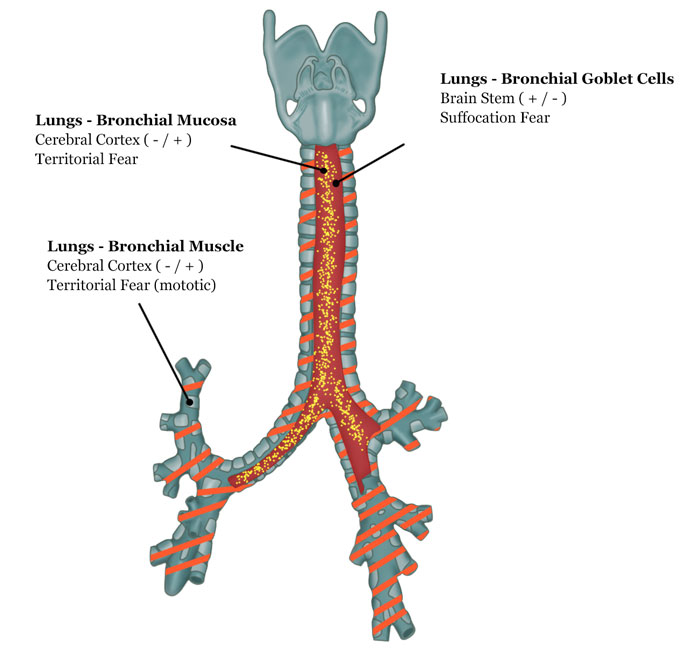
Goblet cells are glandular simple columnar epithelial cells, shaped like a cup, whose sole function is to secrete mucus. They are found scattered among the epithelial lining of many organs especially the intestinal and respiratory tracts. In the respiratory tract they are found inside the trachea, bronchi, and larger bronchioles.
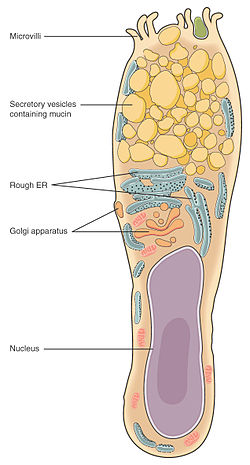
While most of the cell organelles are concentrated in the basal portion, the greatest part of the goblet cell’s cytoplasm shows mucinogen granules.To increase surface area, the apical plasma membrane projects microvilli for secretion.
Brain
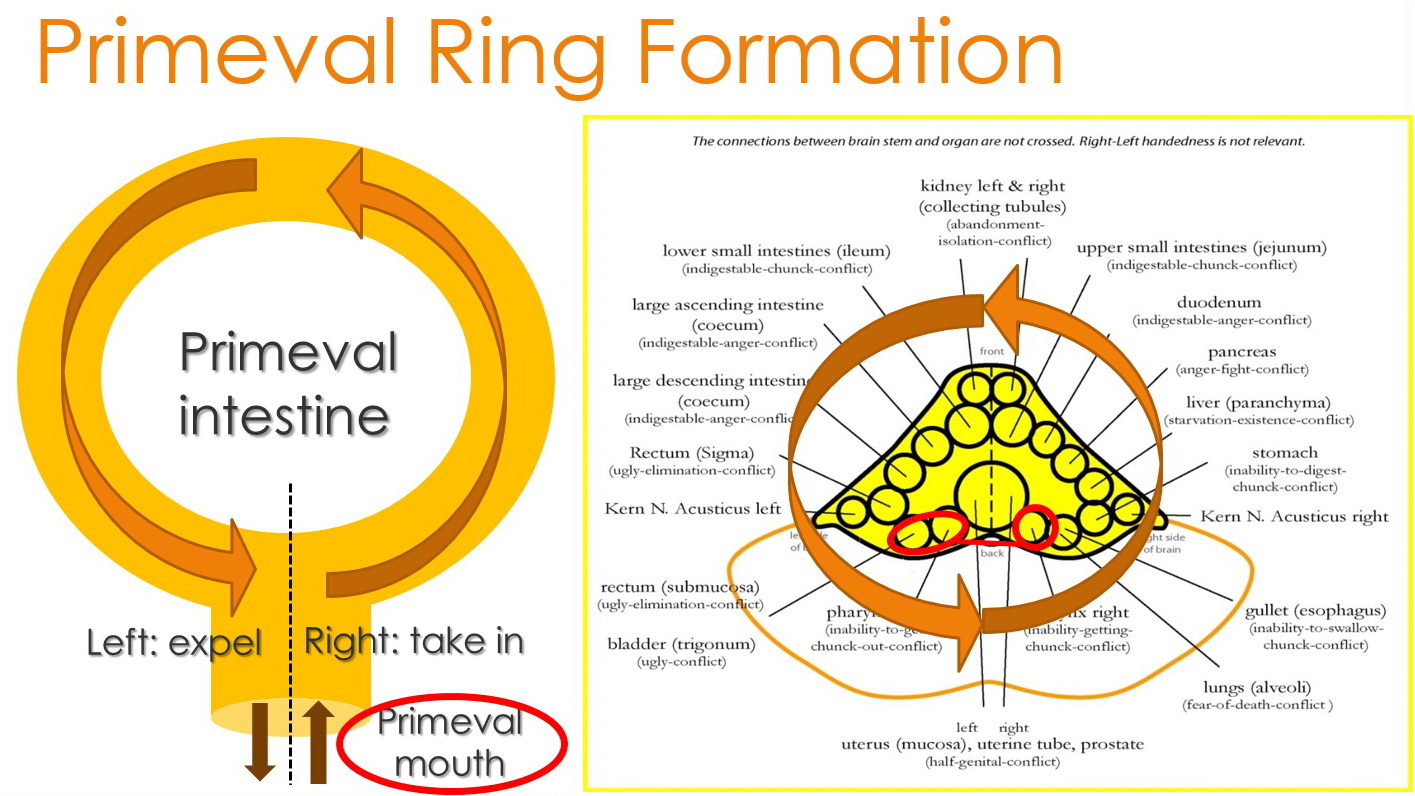
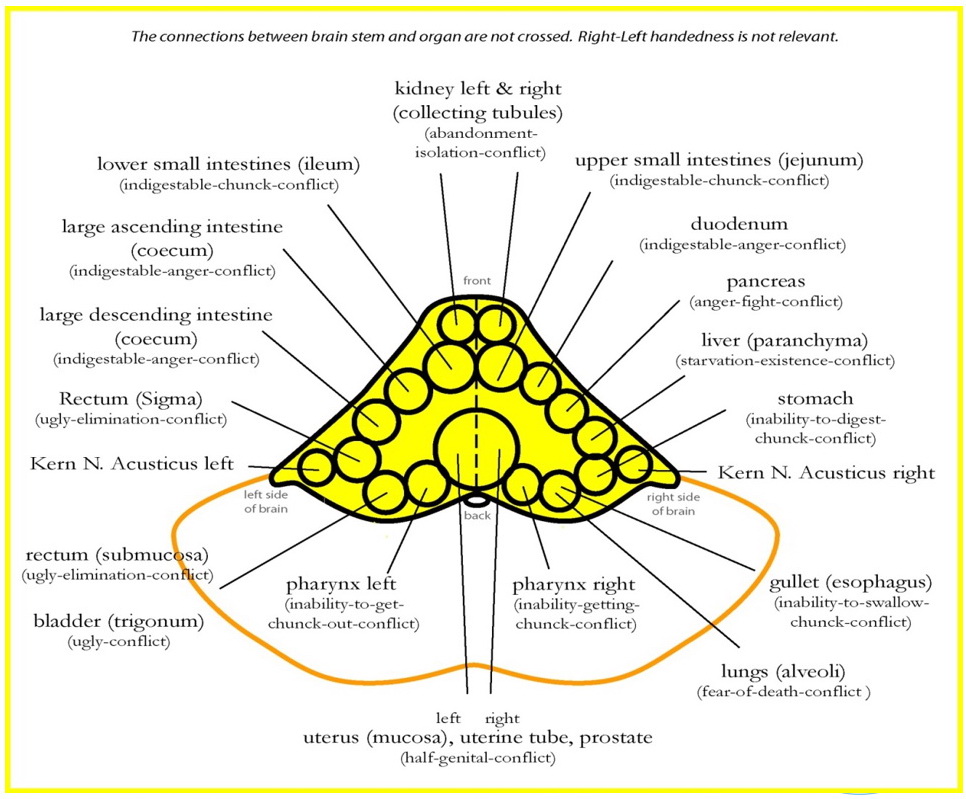
In the Brain Stem, the primeval ring structure is reflected: organ tissue relays with assimilative and digestive functions from oesophagus to small intestines are situated in the right brain stem, while excretory organs from caecum to rectum are relayed in the left brain stem. Medial on both sides are the relays of mouth/pharynx, middle ears and lacrimal glands, as well as the pineal and pituitary glands and the thyroid.
Relay:
Brain Stem ( + / – ) posterior medial both sides between pharynx and alveoli relays
Mind
Theme:
Lubrication. The very basic need to make air, substances and information pass smoothly through our system.
Conflict: Fear of suffocation.
Handedness is irrelevant in this relay.In the brain stem, right side is reflecting “ingoing chunks” and left side “outgoing chunks” or chunks to avoid.
Emotions, Thoughts:
Panic , shock, freeze
- Let go, you are choking me.
- I felt smothered.
- I can´t breathe!
- The air is too hot/cold/dry, it will harm me!
META-Meaning:
- Now, I let my breath easily flow in and out.
- I let everything go through me with ease.
Organ
Stress Phase Symptoms:
Functional increase and hyperplasia of bronchial goblet cells producing more secrete with increased mucus secretion;
Under unfavourable circumstances, adenoma or adenocarcinoma growth occurs consisting of goblet cells and having secretory properties. Possible diagnoses: goblet-cell lung carcinoma, bronchial adenocarcinoma, goblet cell adenoma or bronchial carcinoma.
Regeneration Phase Symptoms:
Hyperfunction stops. Purulent degradation of the tumor by fungi or mycobacteria leads to night sweat and cough with purulent or caseated discharge, possibly with blood. Possible diagnoses: bronchial goblet cell-inflammation, bleeding bronchial carcinoma or purulent bronchitis.
Recurring processes can lead to lung fibrosis.
Goblet cell function is involved in the development of COPD:
1.”chronic catarrhal bronchitis” are repetitive processes featuring enhanced mucus secretion.
2. In “chronical mucous purulent bronchitis” bacteria are involved. Typical are night sweat, fever, expiratory stridor and breathlessness.
3. In “chronical atrophic bronchitis” the functional mucosa is degraded and replaced with fibrous tissue. When the walls of respiratory tract (muscle, cartilage) is affected, it is due to self-devaluation regarding breathing capacity. When the walls get thin, bronchi can collapse.
Social
Examples:
- At birth, the baby had the umbilical cord wrapped around her neck. In regression, the client feels panic of suffocation. (Klapp)
- strong smoker gets the diagnosis COPD. He has stress dyspnea and feels that he can’t perform. He believes the negative prognoses of medicine,but does not want to quit smoking. He is a victim of self-fulfilling prophecy. (Klapp)
- A woman barely escaped from a burning house, suffering from sleep apnoe and a dry throat later in her life because she re-experienced the trauma in her dreams. (Klapp)
Biological Meaning:
The increased mucus production of bronchial goblet cells (in the stress phase) allows a better sliding of ’air morsels’ through the bronchi.
Additional Information
Other goblet cells can be found inside the trachea, the small intestine, thevagina, and the conjunctivae in upper eyelid and nose. Their biological function is always to provide mucus for fluent and smooth passage and cleaning of the inner organ walls.
The condition of cystic fibrosis, also called mucoviscidosis, involves the function of goblet cells, which then are hypertrophic and augmented in number. Moreover, the gene for the CFTR, a protein required to regulate the components of sweat, digestive fluids and mucus, is mutated. and is inherited by the next generation. This indicates a prenatal suffocation UDIN either by the fetus or by the mother, or an ancestral pattern of emotions and beliefs.
In asthma, hypersecretion of mucus is often found. This is due to asthma symptoms triggering the goblet cells suffocation response.
Constellations:
Brain Stem Constellation possible: perplexity, lethargy, passiveness, reduced movement. Purpose: new orientation
Differential Diagnosis:
Lung Alveoli (Brain Stem, +/-) with lung cancer in the stress phase (death fright), pneumonia or tuberculosis in the regeneration phase.
Pharyngeal Arches (Cerebral Cortex, -/+) stress (frontal fear/powerlessness): hyperesthesia in lateral neck area or down to mediastinum; regeneration phase cysts in neck or mediastinum possible
Pharynx Respiratory Epithelium (Brain Stem, +/-) stress (assimilation and filtering of air/information): polyps or tumor formation; regeneration phase: sore throat or fungal infection, productive cough with pus.
Pharynx Mucosa (CC -/+) stress (prohibited swallowing or expression): hyperesthesia, harrumph, light irritant cough
Tracheal & Bronchial Mucosa (CC -/+) stress (social fear): hyperventilation, depression; Regeneration phase: viral or bacterial bronchitis, high fever, deep cough with mucus
