
Parathyroid Glands
Anatomy
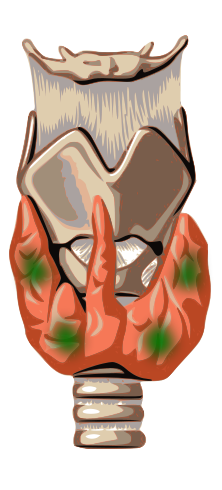
The parathyroid glands are four small oval bodies located on either side of the rear side of the thyroid gland of the endocrine system. They produce parathyroid hormone (PTH), which as antagonist to calcitonin controls the amount of calcium in the blood, to enable muscular activity. It also influences nervous function, blood clotting, bone construction and cellular metabolism.
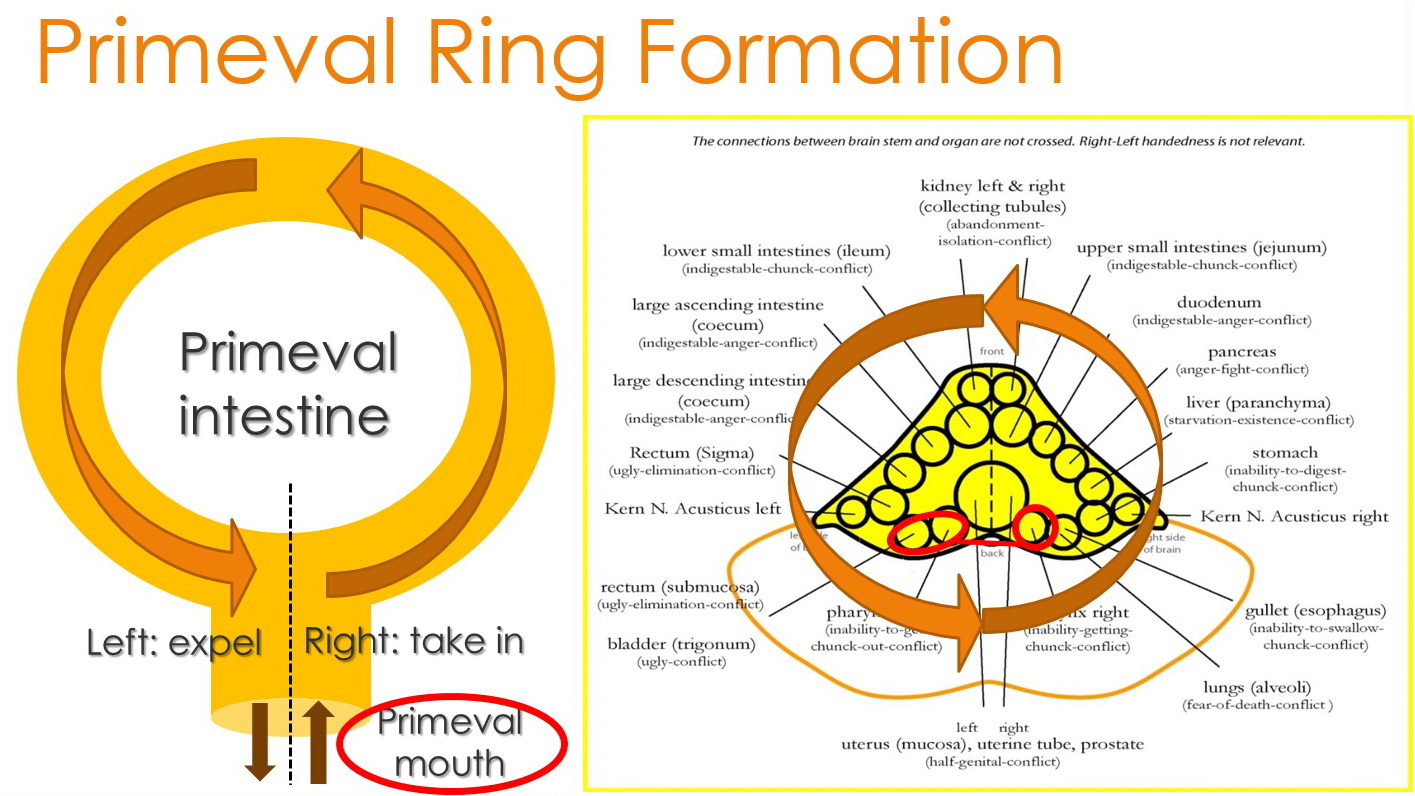
PTH augments calcium availability in the blood. When uptake is insufficient, calcium can be dissolved out of bone mass. Historically, thyroid and parathyroid glands were exocrine glands secreting into the gut (see primeval ring-formation of the organism).
Brain
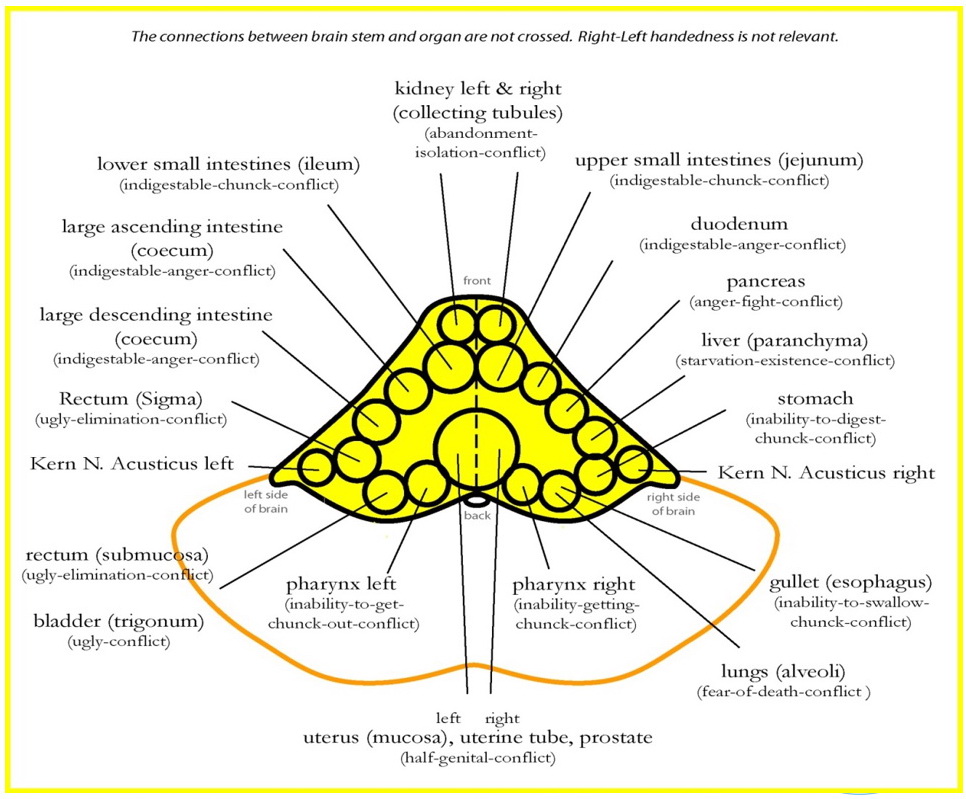
In the Brain Stem, the primeval ring structure is reflected: organ tissue relays with assimilative and digestive functions from oesophagus to small intestines are situated in the right brain stem, while excretory organs from caecum to rectum are relayed in the left brain stem. Medial on both sides are the relays of mouth/pharynx, middle ears and lacrimal glands, as well as the pineal and pituitary glands and the thyroid.
Relay:
Brain Stem ( + / – ) posterior medial left & right
Mind
Theme:
Right side: Inability to reach a chunk/aim because of muscle function
Left side: Inability to rid oneself of or avoid a chunk/situation because of muscle function
Emotions and Thoughts:
Typical emotions are impatience, or regretting own incapability.
- I´m not smooth/strong/agile enough to catch or to get rid of that.
- I’ve got to get that!
- I’ve got to make it!
- I can’t do it!
The Brain Stem association of performance is focused on the goal, whereas in the Cerebral Medulla conclusions about self-value are made.
META-Meaning:
My system is functioning perfectly to provide me with everything I need.
Organ
Stress Phase Symptoms:
Increase of PTH production and hyperplasia of the main cells of the parathyroid glands. This leads to elevated calcium levels in the blood and eventually dissolution of calcium and phosphate from bones. Phosphate is excreted with the urine while calcium remains in the body, and can lead to calcifications and deposits.
Prolonged or recurrent stress phases may thus lead to “moans, groans, stones, and bones“, referring to aches, fatigue, kidney stones, and possibly demineralisation of bones (osteoporosis, fibroosteoclasia, osteoidosis), when the nourishment and buildup of bone tissue is inhibited. However, in many cases hyperparathyroidism appears without symptoms.
Possible diagnoses: primary hyperparathyroidism (HPT), adenoma, adenocarcinoma
Regeneration Phase Symptoms:
In the regeneration phase the tumor will either remain as incapsulated knots, or be degradated by a bacterial inflammatory process which results in the normalization of the PTH level. These tumors frequently persist and encapsulate. In this case the organism continues to produce an increased hormone level although the biological conflict has been solved.
Hypoparathyroidism is a condition that rather comes from parathyroidectomy or traumatization of the glands during surgery than from a prolonged and interrupted regeneration. It leads to muscle cramps, spasms and paresthesia.
Biological Meaning:
The elevation of PTH and calcium availability as part of a feedback loop leads to improved muscular activity for to reach food or values, or to avoid danger. As the endocrine System needs and creates hormonal balance, a one-sided increase does not serve a purpose.
Social
Examples:
- A woman applying for a job with male competitors feels she is turned down because she is not physically strong enough.
- A young man is advertising for a girl, but she chooses another boy who plays in the football team.
- A widow wants to sell the big house she is living alone in, because she feels the can´t cope with maintaining it.
Additional Information
Constellations:
Brain Stem Constellation possible: perplexity, lethargy, passiveness, reduced movement. Purpose: new orientation
Differential Diagnosis:
Thyroid Gland "Ductal pattern” (Cerebral Cortex -/+) Stress (helplessness/frontal fear). Elevation of hormone release by augmented transport (not secretion), dragging pain (Inner Skins sensitivity pattern); euthyroid goiter; Regeneration phase: cold nodules, hypothyreosis.
Thyroid Follicular Epithelium (Brain Stem +/-) Stress (velocity): hyperthyreosis, speeded metabolism, goiter; chronic: hypothyreosis
Bones (Cerebral Medulla -/+) Stress (instability): Reduction of trophic/nourishment leads to osteolysis, demineralisation
Skeletal Muscle (Cerebral Medulla -/+) Stress (performance): Reduction of trophic/nourishment leads to muscle weakening, dystrophy
Muscle Fascia (Cerebellum, Midbrain +/-) Stress (muscular protection): elevated tonus, contraction, hardening of muscles
Motoric Innervation (Cerebral Cortex -/+) Stress (inhibited action): Paralysis, freeze reaction; Regeneration phase: muscle spasms especially in Healing Peak
There are also other causes for hyperparathyroidism, such as hypocalcemia (low blood calcium levels) e. g. due to vitamin D/sunlight deficiency, renal insufficiency by injury or recurring (chronic) kidney parenchyma (water, drowning) conflict, or as a response to parathyroidectomy.
