
Duodenum Mucosa – Villi
Anatomy
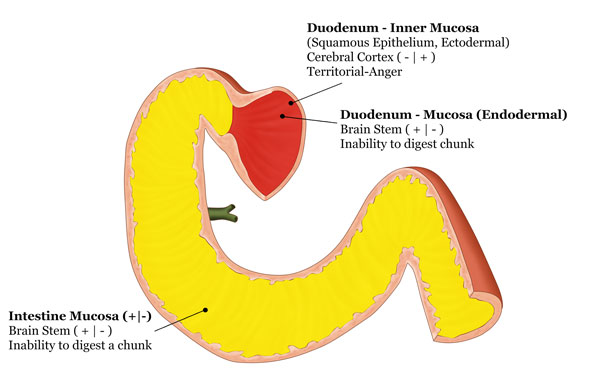
The duodenum is the shortest part of the small intestine, which follows the pylorus and precedes the ileum and jejunum. Here, most chemical digestion takes place. The villi of the duodenum have a leafy-looking appearance. Brunner's glands, which secrete mucus, are found in the duodenum only. The duodenum also regulates the rate of emptying of the stomach via hormonal pathways. Secretin and cholecystokinin are released from cells in the duodenal epithelium in response to acidic and fatty stimuli present there, when the pylorus opens and releases gastric chyme into the duodenum for further digestion. These cause the liver and gall bladder to release bile, and the pancreas to release bicarbonate and digestive enzymes such as trypsin, lipase and amylase into the duodenum as they are needed.
Brain
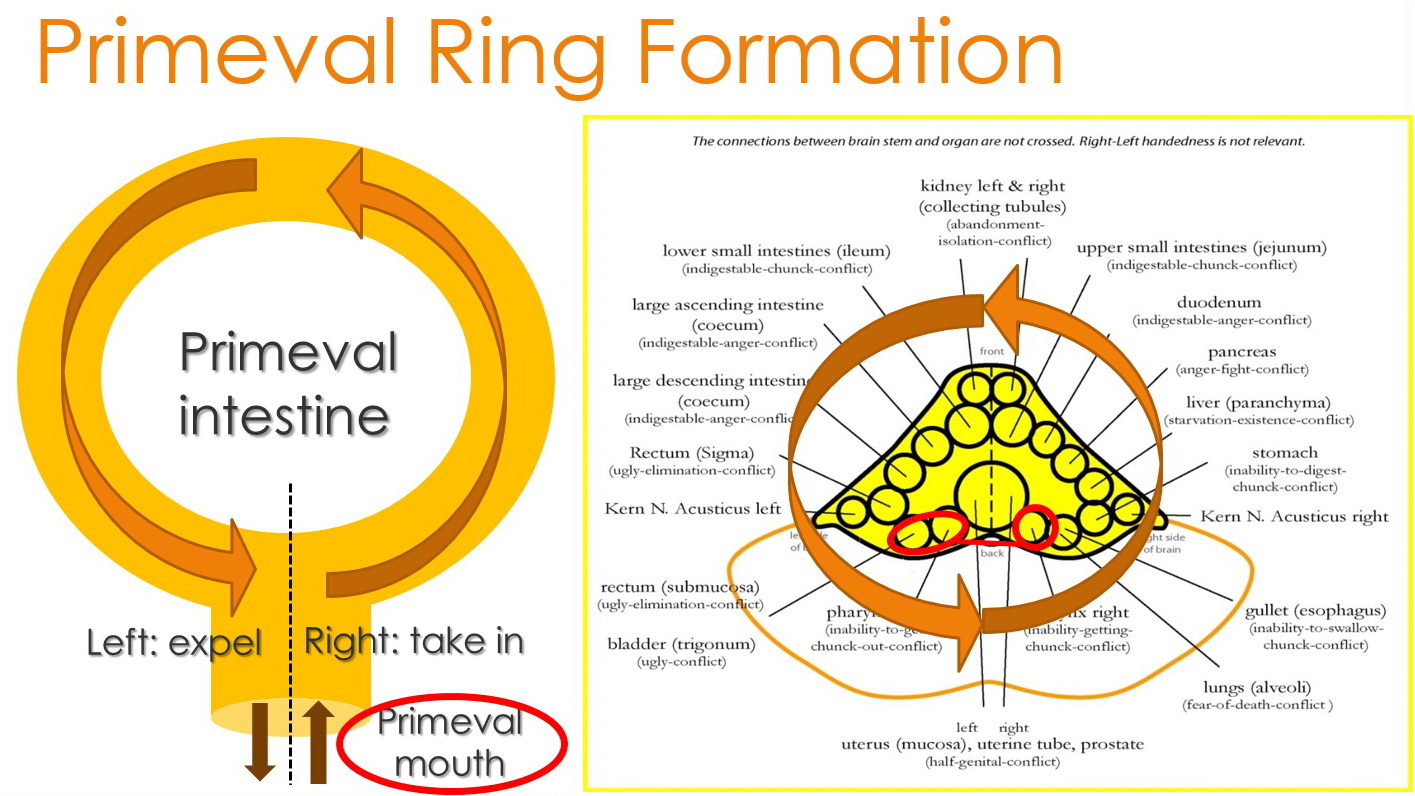
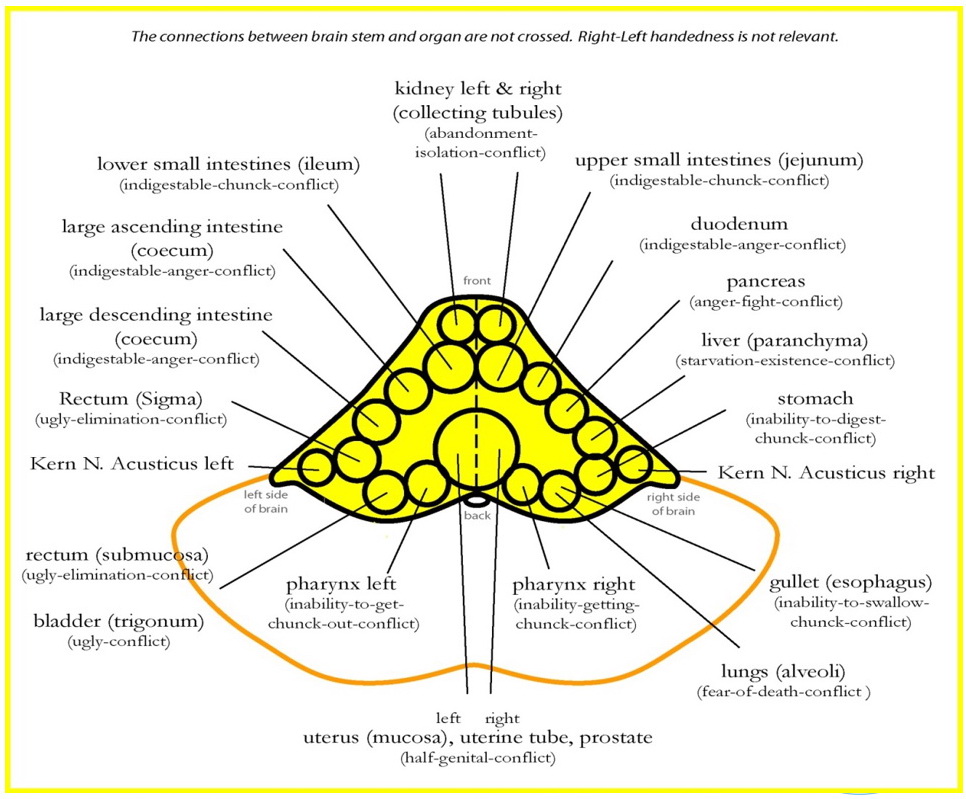
In the Brain Stem, the primeval ring structure is reflected: organ tissue relays with assimilative and digestive functions from oesophagus to small intestines are situated in the right brain stem, while excretory organs from caecum to rectum are relayed in the left brain stem. Medial on both sides are the relays of mouth/pharynx, middle ears and lacrimal glands, as well as the pineal and pituitary glands and the thyroid.
Relay:
Brain Stem (+/-) fronto-medial right
Mind
Theme:
1. Digestion with aspect of starvation; fight for values
2. Resentment, not being able to understand a situation/emotion/thoughts and to use it.
Side dominance is irrelevant.
Emotions and Thoughts:
Irritation
- I cannot digest this.
- I am going to starve.
- I can´t accept this.
- Why did they do that to me?
- I can´t squeeze a meaning out of it.
META-Meaning:
- I take my time to digest and process this.
- I can take what I need and leave or pass on the other.
Organ
Stress Phase
Functional gain (secretory or reabsorptive), later a cell proliferation in the duodenum. This can take the shape of polyps or of adenocarcinomas: for reabsorptive quality they grow flat, for secretion of hormones or juice they grow in a compact way which can lead to an or a cholestatic icterus.
Regeneration Phase Symptoms:
Tumor growth stop and function normalization. Tumor decomposition by acid resistant fungi and bacteria (mycobacteria). The leading symptoms are fever, nightly cold sweats, black “tar stools” (digested bloodin stool), duodenal inflammation. In the absence of bacteria the tumor may encapsulate.
After long or chronic processes duodenal diverticula can develop as a remnant.
In chronic cycles or by conditioned alarm signal function, food intolerances like coeliakia can develop.
Biological Meaning:
By cell proliferation and functional improvement, the chyme can be easily digested and absorbed in order to gain more nutrients.
Social
Examples:
1. Not being able to break down or to digest a chunk of information or experience related to fear of starvation:
- The business is bankrupt and owner cannot digest that he failed in his endeavor. After the started a new business which he felt will be a success, his became “sick” as his body regenerated with night sweat, fever which lasted for several weeks until he fully recovered.
2. “Indigestable anger” often related to family quarrel, with a nuance of cleavage and incomprehension: - A therapist has several food intolerances and experiences chronic bloating and diarrhea. She can’t forgive her father who didn’t let her have higher education. Her intolerances got better when she began to lead her own life. By META-Coaching, the emotional background was renegotiated.
Additional Information
Constellations:
Brain Stem Constellation possible: perplexity, lethargy, passiveness, reduced movement. Purpose: new orientation
Differential Diagnosis:
Duodenum inner mucosa (bulbus) (Cerebral Cortex -/+) with painful ulceration in the stress phase (rank/identity) and possibly carcinoma in the regeneration phase.
Pylorus squamous epithelium (Cerebral Cortex -/+), with pyloric ulcer in stress phase (rank/identity), pyloric cancer in regeneration phase.
Pylorus Sphincter muscle (midbrain +/-) stress phase (suppressed anger) with hypertonus leaving chyme and acid in the stomach, creating an environment for ulceration. Regeneration phase infection with helicobacter pylori.
Submucosa/ lymphatic tissue (Cerebral Medulla -/+) stress (choice, decision): immune insufficiency, leaky gut; regeneration phase: Inflammatory and edematous in the first phase. Diagnoses may be lymphoma, inflammatory fibroid polyps, perineurioma and leiomyoma.
Smooth Muscle Layer (Midbrain +/-): smooth muscle often co-reacts with mucosa, theme being to forward the chyme by peristalsis. In stress phase (processing anger) we see a functional increase and possibly leiomyoma.
