
Large Intestine – Cecum, Appendix
Anatomy
The cecum or blind gut is a pouch connected to the ascending colon of the large intestine and the ileum. It is separated from the ileum by the ileocecal valve (Bauhin’s valve) which prevents bacteria from entering the sterile ileum. It is connected to the colon by the cecocolic junction.
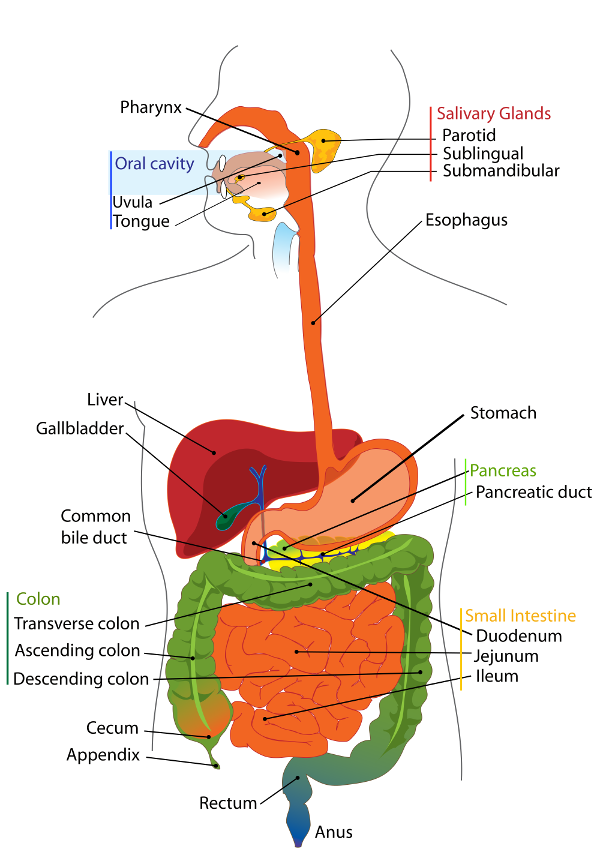
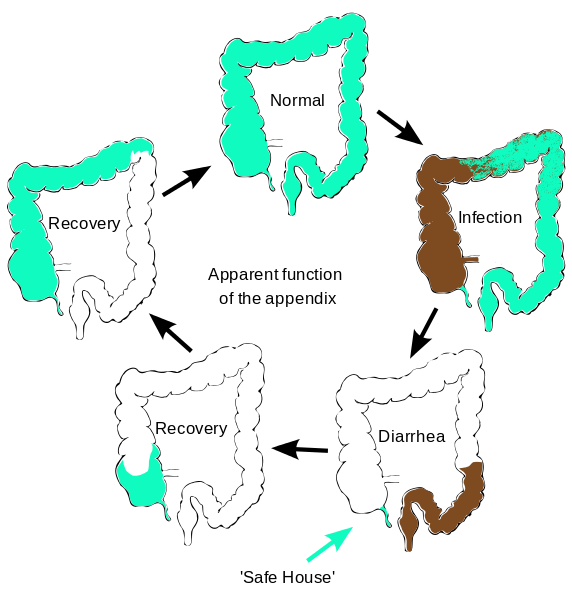
The appendix is a blind-ended tube connected to the cecum, from which it develops embryologically. It is located near the junction of the small intestine and the large intestine. The appendix contains much lymphatic tissueto support self-regulation of microbial population, as well as being a reservoir for gut bacteria.
Brain
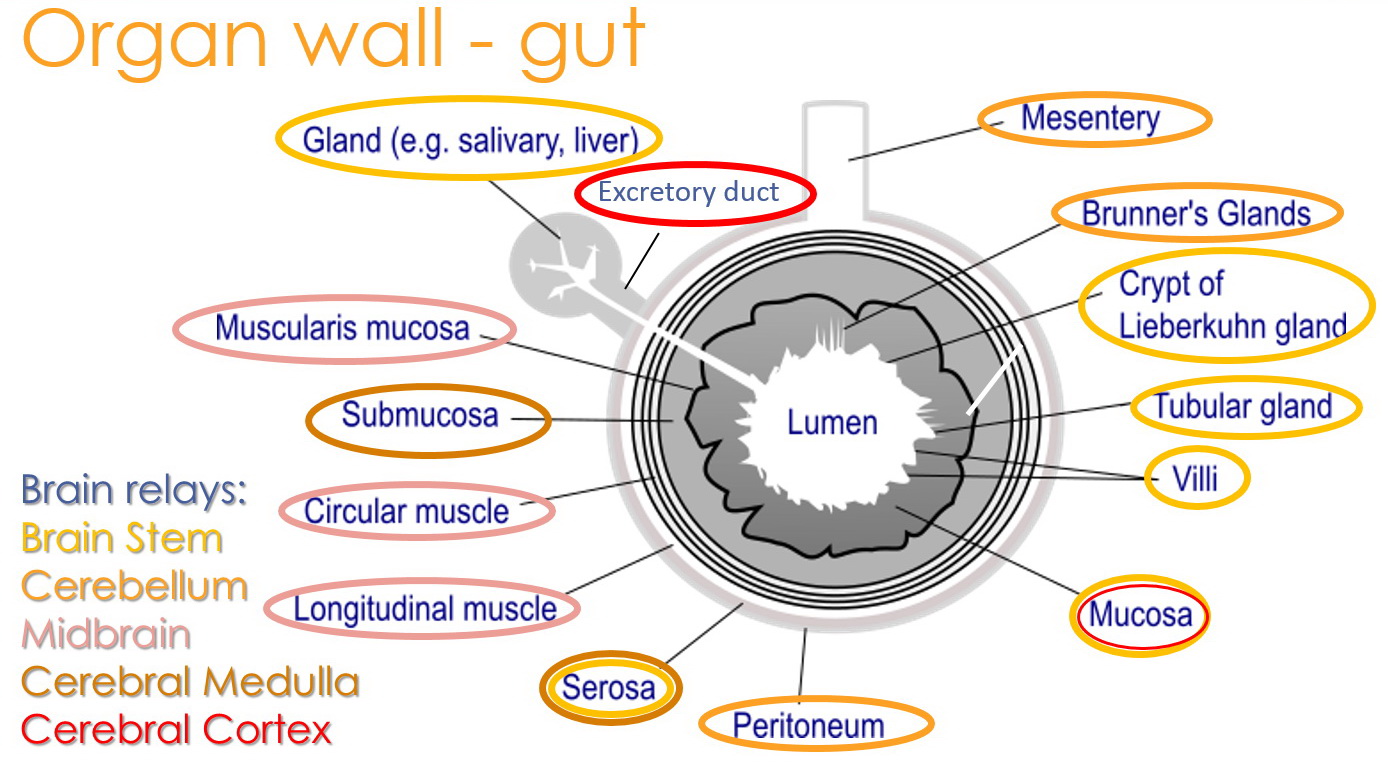
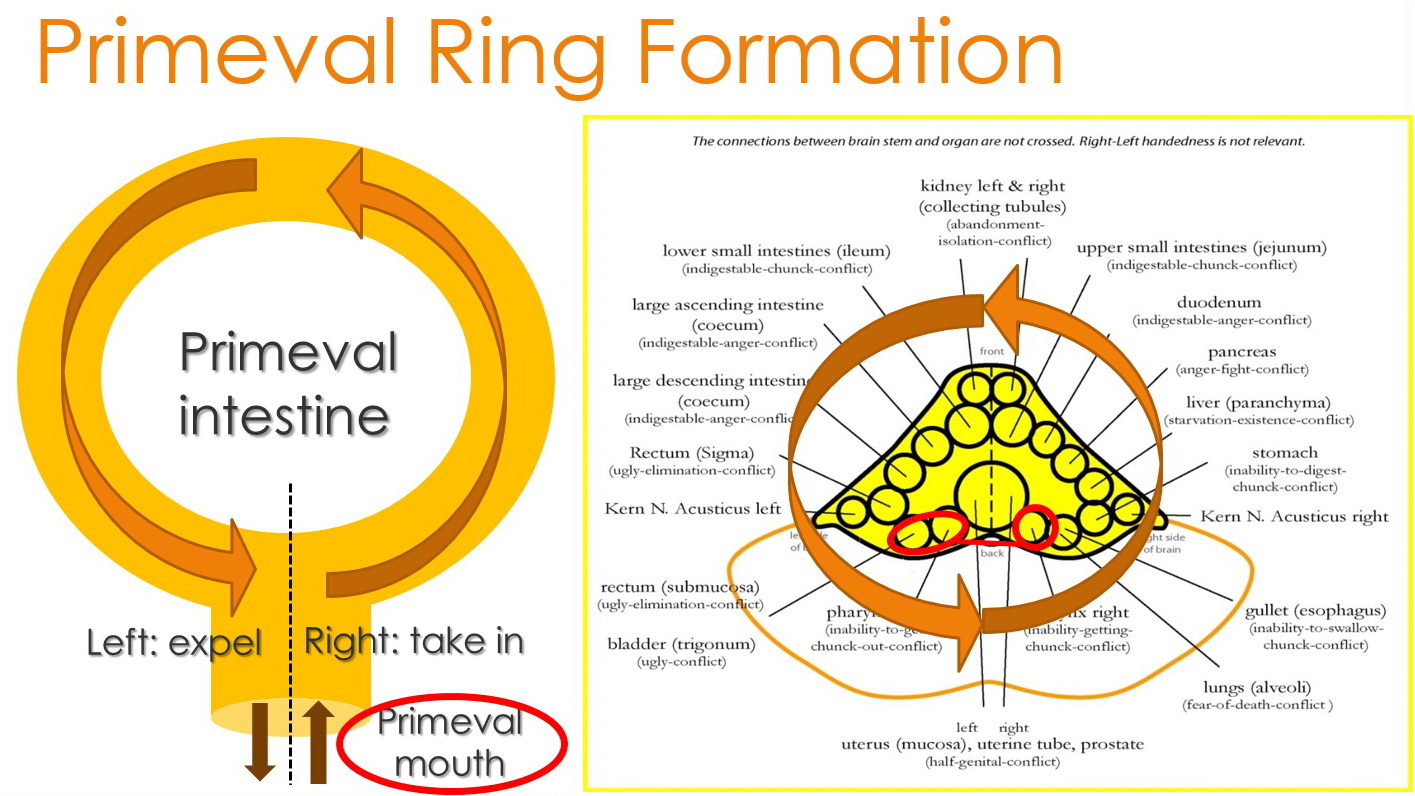
In the Brain Stem, the primeval ring structure is reflected: organ tissue relays with assimilative and digestive functions from oesophagus to small intestines are situated in the right brain stem, while excretory organs from caecum to rectum are relayed in the left brain stem. Medial on both sides are the relays of mouth/pharynx, middle ears and lacrimal glands, as well as the pineal and pituitary glands and the thyroid.
Relay:
1. Brain Stem ( + / – ) frontal left between ileum & pars asscendens coli relays, for mucosa
1.a Midbrain (+/-) frontal left, for smooth muscle
The ileocecal valve is represented on the sagittal midline of the brain stem.
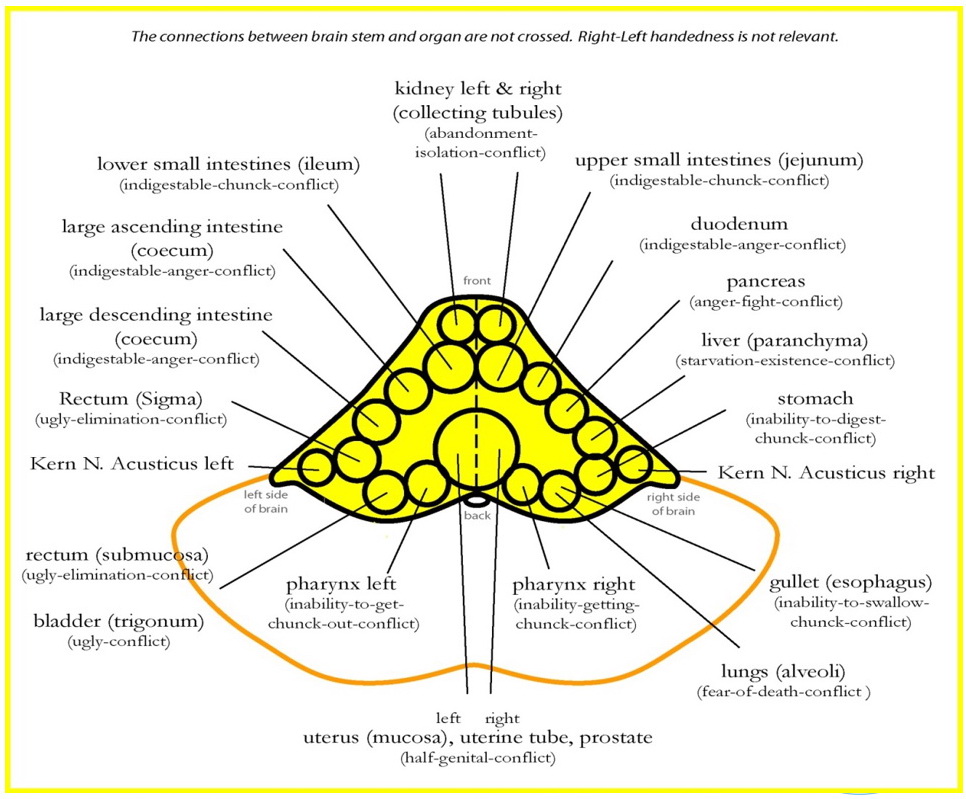
2. Cerebral Medulla (-/+) “Lumbar area” left opposite to spleen relay right, for Appendix Lymphatic Tissue
Mind
Theme:
1. (BS) Digestion, vitamin production, water reabsorption: Ugly, indigestible anger conflicts and inability to digest a chunk, situation or experience.
2. (CM) Self worth with regard to ability to select and handle morsels/situations on gut level. Self-protection.
Side dominance is irrelevant here.
Emotions and Thoughts:
Anger and resentment connected to ugly situations, often between close relationships such as family, mistrust, fear to let go and open up for something new
- I couldn’t digest that.
- This is too much for me to handle.
- It was horrible.
- I should have known/felt that!
META-Meaning:
- I can now process that and let it leave my system.
- I have much more resources than I believed!
Organ
Stress Phase Symptoms:
1. (BS) Functional increase and possibly tumor growth like in all colon: as compact adenocarcinoma with secretory quality, or as a wall thickening with absorptive function.
Possible diagnoses: large intestine carcinoma (colon carcinoma) – with the following symptoms: weight loss, digestive troubles, changes in bowel habits, constipation. Growth of symptomless colorectal polyps (polyposis coli) is also possible. Tumors can cause an obstruction of the blind gut and therefore increase the danger of perforation in the regeneration phase.
2. (CM) Reduction of lymphatic tissue, depletion of gut microbes, impaired detox and immune function
Regeneration Phase Symptoms:
1. (BS) Normalization of the function and stop of excess proliferation often under light fever and nightly sweating. Purulent decomposition of the tumor by lymphatic cells often in presence of fungus or mycobacteria (candida, tubercle). Possible symptoms are bloody stool (mostly occult, but fresh blood when the blood vessels are affected) which can result in acute blood loss and anaemia (danger!). Other symptoms are digestive troubles, bloating, mucous stools, alternating constipation and diarrhea (especially in chronic processes).
Potential diagnoses: Typhilitis, colon tuberculosis, ulcerative colitis, irritable colon
2. (CM) Acute or subacute appendicitis. Painful swelling, nausea, vomiting. Tenderness at Mcburney’s point is a sign of acute appendicitis. Caution is necessary because occlusion of the blind gut can lead to a perforation.
Healing Peak
Chills, colic, vomiting
Biological Meaning
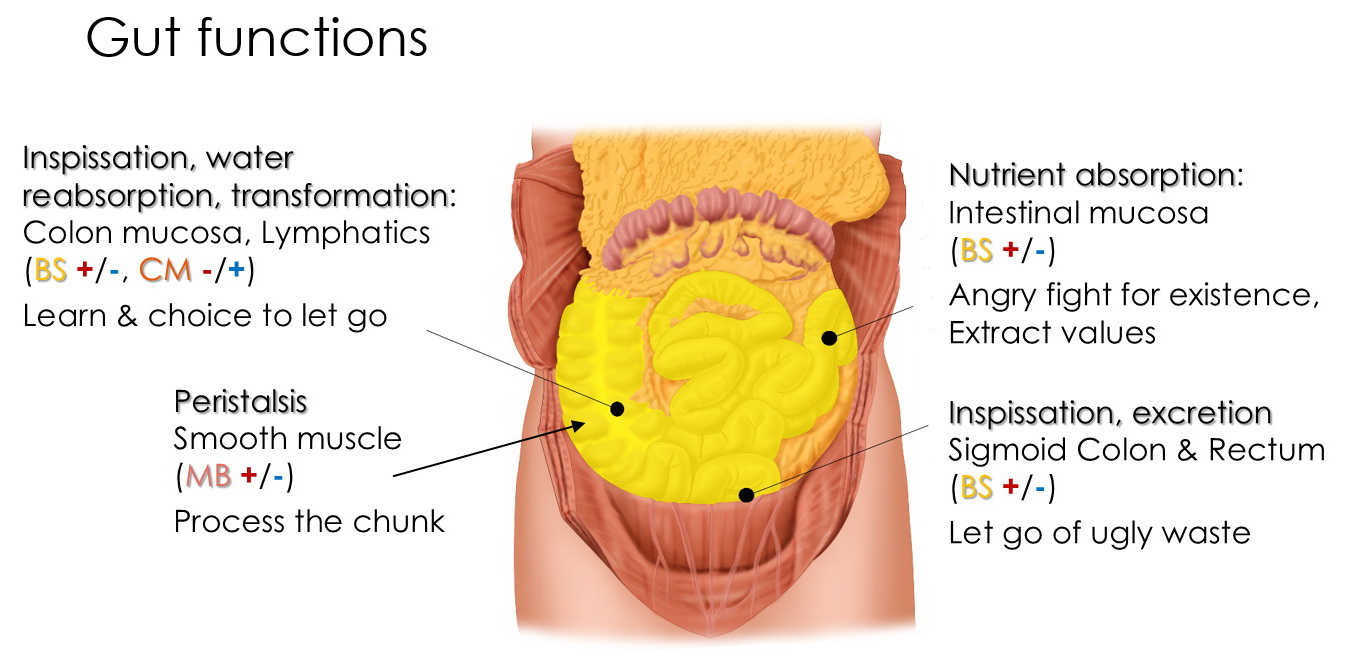
The reabsorptive function takes care of enhanced uptake of water and remnant nutrients in the colon before excretion. Increased secretion of mucus helps to prepare the waste for elimination.
Social
Examples:
- The parents of a little girl are arguing and insulting each other in front of her. A little later she gets appendicitis.
- A woman is haunted by family quarrels and anger about her brother who abandons his parents. She suffers a perforation of the blind gut.
- A student is verbally attacked and mobbed by older schoolmates. He has digestive trouble and eventually needs to be operated for appendicitis.
- The client with IBS had beed traumatically mistreated by her mother which repeats in her life as an emotional pattern. Thoughts are “how can they treat me like that? I can’t fulfill the expectations. I can’t trust my body.” The trauma was successively released, and the symptoms receded. (Hansen)
- A young woman who has to leave her beloved home and to live in more distance to her boyfriend for studying and following her dream, gets acute appendicitis after her fear for losing connection has been resolved and the contract for accomodation near the college is signed. She needs surgery, but then takes steps supported by mother and oyfriend to adapt to the new circumstances and possibilities. (Barthel)
Additional Information
Blind gut perforation with release of gut content into the abdominal cavity can cause dangerous peritonitis!
Constellations:
Brain Stem Constellation possible: perplexity, lethargy, passiveness, reduced movement. Purpose: new orientation
Differential Diagnosis:
Typhilitis can be caused by neutropenia after chemotherapy.
Submucosa/ lymphatic tissue (Cerebral Medulla -/+) stress (choice, decision): immune insufficiency, leaky gut; regeneration phase: Inflammatory and edematous in the first phase. Diagnoses may be lymphoma, inflammatory fibroid polyps, perineurioma and leiomyoma.
Smooth Muscle Layer (Midbrain +/-): smooth muscle often co-reacts with mucosa, theme being to forward the chyme by peristalsis. In stress phase (processing anger) we see a functional increase and possibly leiomyoma.
Peritoneum & Greater Omentum (Cerebellum +/-), stress phase (protection of the gut) possibly with adenoidal mesothelioma, and tuberculous decomposition in regeneration phase, possibly ascites.
Adipose and Lymphatic Tissues of the Greater Omentum (Cerebral Medulla -/+), with necrosis in stress phase (Resources to protect Self) and possibly lipoma, lipoedema or lymphoma in regeneration phase.
Submucosa / connective tissue and gastro-intestinal lymphatic tissue (Cerebral Medulla -/+):Symptoms in regeneration phase: Inflammatory and edematous in the first phase. Diagnoses may be lymphoma, inflammatory fibroid polyps, perineurioma and leiomyoma.
