
Subcutaneous Fatty Tissue
Anatomy
In the structure of the skin, the subcutaneous tissue or sub cutis is the layer of tissue directly underlying the dermis. It is mainly composed of adipose tissue (loose connective tissue composed of adipocytes) and septs that connects to adjacent tissue layers. Blood vessels and nerves run through the subcutis, and lymph capillaries end here. It features mechanoreceptors (especially in hands and footsoles) that transmit vibration and add to the sense of touch. Main function of adipose tissue is to store energy in the form of fat, although it also cushions and insulates the body.
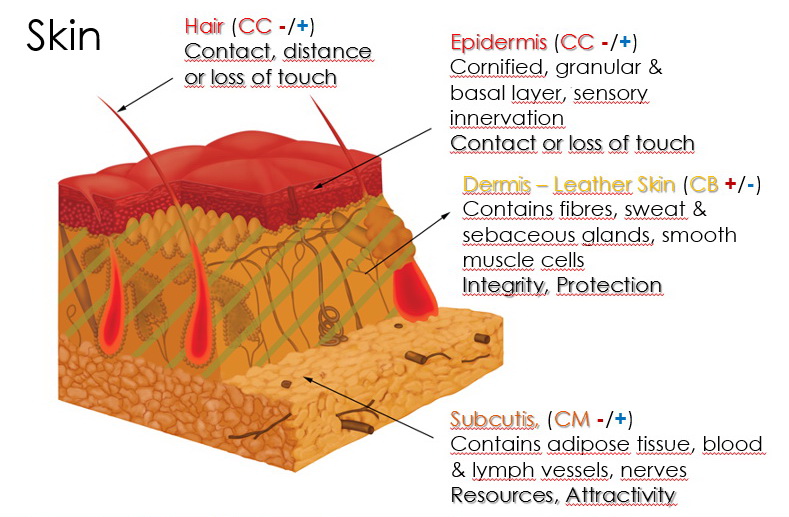
{img fileID=”362″ thumb=”box”}
Graphic: wikipedia, authors Madhero88 and M.Komorniczak
Brain
Relay
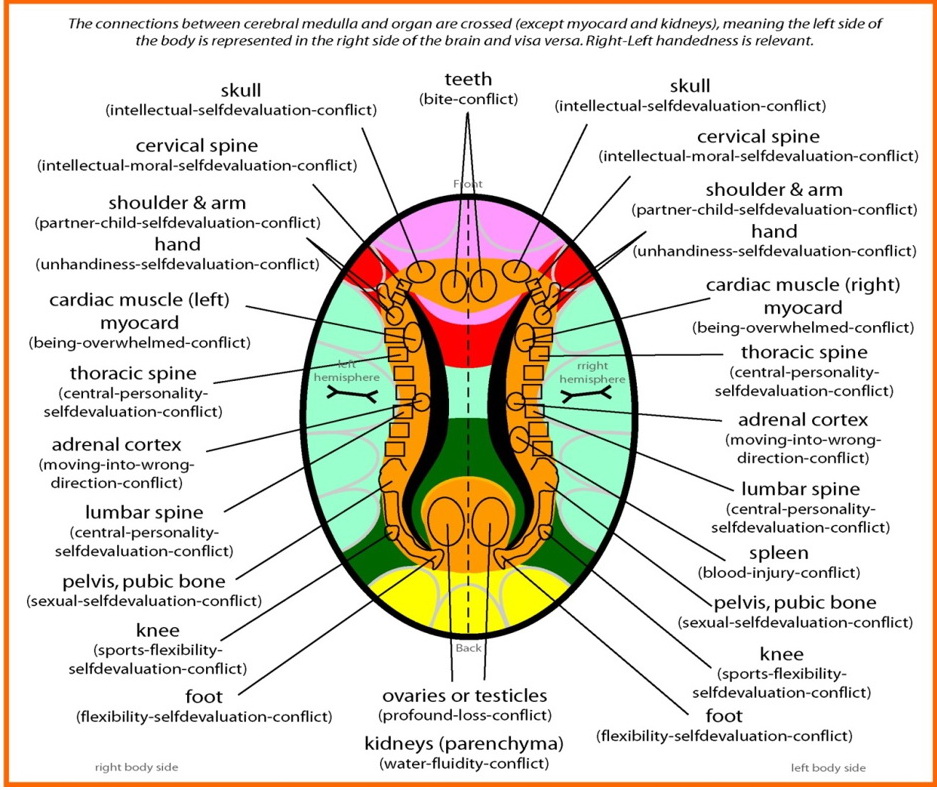
Cerebral Medulla ( – / + ) according to locality
Mind
Theme
Self-devaluation related to the part of the body that we feel as unaesthetic
For special associations according to locality see “Musculoskeletal System – Overview“!
Emotions, Thoughts
Self-consciousness, self-doubt, self-hate
- I am too skinny/too fat.
- They don’t find me attractive.
- I don’t like my looks.
- I am ugly.
- I don’t have the reserves for that.
META-Meaning
I love myself, my looks and my way to express myself in the world!
Organ
Stress Phase Symptoms
Cell atrophy noticeable through necrosis of the adipose tissue. Mostly without intense symptoms in this phase. The possible diagnoses are :
- Ageing of the skin, wrinkles
- Cell minus in the adipose tissue of the affected organ
- Orange peel syndrome (cellulite), often without symptoms
Regeneration Phase A
Swelling by water deposition, especially when kidney tubules are stress-active. Stretch marks (striae) can appear in the weakened tissue. Bacterial infection with haemophilus influenzae, streptococci or pneumococci is possible in inflammation of the subcutis (cellulitis).
Regeneration Phase B
In scarring healing, keloid is typical and can lead to deformation. Excessive repair can escalate in lipomas: liposarcoma, fibrolipoma, spindle cell lipoma, myolipoma and angiolipoma.
After completed process the connective tissue becomes more fibrous and less flexible, which can lead to sclerodermia or fibrosis. Stretch marks (ruptured elastic fibres) have a whitish colour. Cellulite develops in chronic processes.
Biological Meaning
After finished regeneration, there is a gain in quantity of adipose tissue to better fulfill the function of provision and protection.
Social
Examples
- Female patient feels too thick around the hips. As a result of her repetitive conflicts, she has developed a cellulite.
- Father of patient has developed a ca. 8cm large ugly fat lump at the left forearm. The patient has been shocked and affected by it. Few weeks later, he has developed himself a ca. 3 cm large fat lump at the same place as his father.
Additional Information
Constellations
Megalomania: Both hemispheres stress-active or uncompleted cycle create an elevation of self-esteem and confidence which helps motivation and stamina. For adipose tissue relays, this is Beauty Megalomania.
Differential Diagnosis
Lymph vessels/nodes (CM, -/+) Stress (self-doubt): Lymphoedema to be differentiated from lipoedema or lipoma.
Pancreas alpha islet cells (CC, -/+) Stress (avoiding confrontation): Obesity because of hypoglykemia/hunger to be differentiated from fat tissue proliferation.
Kidney Collecting Tubules (BS, +/-): Stress (isolation) causes water retention and enlarges oedemas.
Skin – Dermis (CB +/-) Stress (vulnerability): Increased activity of sweat and sebaceous glands, possibly tissue reinforcement with or without pigmentation in stress phase, degradation with pus in regeneration phase.
The skin and it’s supply is influenced by hormones.
