Adrenal Gland – Cortex
Anatomy
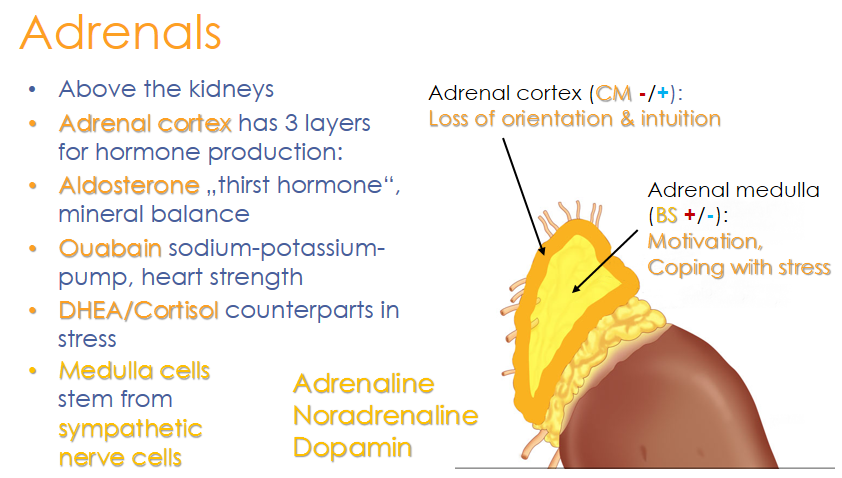
The adrenals are endocrine glands situated on the top the kidneys. Together with the kidney, each one is covered in a fatty capsule and the renal fascia. These glands consist of two parts: the adrenal cortex and the adrenal medulla.
The adrenal cortex is derived from the mesoderm and consists of 3 layers with different functions:
- The outer zone produces the “thirst hormone” aldosterone, which regulates the electrolyte concentration in the blood.
- The intermediate zone is stimulated by adrenocorticotrope hormone (ACTH) from the pituitary to secrete mainly cortisol, but also ouabain that strengthens the cardiac muscle.
- The inner zone produces dehydroepiandrosterone (DHEA) which is a precursor of the sex hormones.
Cortisol and DHEA are counterparts in stress:
Cortisol makes energy available by inducing catabolic processes dissolving fat and stimulating synthesis of glucose. It thereby inhibits the regeneration of tissue, which is why it can suppress symptoms from the regeneration phase like inflammation and immune reactions.
By slowing down the energy transformation in the mitochondria (the “power plants” of the cells), DHEA counteracts the waste of energy, creation of free radicals, and ageing of tissues. It also inhibits fat storage, and nourishes nerve cells.
Contrary to the adrenal medulla that is steered directly by the autonomous nervous system, the adrenal cortex is regulated by neuroendocrine hormones secreted by the pituitary gland and hypothalamus as well as by the renin-angiotensin system.
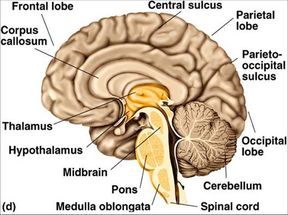
Brain
Relay:
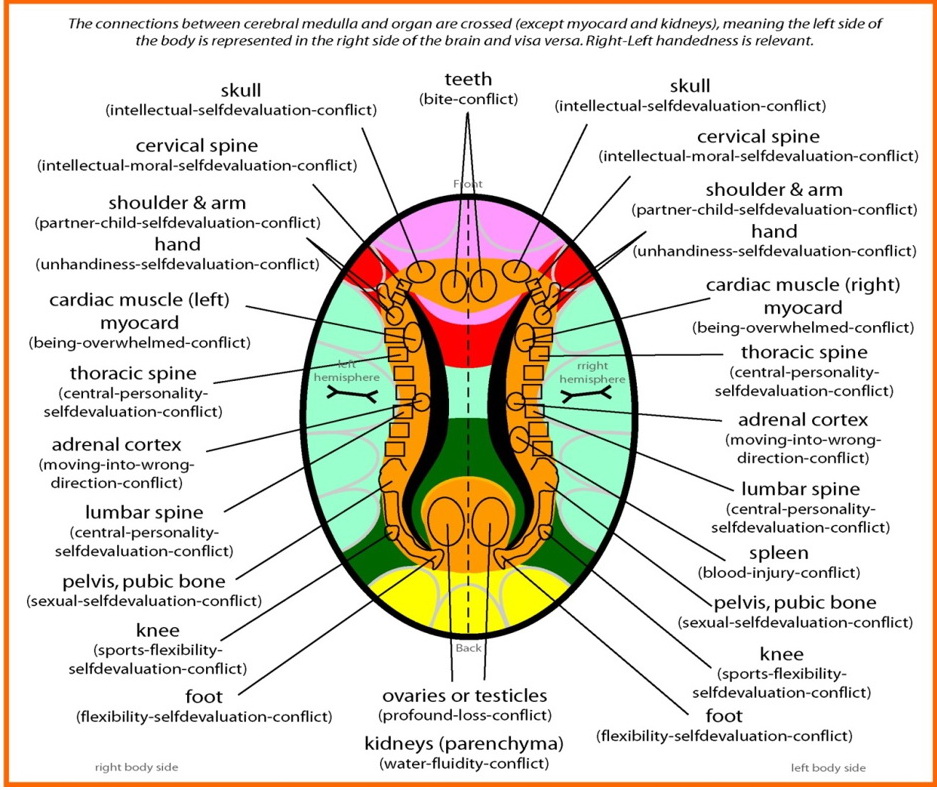
Cerebral Medulla ( – / + ) central left & right
Mind
Theme:
Orientation, intuition
Emotions and Thoughts:
Energylessness, lack of motivation, confusion, dissatisfaction, internal conflict
- This is not what I had in mind!
- I feel this is wrong.
- Why am I doing this?
- I can’t get myself to doing this.
- I have lost myself.
- What is my true path?
META-Meaning:
- Now I stop and find myself again.
- My heart shows the way.
- Now I recognize my true goal.
- Now, I allow myself to re-evaluate my path and to follow my energy.
Organ
Stress Phase Symptoms:
Reduction of production of corticosteroid hormones and tissue degradation in the adrenal cortex cause imbalances in energy management Typical symptoms are difficulty to wake and get up in the morning, stressed fatigue, energylessness, overall weakness (asthenia), low blood pressure, low appetite but salt craving. From those derive indigestion, vertigo and fainting. By reduction of androgen production, loss of libido and signs of ageing are possible.
Adrenal insufficiency can be accompanied by hyperpigmentation (bronze colouring) of skin and mucosae.
Possible diagnoses: Adrenal Fatigue, Adrenal insufficiency, Morbus Addison.
The adrenal cortex can be involved in Chronic Fatigue Syndrome (CFS), Burnout or Bore-Out Syndromes.
Regeneration Phase Symptoms:
Normalization of hormone production, tissue restoration and possibly hyperplasia and overfunction of hormone production.
Especially with activated water retention, cysts can form in the adrenal cortex that later solidify and secrete hormone.
The physiological reaction is a surge of energy, accompanied by high blood pressure and elevated blood sugar. Often much thirst. Later, this state leads to obesity, diabetes, and the catabolic effect of cortisol causes weakness in structural tissues, like stretch marks (striae), muscle dystrophy and osteoporosis.
Possible diagnoses: hyperadrenocorticism, Cushing Syndrome, Conn-Syndrome, adrenocortical carcinoma
By overproduction of androgen, motivation and decisiveness are reestablished. Later this can lead to virilization (women develop masculine hair growth, acne, enlarged clitoris), to reduced fertility and depression.
Possible diagnoses: Adrenogenital Syndrome (AGS), hirsutism
Biological Meaning:
During and after the regeneration phase the individual acceses more energy and decisiveness to find and follow their own way. Ouabain (g-strophanthin) strengthens the cardiac muscle.
Social
Examples:
- Since moving to another town and quitting her job to follow her boyfriend, a woman felt drained of energy and always sleepy. First when she found a new purpose in life and felt integrated in the community, she got her vitality back.
- An elderly lady suffered from pain and depression after her husband died. She leaves the home they built together but doesn´t find peace and alignment for years, leading to fatigue. After a moment of insight, she lets the memories go and follows her heart, finding an abundance of energy in dancing and sharing with others. (Klapp)
- The client identified for years with having to care for her depressive husband, which depleted her energy. Besides, she built a business. When she finally decided to leave her partner, she was in inner conflict, not being able to use her new freedom. By learning to redefine her identity and life goals, new perspectives and energy resources show up. (Klapp)
- A young woman became seduced and manipulated by a man, so that she led a double life. When the situation is disclosed by fate, her family and friends feel betrayed by her. She lacks appetite and focus, and develops fatigue and hair loss, accompanied by emotions of guilt, shame and resentment. After treatment with EFT, and having the insight “I can change direction anytime”, she takes steps to clear the situation, and finds new power. (Koch, MHU archive)
Additional Information
Cortisol is an antagonist to melatonin in the circadian rhythm and makes us be awake.
Any longer stress phase is accompanied by release of cortisol for to resolve the conflict. By the catabolic effect of cortisol, the tissue renewal and maintenance is impeded, what creates preconditions for buildup of dysfunctional tissue (e.g. in tumors). This is why long-termed stress or overall high stress levels can lead to reduced vitality because of depletion of the gland.
Waterhouse-Friderichsen syndrome appears in severe bacterial infections (in other tissues), which leads to decomposition of the adrenal cortex. This hints at a secondary conflict of the adrenal cortex through sub-optimal regeneration phases with the perception of dis-ease.
The “thirst hormone” aldosterone produced by the adrenal cortex stimulates reabsorption of water in the kidney tubules
Constellations
Motivation Megalomania: when orientation conflicts are present in both hemispheres, the person accesses a meta-perspective from which they find unshakeable intuition and decisiveness.
Differential Diagnosis:
Fatigue and sleepiness can also be symptoms of the regular vagotonia in any regeneration phase, but also of cachexia through long-termed stress in any tissues.
Pituitary Gland (Brain Stem, +/-) “motivation stress”: increased production of adrenocorticotropin (ADCT) which stimulates the adrenal cortex.
Adrenal Medulla (Brain Stem, +/-): excessive stress effects increased production of adrenaline & noradrenaline, heightened attention, heart rate, blood pressure & respiration
Thyroid gland (Brain Stem, +/-) velocity stress: increased thyroxine production, nervousness, weight loss; Regeneration phase: fatigue, depression, freezing, weight gain without appetite
Thyroid "Ductal Pattern" (Cerebral Cortex, -/+): Regeneration phase or prolonged stress of powerlessness lead to decreased thyroxine levels and fatigue.
Ovaries Estrogen production (Cerebral Medulla, -/+) stress (loss of a dear person): reduced hormone level, infertility; Regeneration phase: cysts, eventually increased hormone production.
Testicles Testosterone production (Cerebral Medulla, -/+) stress (loss of a dear person=: reduced hormone level, infertility; Regeneration phase: increased hormone production.
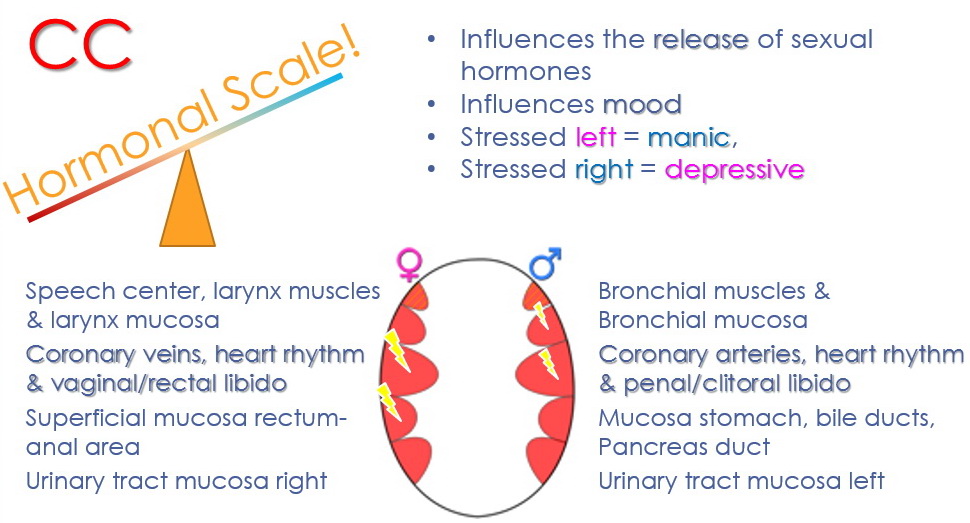
Territorial Constellations in the Cerebral Cortex lead to imbalances in the release of sex hormones, as well as to personality changes and manic or depressive episodes.