
Myocardium – Heart Muscle (Ventricles)
Anatomy
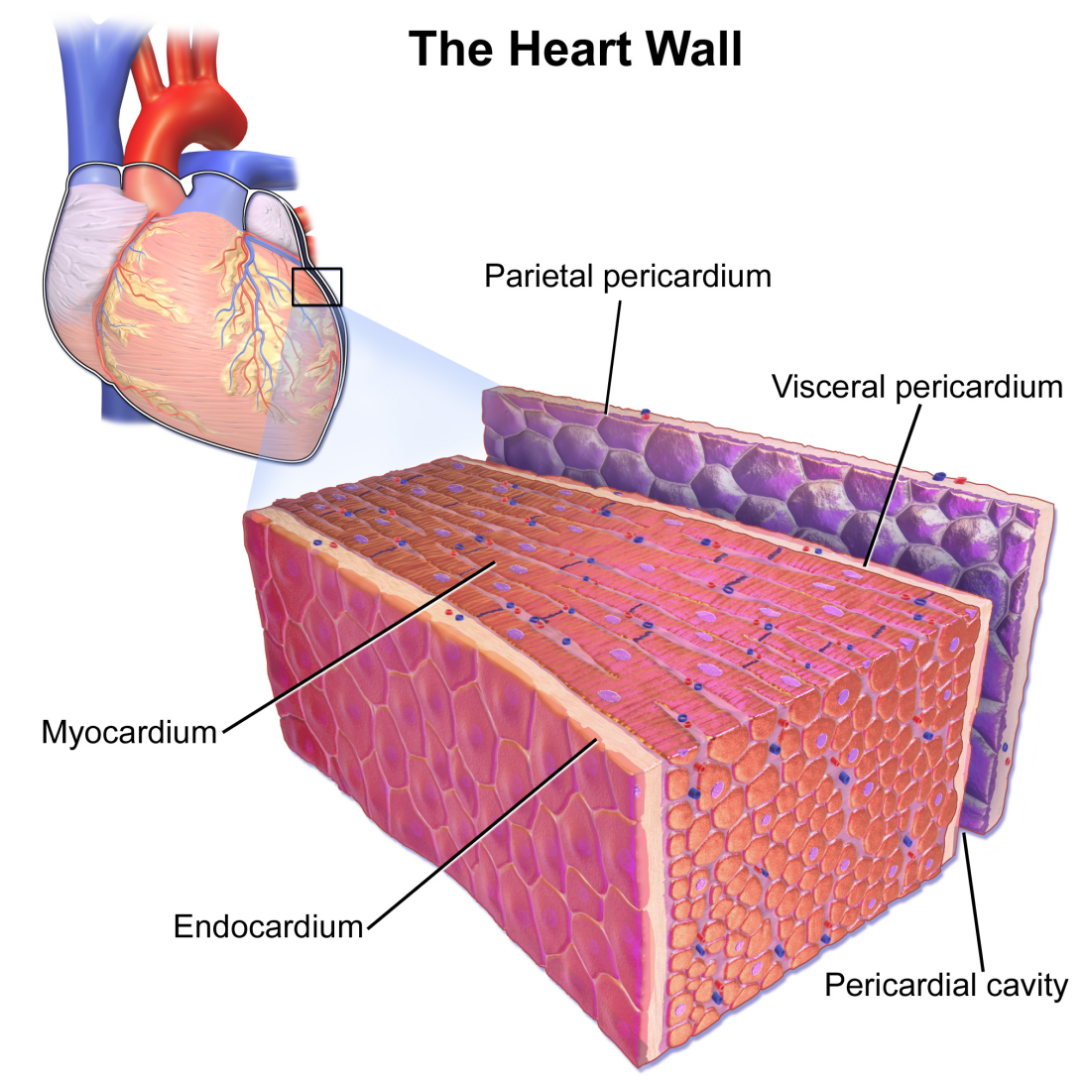
Cardiac muscle is a blend of striated and smooth muscle (it is striated but cells usually have only one nucleus, different from skeletal muscle) with involuntary innervation by the cardiac plexus. It’s blood supply is secured by the coronary arteries in a circulation separate from the systemic circulation.
The heart muscle cells are multinuclear, whereas smooth muscle cells are mononuclear.
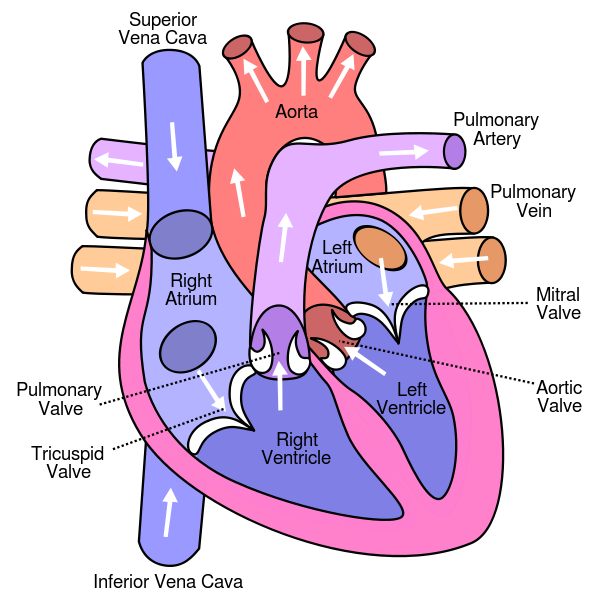
The heart chambers (ventricles) are filled from the atria by coordinated contractions while the valves prevent reverse flow. The right ventricle pumps deoxygenated blood via the lung artery into the lungs, whereas the left ventricle supplies the systemic circulation with oxygenated blood. The expulsion is called systole, the filling phase diastole.
The coordination of contractions in atria and ventricles is effected by an autonomous center of excitation and conduction which is influenced by the autonomous nervous system.
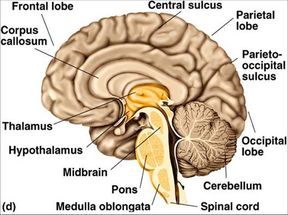
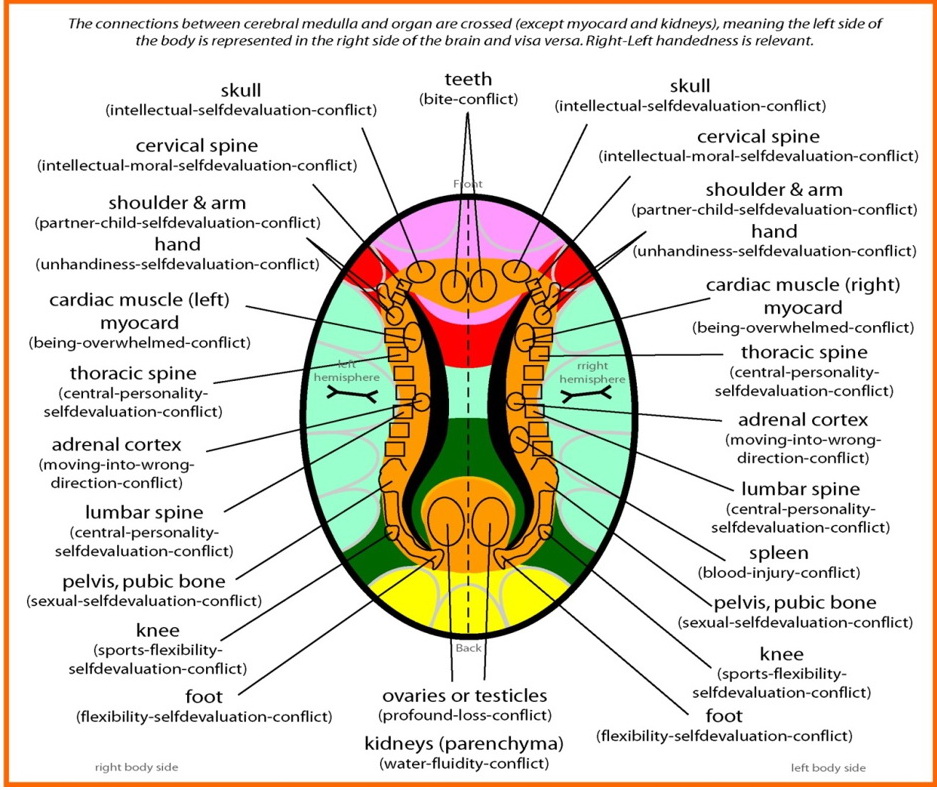
The myocardium of atria and ventricles show different reaction patterns and conflict themes. The atrial myocardium has a relay in the midbrain, the ventricular myocardium in the cerebral medulla.
Brain
Relay:
Cerebral Medulla/Plexus Cardiacus ( – / + ) medial from thoracic relays left & right, for muscle trophic
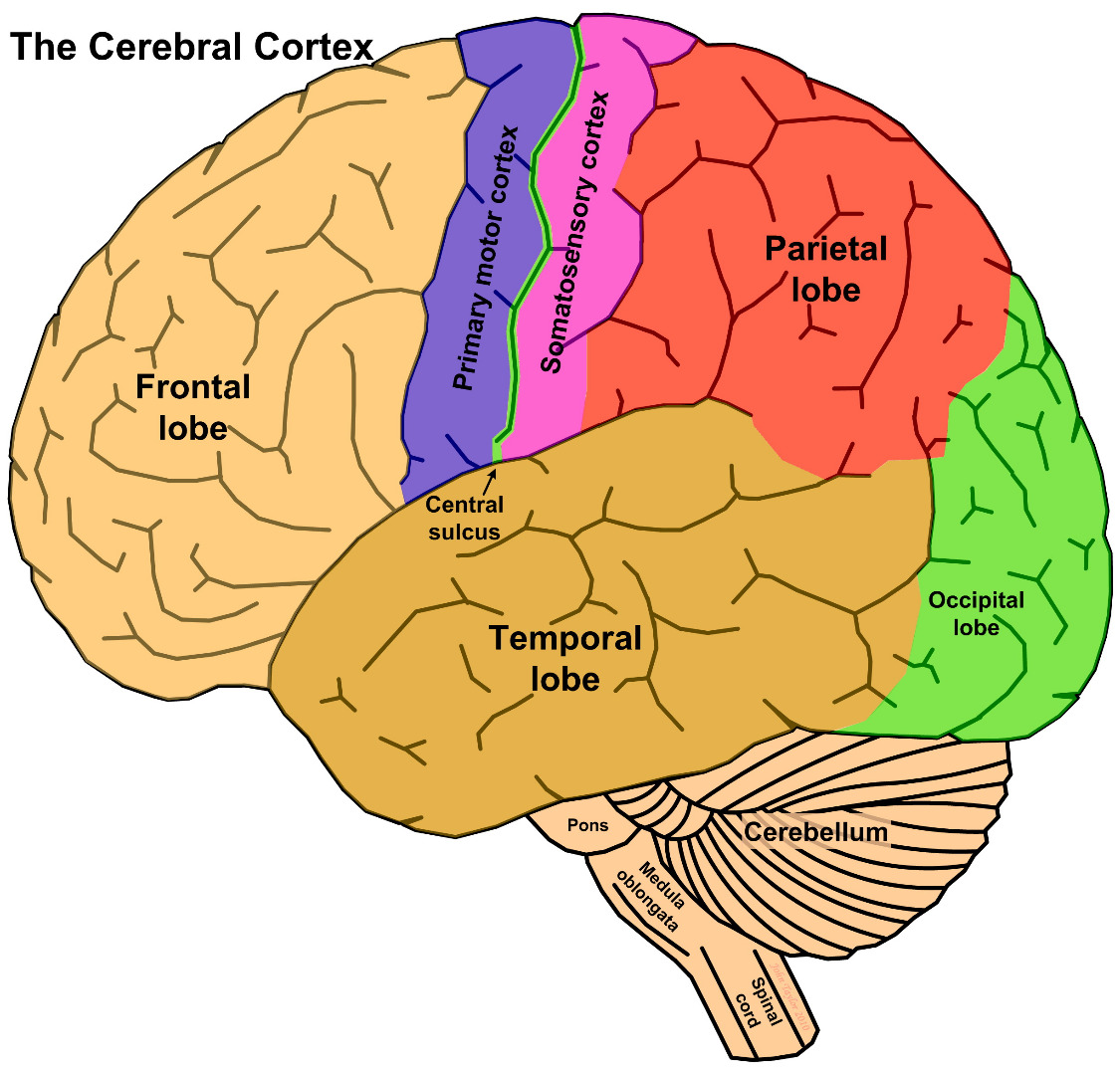
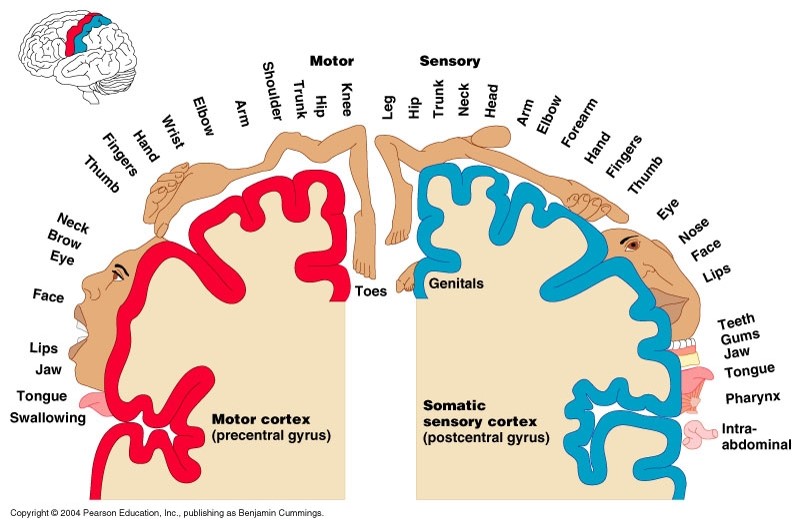
Cerebral Cortex (-/+) motor cortex parietal left & right
Mind
Theme:
Overwhelm, overload (regarding support of others)
Emotions, Thoughts
The overwhelm/overload is perceived as a self-devaluation “I can´t handle this”, and relates to a specific person or situation:
Overwhelm, grief, fatigue, distrust
- This overwhelms me.
- This is just too much.
- I can´t support my family but I should.
- This goes beyond my capacity.
META-Meaning:
- I feel borne and guided by the rhythm of the earth and the universe, reflected in my body.
- I am a good partner, effortlessly.
- We stand by each other and divide the tasks.
- I can trust the others as well.
Organ
Due to the evolutionary turn of the heart the right-wired person reacts with the right myocardium (ventricle) with a mother/child/home conflict and with the right myocardium with partners.
Stress Phase Symptoms:
Reduced heart performance through local temporary heart muscle paresis (hypokinesia), and reduced trophic of the cardiac muscle.
- When the right chamber is affected, blood pressure at rest is increased (hypertension, diastolic pressure elevated), backlog of blood/fluid in feet & legs.
- When the left chamber is affected, blood pressure falls (hypotension, decreased systolic pressure), thereby the arterial system is not supplied adequately which can effect a circulatory collapse (also spontaneously in healing peak). Backlog in the lungs which leads to dyspnea and bubbling sound when breathing.
The diaphragm reacts together with the ventricle, which can result in functional loss/dyspnea in stress phase and healing peak.
Takotsubo or “broken heart syndrome” appears after a shock trauma connected to grief. https://www.webmd.com/heart/news/20181217/stress-sadness-really-can-break-your-heart?
Regeneration Phase A
Recession of the local paresis and replenishment of muscle tissue, which is accompanied by edema formation and the relaxation of the heart muscle. Function is still reduced. This may result in an increased cardiac contractility (with arrythmia, tachycardia, bradycardia) and compenatory extrasystoles in the non-effected chamber.
Healing Peak:
Short-termed condensed symptoms of the stress phase, allodromy, extrasystoles, atrial fibrillation, in extreme: heart attack/standstill, feeling of annihilation, diagnosed as an infarction.
Right chamber: increased diastolic pressure, left chamber: decreased systolic pressure.
When even the atria are effected, water can accumulate in the lungs leading to dyspnea and blue lips (insufficient oxigenation, emergency!)
Regeneration Phase B
Rhythm and blood pressure normalization, often remaining hypertrophy of the cardiac muscle (cardiomegaly)), the so called athlete’s heart. Very rarely it may be diagnosed as myocardial sarcoma or cardiomyopathy
Ultra-sound might show a scarring of the tissue which often is diagnosed as an infarct scar, which can cause remaining insufficiency.
An aneurysm can also be formed in the altered cardiac muscle as a result of the increased blood pressure.
Biological Meaning:
The biological meaning of muscle trophic changes lies in the finished regeneration phase, leaving the muscle stronger than before. So, an athlete’s heart is more efficient under stress.
The biological meaning of myocardial paralysis is the freeze response in the moment of conflict, prolonged into the stress phase.
Social
Examples:
- The client identifies as a supporter and provider for her whole environment. At a certain point when overused by a friend, she develops heart arrhythmia. (Klapp)
- A woman feels that she cannot support and protect her child who is mobbed in school.
- A father feels that he needs to help his son to finance his education and to build a future, then he loses his job.
- A young woman follows her heart and joins an intentional community. There she feels overworked, too slow and a burden for the others. During this time she gets edema in her lower legs, connected to weakened vein and heart function and stress-active kidney tubuli. (Klapp)
Additional Information
Symptoms of right and left myocardium
The right heart chamber sucks the blood from the body´s systemic circulation and passes it on to the lungs.
A right heart insufficiency leads to backlog in the veins and edema in lower legs and feet, possibly even in other organs, and elevated venous blood pressure.
The left heart chamber sucks blood from the lungs and passes it on to the body’s systemic circulation.
A left heart insufficiency leads to backlog in the lungs, lung edema and dyspnea, and simultaneously the arterial blood pressure is decreased and the blood supply to organs and extremities impaired. General reduced performance.
Differentiation of coronary heart disease and myocardial infarction
The coronary vessels supply the cardiac muscle and thereby influence it’s reaction. Therefore, in long-termed territorial loss conflicts, the heart muscle will be weakened. However, there are myocardial infarctions that show no obstruction of blood vessels. These are due only to overwhelm and performance regarding supporting another person (compassion). A myocardial infarction of the right heart leads to spontaneous elevation of blood pressure by compensatory mechanism. When the left heart is affected, blood pressure falls. In a coronary infarction, blood pressure does not change obviously.
Causes for heart insufficiency
Ventricular Myocardium (CM -/+) in stress phase (gradual reduction of trophic) or regeneration phase A (fast reduction of function through edema). Cardiomegaly (athlete’s heart)) or scarring in chronic processes.
Atrial Myocardium (MB +/-) and sinus node in regeneration phase (irregular pulse)
Peri- & Epicardium (CB +/-) in regeneration phase A (fast reduction of the filling capacity through edema, pericardium effusion) or after recurring processes which reduce flexibility of the tissue (gradual reduction of the filling capacity) “armoured heart”
Coronary Arteries (CC -/+) in regeneration phase A (stenosis through edema) or after chronic processes (scarring and thickening of the vessel walls) effects decrease of supply to myocardium
Heart Valves (CM -/+) in stress phase (functional decrease, insufficiency) or after chronic processes (remaining deformation)
Influence of toxic substances (medication, alcohol)
Constellations:
Heart – Megalomania: “overwhelmed”-conflicts in both hemispheres lead to “Saviour”-Constellation: belief in one’s ability to save the world.
Differential Diagnosis:
Heart – Endocardium (Cerebral Medulla, Plexus Cardiacus, -/+) with reduced heart performance due to valve insufficiency in stress phase (performance self-devaluation), painful endocarditis in regeneration phase
Heart – Myocardium/Atria(Midbrain/Plexus Cardiacus, +/0) with atrial tachycardia and fibrillation in regeneration phase (after overexertion)
Heart – Pericardium (Cerebellum, Plexus Cardiacus, +/-) with feeling of pressure or “armored heart” in stress phase (protection of the heart), cardiac insufficiency due to effusion in regeneration phase
Heart – Coronary Arteries and AV node (Cerebral Cortex, Plexus Cardiacus, -/+) with heart arrythmia and angina pectoris in the stress phase (loss of territory or love); and bradycardia, possibly heart arrest, absence, heart pain in the healing peak
Heart – Coronary Veins(Cerebral Cortex, Plexus Cardiacus, -/+) with painful angina pectoris in the stress phase; and absence, tachycardia or ventricular fibrillation in the regeneration phase.
