
Periosteum
Anatomy
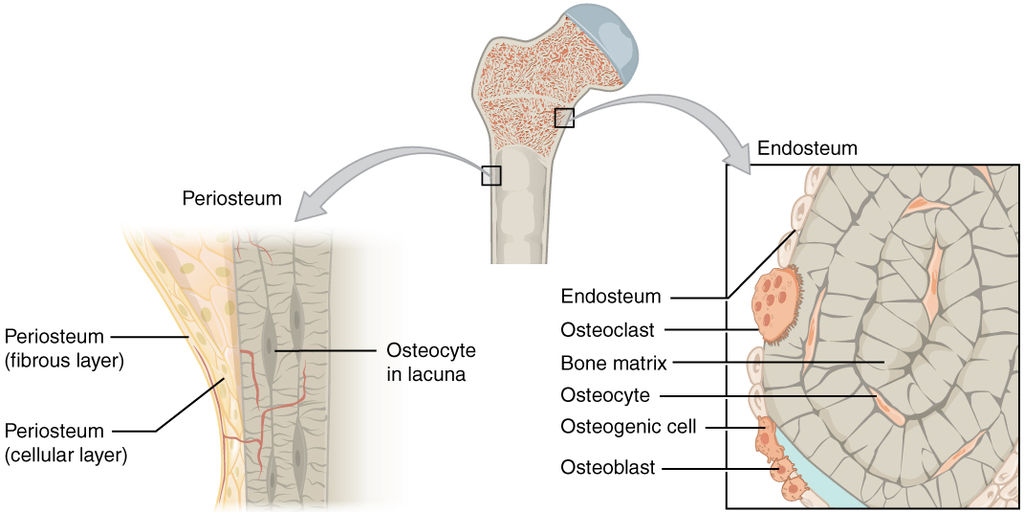
Bones are covered on their outside with periosteum with the exception of articular surfaces of long bones. It consists of dense irregular connective tissue. Periosteum is divided into an outer “fibrous layer” and inner “cambium layer” (or “osteogenic layer”). The fibrous layer contains fibroblasts, while the cambium layer contains progenitor cells that develop into osteoblasts. These osteoblasts are responsible for increasing the width of a long bone and the overall size of the other bone types. After a bone fracture the progenitor cells develop into osteoblasts and chondroblasts, which are essential to the healing process.
As opposed to osseous tissue, periosteum has nociceptive nerve endings, making it very sensitive to manipulation. It also provides nourishment by providing the blood supply. Periosteum is attached to bone by strong collagenous fibers called Sharpey’s fibres, which extend to the outer circumferential and interstitial lamellae. It also provides an attachment for muscles and tendons.
Due to its ability to form bones, periosteum also has a significant role in bone growth and in the healing of bone injuries.
Periosteum that covers the outer surface of the bones of the skull is known as “pericranium” except when in reference to the layers of the scalp. The periosteum is connected to the dura mater protecting the brain.
Brain
Relays:
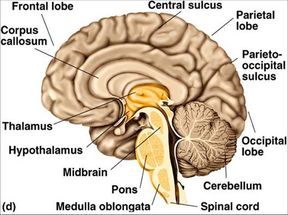
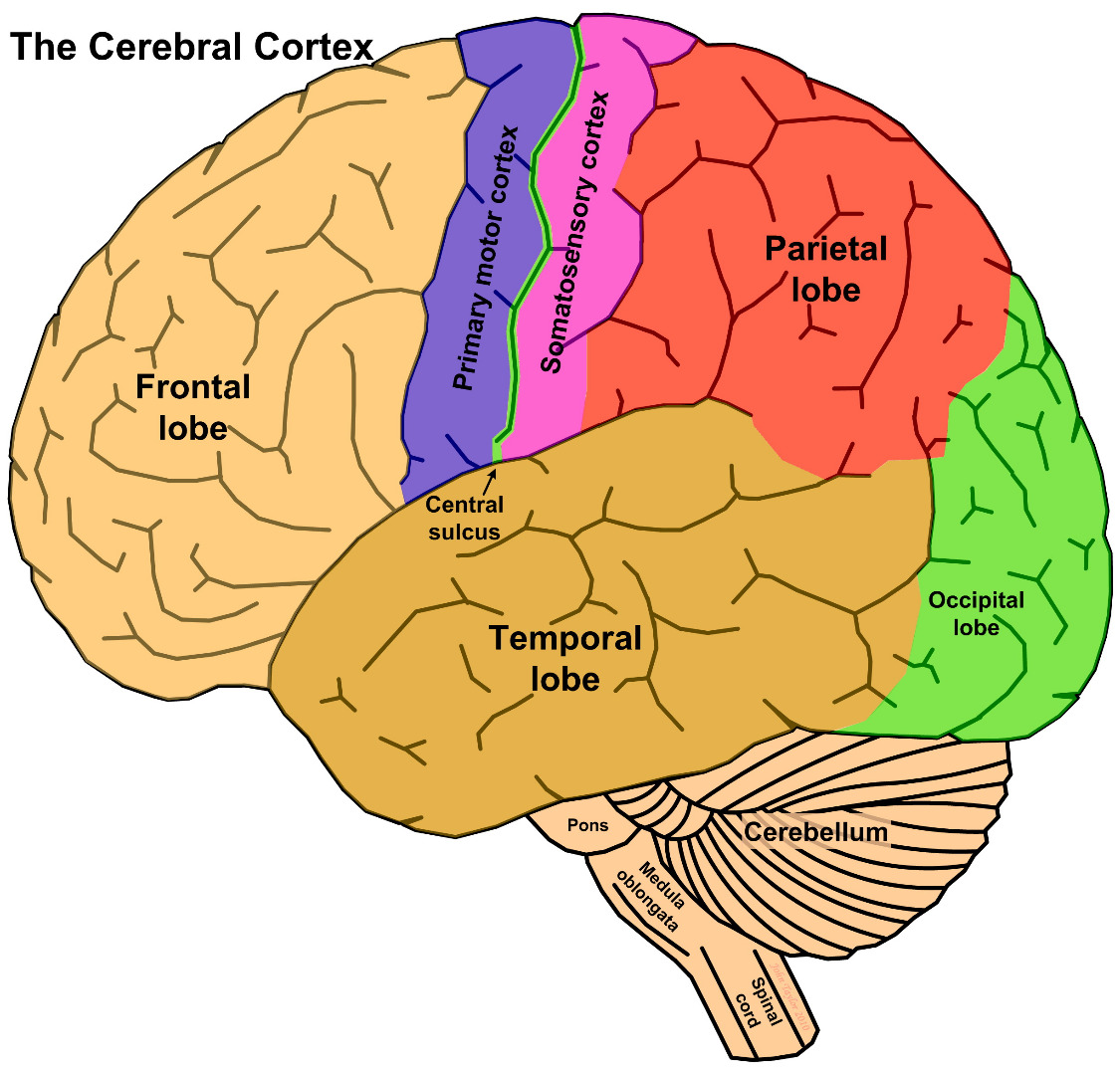
1. Cerebral Cortex ( – / + ) postsensory area for innervation (parietal lobes)
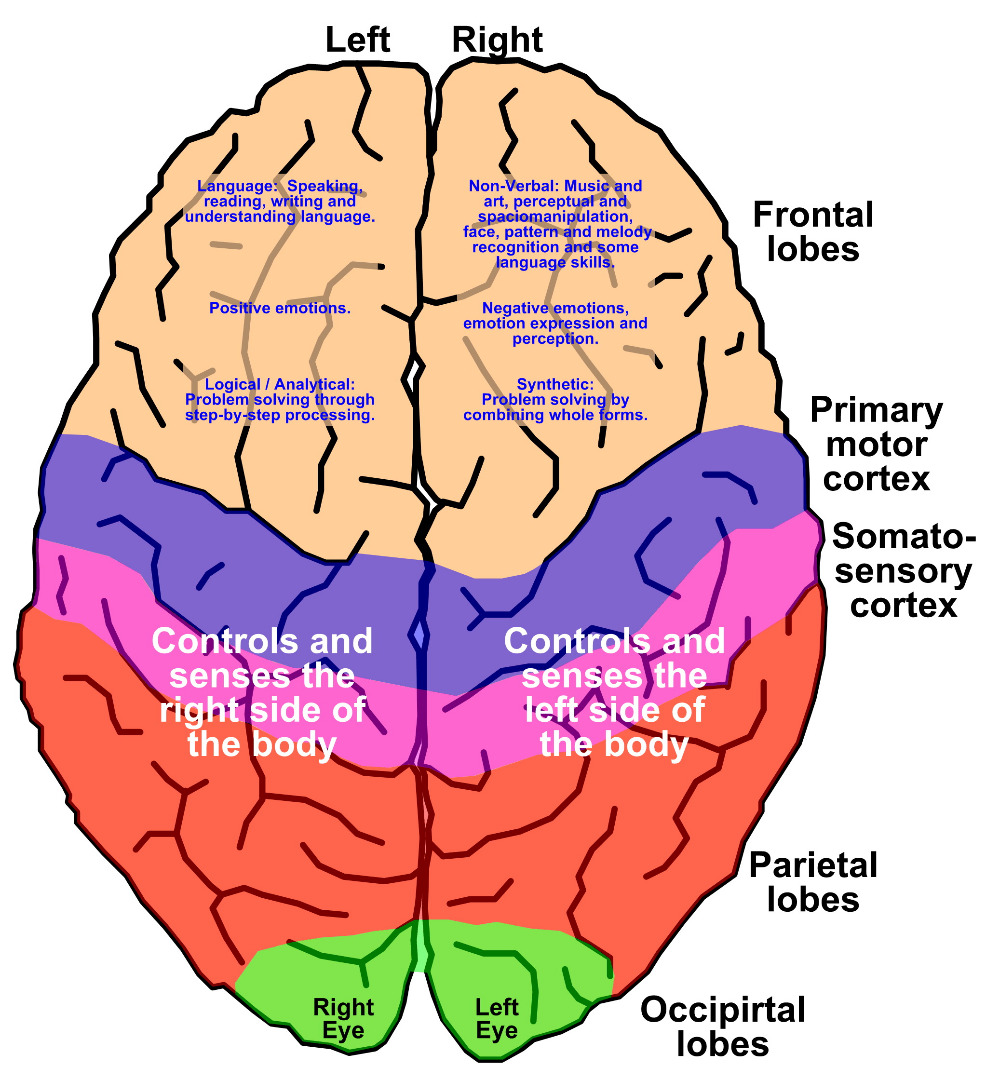
2. Cerebellum (+ / – ) for fibrous layer
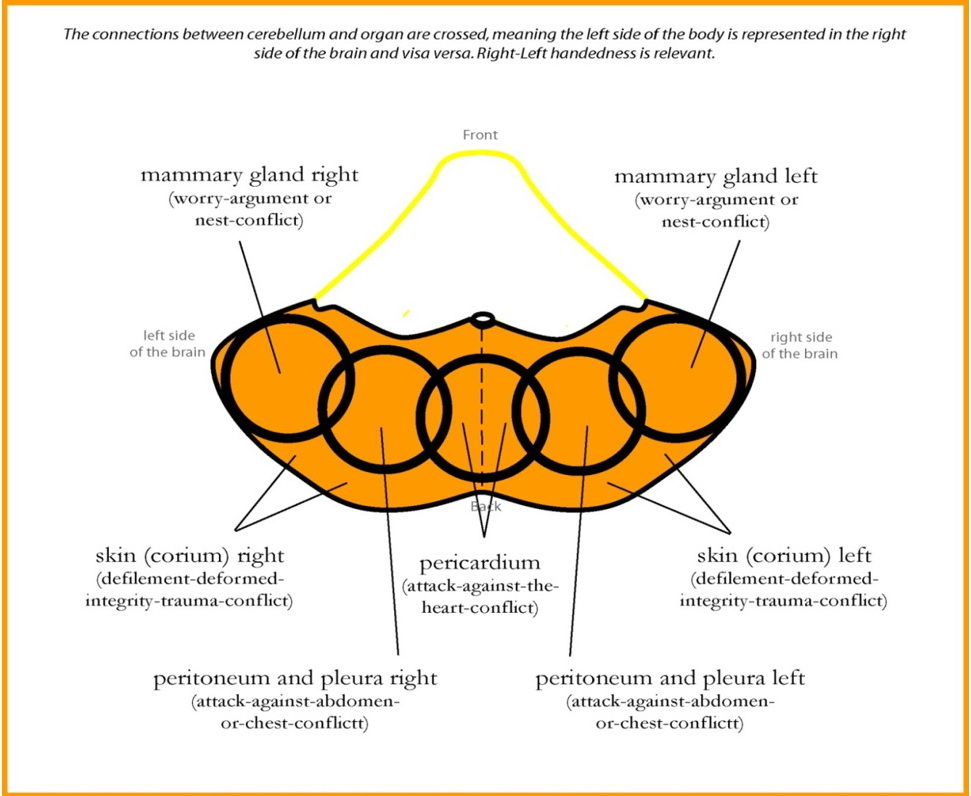
Mind
Theme
1. Pain, either physical or emotionally associated, brutal separation or contact. Even detachment/separation from parts of self.
2. Attack against the bone, protection of the bone
Emotions, Thoughts
Indignation caused by a pain that we inflicted on somebody or that we suffered ourselves.
- That hit my shin!
- This pain goes down to the bones.
- I´m hurt!
- How can they do that to me!
META-Meaning
- Now, I will accept and let go of the hurt.
- I can forgive myself and the others for this.
Organ
Stress Phase Symptoms
1. Downregulation of the peripheral blood flow by dilation of local blood vessels leads to pale, cold hands and/or feet. This equals the vagal inhibition in the shock response (see Porges´ Polyvagal Theory )
For the sensitivity reaction, 2 patterns are described: - Münnich and Eybl describe the Inner Skin Pattern (+/-) with hypersensitivity and pain in stress phase, concurrent with the pain felt when periosteum is irritated (kick in the shin), and name “cold rheumatic pain” as stress reaction.
- Hamer’s earlier publications (Scientific Chart, 2006) describe the Outer Skin Pattern (-/+) with sensory paralysis and numbness in stress phase, concurrent with the shock reaction in bone fractures.
Possible diagnoses: Bone Rheumatism, Raynaud-Syndrome
2. The outer fibrous layer thickens in stress phase, which can be diagnosed as fibroma or fibrosarcoma.
Regeneration Phase Symptoms
1. In the regeneration phase the function recovers. Increase of blood flow and trophic around bones, thereby tingling and pain is experienced.
In the regeneration phase of bone tissue, there is a strong swelling by callus formation which painfully stretches the periosteum.
In bone rheumatism, typical symptoms are an increased sensitivity (hyperesthesia) and flowing pain that can be experienced either as cold or warm. This refers to different chronic patterns of the periosteum, stressing the reaction in first or second phase. This extending rheumatic pain mostly comes without or with just a slight swelling. The wandering pain’s location tends to move around the body parts.
2. Tthe excessive tissue might stay as remnant, or be degraded by bacteria or mycobacteria which would be diagnosed as (purulent) periostitis. Nightly sweat may occur in the affected area.
Healing Peak
The Healing Peak comes with a short unconsciousness / absence.
Biological Meaning
The reduction of blood flow prevents excessive bleeding in case of a fracture or detachment of a limb. The numbness in stress phase makes the pain or separation felt in the UDIN easier to endure.
Social
Examples
- A woman suffers rheumatic pain connected to continuous quarrel in the family. She can’t free herself from their common property.(Klapp)
- A young woman can’t protect herself in sexual harrassment in the metro, and can’t run away. When in near contact, she suffers from chronically cold extremities. (Klapp)
- A young woman feels “tread on the foot/toes” by her colleague at work. She develops chronic rheumatic pain (intermittent regeneration)
- A football player kicked an opponent in the shin. After a while, he senses a strong pain himself in that location.
Additional Information
The oedema of a regeneration phase in bones can cause a very painful detachment and stretching of the periosteum. A local paraesthesia or disambiguation (paralysis) can arise.
When severed from the bone (which happens during regeneration of bone tissue), the periosteum reacts with building new bone tissue.
Severed extremities often leave “phantom pain” which can be connected to the postsensory cortex (periosteum sensitivity) in the brain.
In Morbus Sudeck (painful dystrophy after injury/physical trauma) the periosteum stress reaction seems to be involved.
In the skull area, the periosteum is attached to the external brain skin, the dura mater, which protects the brain. The meninges react in the same sense as the periosteum.
Differential Diagnosis
Bones(CM, -/+) Osteolysis or decalcification in stress phase, swelling and inflammation in regeneration phase. This healing oedema influences also the periosteum. Osteoma or ostesarcoma can stem from perforation of the periosteum during regeneration.
Sensory Nerves (CC, -/+) Different reaction patterns (IS/OS) according to the affected tissue.
Tendons (CM -/+) insert into the bone with fibres intertwining with those of periosteum.
Joint Capsules (CB +/-) have sensory innervation, and can cause pain around bony surfaces. This is felt especially at joints, and changes with movement.
