Kidneys – Collecting Tubules
Anatomy
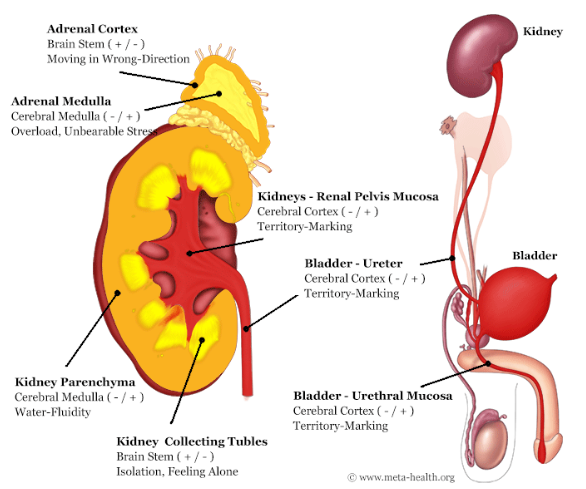
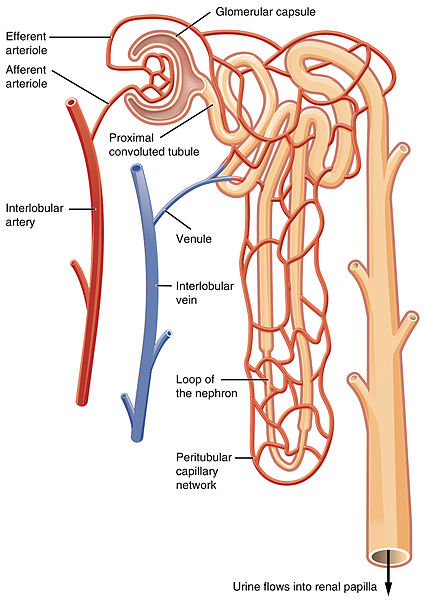
The collecting duct system of the kidney consists of a series of tubules and ducts that connect the nephrons to the renal pelvis. It participates in electrolyte and fluid balance through reabsorption and excretion processes regulated by the hormones aldosterone (produced in adrenal cortex) and vasopressin (produced in pituitary). Anatomically there are several components of the collecting duct system, which partly belong to the nephron: the connecting tubules, cortical collecting ducts and medullary collecting ducts. In the kidney medulla the collecting tubules of each pyramid converge to join a central tube (duct of bellini) which opens on the summit of the papilla and leads into the renal pelvis. Embryologically, the distal part of the nephron belongs to the endodermal tissues.
Brain
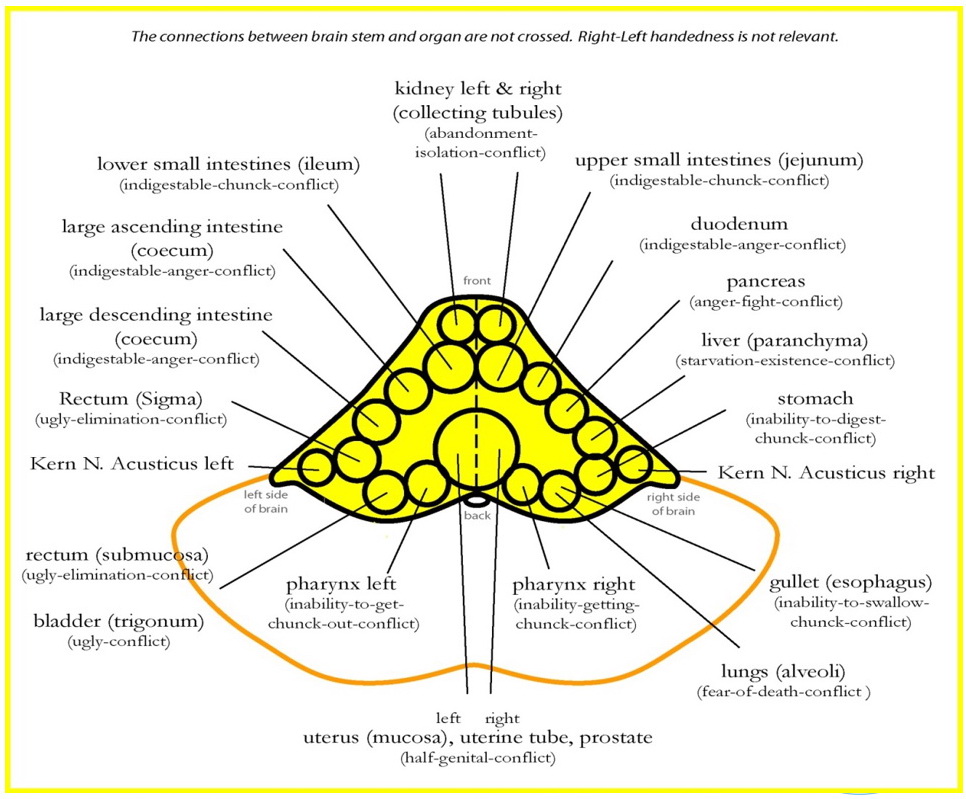
In the Brain Stem, the primeval ring structure is reflected: organ tissue relays with assimilative and digestive functions from oesophagus to small intestines are situated in the right brain stem, while excretory organs from caecum to rectum are relayed in the left brain stem. Medial on both sides are the relays of mouth/pharynx, middle ears and lacrimal glands, as well as the pineal and pituitary glands and the thyroid.
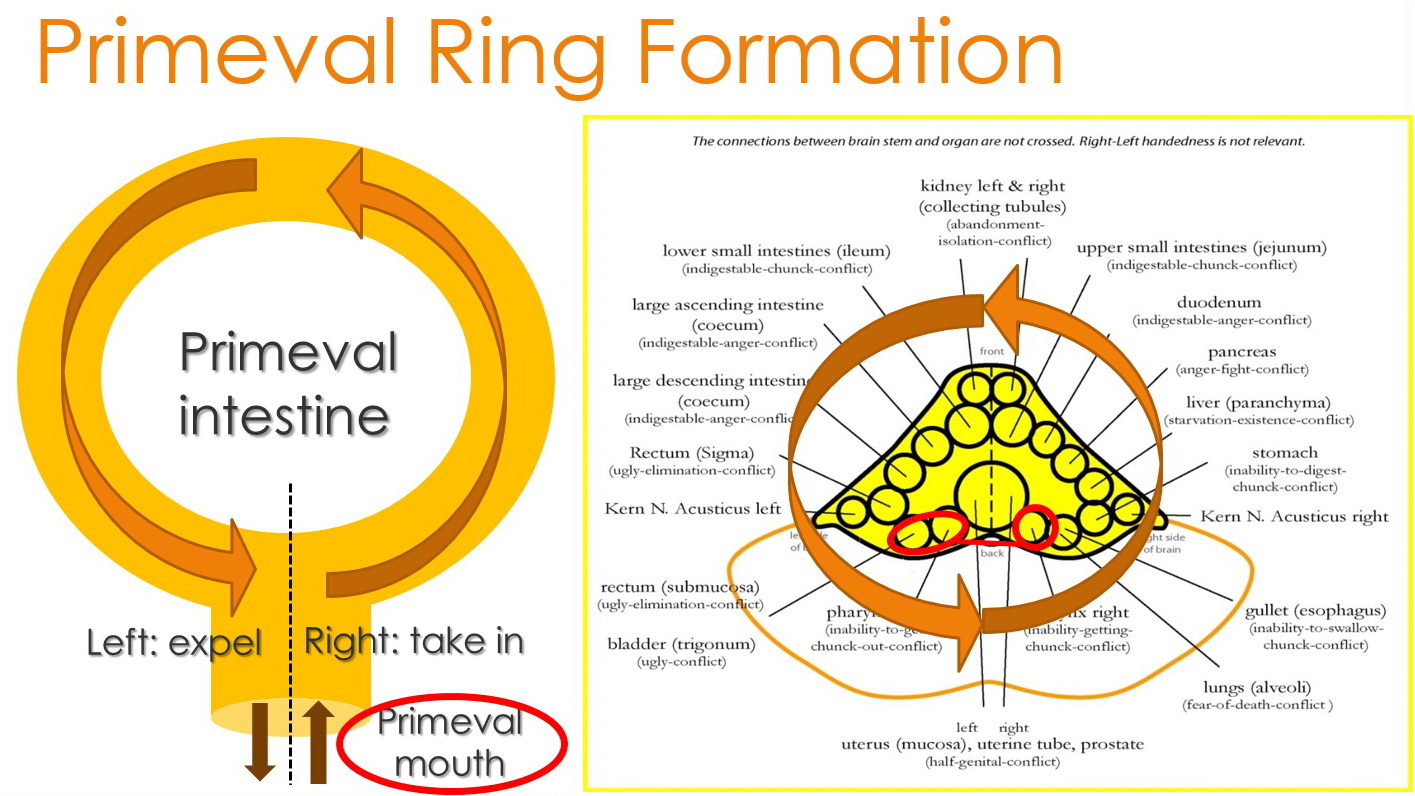
Relay:
Brain Stem ( + / – ) central anterior
Mind
Theme:
Survival Emergency:
- Existence threatened
- Abandonment
- Isolation
Emotions, Thoughts:
Abandonment, panic, isolation
- Help!
- I’m not supported.
- They forgot me.
- Don’t leave me alone!
- I feel so alone!
- Nobody cares for me.
- I don’t belong here.
META-Meaning:
- I feel connectedness and know exactly what I want.
- I am well-protected and taken care of.
- Now I know where I belong.
Organ
Stress Phase Symptoms:
Functional increase of the renal collecting ducts and the distal tubules, thereby an increased reabsorption of primary urine and low urine excretion as well as increased levels of creatinine, urea, uric acid in the blood. Symptoms: reduced urination, oedema formation, weight gain without eating more, reduced metabolism, elevated blood pressure, hyperplasia and cell proliferation in the kidney medulla.
Possible diagnoses: Oliguria (reduced diuresis) or anuria when both kidneys are involved, uremia, gout, kidney stones, renal insufficiency, collecting duct carcinoma, renal cell carcinoma.
Regeneration Phase A:
Normalization of function (in low-level or short conflicts), urge to urinate big amounts (polyuria) even without drinking more, weight loss, tumor degradation by microbes (renal tuberculosis) accompanied by nightly sweating and light fever (pyelitis, nephritis). Blood & Proteins in the urine (hematuria, proteinuria, albuminuria), low creatinin level in the blood.
Alternatively, the affected tissue can be incapsulated by connective tissue. Non-inflammatory degradation of the cell growth by self-dissolution (autolysis) is also possible.
Healing Peak
Chills, reduced urination
Regeneration Phase B:
Polyuria, weight loss, fat loss (due to the accelerated metabolism), lowered blood pressure. After TB development of calcium-oxalate stones possible. Scarring processes may lead to renal caverns and kidney thrombosis. Obstruction of the renal calyxes is possible.
Chronic processes could be diagnosed as nephrosis or nephritic syndrome.
Biological Menaing:
Due to the increased reabsorption by renal collecting ducts, there can be more water retained in the body.
There is also a retention of urea that can be reconverted to proteins in the case of deficiency. A low metabolism can lead to the storage of body fats for the time of famine.
Social
Examples:
- A young woman has swollen legs since the birth of her son. before that, the father of the child had abandoned her, and the financial situation was very hard. By her son, she has daily stress triggers, because she is dependent on care help. When she finds a new partner and new outlooks, the symptoms get successively better. (Nilsson, MHU archive)
- An elderly client with elephantiasis can excrete big amounts of urine after a META-Health session working with her relationship to her deceased husband. (Klapp)
- A young woman follows her heart and seeks out a situation reflecting her life purpose, nut meaning seclusion. She heals her identity conflict but activates the KCT and has temporary strong edema in her lower legs. (Klapp)
- The client had a life long tendency for accumulating weight. He has an immigrant background and deeply imprinted beliefs of not belonging. He is triggered into pulling himself back, feeling disoriented and dizzy, when a guest in his house tries to dominate him. When the theme is explored, he finds the UDIN was from his mother at age 21 when her home was uprooted and she felt isolated from the culture she was now in. After the session he feels at peace and has to urinate more than normal. (Hansen, MHU archive)
- A man has big conflicts with his neighbour. Now he moves to the countryside. He feels overwhelmed with responsibility, unsupported and not belonging to that society. He develops some cellulite and gains mass in belly and legs. (Wilk, MHU archive)
Additional Information
This organ process is active in many people. However, it commonly occurs in a strongly suppressed form, without any symptoms or with only mild symptoms. An undulating conflict intensity is often noticed by weight changes.
Fasting with an active kidney tubules process is not recommended. It may unconsciously increase the existance-isolation, metabolism may slow down, fats are not burned but stored and sugar in the blood and in the liver will not be burned for energy. Even if there is enough insulin in the bloodstream we may see increased blood sugar levels. Often an active kidney collecting tubules process is a major cause for obesity and also related issues like the development of type 2 diabetes.
Possible Constellations:
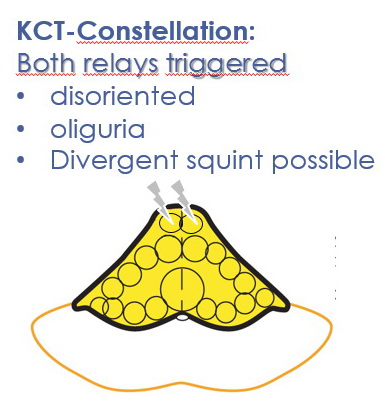
Consternation: When the collecting ducts of both kidneys are affected. The leading symptoms are strong water retention in body tissues, oliguria, anuria, a sense of disorientation and strabismus divergens (diverging squint).
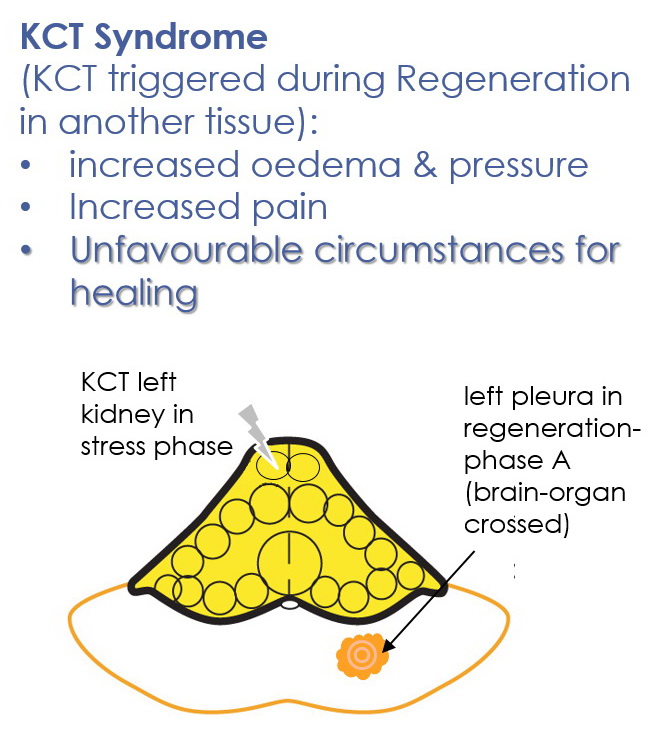
Kidney Collecting Tubule Syndrome:
In the regeneration phase of any other conflict, the presence of a simultaneous kidney collecting duct syndrome can lead to the amplification of the symptoms due to the increased water retention. Thereby, the affected organ shows an increased swelling (greater than in the ordinary regeneration phase). There also is a swelling in the brain relays of the affected organs. This swelling appears to be a precondition for tumor development in the place of the relevant brain relays.
The typical symptoms of kidney collecting tubule syndrome are:
*
Increased brain swelling in regeneration phase, brain tumor - Ascites
- Exsudative or transsudative pleural effusion
- Increased pericardial effusion
- Gout, rheumatoid arthritis
- Water filled cysts (which can easily burst due to the increased internal pressure)
- Filling of caverns which may appear as cysts (in the breast or in the liver)
- Overweight due to the increased water retention and fat accumulation
- Aggravation of all complaints in the healing crisis
- Aggravation of all swellings and inflammations that appeared to be tumours
- Deterioration of paralyses in regeneration phase e.g. in case of a motoric conflict
Differential Diagnosis:
Any regeneration phase is accompanied by a healing oedema.
In obesity, apart from active kidney collecting tubules, the Pancreas – Alpha Islet Cells (CC -/+; inner resistance) often play a role (hypoglykemia).
Kidney Parenchyma (Cerebral Medulla -/+) Stress phase (drowning): uremia , hypertension; Regeneration phase: glomerulonephritis, hematuria, proteinuria, renal cysts; chronic: cirrhotic kidney
Renal Pelvis Mucosa – Urothelium (Cerebral Cortex, -/+) stress phase (boundary-marking): dilation, inconspicious tissue reduction enhanced excretion; Regeneration phase: painful pyelonephritis, hematuria