
Diaphragm and Respiratory Muscles
Anatomy
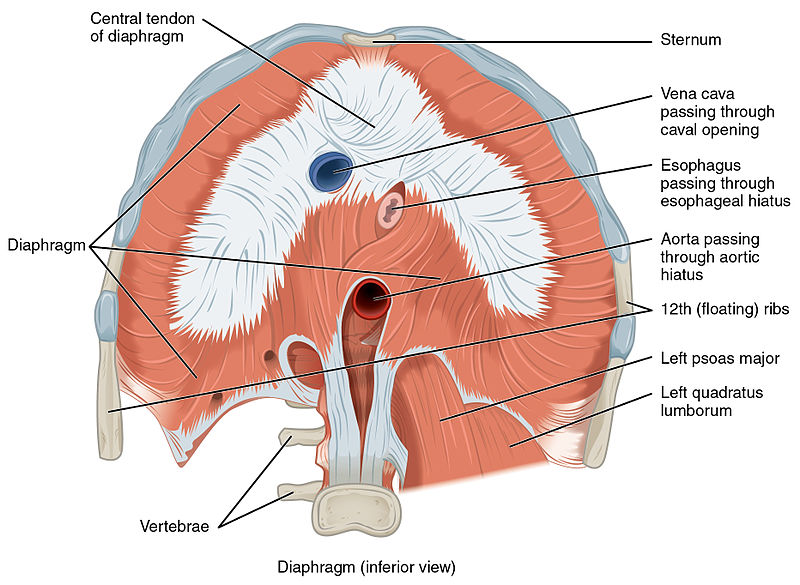
The diaphragm is the foremost respiratory muscle, and it separates the thorax from the abdomen. It consists of striated muscle tissue that has both voluntary as autonomous innervation, and of the central aponeurosis. It’s upper side is covered by the pleura and the lower side by the peritoneum. Because of the vacuum in the pleural cavity, the diaphragm is dome-shaped.
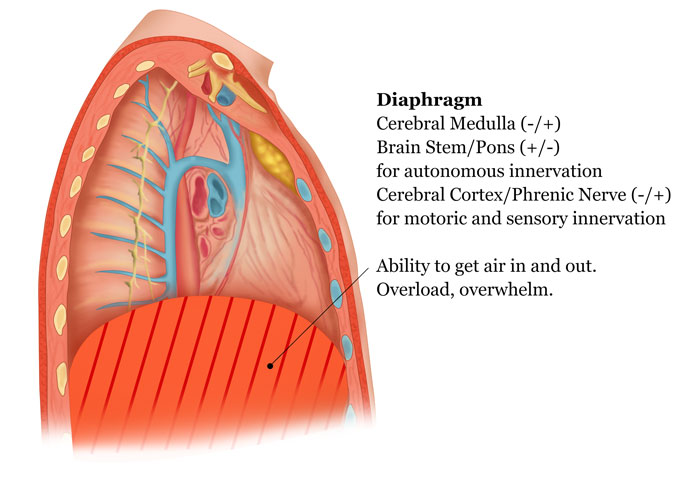
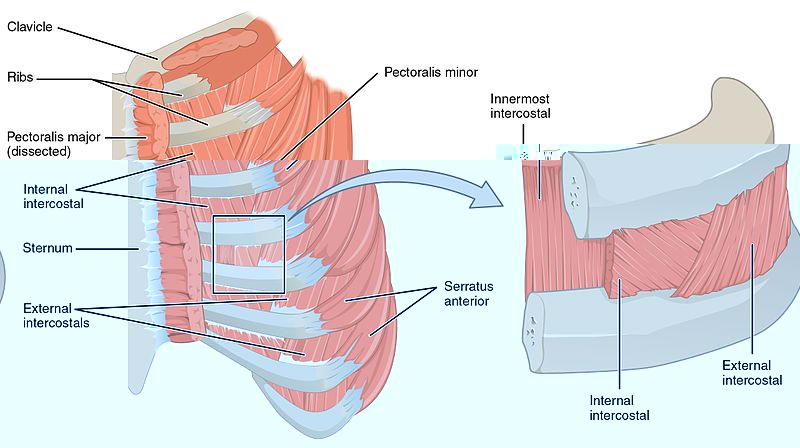
In inhale the diaphragm contracts, in exhale it relaxes and is drawn to the thorax where it compresses the lung space. In the contrary sense, the accessory respiratory muscles of rib cage and abdomen expand or compress the breathing space in the thorax: The inspiratory muscles lift the ribs and pull them apart, while the expiratory muscles depress and pull them together.
In the respiratory movement the diaphragm also massages the intestines. Together with the abdominal muscles, it also helps with pressing in defecation and in childbirth.
When we laugh, the diaphragm carries out fast and rhythmic contractions. A hiccup is spasms of the diaphragm.
Brain
Relay
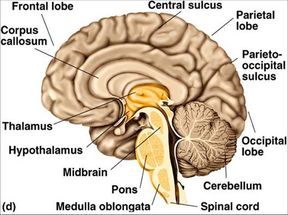
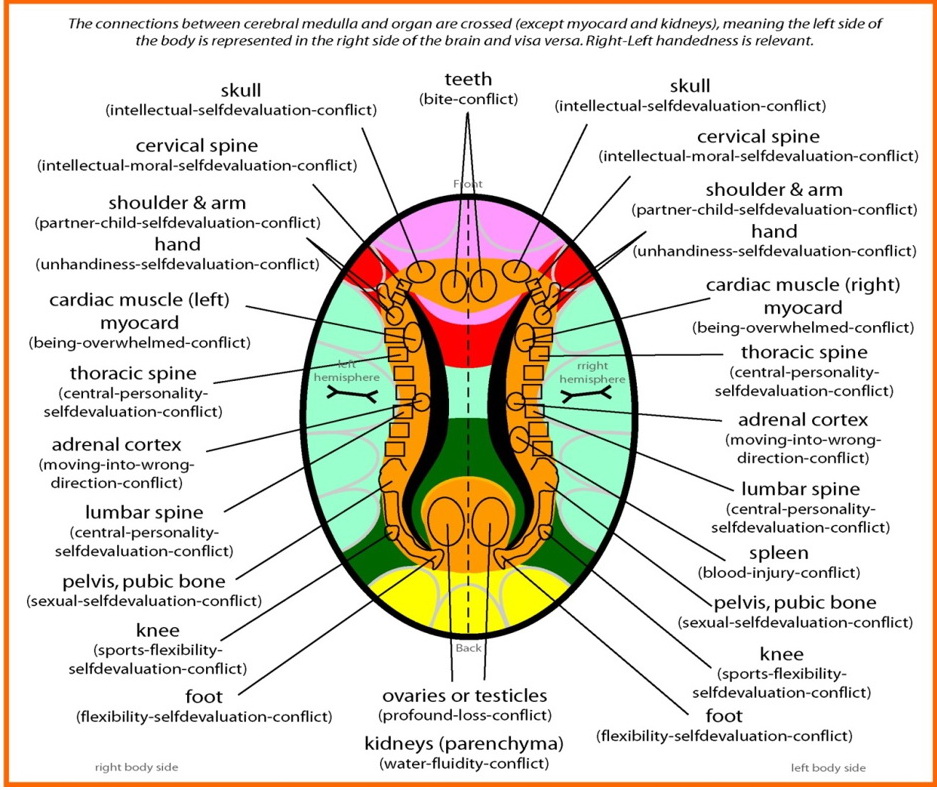
Cerebral Medulla (-/+) by myocardium relays
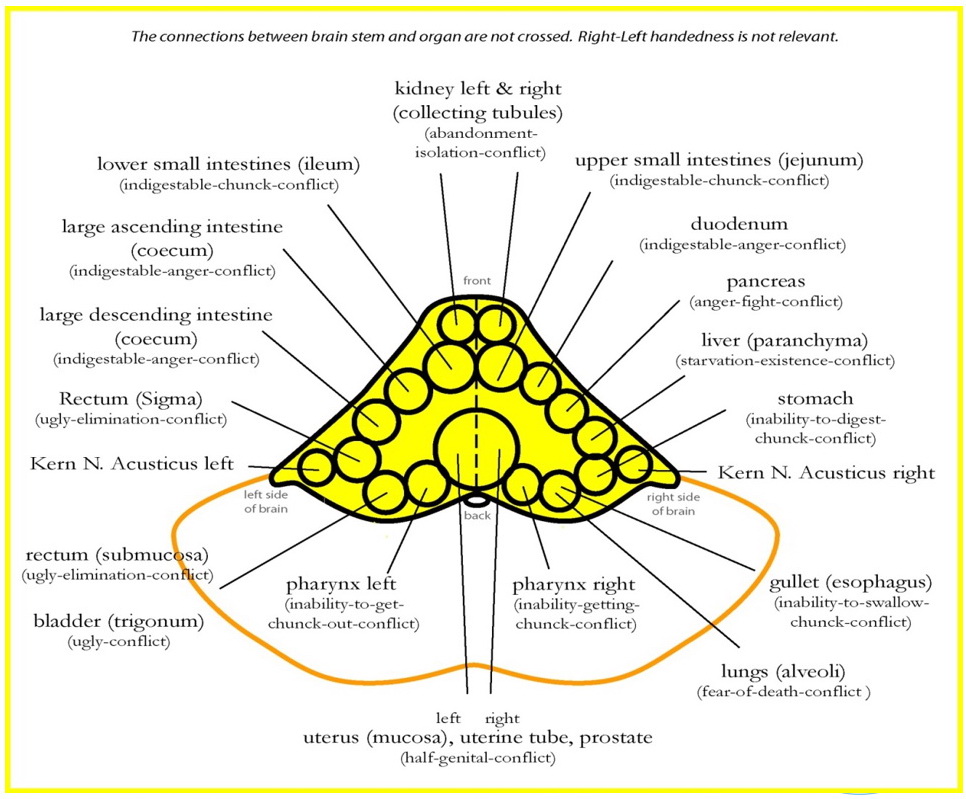
Brain Stem/Pons (+/-) for autonomous innervation of the diaphragm
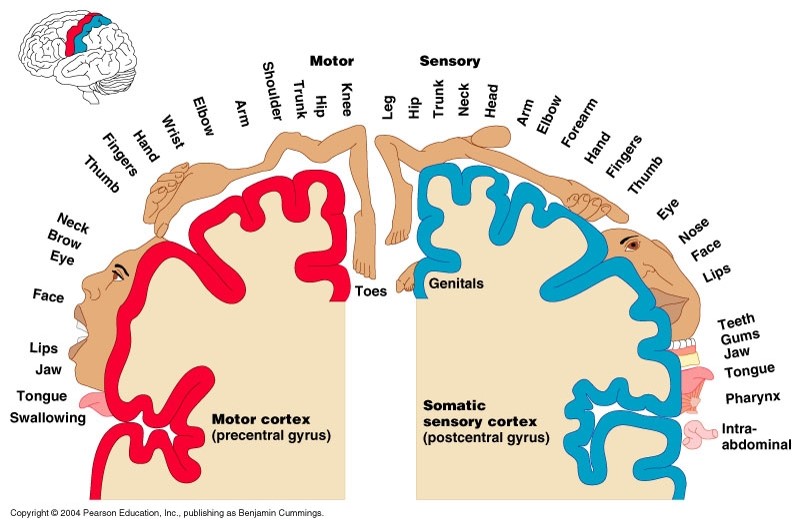
Cerebral Cortex/Phrenic Nerve (-/+) parietal region for motoric and sensory innervation
Mind
Theme:
Self-devaluation regarding breathing. Diaphragm also overload, overwhelm like chamber myocardium.
Emotions and Thoughts:
Shock
- This knocked the wind out of me.
- This is a standstill.
- I don´t dare to breathe.
- I can´t breathe!
META-Meaning:
My breath is flowing smoothly and faithfully.
Organ
Stress Phase Symptoms:
The diaphragm is seldom affected by unfunctionality, because it has a double system of innervation with contrary stress reaction (the brain stem relay for automatic breathing causes increased stimulation in stress phase while the cortex relay causes decreased stimulation). Hyperinspiration is a common reaction in general fright and shock situations. However, there is the possibility of diaphragm paresis or paralysis with apnea under certain circumstances, including stroke.
Regeneration Phase Symptoms:
First muscle ache, then gradual return to normality. Accessory muscles get stronger and bigger after completed regeneration.
Healing Peak:
Spasms (diaphragm: hiccup) during healing peak.The diaphragm has been observed to react simultaneously with the myocardium during it´s healing peak, the myocardial infarction, leading to apnoe.
Biological Meaning:
The biological meaning of the doubled-up system lies in it´s flexibility and support of the most vital life function, the breathing.
Social
Examples:
- A woman who survived a car accident, reacts since then with hyperinspiration and fright whenever she hears a crash.
- A boy develops diaphragmatic weakness with shallow breathing after having seen his sister beaten and not being able to help her.
Additional Information
Differential Diagnosis:
Bronchial muscle (Midbrain, Sympathetic, +/-) stress phase (competition, social fear): hyperventilation, depression; regeneration phase:coughing; asthma in constellation.
Bronchial or Laryngeal Asthma (CC -/+, constellation) Stress (social fear): aggravated in- or exhale, spasms. Both relays together effect in healing peak or by trigger signal the asthma attack.
Pleura(Cerebellum, +/-) Regeneration phase after attack to the lungs: Dyspnoe, pleural effusion
Intercostal Muscles (Cerebral Medulla, -/+ and Cerebral Cortex, -/+ for innervation) functional loss/paralysis in stress phase (performance self-devaluation).
