Bronchial Mucosa & Muscle
Anatomy
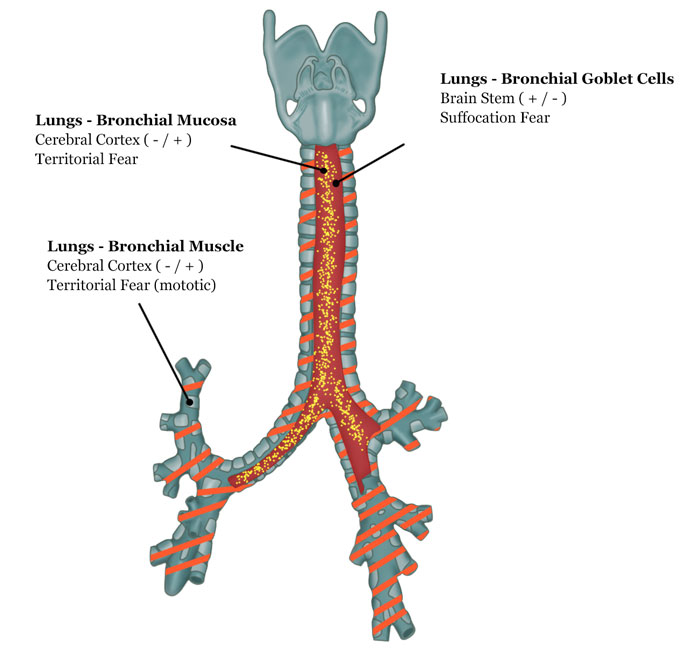
The trachea begins at the larynx and runs ventral of the oesophagus. It is an elastic tube in the respiratory system held open by horseshoe-formed cartilage. It’s backside consists of connective tissue and smooth muscle that can narrow it by one fourth.
In the mediastinum, at the level of the fourth thoracic vertebra, the trachea divides into the right and left primary bronchi. The bronchi branch into smaller and smaller passageways until they terminate in tiny air sacs called alveoli.
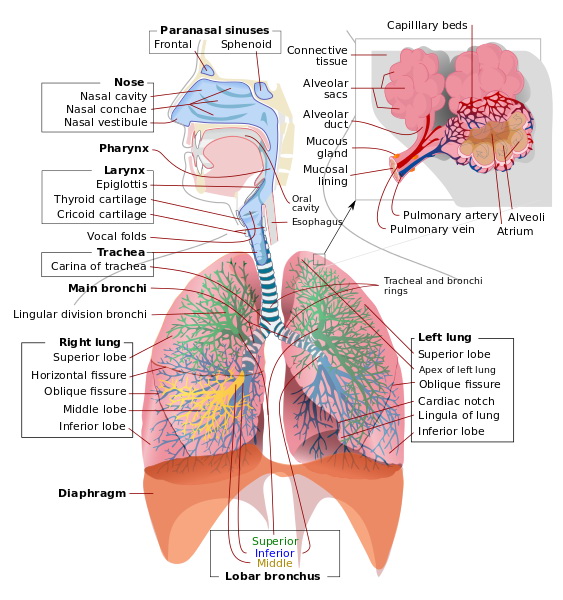
The hyaline cartilage forms an incomplete ring in the bronchi, giving them a “D”-shaped appearance in the larger bronchi and as small plates and islands in the smaller bronchi. Smooth muscle is present continuously around the bronchi. The cartilage and mucous membrane of the primary bronchi are similar to those in the trachea. As the branching continues through the bronchial tree, the amount of hyaline cartilage in the walls decreases until it is absent in the bronchioles. As the cartilage decreases, the amount of smooth muscle increases. The mucous membrane also undergoes a transition from ciliated pseudostratified columnar epithelium to simple cuboidal epithelium to simple squamous epithelium. The bronchioles are the first airway branches that no longer contain cartilage. They are branches of the bronchi and are smaller than one millimeter in diameter. There are no glands or cartilage in any of the bronchioles and the epithelial cells become more cuboidal in shape. Control of airflow resistance and air distribution in the lungs is controlled by the bronchioles.
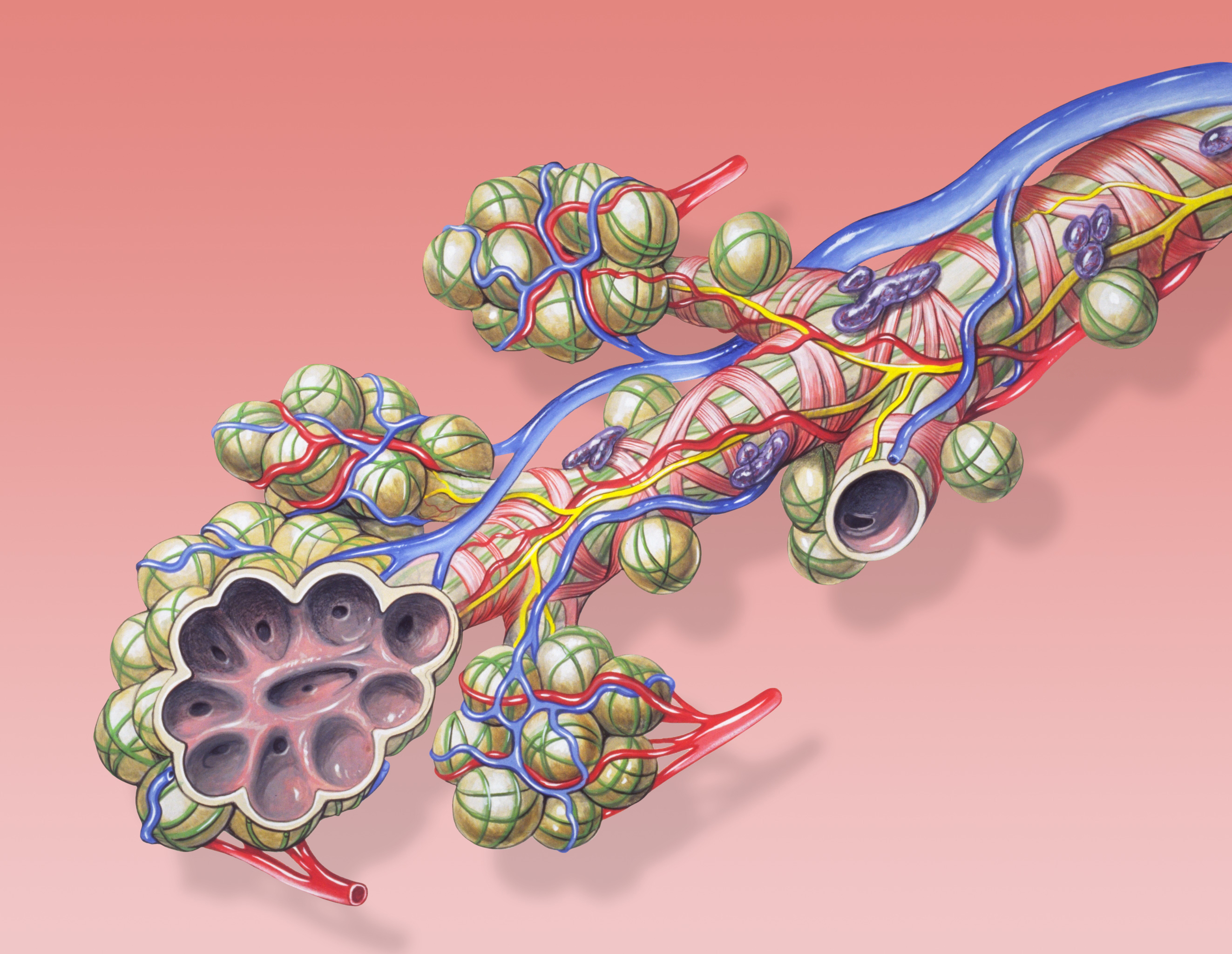
The smooth muscle layer of the bronchi is controlled by the autonomic nervous system. Stimulation from the sympathicus (stress response) causes these smooth muscles to relax, dilating the bronchial branches allowing more air to pass through the lungs. The parasympathetic nerve causes the smooth muscles of the bronchi to contract, allowing less air through the lungs. Normally the two divisions of the autonomic nervous system are in balance, imbalance being a sign of stress or regeneration phase.
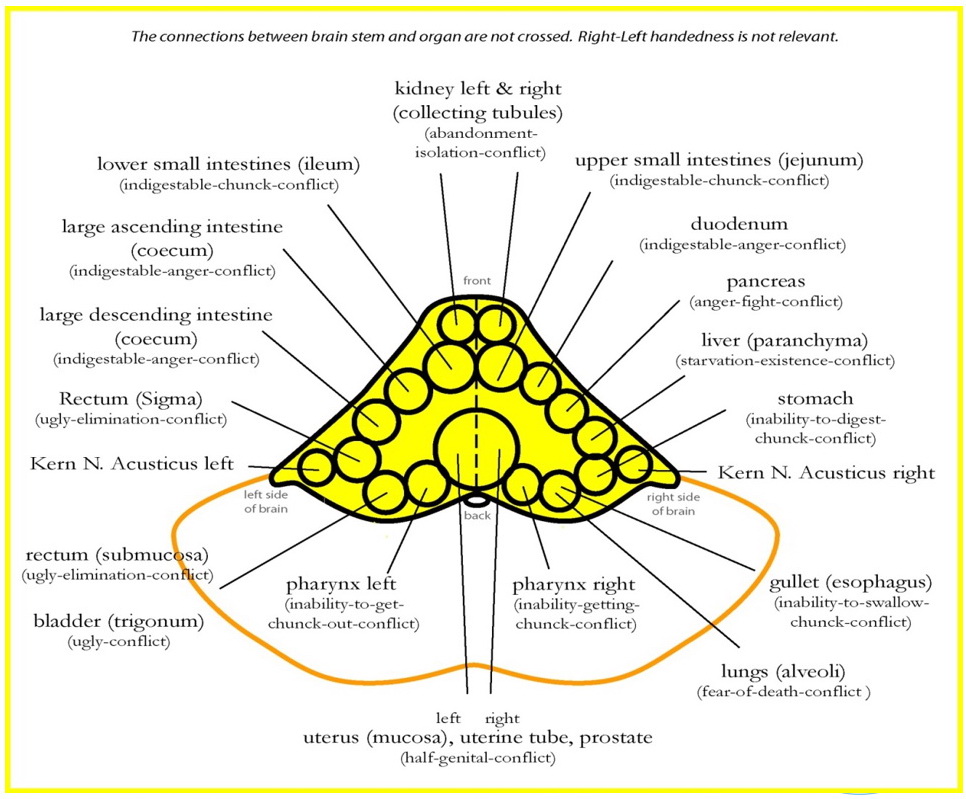
Brain
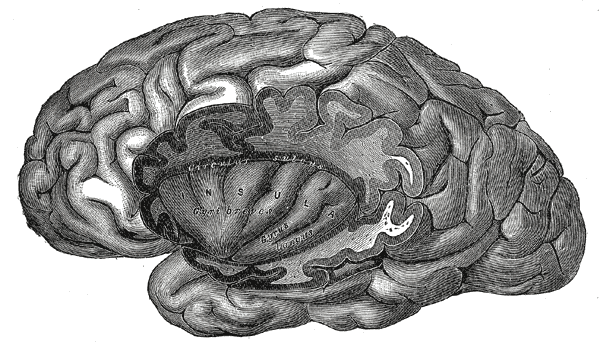
graphic: wikipedia, Henry Gray
Relay:
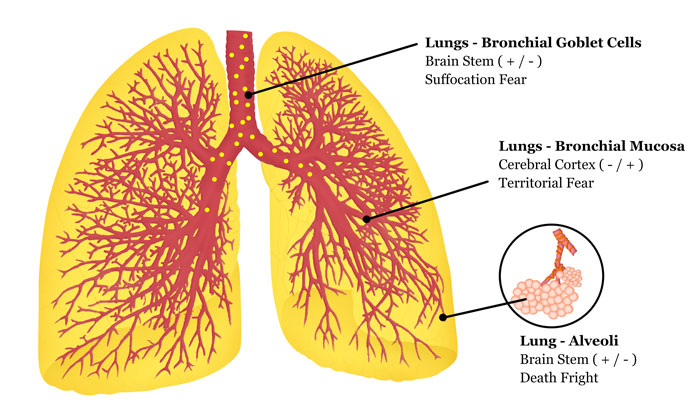
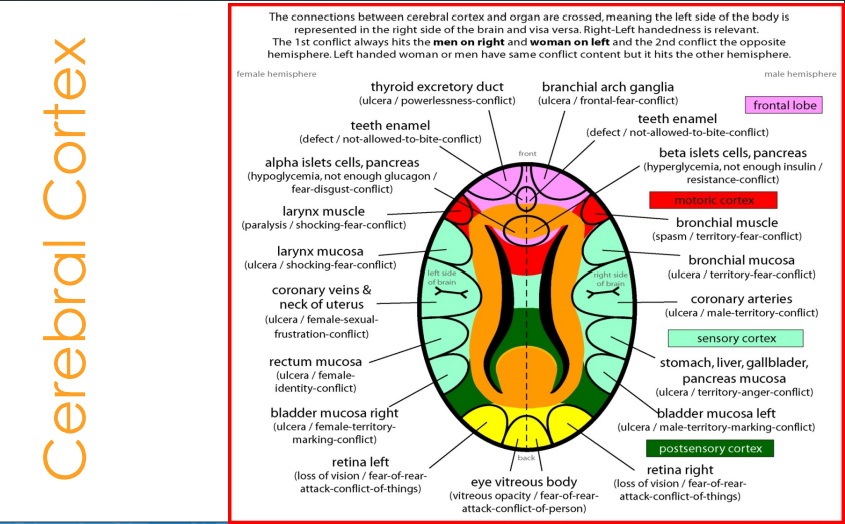
Cerebral Cortex ( – / + ) territorial area frontal left side (for trachea upper part near larynx) & right side (for trachea lower part & bronchial mucosa)
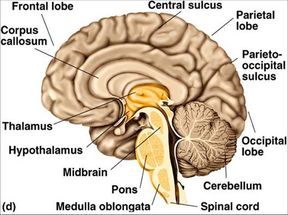
Midbrain ( + / – ) for bronchial muscle
compare Brain Stem
Mind
Theme:
1. Territorial fear – The fear that one´s space will be entered and invaded (male perception depending on hormones), impulse to “roar or bark” away the rival
2. Scare Fright, Speechlessness (female perception depending on hormones): ex
Emotions and Thoughts:
1. Suppressed anger, competition fear, worry
- Who’s that!
- Will he get my position?
- I need to defend my position!
- I’ll show them!
2. Shock, apprehension, perturbance - I don’t know what to say!
- I went speechless.
- I can’t express myself.
- I couldn’t utter a sound.
META-Meaning:
- I can express myself freely and easily.
- I respect and I am being respected.
Organ
Sensitivity change according to Outer Skin/Epidermis pattern with hyperesthesia in regeneration phase
Stress Phase Symptoms:
There are 2 possible stress reactions:
- In the UDIN moment or upon a “freeze”-trigger, the (old) vagus induces narrowing of the bronchi.
- The sympathetic nervous system is stimulating hyperventilation and dilation of the bronchi.
Wheezing. is caused by the bronchial muscle (and auxiliary respiratory muscles) reaction of relaxation up to paralysis. There may be bronchial cell loss that is not noticed because of decreased sensitivity in stress phase.
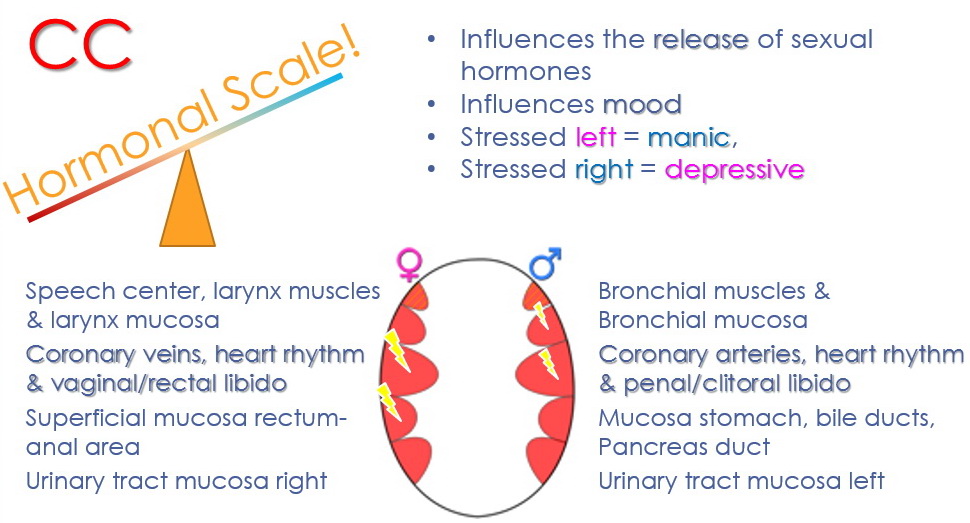
Depressive states in this phase are due to suppression of testosterone (hormonal scale in territorial relays) and vagotonia.
Regeneration Phase Symptoms:
High fever, swelling and cell proliferation around the affected regions, hyperesthesia causes irritation, e g tickle in the bronchi, first dry and later productive cough
The possible symptoms and diagnoses are:
1. Tracheitis, tracheobronchitis, bronchitis (Bronchiolitis/Bronchopneumonia: see under 2.): Often begins with dry cough and retrosternal pain (chesty cough), later mucous cough, coughing up blood, shortness of breath (dyspnea), fear of suffocation, bronchospasm (when the motoric area is also involved). In this connection, due to the mostly shorter conflict courses and the consequently shorter regeneration phases there is no detectable cell growth.
2. Broncho-pneumonia/Pneumonia: Pneumonia could be caused by a dramatically experienced, deep conflict affecting the bronchi/bronchioles deep in the lungs. The major symptoms are: chills, high fever (at the beginning), cough, shortness of breath, possibly chest pain when breathing, tinkling crepitations, wheeting, humming, whistling breath sounds. Typical lab paramters are: elevated CRP-level, later accelerated ESR, leukocytosis, left shift, toxic granulation, eosinopenia and lymphopenia
3. Atelectasis: In case of a KCT-syndrome prolonged regeneration phase, there can be a swelling of the bronchial mucosa so strong as to result in atelectasis (and decreased ventilation) of the deeper lung regions. Strong cough is a typical symptom.
4. Bronchial tumor (squamous epithelium-carcinoma): In case of a long-lasting, intensive conflict, the cell-regeneration-growth can be diagnosed as a bronchial tumor. By the end of regeneration phase, there aren’t any growing tumors in the lungs (which are often asymptomatic). In the regeneration phase, we often see ’shadows’ on the pulmonary x-ray.
Healing Peak:
Short-termed bronchiospasms and wheezing when muscles are affected, expiratory stridor. Absence / unconsciousness possible.
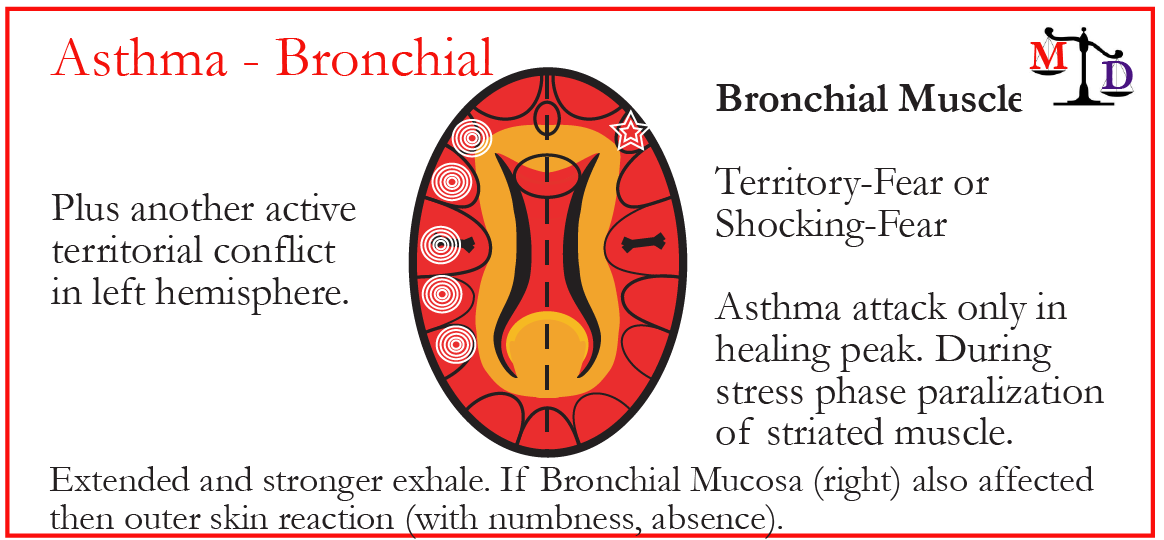
Asthma attacks if in constellation (see below).
Regeneration Phase B:
After the healing peak, the bronchial swelling recedes and the scarring healing begins. Sensitivity is still increased and coughing is usual.
1./2.Tracheitis, Bronchitis, Bronchopneumonia: declining symptoms (possibly hyperesthesia, urge to cough)
3. Atelectasis: slow reventilation of the affected bronchi
4. Bronchial tumor: cell growth slows and stops.
After the completition of the healing process a client might notice these symptoms:
3. Atelectasis: Still reduced ventilation, that may persist as a residual state
4. Bronchial tumor: Possibly, residual cell growth in pulmonary connective tissue, but no more cell proliferation (mitosis)
Biological Meaning:
The essence is the expansion of the bronchi in the stress phase in order to inhale more air and to be able to compete better in competetive situations. Due to the expansion of the bronchi, more oxygen can be taken in for to “roar” the enemy out of the boundaries.
Social
Examples:
Territorial fear:
- The client loved his autonomy when working. Now in retirement, he finds his wife dominant. He suffers coughing spells.
- A husband sees his wife flirting with another attractive man and is afraid that she will leave him. After the clarification and a good discussion about the situation he felt assured that there was nothing to worry about (and as part of the regeneration developed bronchitis.
- A five-year-old boy gets a little sister and is threatened by her and believes he will not get enough attention anymore. After his birthday (and much attention) he gets high fever and a chesty cough.
Speechlessness - After an exhausting hike in the mountains, where he experienced a dangerous ravine, the client got pneumonia.
- A little girl is frightened when a strange man addresses her in the shopping mall, and she can’t see her mother. When they later come home, the girl coughs a lot.
Additional Information
Smoking is considered a main risk factor for respiratory diseases. Especially in cases of decreased resilience and lost inner balance (smoking as coping strategy) in stress mode, the body `s filtering and cleansing faculties by the lymphatic system are impaired.
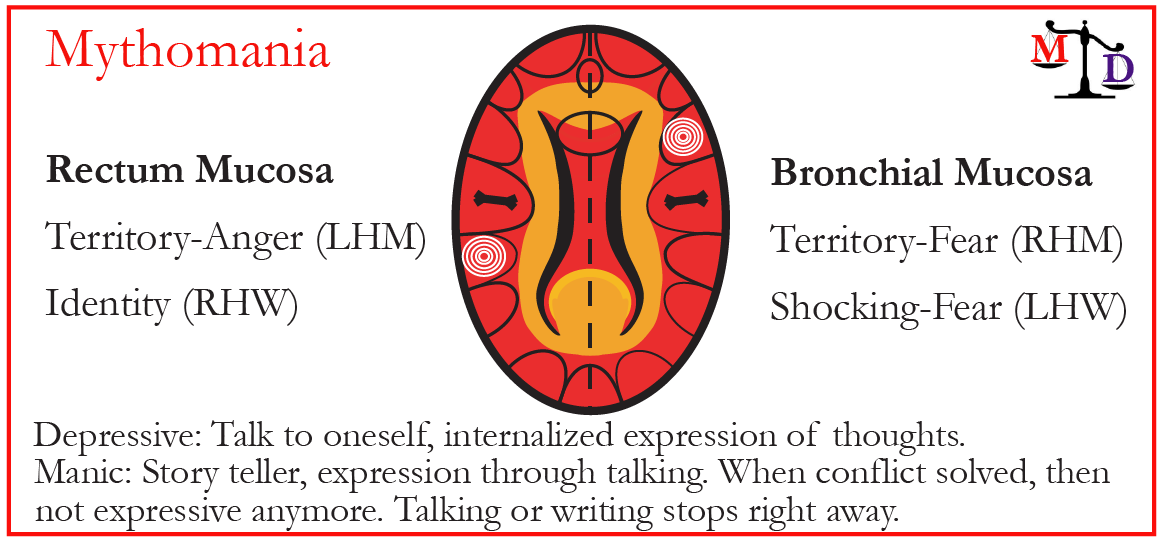
The bronchial mucosa relay belongs to the “territorial relays” in the peri-insular cerebral cortex, with the theme of social position and affiliation. Special rules apply for the meaning of side dominance. Conflicts affect the sexual and social “hormonal scale” and can promote manic or depressive episodes (see “territorial constellations” related to the function of the neurohypophysis).
Constellations:
Bronchial Asthma: Together with another active conflict in one of the territorial relays of the left hemisphere. Mainly, bronchial muscles react with prolonged and enhanced exhale, wheezing, not being able to exhale the remaining air volume from the lungs. Asthma can be triggered by fungi (candida): consider a connection with goblet cells orlung alveoli!
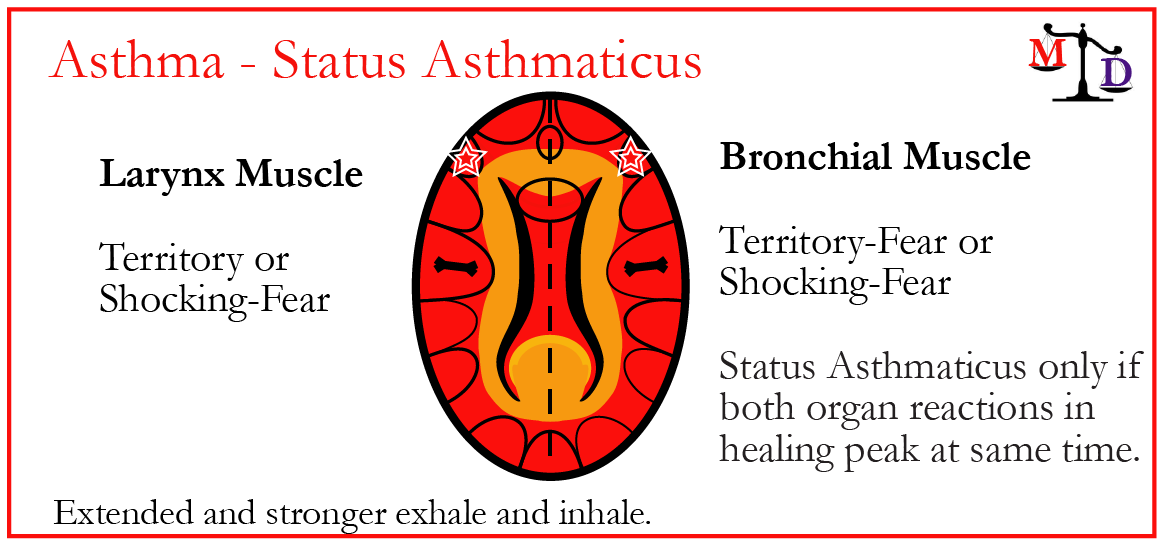
Status Asthmaticus: In case of the simultaneous involvement of the laryngeal muscle relays (left hemisphere) and the bronchial muscle relays (right hemisphere) during the healing peak. The main symptoms are: chest tightness, shortness of breath, dry cough, use of accessory respiratory muscles, labored breathing, and extreme wheezing. This is an emergency that requires immediate intervention.
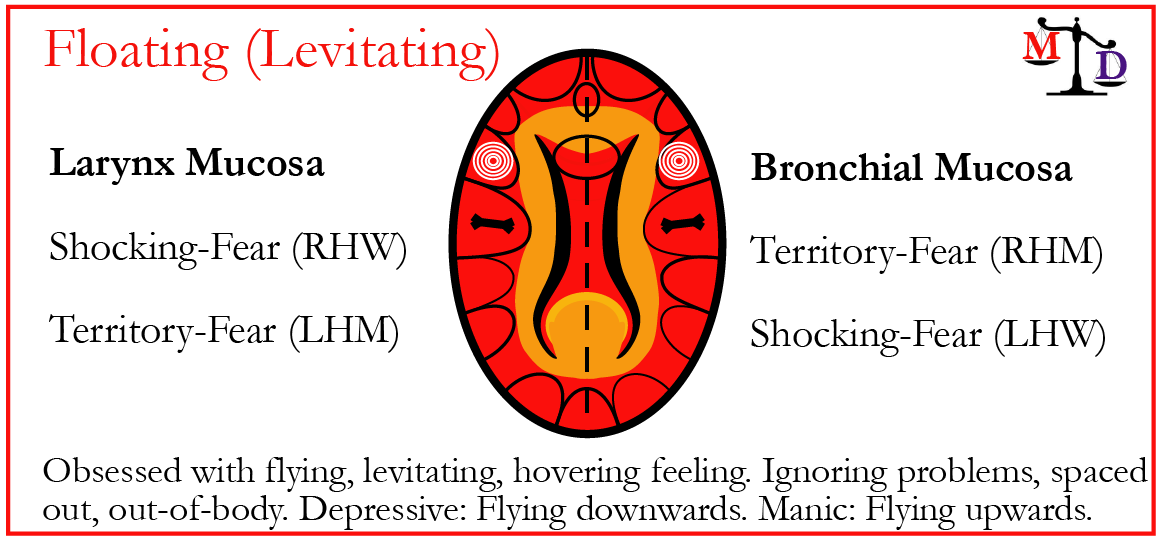
Levitating or Distanced Constellation: together with Larynx Mucosa relay. Affinity to overview and dreaming of flying or hovering. Distanced world view, often spiritual or esoteric. Positive: wisdom!
If together with stress-active Retina relays (fear of attack from behind), paranoia and spiritual world-saving beliefs appear.
Mythomania or Talkative Constellation: together with Superficial rectum mucosa/Anal Epithelium relay. Can be both manic (talking) and depressive (writing). Positive: Communicator!
Together with the stomach mucosa relay (territorial anger/identity) is shows as the typical “Paparazzi” or “Führer” (reckless speaker/writer) constellation.
Differential Diagnosis:
Larynx Mucosa (Cerebral Cortex, -/+) in Regeneration: Hypersensitivity and dry cough from the voice box area, often depressive states
Bronchial Goblet Cells (Brain Stem, +/-) with tumor (adenoma) in the stress phase (suffocation fear), bloody cough in regeneration phase and cystic fibrosis after recurring conflicts.
Lung Alveoli(Brain Stem, +/-) stress phase (death fright): lung cancer; regeneration phase: pneumonia or tuberculosis with night sweat, cough with coagulated blood and broken down tissue.
Pharyngeal Arches(Cerebral Cortex, -/+) with hyperesthesia & coughing in stress phase (frontal fear/Powerlessness), cysts in the mediastinum in the regeneration phase.