Pancreas Glands – Ducts
Anatomy
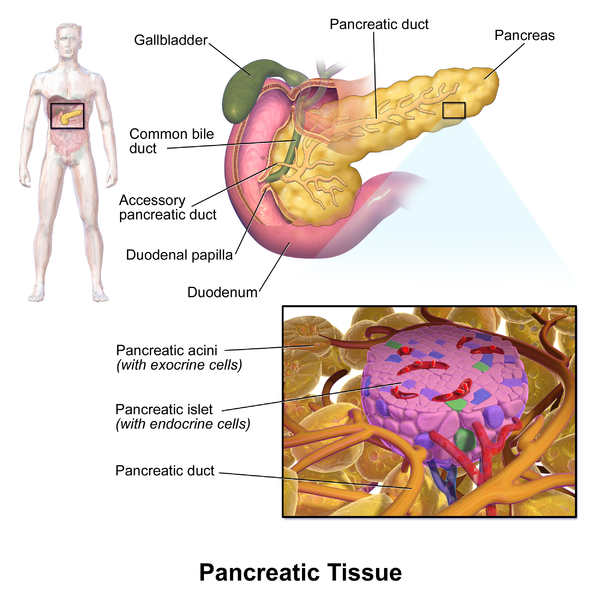
The ducts from the secretory cells in the pancreas are called acini. They also produce mucus to protect the epithelium, and are combined in complexes of 3-5 which join a common duct. Smaller ducts lead into the main duct, which joins the gall bladder duct in the ampulla of Vater which drains into the duodenum. Part of the people have an accessory duct which bypasses the ampulla of Vater and runs directly to the duodenum. The digestive enzymes trypsinogen, chymotrypsin (protein digestion), lipase (fat digestion) and amylase (carbohydrate digestion) are activated after transport into the duodenum.
Brain
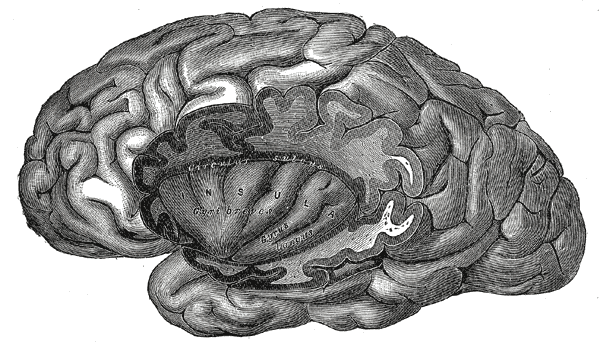
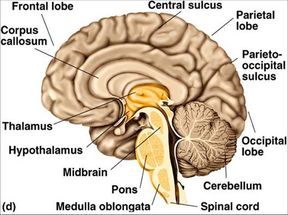
Relay:
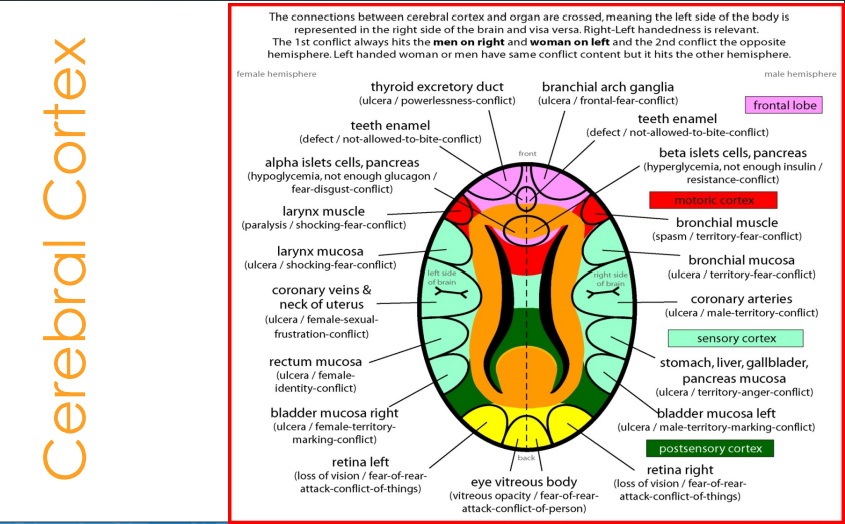
Cerebral Cortex ( – / + ) insular area right hemisphere, medio-lateral “4 o’clock relay”
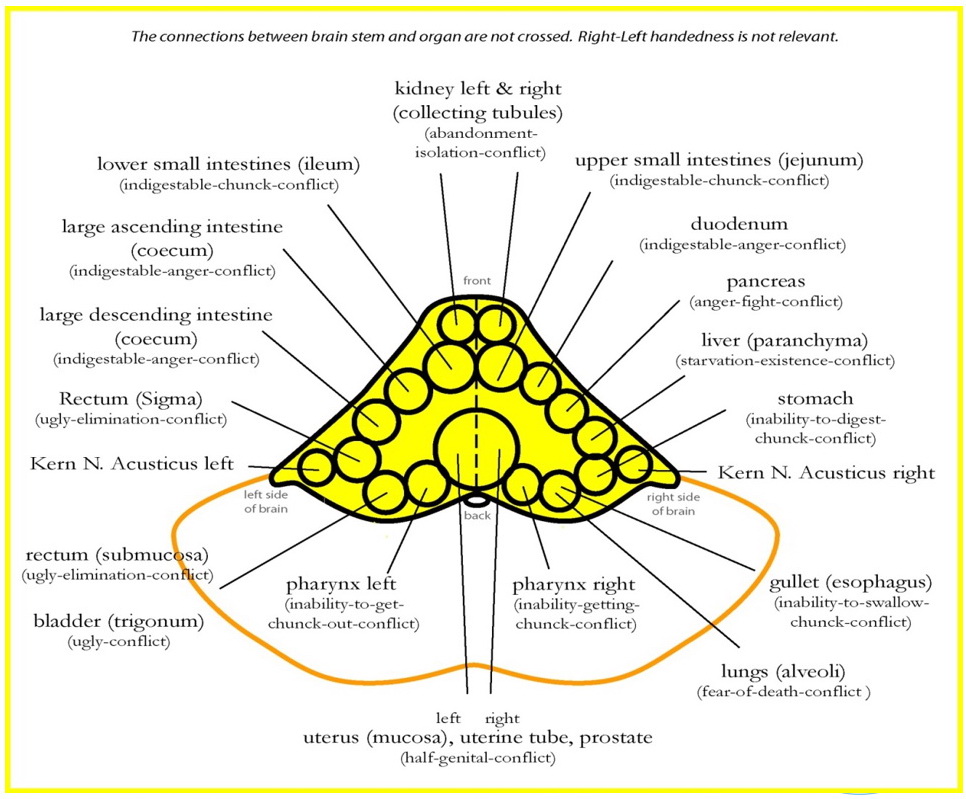
Midbrain (+/-) medio-lateral right, for smooth muscle layer
compare Brain Stem
Mind
Theme:
1. Fight about rank (male perception)
2. Identity, belonging (female perception)
depending on sex, side dominance, hormone levels & subjective association
Emotions, Thoughts:
1. Anger, indignation about somebody who ichallenges our territory, our own space or domain:
- They are encroaching into my space.
- This is my emotional/physical space, this is me.
- How can he do that!
- Don’t you dare!
2. Indecision, longing - What is my function here?
- Should I follow him?
- What am I doing here?
- Who am I really?
META-Meaning:
- I always find the right solution.
- Now, I respect and I am being respected.
- I find the answer in my heart.
Organ
Sensitivity change according to Inner Skin Pattern with hyperesthesia and pain during the stress phase.
Stress inhibits release of testosterone
Stress Phase Symptoms:
Widening of the pancreatic ducts, later cellular atrophy that can lead to an ulcer in the pancreatic duct branches, and in the large pancreatic duct. Hyperesthesia and reduced mucus production in acini which can lead to pancreas insufficiency. That is often connected with pain and sensitivity in the upper abdomen.
Regeneration Phase Symptoms:
This phase is not painful except in Healing Peak! The healing oedema can create obstruction (occlusion) of the pancreatic ducts and even icterus (jaundice) when bile duct is affected. The amylase enzyme of the blood serum is increased. The most important symptoms: nausea, abdominal wall pressure, pain and defense especially on left side of abdominal wall, vomiting, bloating, fever. A typical diagnosis may be a pancreatitis or a pseudo pancreatic tumor.
After swelling, retention cysts can develop especially in chronic processes. Chronic pancreatitis can present as relapses of acute inflammations in a formerly injured pancreas. Under some circumstances, it can lead to formation of pancreatic stones with permanent pain or severe left-sided upper abdominal pain. When the disease course is prolonged and intense (also depending on emotional state), due to greater swelling and cell proliferation, the possible diagnoses are pancreas carcinoma or papillary-mucinous tumor. In case of a simultaneous water retention, the regeneration process can be very intense.
Healing Peak:
Pain reflecting into left flank and back. A painful colic arises in the healing crisis by the smooth muscle reaction of the main pancreatic duct.
Biological Meaning:
The territorial conflicts make the person aggressive for to promote pro-active resolution. Metabolism is increased. Therefore, pancreatic ducts expand their surface in order to release more pancreatic juice faster, for digestion and energy production. .
Social
Examples:
Territorial Anger/Competitiveness:
It is often about border disputes with siblings, neighbors, work colleagues or about „possessing” a woman. - The patient with pancreas carcinoma didn’t see his children after divorce, and feels that his ex-wife prejudices them against him, so he had no opportunity to get close to them. He feels wrongfully rejected.
- The landlord enters the apartment of his tenant without previous notification. Both men speak harshly with each other. The tenant feels irritated and threatened.
Identity/Belonging:
The concerned person doesn’t know where she belongs or where she’s going and what decisions to make (decision-conflict).
Territory marking conflict can also occur in these people. - The menopausal client wants to change her lifestyle, quit her business and find new meaning. She feels tied to her family, and feels burdened by responsibility. Various triggers effect pain in her upper abdomen, and she has depressive episodes. It helps her to find more distance and a new goal. (Klapp)
- The client feels bloated and pain so that he worries for his heart. He feels the responsibility to support his wife in her business, and to care for his disabled son. He is irritated that she doesn’t seem to let him have some distraction by playing football, and that she blames him for faults in bookkeeping. META-Health Coaching helps him to find calm strength to communicate his needs. (Klapp)
Additional Information
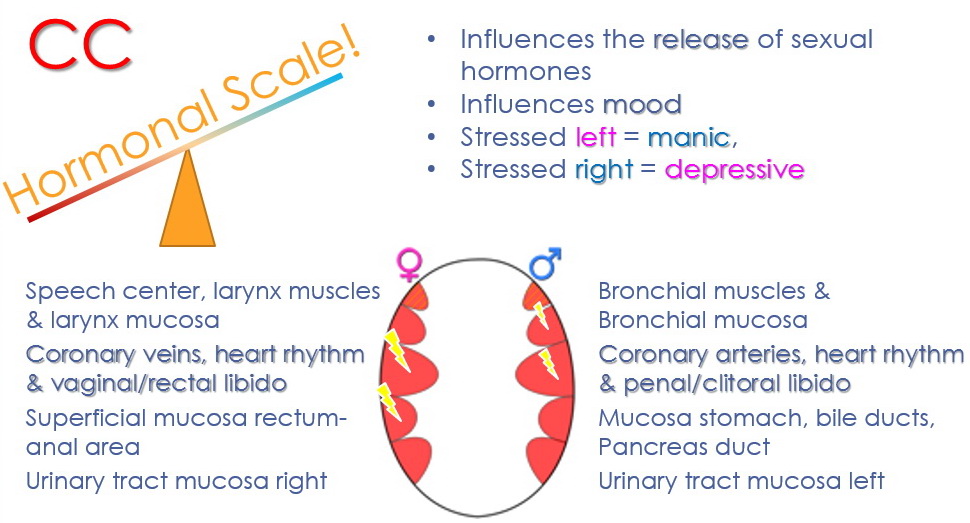
This relay belongs to the “territorial relays” in the peri-insular cerebral cortex, with the theme of social position and affiliation. Special rules apply for the meaning of side dominance. Conflicts affect the sexual and social “hormonal scale” and can promote manic or depressive episodes (see “territorial constellations” related to the function of the neurohypophysis).
Constellations:
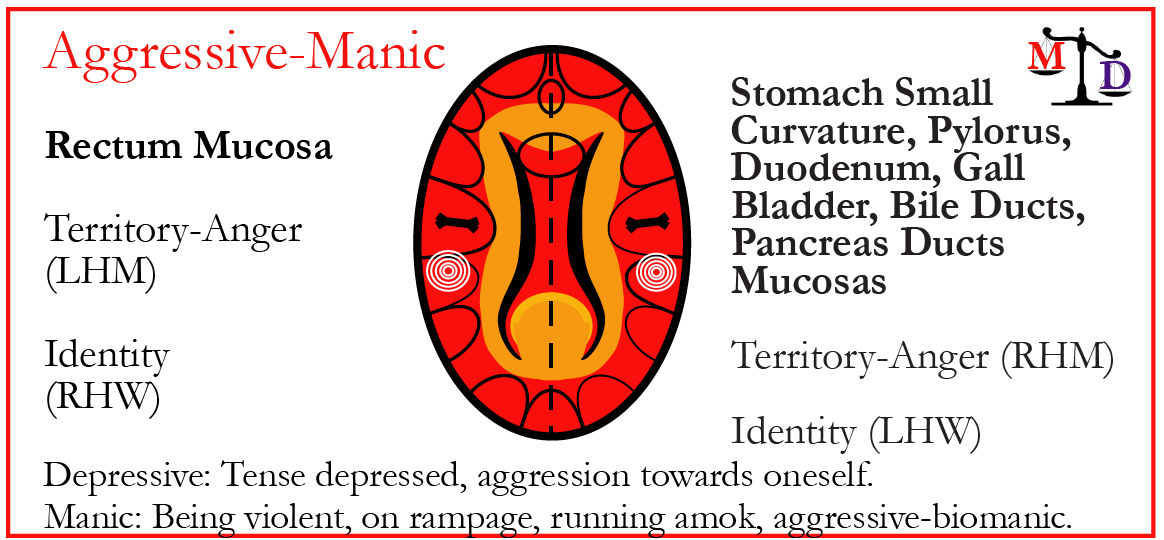
Aggressive: Together with Rectum/Anal Mucosa relay. The person is aggressive and possibly violent against himself or others. Positive: courage and will to resolve the conflict.
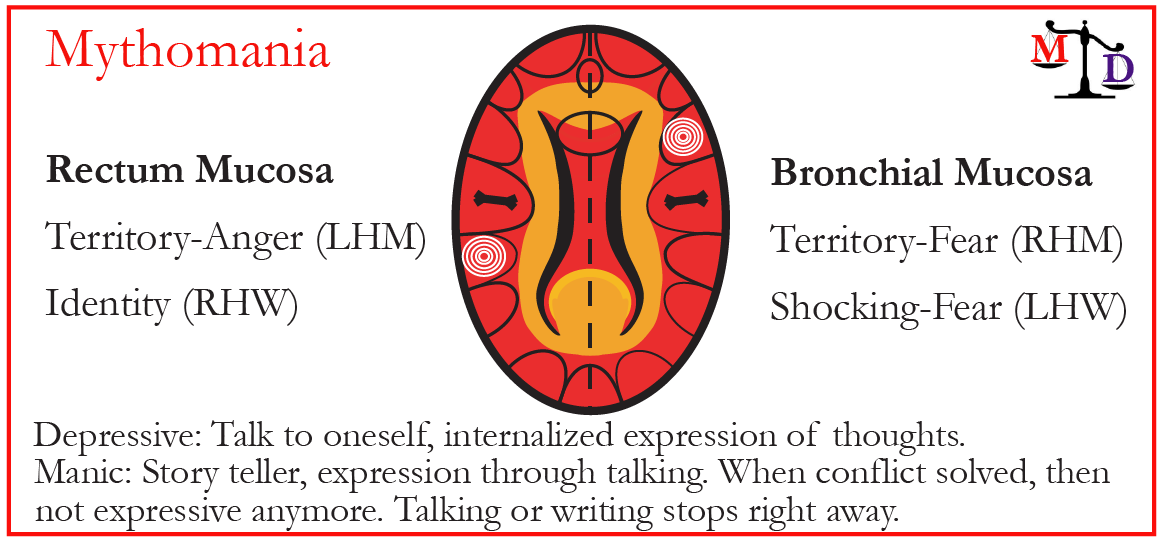
When together with Bronchial Mucosa activation, aggressive mythomania leads to “Paparazzi”- or “Führer” behaviour.
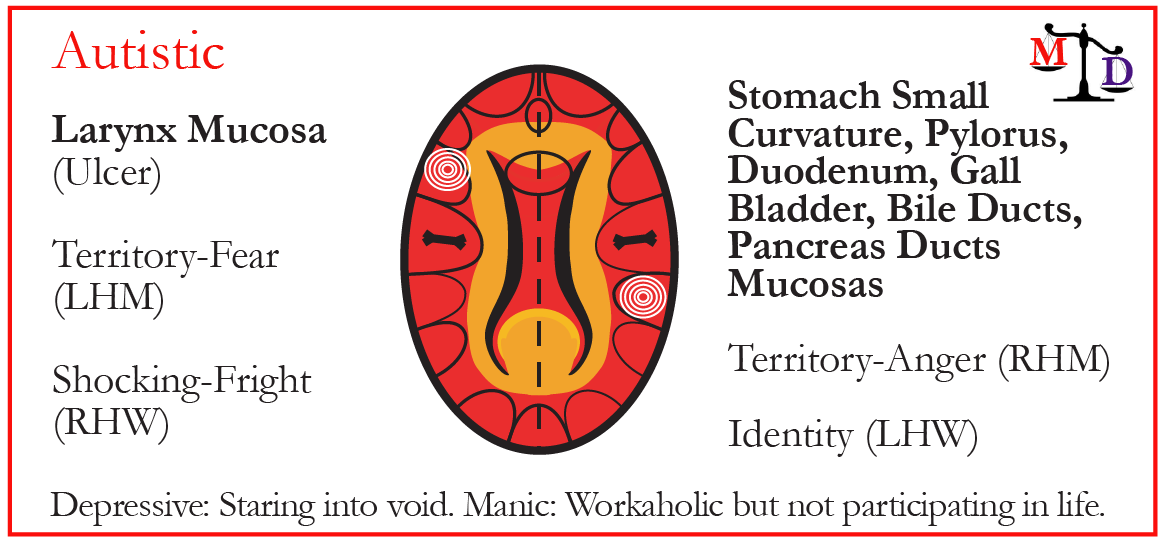
Autistic or Introvert constellation: Together with Larynx Mucosa relay. The person shows an introvert and self-centered personality, distracted and living in their own world. Positive: focus!
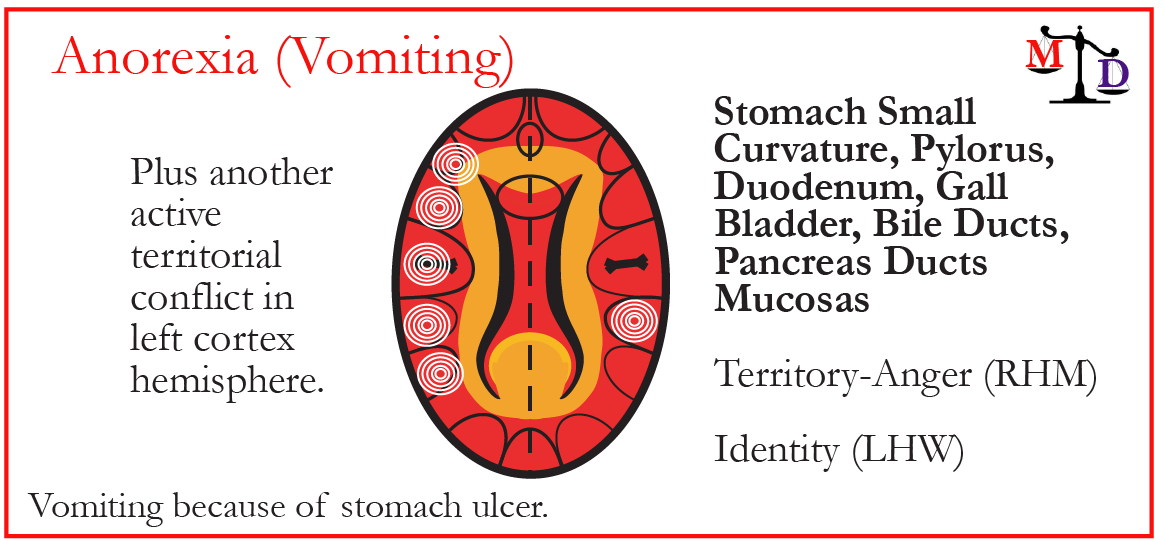
Anorexia: Together with another active periinsular relay in the left hemisphere. The person is unwilling to eat, or throws food up again.
With these 3 constellations mania and/or depression will be present depending on hormonal status and conflict impact.
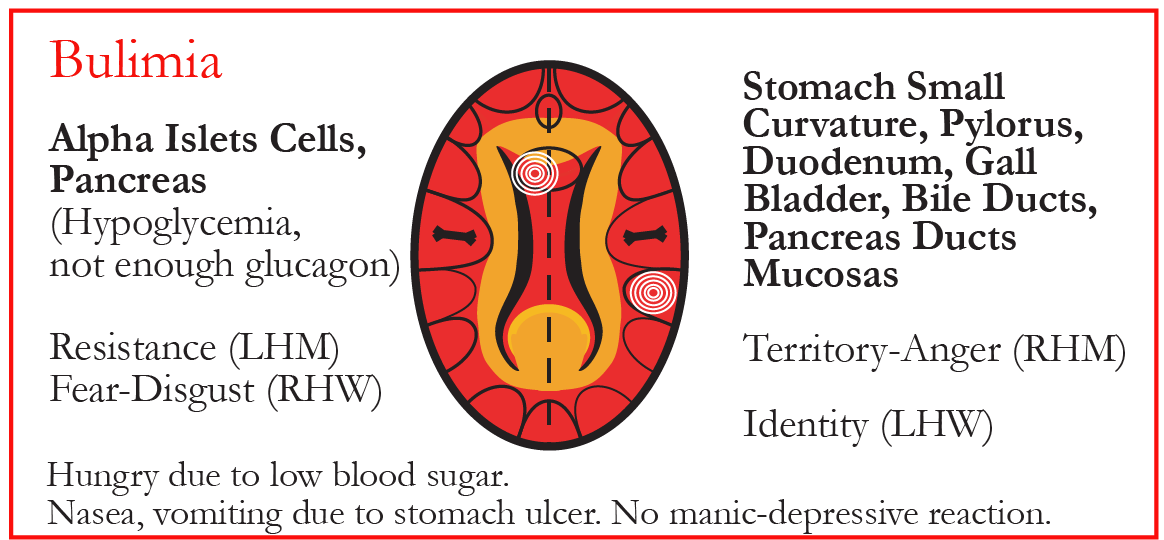
Bulimia: Together with Pancreas Alpha Islet Cells relay. The person is binge-eating (reflects hypoglykemia) and throwing up (reflects pain in pancreas).
Differential Diagnosis:
The differential diagnosis of pancreatitis include the followings: gastric perforation, mesenteric vein thrombosis, cholecystitis, splenic infarction and posterior myocardial infarction.
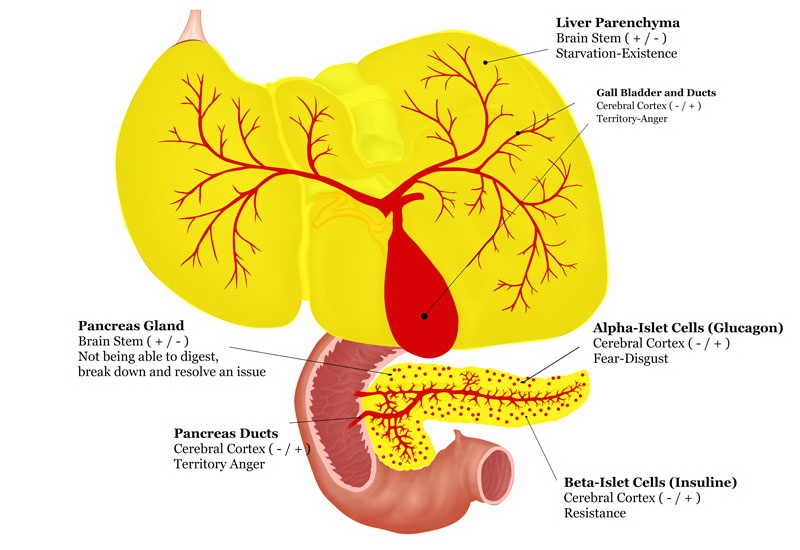
Gall Bladder & Bile Ducts (Cerebral Cortex -/+) Stress (rank, identity): painful biliary colic, bile stones; Regeneration phase: Swelling and occlusion can lead to reflux of bile into the pancreas.
Pancreas Glandular Tissue (Brain Stem, +/-) stress phase (anger about finances) with increased production of juice, possibly tumor growth (adenoma); pancreatitis in regeneration phase
Pancreas Alpha & Beta Islet Cells (Cerebral Cortex,-/+) stress (confrontation): no tumor growth but functional change, obesity, binge-eating, diabetes
Duodenum Mucosa /Villi(Brain Stem, +/-), with polyps or adenocarcinoma in the stress phase (indigestion), inflammatory decomposition in the regeneration phase.
Duodenum inner mucosa (bulbus) (Cerebral Cortex -/+) with painful ulceration in the stress phase (rank/identity) and possibly carcinoma in the regeneration phase.