Nails
Anatomy
Finger & toe nails are plates covering the outside of the tips of human extremities. They consist of keratin, a tough translucent protein, and their function is similar to claws and hooves in animals. Several layers of dead, compacted cells make nails both strong and flexible. Nails have protective as well as sensory and executive functions, thumb and index finger nails together can work as tweezers.
The nail bed is the skin beneath the nail plate, consisting of an epidermis and a dermis layer building a nail matrix which supplies the nails with nerves, blood– and lymph vessels. The cutaneous fold overlapping the sides and proximal end of the nail is called nail wall. The growing part of the nail is at the nail’s proximal end under the epidermis.
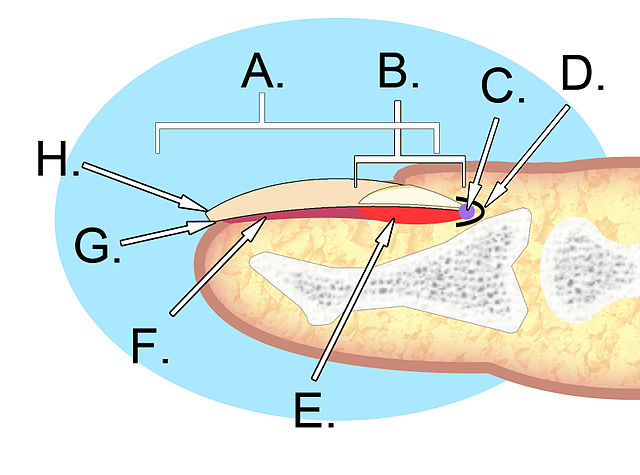
graphic:wikipedia/KDS444
Brain
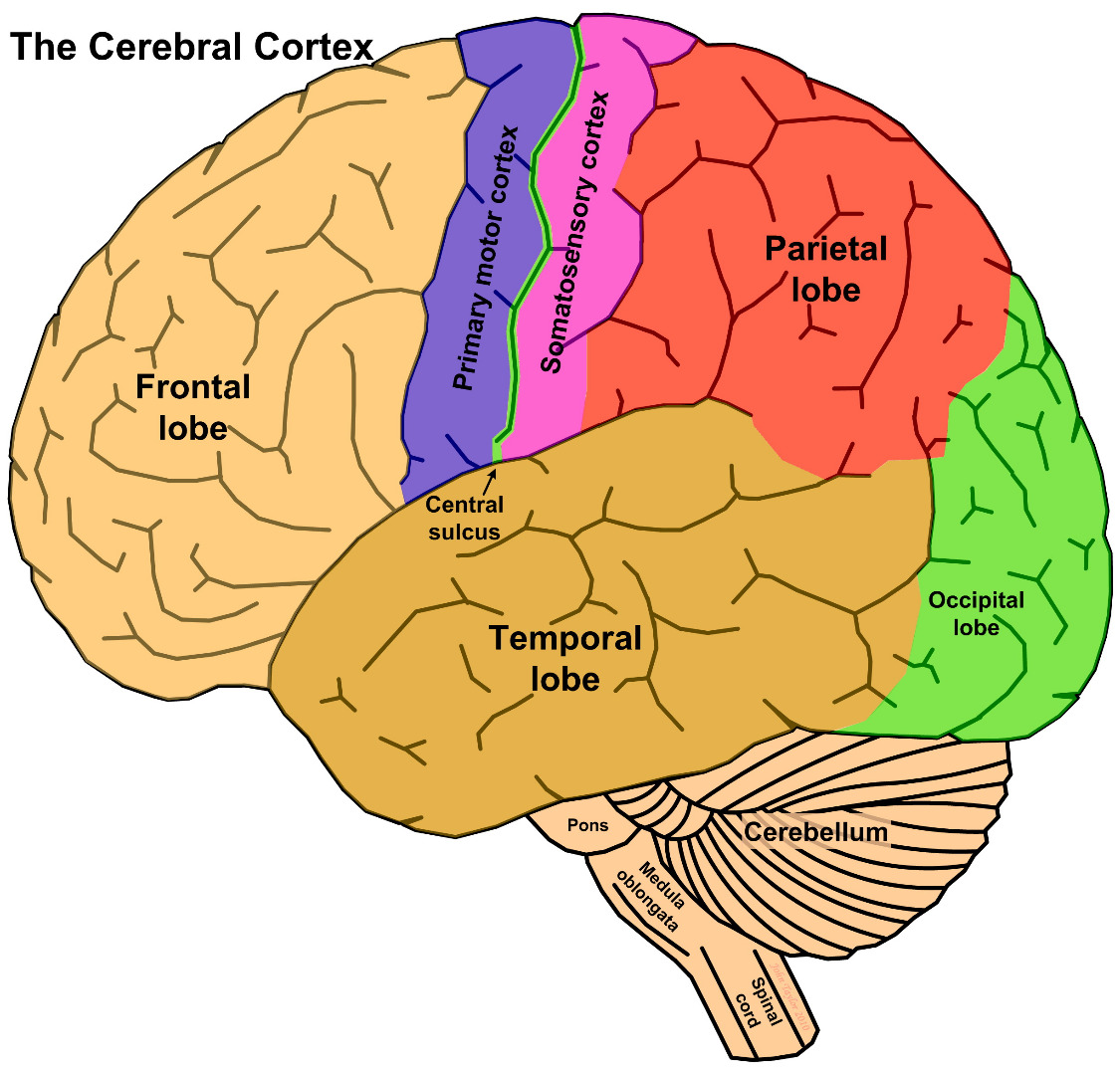
Relay
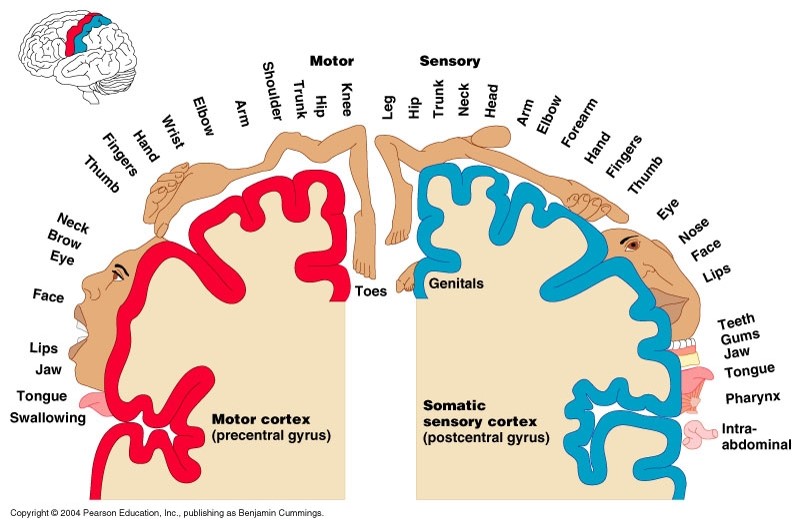
Cerebral Cortex ( – / + ) sensoy area
Mind
Theme
Active contact in attraction or defense
Emotions, Thoughts
(suppressed?) aggression
- How I wish I could scratch them!
- I want to get hold of this!
- I want my nails to attract looks.
META-Meaning
- My own thoughts decide how I perceive this contact.
- I can act out in a safe and satisfying way.
Organ
Stress Phase Symptoms
Decreased trophic/nourishment of the nails, which cause them to grow thinner, to split or to get grooves (onychorrhexis). Severe cases are diagnosed as onychodystrophy. Onycholysis (loosening of the nail plate) can happen in stress phase but could also be caused by fungus (which appears in regeneration phase of the dermis beneath the nail).
Further symptoms of stress phase can be a decrease in sensitivity or short-term memory disorders, just like in epidermis.
Regeneration Phase Symptoms
In the regeneration phase the trophic is restored, however inflammation like onychia can occur. In chronic processes or when regeneration conditions lead to excessive builtup of keratin, ingrown nails (onychocryptosis) or excessive thickening (onychogryposis) can occur.
Biological Meaning
Since nails mediate perception, the stress phase is accompanied by the loss of sensitivity. Thereby, the contact conflict can be resolved temporarily even by forgetting which happens on brain level in stress phase.
Social
Examples
- Woman who wants to impress on men (“hunting” with painted nails) but is afraid to go out in public showing herself, develops grooves in her fingernails.
- Man who is constantly fighting with his neighbour over their garden territory, gets ingrown toe nails.
- Righthanded Woman who feels unsatisfied and caged in her workplace because she never can “dig into” cases, shows nail loosening in her right middle finger.
Additional Information
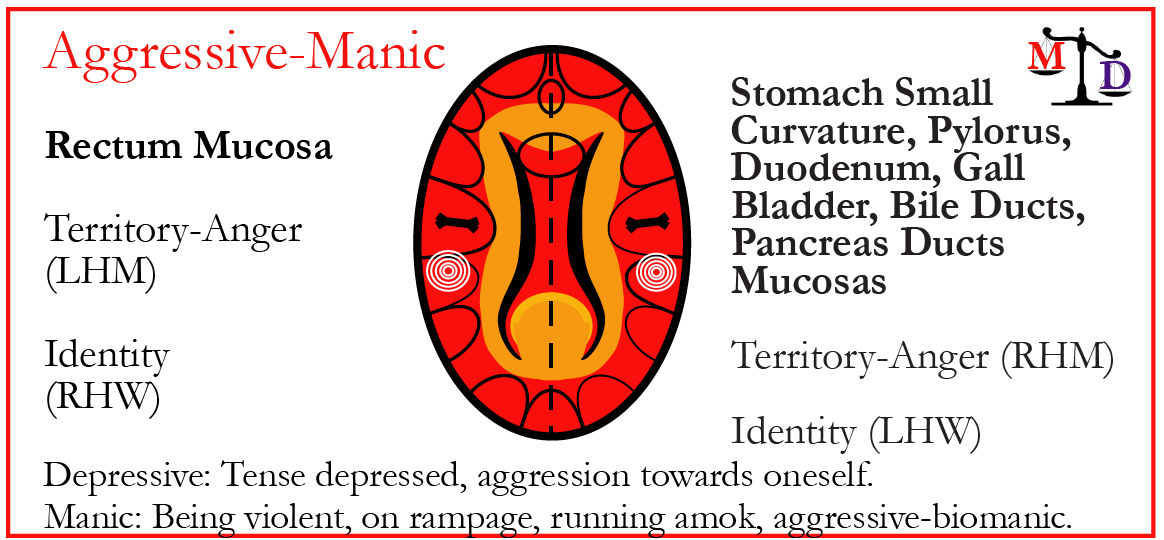
Nail-biting is a depressive expression of the aggressive constellation (identity & territorial anger: rectum mucosa & stomach lesser curvature / gall bladder / bile ducts / pancreatic duct)
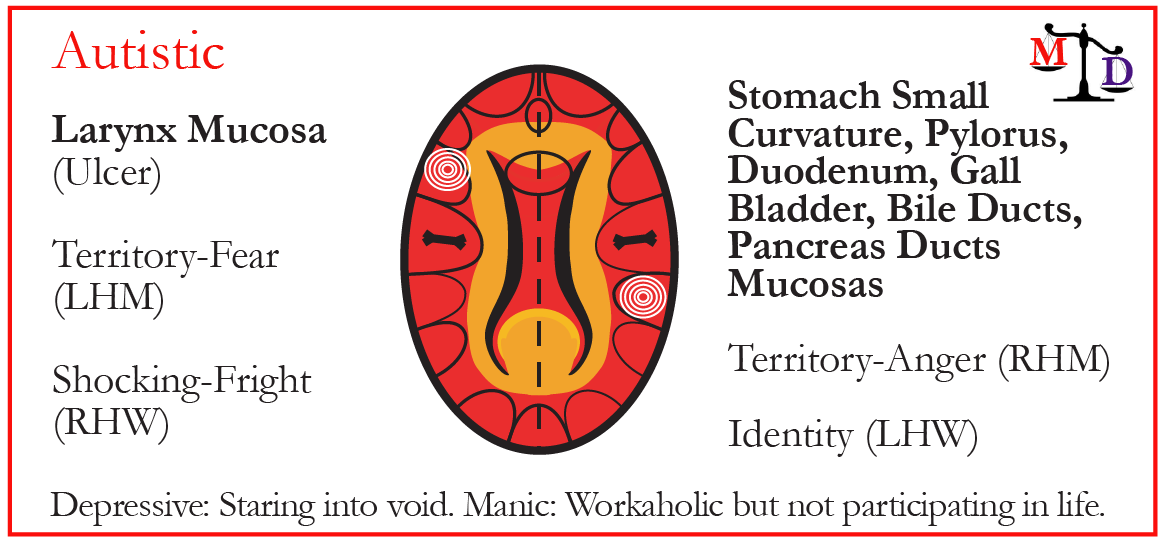
The behaviour is a mostly unconscious habit and means to disarm oneself and avoid external aggression, in order to be accepted and loved. At the same time there is a fixation on self and often “autistic”, retracting features.
Interconnections
quote [wikipedia]:
Pliability
- Brittleness is associated with iron deficiency, thyroid problems and impaired kidney function.
- Splitting and fraying are associated with psoriasis and deficiencies of folic acid, protein and Vitamin C.
- Unusual thickness is associated with circulation problems.
Shape and texture
- Nail clubbing – nails that curve down around the fingertips with nailbeds that bulge – is associated with oxygen deprivation and lung, heart, or liver disease.
- Koilonychia – spooning, or nails that grow upwards – is associated with iron-deficiency anaemia or B12 deficiency.
- Pitting of the nails is associated with Psoriasis.
- Beau's lines are horizontal ridges in the nail.
Discoloration of entire nail bed
- Yellowing of the nail bed is associated with chronic bronchitis, lymphatic problems, diabetes, and liver disorders.
- Brown or copper nail beds are associated with arsenic or copper poisoning, and local fungal infection.
- Redness is associated with heart conditions.
Other color changes and markings
- Melanonychia – longitudinal streaking that darkens or does not grow out, especially on the thumb or big toe – may indicate subungual melanoma.
- White lines across the nail – leukonychia striata – may be Mees' lines or Muehrcke's lines.
- Small white patches are known as leukonychia punctata.
- Dark nails are associated with B12 deficiency.
- Stains of the nail plate (not the nail bed) are associated with smoking, and henna use.
Differential Diagnosis
Skin – Dermis (Cerebellum +/-): Nail fungus (onychomycosis, paronychia) appears when the dermis underneath or around the nails is affected & in regeneration phase of an attack or defilement conflict concerning the look or function of the affected area.
Nail deformities can also arise from physical pressure or injury, especially when the nail matrix is concerned.
Onychodystrophy can also be caused by chemotherapy.