
Muscle Fascia
Anatomy
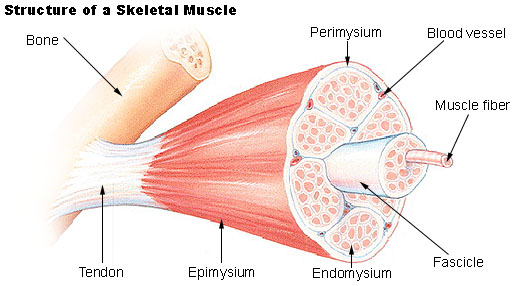
A fascia is a structure of connective tissue that surrounds muscles, groups of muscles, blood vessels, and nerves, binding some structures together, while permitting others to slide smoothly over each other. Various kinds of fascia may be distinguished. They are classified according to their distinct layers, their functions and their anatomical location: superficial fascia, deep (or muscle) fascia, and visceral (or parietal) fascia.
Like ligaments, aponeuroses, and tendons, fasciae are dense regular connective tissues, containing closely packed bundles of collagen fibers oriented in a wavy pattern parallel to the direction of pull. Fasciae are consequently flexible structures able to resist great unidirectional tension forces until the wavy pattern of fibers has been straightened out by the pulling force. These collagen fibers are produced by the fibroblasts located within the fascia.
Fasciae are normally thought of as passive structures that transmit mechanical tension generated by muscular activities or external forces throughout the body.
The function of muscle fasciae is to reduce friction to minimize the reduction of muscular force.
Current research has shown that fascia is far more than a passive structure: it contains sensory receptors, smooth muscle cells (myofibroblasts) and sympathetic nerves, and it is capable to mediate sensations such as pain or environmental changes over long distances, influencing and adapting the function of the structures it envelopes.
Here we find the smooth muscle reaction pattern even around voluntary skeletal muscles, which explains shivering as well as other involuntary reactions like the tightening up of muscle groups to protect inner organs, or during actual or remembered stress.
Brain
Relay:
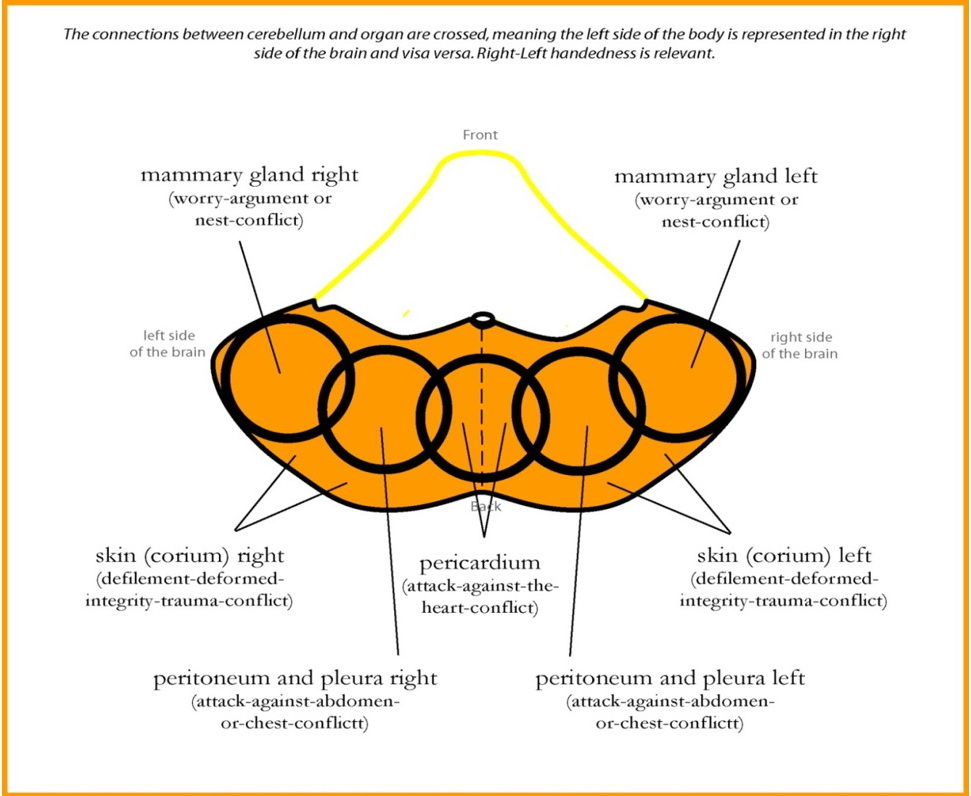
1. Cerebellum (+/-) for fibrous Connective Tissue
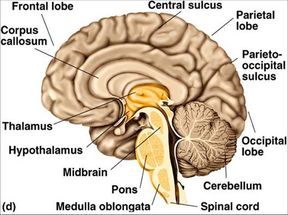
2. Midbrain (+/-) for Smooth Muscle Tissue
compare Brain Stem (+/-)
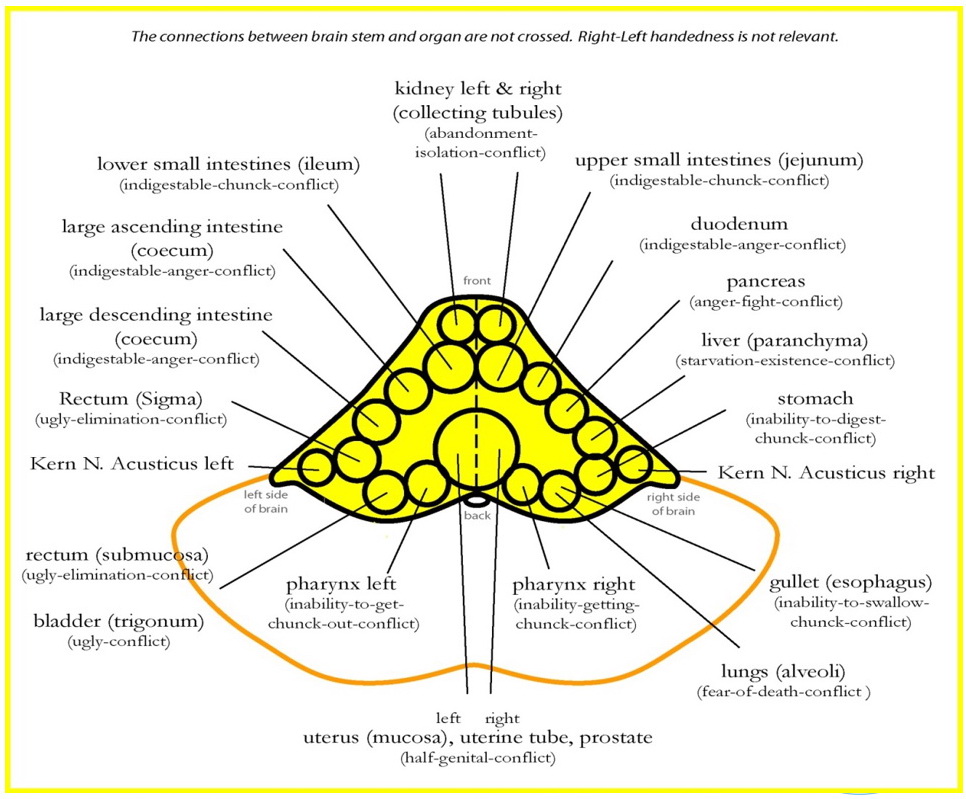
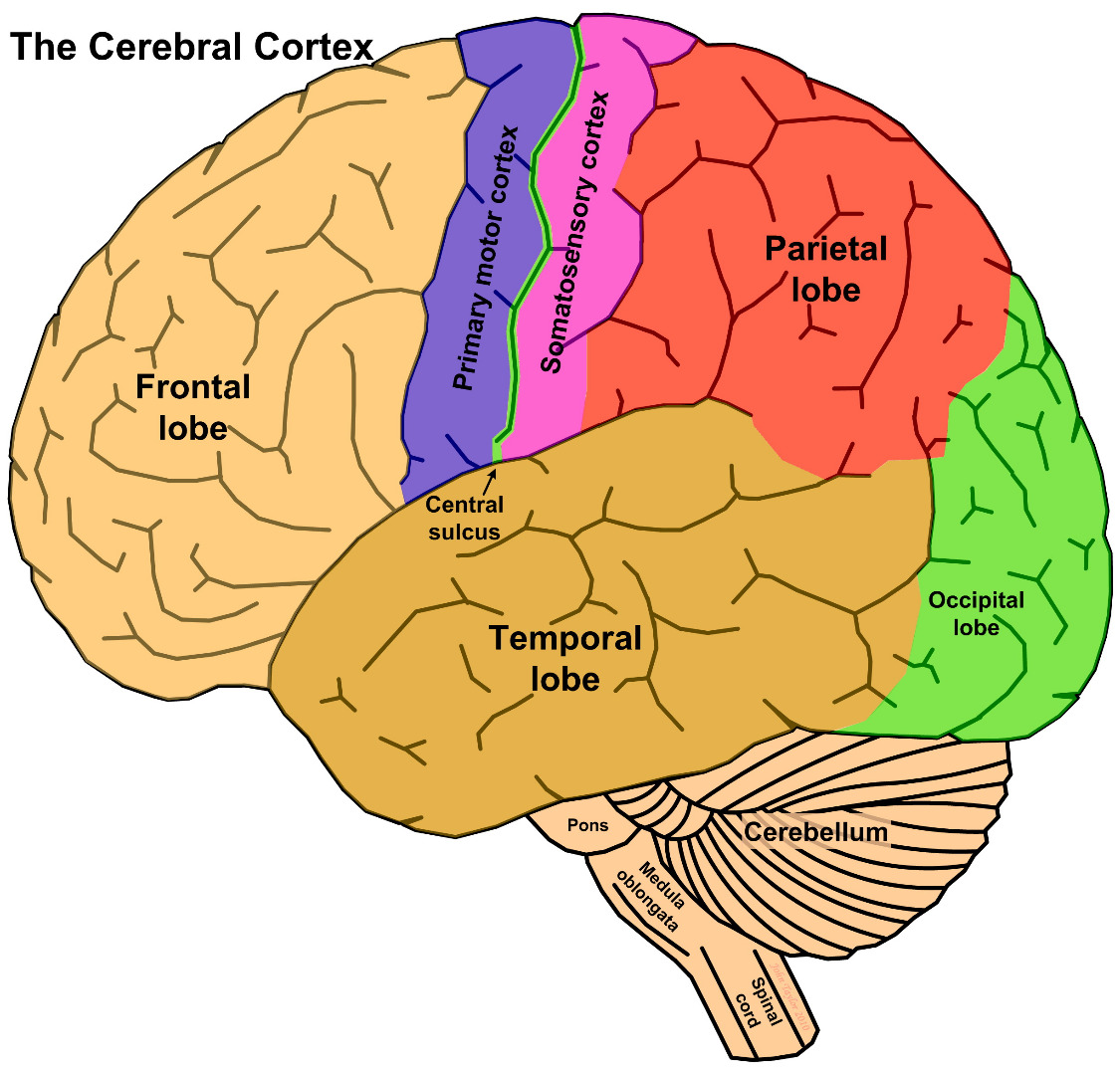
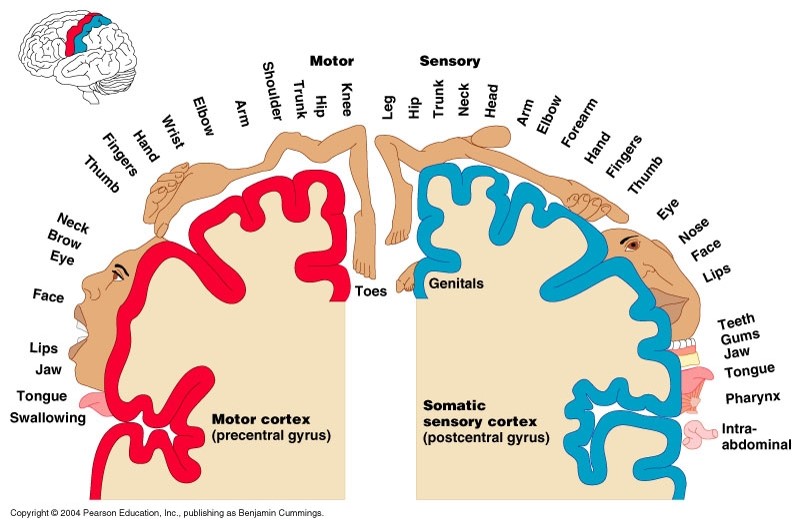
3. Cerebral Cortex (-/+) postsensory area, for sensory innervation
Mind
Theme:
Mediation, force distribution, physical overload
Association: Protection through muscle function
Association to locality:
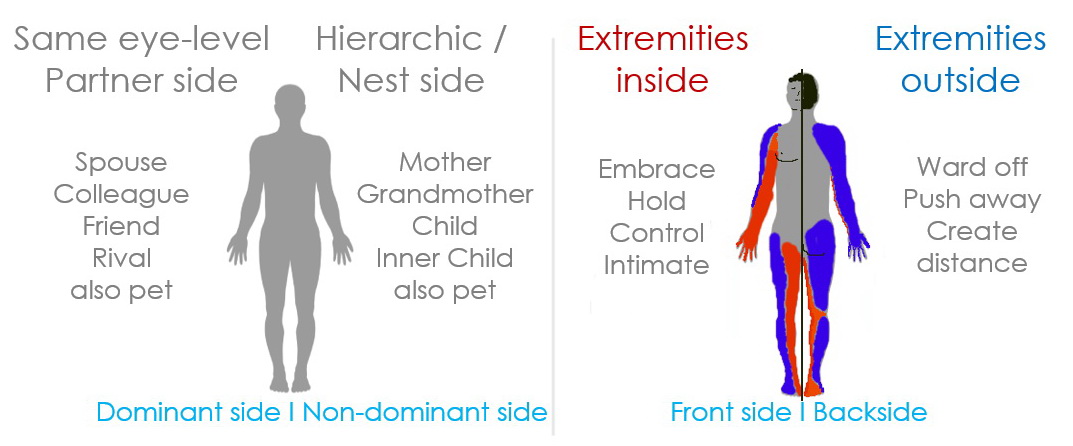
For special associations according to locality see “Musculoskeletal System – Overview“!
Emotions and Thoughts:
Caution, insecurity
- I can´t shake that, I have to be more careful!
- How can I act securely?
- I have to prevent that movement.
- I have to get stronger/tougher!
META-Meaning:
Now, I can open up again and use my whole potential. I am moving elegantly and with grace.
Organ
Stress Phase Symptoms:
Tightening and proliferation of the muscular and collagen fibers, possibly inhibition of movement, sometimes shivering. Muscle hardening is a consequence (protection by thickening of muscle) which can lead to pain (e g “tension headache” from the neck upwards) when sensible structures are irritated/pressed.
“Frozen Shoulder” (Tissue reinforcement by active myofibroblasts around the shoulder joint) or “Dupuytren contracture” (Thickening of finger flexors) appear in prolonged or recurring stress phases.
Persisting tension of the fascia leads to congestion of the lymph flow, release of fibrinogen, and thereby to adherence and further stiffening.
Regeneration Phase Symptoms:
A spontaneous relaxation reflex can be induced by stress dissolution, which is followed by possible mobilization of the affected structure, e g muscle group. Adaptions that have developed during longer time seem to be persistent, but can gradually be changed and re-learned with training and change of habits.
Healing Peak:
Shiver, muscle shaking
Biological Meaning:
The meaning lies in the protective stress phase with functional gain of the myofibroblasts, and in the distribution of sensory and motoric information.
Social
Examples:
*
Stiffening of muscles in dangerous situations
*
Tightening of neck and shoulders in cold and windy weather
*
Shaking dissolution of stress after a fright (in healing peak)
Additional Information
As fascia includes parts from both old brain and new brain tissues with different healing cycle symptomatics, we look at the reacting tissue and purpose.
If necrotizing fasciitis should be seen as a symptom of a (escalated) regeneration phase or of toxic (misplaced) bacteria has yet to be researched.
Hypertonus and hypertrophy of smooth muscle cells comes in stress phase with an emotion of needing to protect. (“Old Brain” / Cerebellum reaction)
Myofascial pain and fibromyalgia as well as polymyalgia rheumatica are symptoms of the “muscular mind” sensory function of the fascia to protect for repeated similar conflicts.
Differential Diagnosis:
Motoric Innervation (Cerebral Cortex, -/+) Stress phase (movement inhibited): weakening and paralysis of the motion impulse; Regeneration phase: gradually returning function; Healing Peak: muscle spasms
Skeletal Muscles (Cerebral Medulla, -/+) with weakness and possibly necrosis in stress phase (performance self devaluation), inflammation and pain in regeneration phase, spasms in healing peak and strengthened tissue after finished regeneration.
Subcutaneous Fatty Tissue (Cerebral Medulla, -/+), adipose or lymphatic connective tissues: Stress phase (resources & healing self-devaluation): degeneration, necrosis; Regeneration phase: replenishment, Cellulite
