Thyroid
Anatomical overview
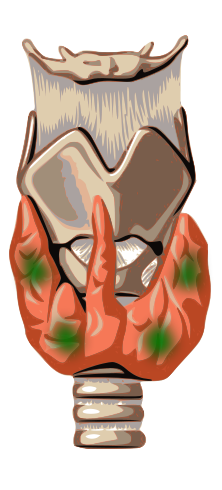
The butterfly-shaped thyroid is one of the largest endocrine glands in the body, in the neck below the larynx and behind the cricoid cartilage. The thyroid gland is covered by a thin fibrous sheath, composed of an internal and external layer. The gland is covered in front by infrahyoid muscles and at the sides with the sternomastoid muscle (SCM). On the backside, the gland is fixed to the cartilage of the trachea. The thyroid gland’s firm attachment to the underlying trachea is the reason behind its movement with swallowing.
The thyroid has 2 lobes which consist of many follicles, in which thyrocytes are arranged like alveoles. Here, triiodothyronine (T3), thyroxine (T4), and calcitonin are produced and stored. The hypothalamus controls their release via a feedback loop with the pituitary. The hormones stimulate metabolism and growth: heart rate, blood pressure and excitability of nerves increase.
The parathyroid glands are 4 small endocrine glands in the neck that produce parathyroid hormone to control the amount of calcium in the blood and within the bones.
Embryologically the thyroid derived from the head gut – endodermal tissue – and traveled through the thyreoglossal duct to it’s remaining location. The duct closes and regresses after passage. If this happens incompletely, a medial cervical cyst remains.
Brain
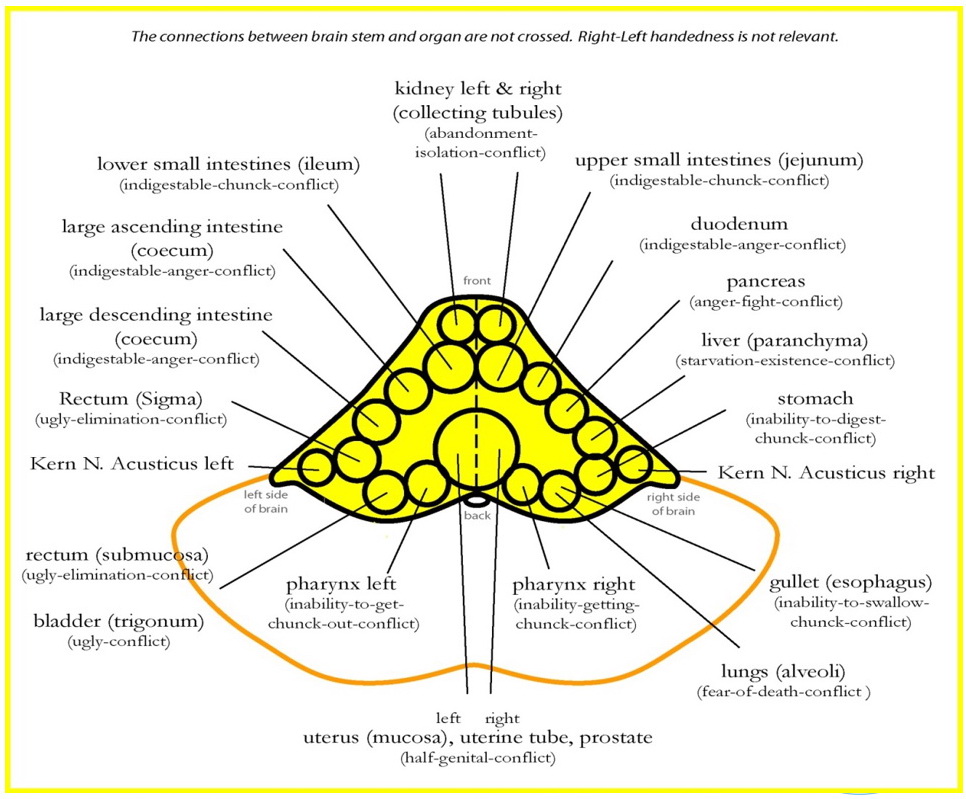
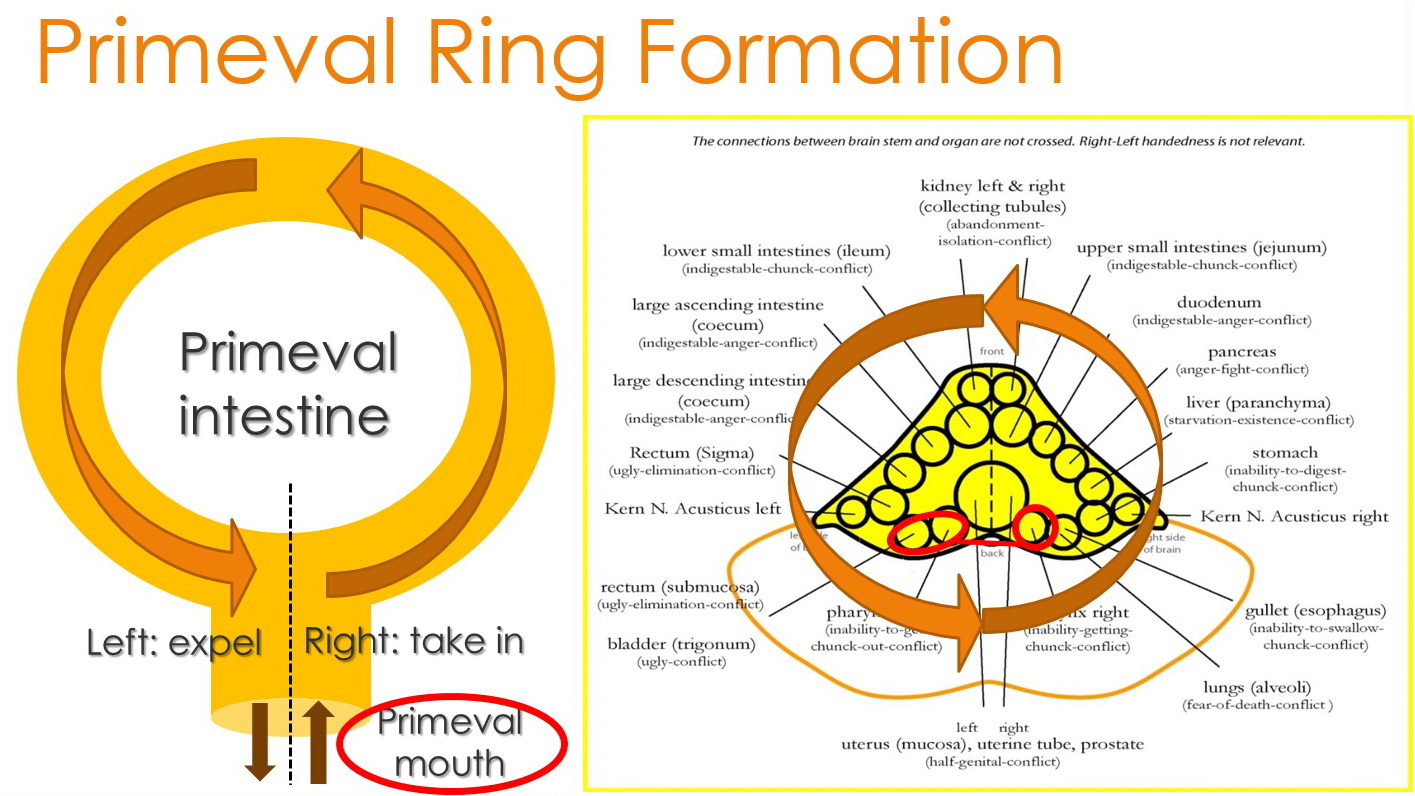
In the Brain Stem, the primeval ring structure is reflected: organ tissue relays with assimilative and digestive functions from oesophagus to small intestines are situated in the right brain stem, while excretory organs from caecum to rectum are relayed in the left brain stem. Medial on both sides are the relays of mouth/pharynx, middle ears and lacrimal glands, as well as the pineal and pituitary glands and the thyroid.
Relay:
Brain Stem ( + / – ) posterior central, for Thyroid Follicular Epithelium and Parathyroid Glands
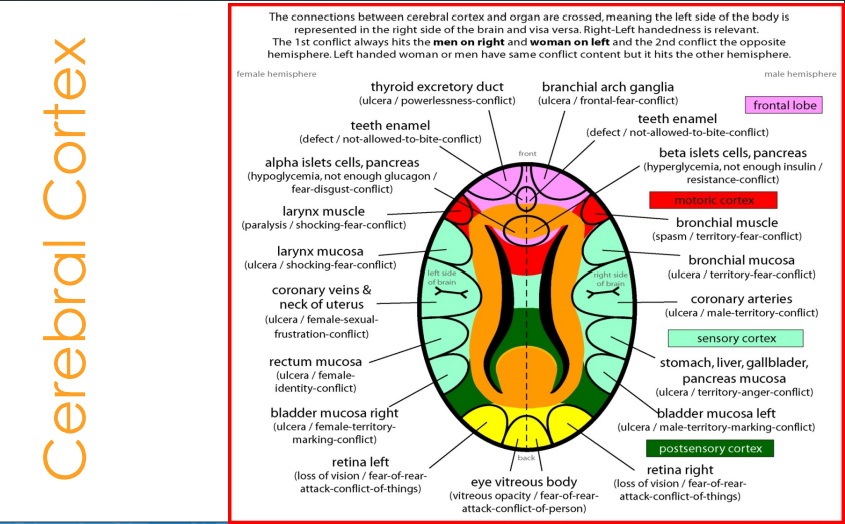
Cerebral Cortex (-/+) prefrontal sensory area, for Thyroid "Ductal Pattern"