Thymus
Anatomy
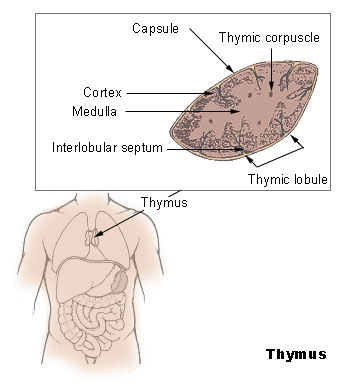
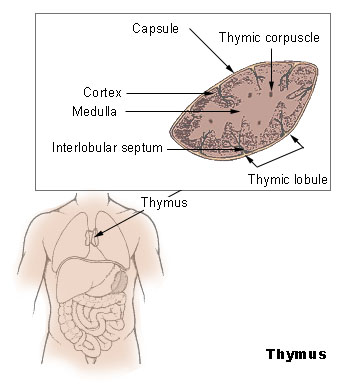
The thymus is a pinkish-gray, soft gland in front of the heart and behind the breast bone, with functions in the immune system. It consists of two identical lobes composed of many small lobules – each can be divided into a central medulla and a peripheral cortex, surrounded by an outer capsule.
The cortex and medulla play different roles in the maturation of T-lymphocytes which enables them to identify cells foreign to the organism. Primary thymocyte development and positive selection takes place in the cortex, while the medulla is specialized in negative selection, thus avoiding autoimmunity and adding complexity to the immune recognition, reaction and tolerance spectrum.
The thymus grows between birth and puberty and then begins to atrophy due to high levels of circulating sexual hormones. In adults, the organ is primarily replaced with fatty tissue, although, residual generation of T-lymphocytes continues throughout adult life
In terms of the META-view of thymus functions, the maturation of cells contributing to the immune system, or orchestration of homeodynamics, indicates that the thymus is about development of both identity, self-esteem and tolerance, especially throughout childhood. As it is derived from several germ layers, we still need more research on it´s specific reactions.
Brain
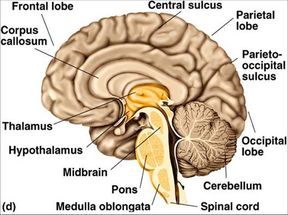
Relay:
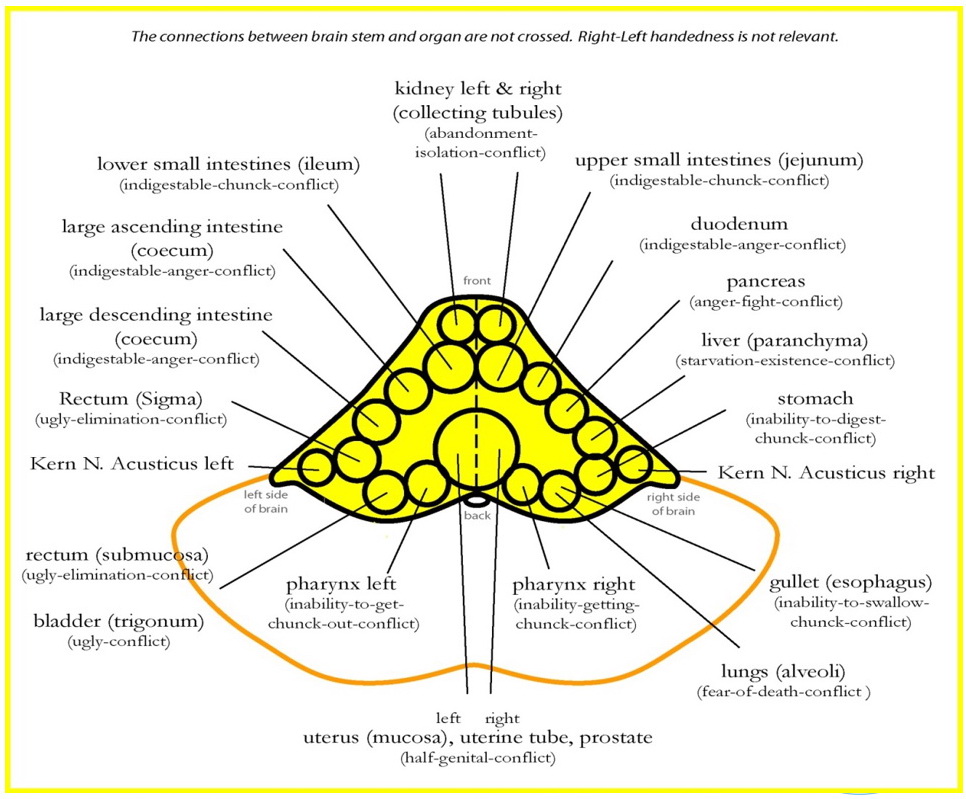
1. Brain Stem (+/-) for medulla epithelium
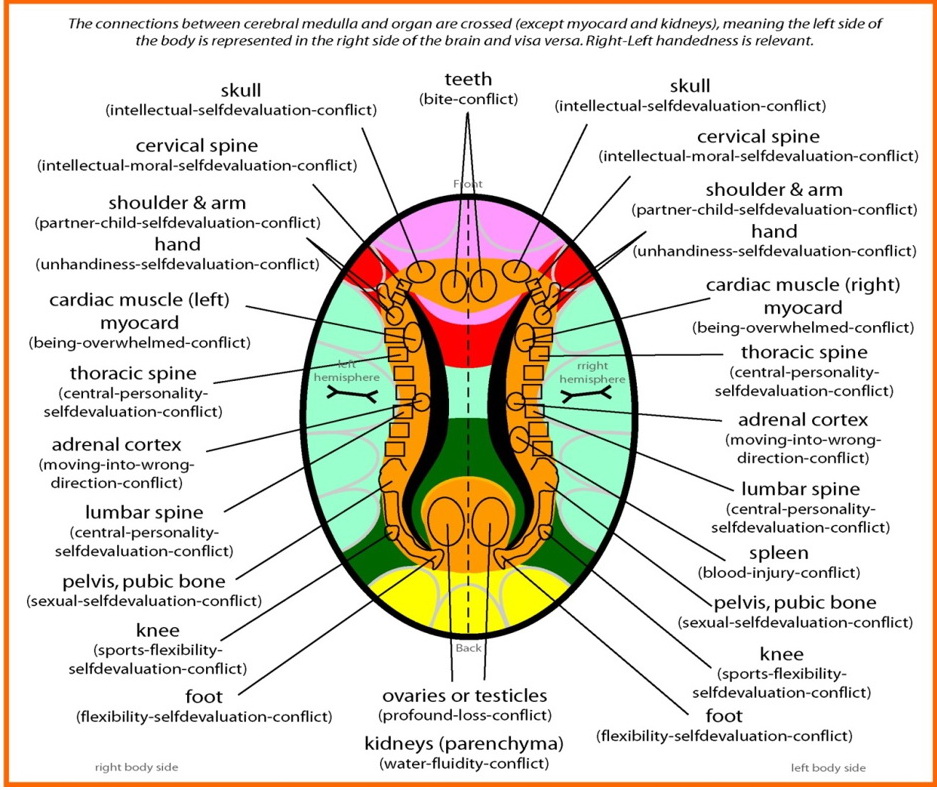
2. Cerebral Medulla (-/+) for thymocytes
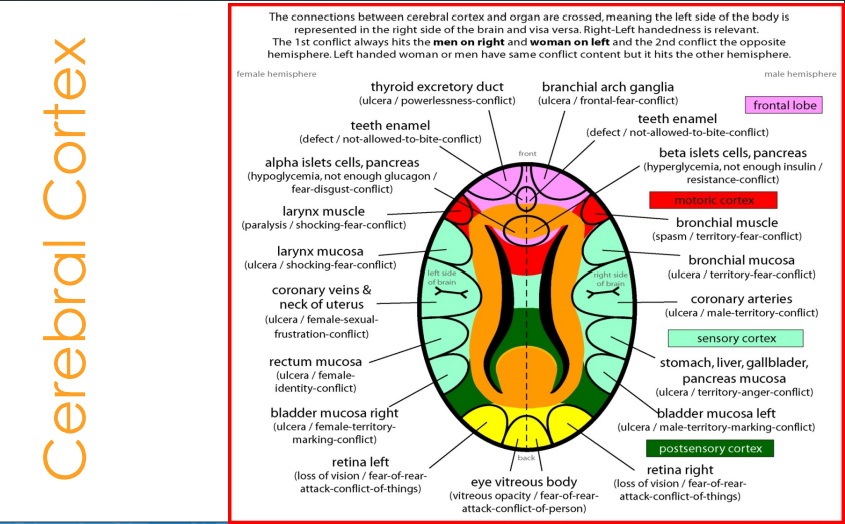
3. Cerebral Cortex (-/+) for cortical epithelium derived from the neural crest
Mind
Theme:
Individuality, self-esteem, acceptance, need to develop resilience & skills on all levels
Emotions and Thoughts:
- Who am I?
- What is that?
- I don’t know that!
- I don’t want that!
- How can I accept that?
- I know that this is bad!
Also shame, guilt and resentment
META-Meaning:
- I am a great learner.
- It´s easy to accept, forgive and let go.
- I can choose how I react.
- My curiosity wins!
- I love and accept myself.
- I feel strong inside!
Organ
Stress Phase Symptoms:
1. Stress phase of the brain-stem related tissue results in stimulation of allergic reactions (function plus) as an excessive immunity reaction, thus being involved in the “warning mechanism” of allergic agents = conditioned stress triggers. Possibly hyperplasia in form of thymoma, which is seen to be a causing factor of myasthenia gravis, neuromuscular degeneration (stress reaction of muscular tissue for reasons of self-devaluation).
2. Stress phase of the cerebral-medulla related tissue results in immune deficiency by reduction of thymocytes, e g AIDS
Regeneration Phase Symptoms:
1. Tumor encapsulation or degradation, function normalization.
2. Function and cell reduction is excessively restored. This can lead to thyme lymphomas or lymphatic leukemia (Precursor T acute lymphoblastic leukemia).
Biological Meaning:
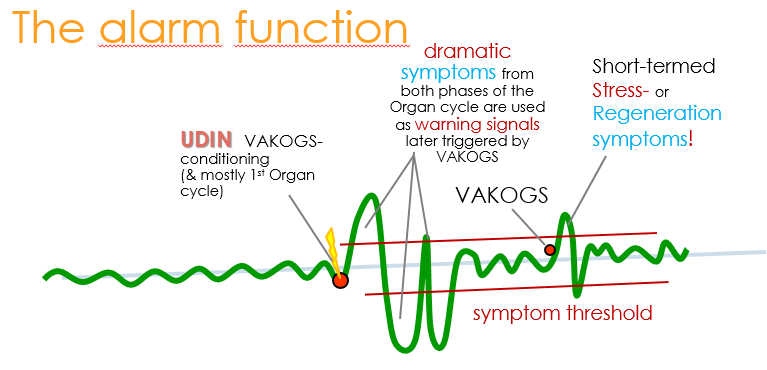
1. Enhanced function of alertness reaction serves as warning mechanism for conditions present in previous UDINs, thus trying to avoid similar threatening situations.
2. Reinforcement under regeneration is meant to serve strengthening of identity and resilience.
Social:
Examples:
- A woman strongly reacts to insect bites (histamin reaction) until discovering the UDIN as root cause, and finding a calmer relationship with insects.
- A man who needs to feed his family in a foreign country, is turned down over and over in his search for work. He experiences a conflict with his identity which is not accepted, and develops a thymoma.
- AIDS is in western societies typically found in homosexual people who, especially at younger age, often show identity, self-questioning and self-hate conflicts, and still have a less accepted position in society.
Additional Information
Thymocytes are derived from hematopoietic stem cells from the bone marrow. This emphasizes the connection to identity and self-worth.
Differential Diagnosis:
Larynx Mucosa or Bronchial Mucosa(Cerebral Cortex -/+): A thymoma can lead to strong cough when pressing on the recurring laryngeal nerve. This symptom is usually present in regeneration phase of these respiratory tissues.
Spleen (Cerebral Medulla, -/+) Lymphatic tissue, with storage of blood & lymphocytes. In regeneration phase of a conflict related to blood & healing, lymphatic leukemia could occur.
Lymph nodes (Cerebral Medulla, -/+) can produce lymphoma in regeneration phase of self-devaluation conflicts.
Bone marrow (Cerebral Medulla, -/+) can produce leukemia in regeneration phase of self-devaluation conflicts.
“Autoimmunity diseases” often are chronic recurring processes in different tissues and their respective themes. The thymus can be involved simultaneously.