Pancreas – Alpha Islet Cells
Anatomy
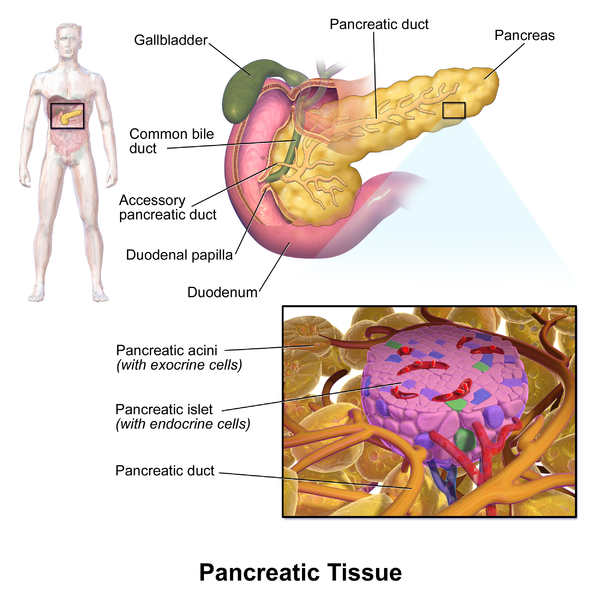
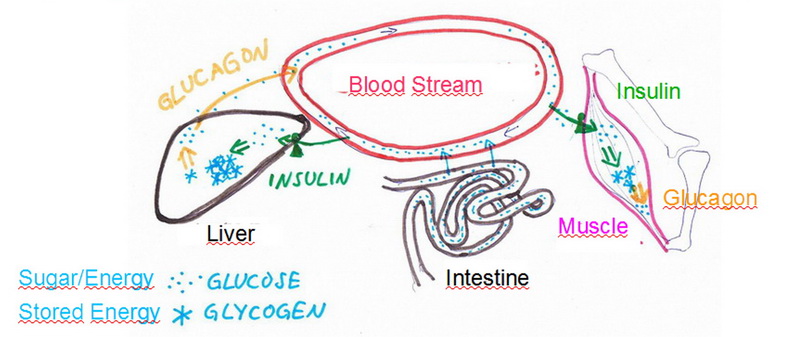
Alpha cells are endocrine cells in the islets of Langerhans of the pancreas. They make up 15-20% of the cells in the islets. They are responsible for synthesizing and secreting the peptide hormone glucagon which transforms stored energy (glycogen) into glucose and transports it into the bloodstream, from where it can be transported to any organ tissues. Thereby, blood sugar levels are elevated. For transporting glucose into the cells, insulin is needed.
Brain
The diencephalon is situated between midbrain and central cerebrum.
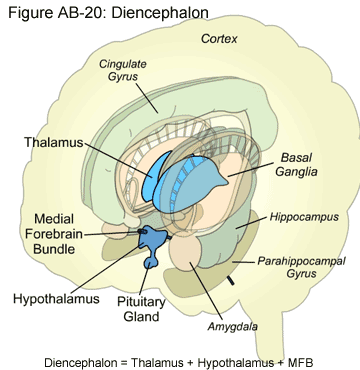
Relay
Cerebral Cortex ( – / + ), diencephalon left side
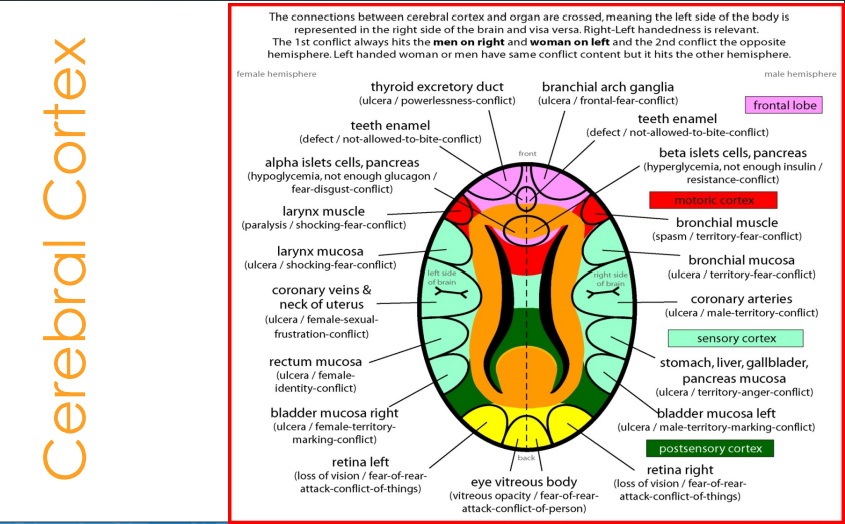
Mind
Theme
Inner resistance, avoiding confrontation
Emotions, Thoughts
Disgust, Fear, Humiliation, Resentment
Female nuance:
- Yuck!
- I’m going to throw up!
- I can’t even look there.
- I can’t look away there.
- I am disgusting.
Male nuance: - Why don’t I have the courage to do this?
- Don´t you dare bother me with that!
- I´m not doing that, no way!
- Leave me alone!
- Stay where you are!
META-Meaning
- Now I’ll do it!
- Now, I will trust myself to react in a direct and relieving way
- Even when I got into this situation, I love and accept myself and my needs.
Organ
Stress Phase Symptoms
Reduced release and production of glucagon, hunger, craving for sweets (“chocoholic”), hypoglykemia, attacks of sweating, trembling (tremor), fainting, dizziness (vertigo), loss of consciousness (absence, coma)
Lasting hypoglykemia has the risk of neural damage, because nerve cells are supplied directly by glucose. Repeated severe hypoglykemia might therefore promote the development of dementia.
Possible diagnose: Glucagon insufficiency
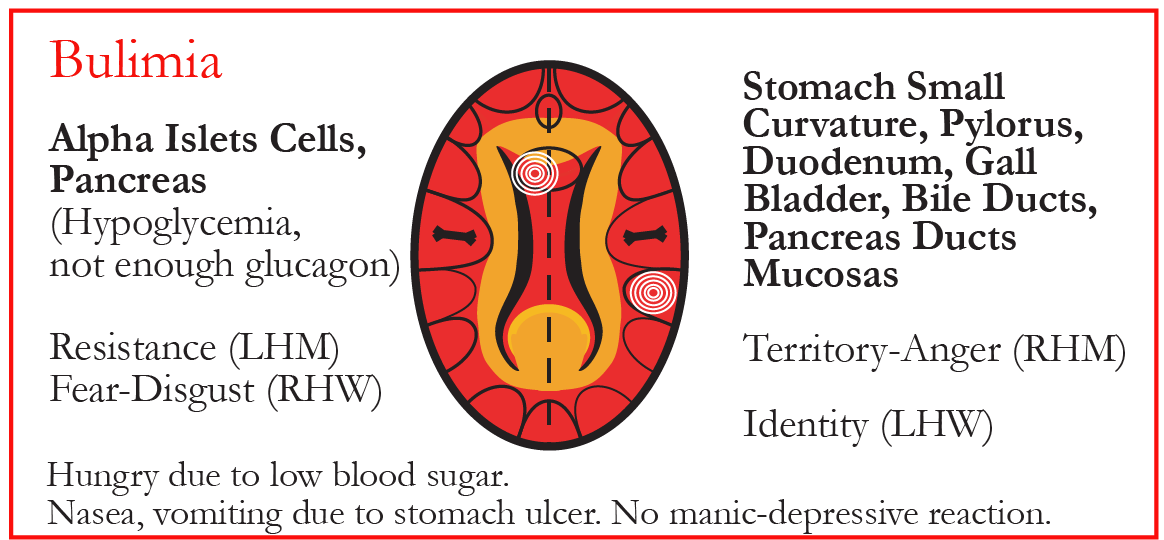
Chronic alpha cell stress triggers lead to overeating and obesity. (See also constellations: bulimia)
Regeneration Phase Symptoms
Normalization of hormone production, fluctuations and hyperglykemic periods are possible.
Healing Peak
Short dropping of the blood sugar followed by a longer and intense blood sugar increase (hyperglycaemia).
Biological meaning
Through her obvious weakness, the person enjoys privileges of not having to actively resolve her conflict.
Social
Often related to sexual harassment and abuse:
- The obese client with cravings for sweets had been abused by her uncle as a child. The body fat gives emotional protection and makes her unattractive for potential sexual attackers. (Klapp)
- The client with eating disorder (bulimia) recalls a humiliating scene in which she had hidden herself under the bed of her boyfriend and was caught by his mother. After renegotiation of the scene, the pressure to eat is relieved. (Klapp)
Inner resistance and procrastination: - A man needs to do an unloved task, motivates himself with sweets but his energy is slow. When he realizes the correlations, he succeeds in replacing the sweets by fun energy, and gets the work done. (Klapp)
Humiliation and incapability for active solution - The client (diabetes II) with immigration background realizes the pattern to not being recognized and accepted according to his competence, and to not being capable to defend his position. By emotional release, active motion and changes in nutrition (green smoothies, low carb) he can manage the fluctuations. (Valentic, MHU archive)
Additional Information
Physical labour and long-time (general) stress stimulate production of glucagon.
Constellations
Bulimia: simultaneous stress-activity in alpha islet cells and stomach mucosa (social anger/identity conflict) leads to overeating and vomiting compulsion, often with self-disgust. Manic and depressive moods are possible (hormonal scale).
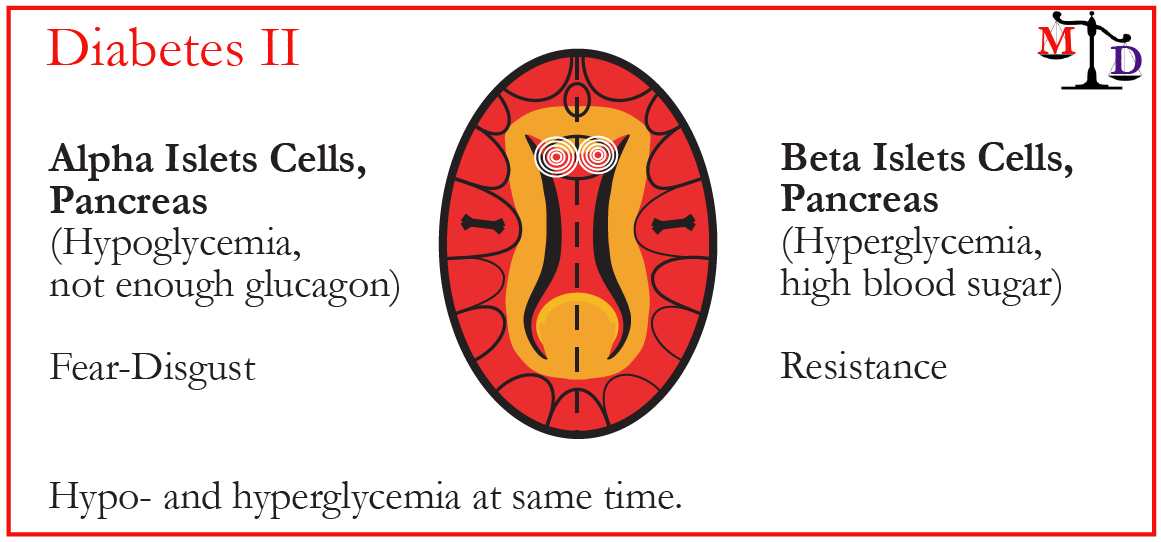
Diabetes II: simultaneous stress-activity in both sugar relays leads to hyper- and hypoglykemia, fluctuations. Manic and depressive moods are possible (hormonal scale).
Hygiene mania: simultaneous stress-activity in epidermis– or dermis relays (contact or protection) leads to obsessive washing (ablutomania), fear for microbes, cleaning as coping strategy.
Compulsions: simultaneous stress-activity in alpha islet cells and motoric relays (incapacity) leads to the urge to carry out certain sequences of movements like touching something or muscle tics. The act or direction of the motion relates to the conflict theme.
Differential Diagnosis
Cause for hypoglykemia may be an overdose of insulin in the blood (lowering blood sugar), or overdosage of blood sugar lowering medication like certain antidiabetics, so that the physiological compensation mechanisms become exhausted.
Liver parenchyma (BS +/-) Stress (fear of starvation): enhanced neoglycogenesis, high fasting blood sugar, energy storage, fatty liver, liver cell carcinoma; Regeneration phase: indigestion, nightly sweat,
Adrenal medulla (BS +/-) General elevation of blood sugar in any stress phase by adrenalin and noradrenalin (hyperglykemia).
Adrenal cortex (CC -/+) Stress (orientation): drop in blood sugar, energylessness, stressed fatigue
Thyroid (BS +/-) Stress (velocity): Nervousness, weight loss, tremor, hunger through speedy metabolism
Kidney tubuli (BS +/-) Stress (isolation, abandonment): enhanced reabsorption and retention of water, weight gain without eating more