Stomach
Anatomy overview
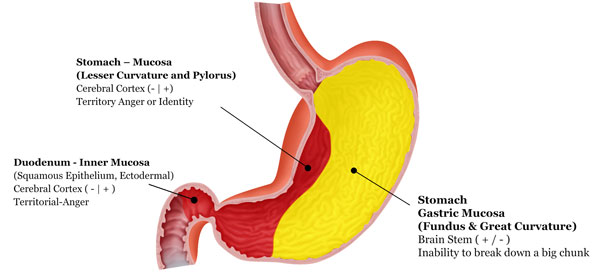
The stomach belongs to the digestive system. It lies between the esophagus and the duodenum (the first part of the small intestine). It is on the left upper part of the abdominal cavity. The top of the stomach lies against the diaphragm. The stomach has four sections:
- the cardiawhere the contents of the esophagus empty into the stomach
- the fundus formed by the upper curvature
- the corpus between the lesser and the greater curvature
- the pylorus, the lower section of the organ that facilitates emptying the contents into the small intestine.
Lying behind the stomach is the pancreas. The greater omentum hangs down from the greater curvature. Two sphincters keep the contents of the stomach contained. They are the esophageal sphincter or LES (found in the cardiac region, not an anatomical sphincter) dividing the tract above, and the pyloric sphincterdividing the stomach from the small intestine.
The stomach is surrounded by parasympathetic (stimulant) and orthosympathetic (inhibitor) plexuses (networks of blood vessels and nerves in the anterior gastric, posterior, superior and inferior, celiac and myenteric), which regulate both the secretions activity and the motor (motion) activity of its muscles.
Brain
Relay:
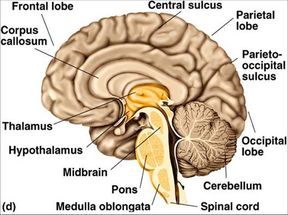
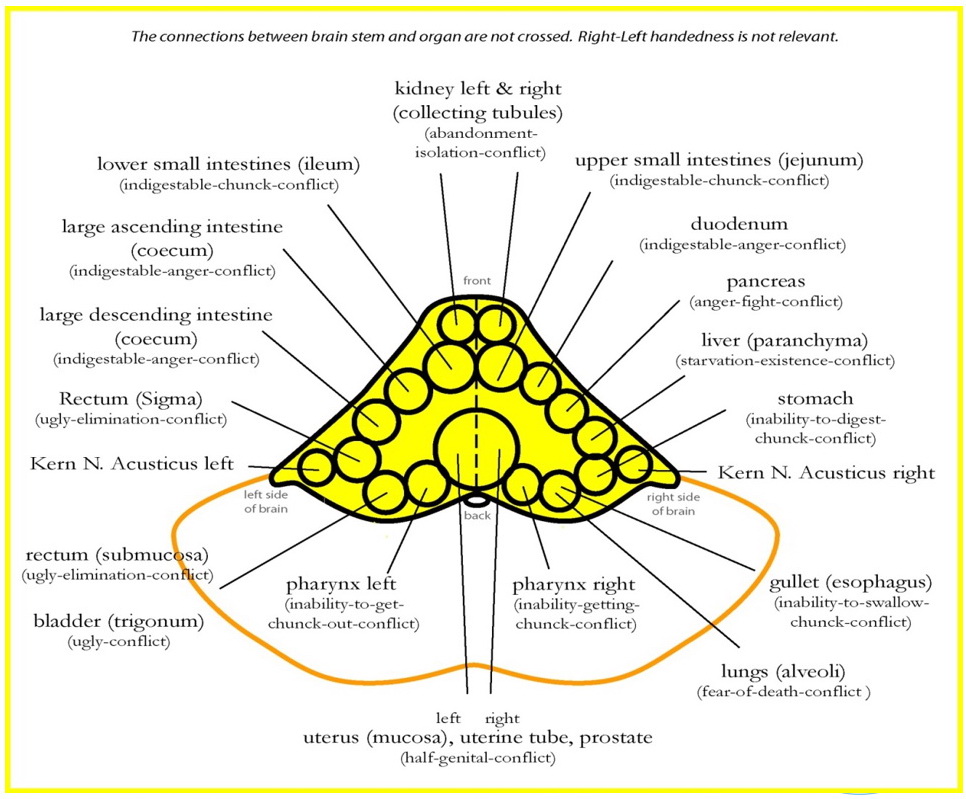
- Brain Stem (+/-) dorso-lateral right, for Stomach Mucosa/Secretory Glands and
- Midbrain (+/0) dorso-lateral right, for Smooth Muscle Layer
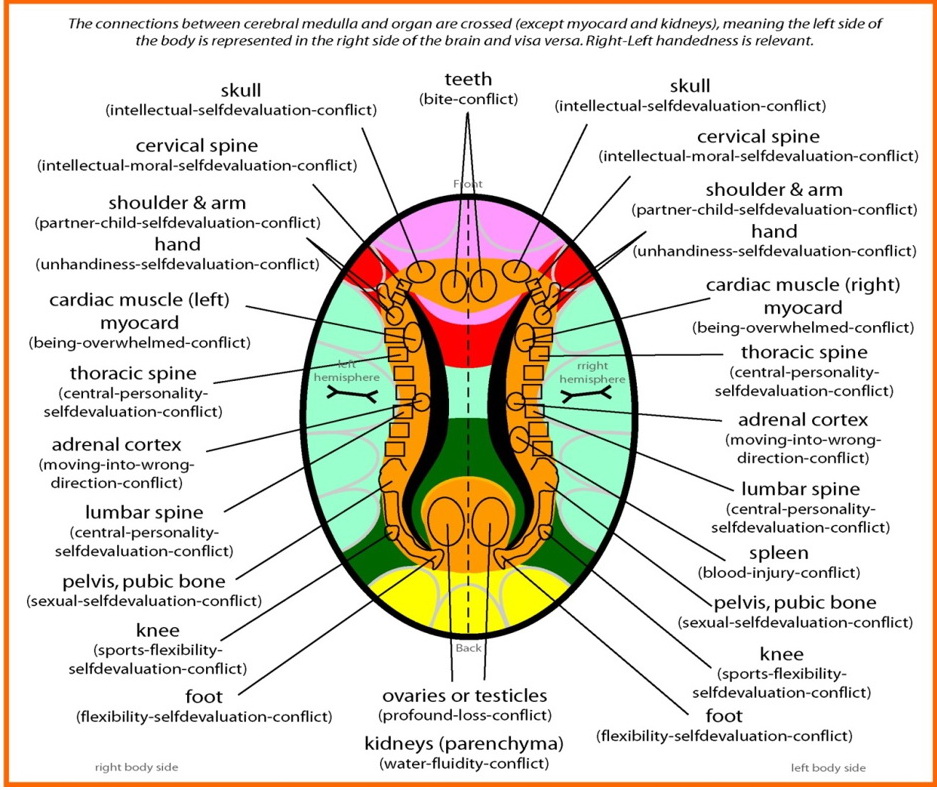
- Cerebral Medulla (-/+) medial right (& left): for Stomach – Submucosa, Connective Tissue Layer
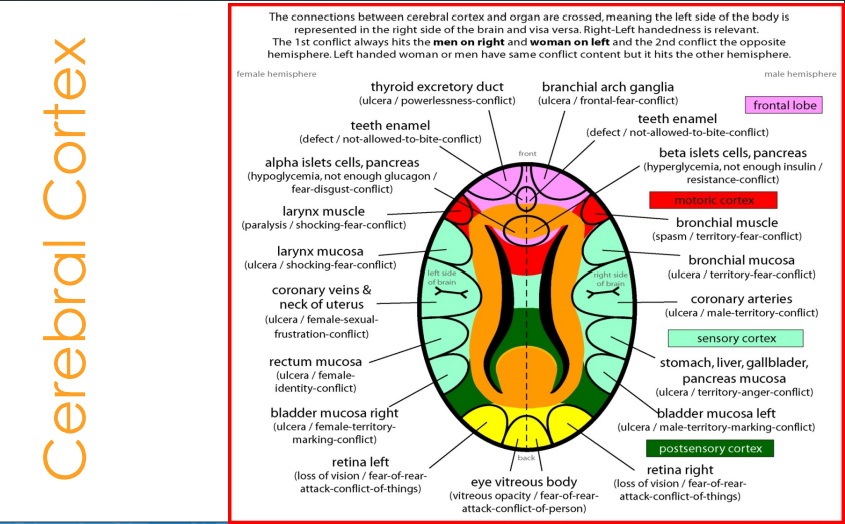
- Cerebral Cortex (-/+) insular region mediolateral right “4 o’clock-relay”: for Mucosa in Lesser Curvature and Pylorus