Small Intestine – Overview
Anatomy
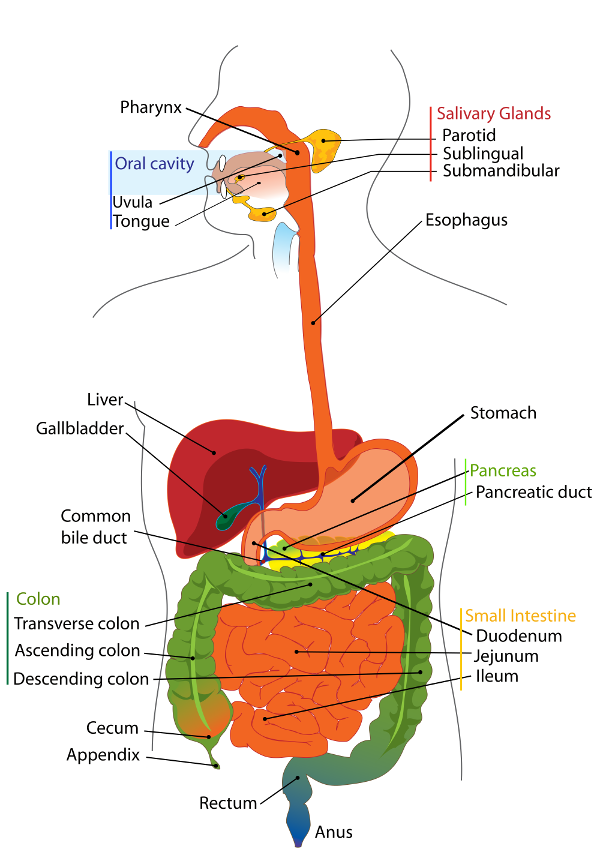
The small intestine is the longest part of the gastrointestinal tract (gut) between the stomach and the large intestine and includes the duodenum, jejunum and ileum. It´s length varies between 3 and 9 meters in adults and is even dependent on the tonus of the muscle layer, while it´s diameter is between 2,5-3 cm. Food from the stomach is allowed into the duodenum through the pylorus by a muscle called the pyloric sphincter.
The small intestine is where most chemical digestion takes place. Most of the digestive enzymes that act in the small intestine are secreted by the pancreas and enter the small intestine via the pancreatic duct. Enzymes enter the small intestine in response to the hormone cholecystokinin, which is produced in the small intestine in response to the presence of nutrients. The hormone secretin also causes bicarbonate to be released into the small intestine from the pancreas in order to neutralize the potentially harmful acid coming from the stomach.
The three major classes of nutrients that undergo digestion are proteins, lipids (fats) and carbohydrates, which are broken down by pancreatic enzymes:
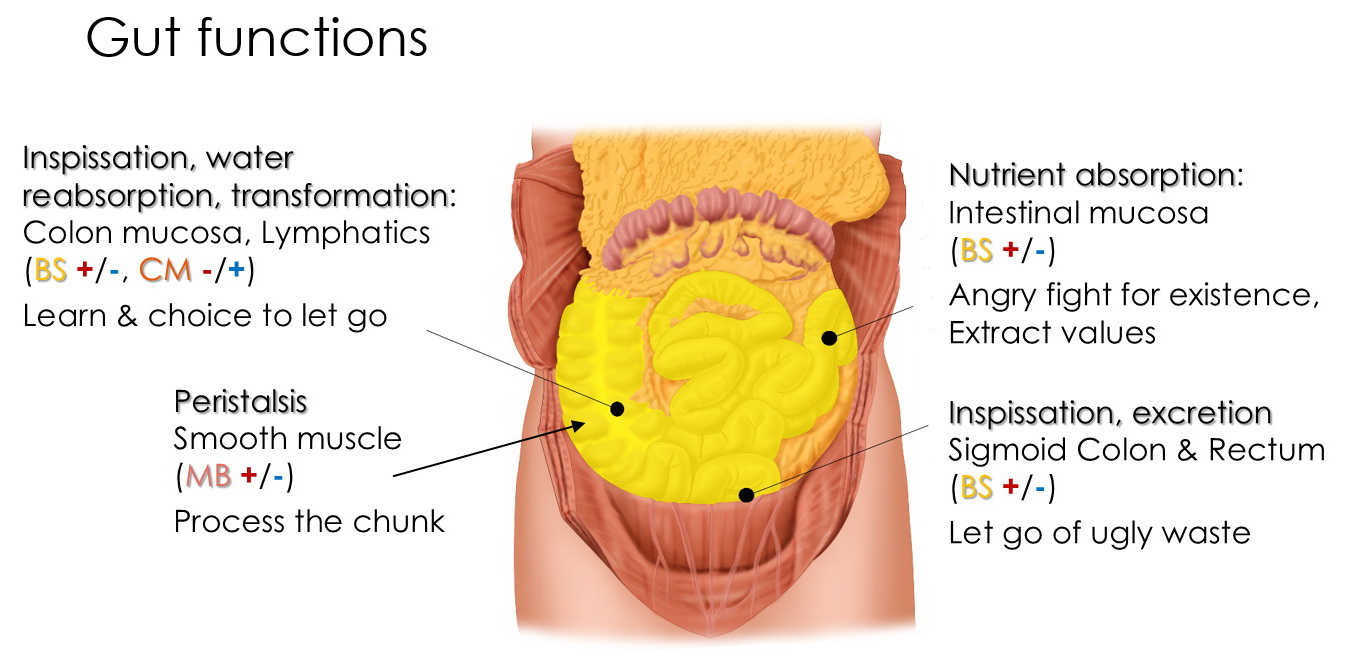
Proteins are broken down by trypsin and chymotrypsin, fats by lipase together with secretes from liver and gall bladder containing bile salts. Some carbohydrates are broken down by pancreatic amylase, others need to be carried on into the large intestine to be treated by bacteria. The nutrients are then ready for absorption into blood and lymph fluid, which happens in the villiand microvilli, finger-like structures that enlarge the surface of the small intestine, especially in the ileum.
Brain
Relay:
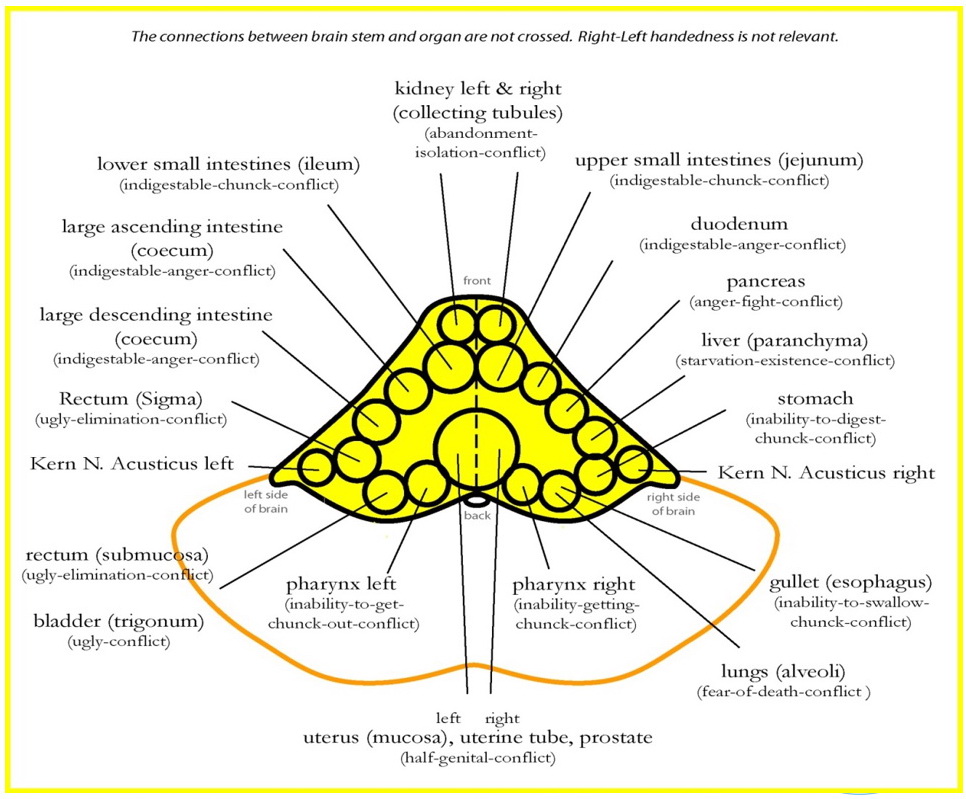
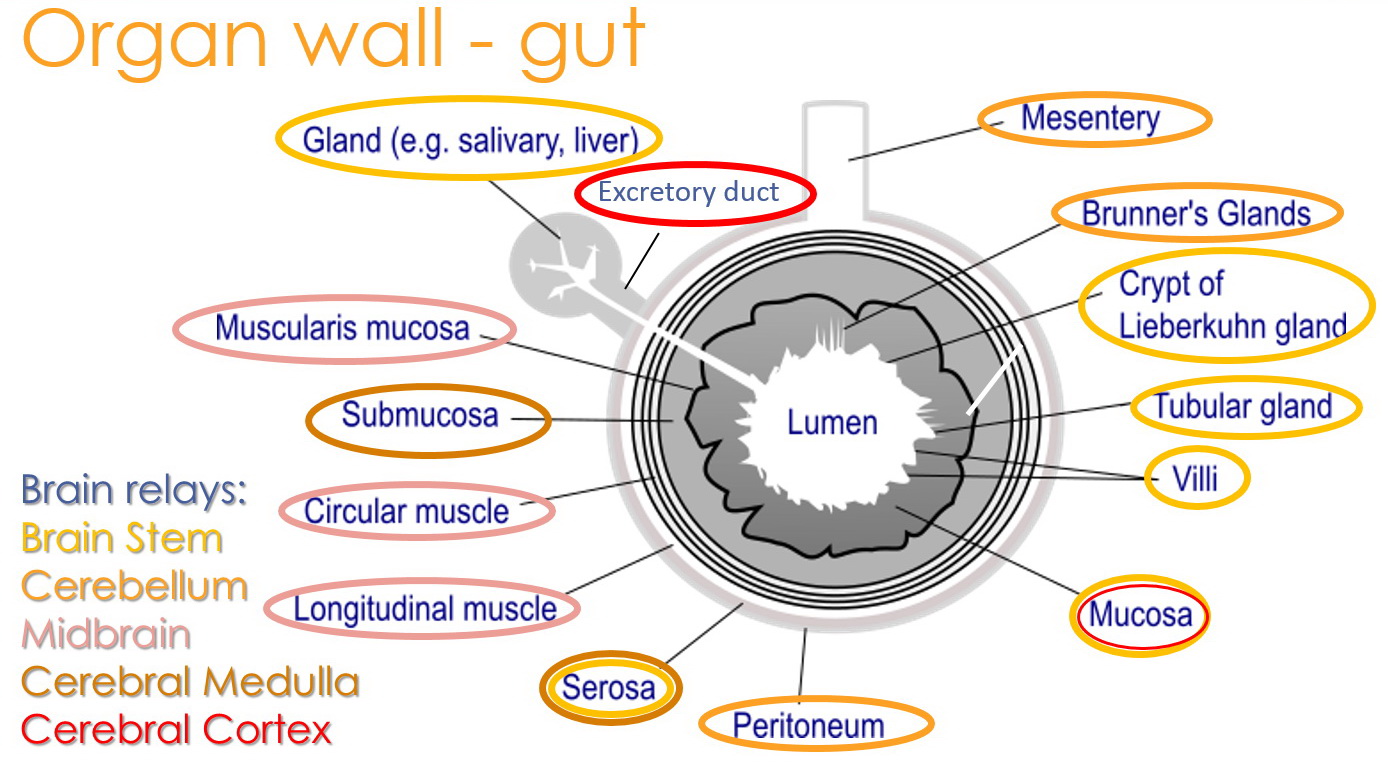
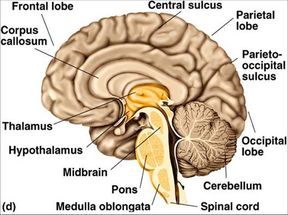
- Brain Stem ( + / – ) for secretory & absorptive mucosa and
- Midbrain (+/-) for smooth muscle
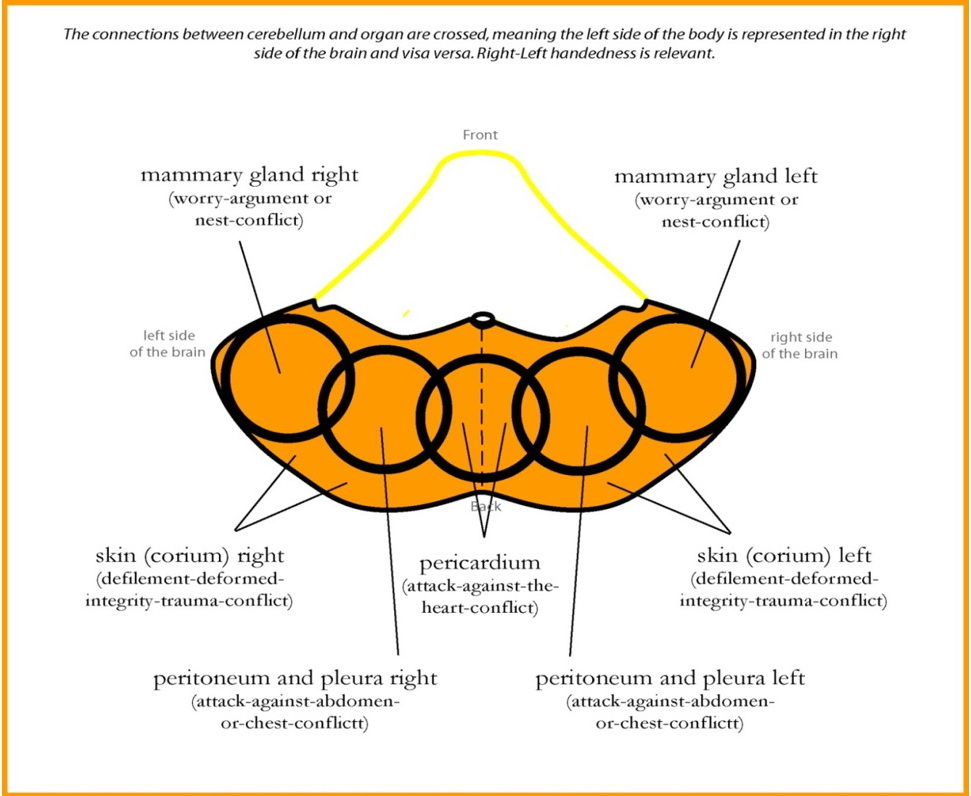
- Cerebellum (+/-) for Peritoneum/greater omentum
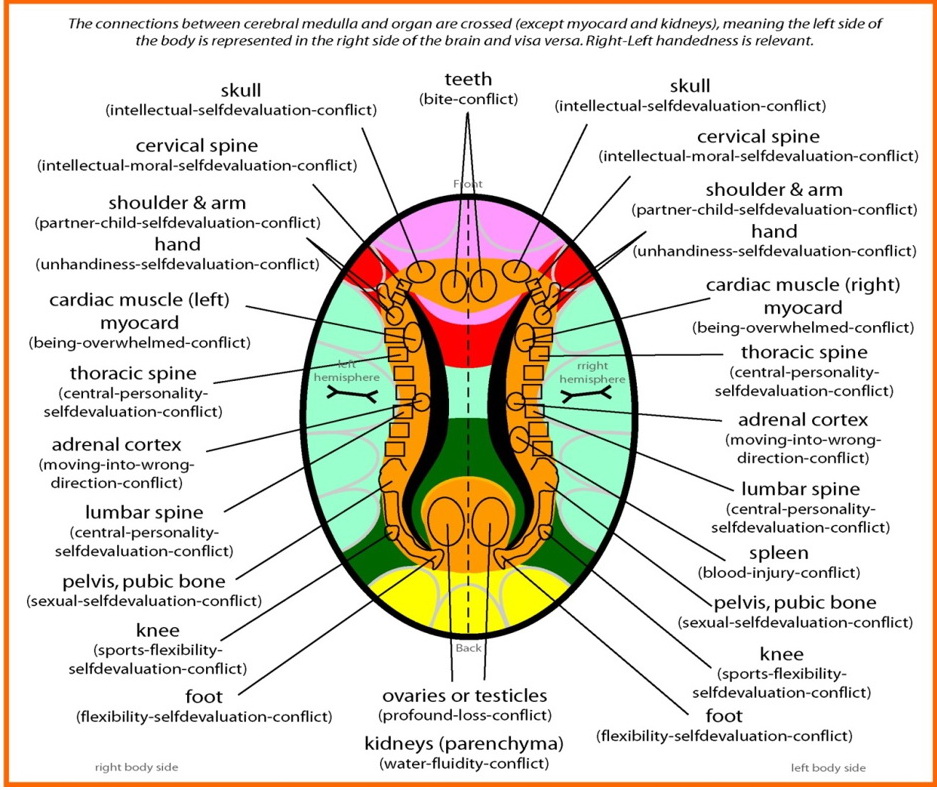
- Cerebral Medulla (-/+) for lymphatic tissue, and Peyer´s plaques in the Ileum
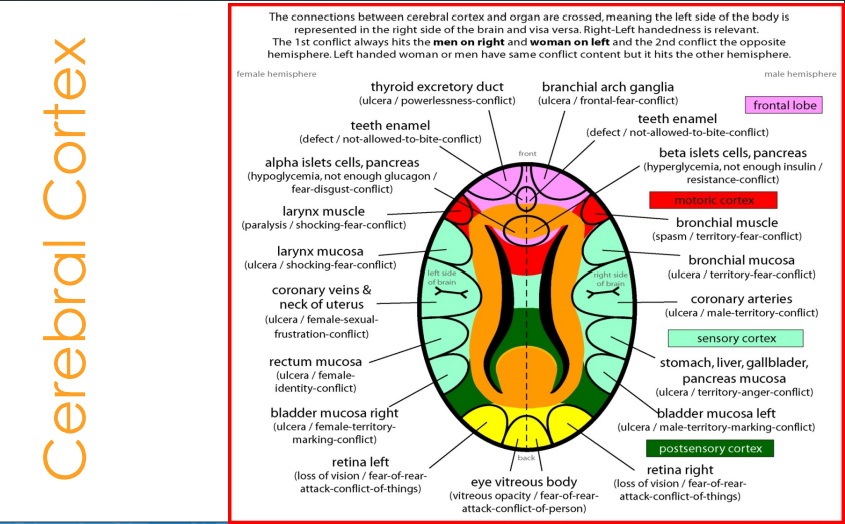
- Cerebral Cortex (-/+) for duodenum bulbus mucosa