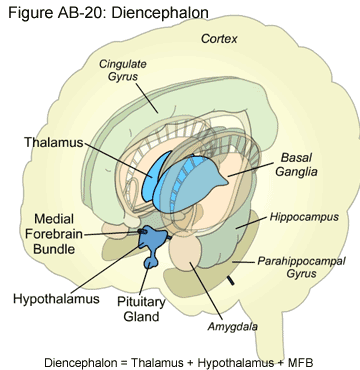
Pancreas
Anatomical overview
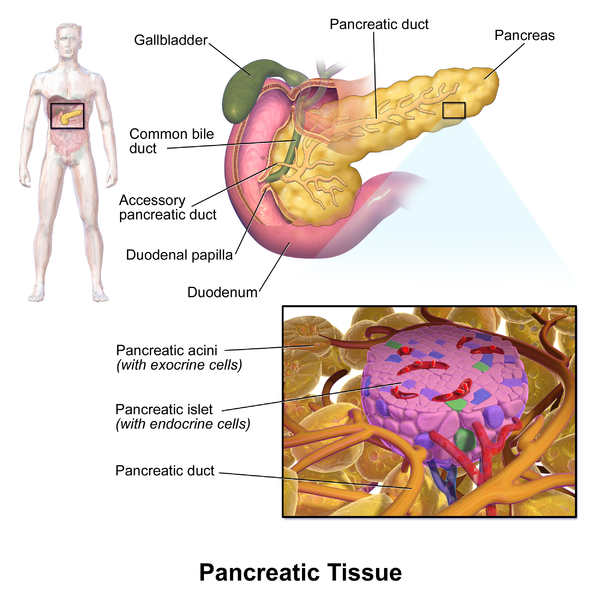
The pancreas is a 6-inch long heterocrine gland in the digestive system, located inferior to the stomach and surrounded by the duodenum on its medial end. This organ extends laterally from the duodenum toward the left side of the abdominal cavity, where it tapers to a point.
The pancreas is considered a heterocrine gland because it has both endocrine and exocrine gland functions. Small masses of endocrine cells known as pancreatic islets make up around 1% of the pancreas and produce the hormones insulin and glucagon to regulate glucose homeostasis in the blood stream. The other 99% of the pancreas contains exocrine cells that produce powerful enzymes that are excreted into the duodenum during digestion. These enzymes together with water and sodium bicarbonate secreted from the pancreas are known as pancreatic juice.
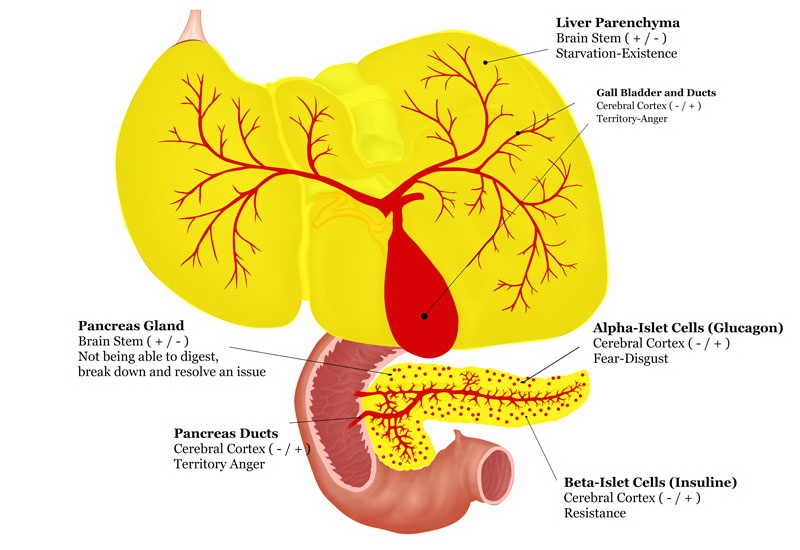
Brain
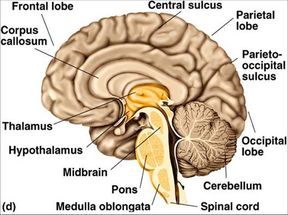
Relay:
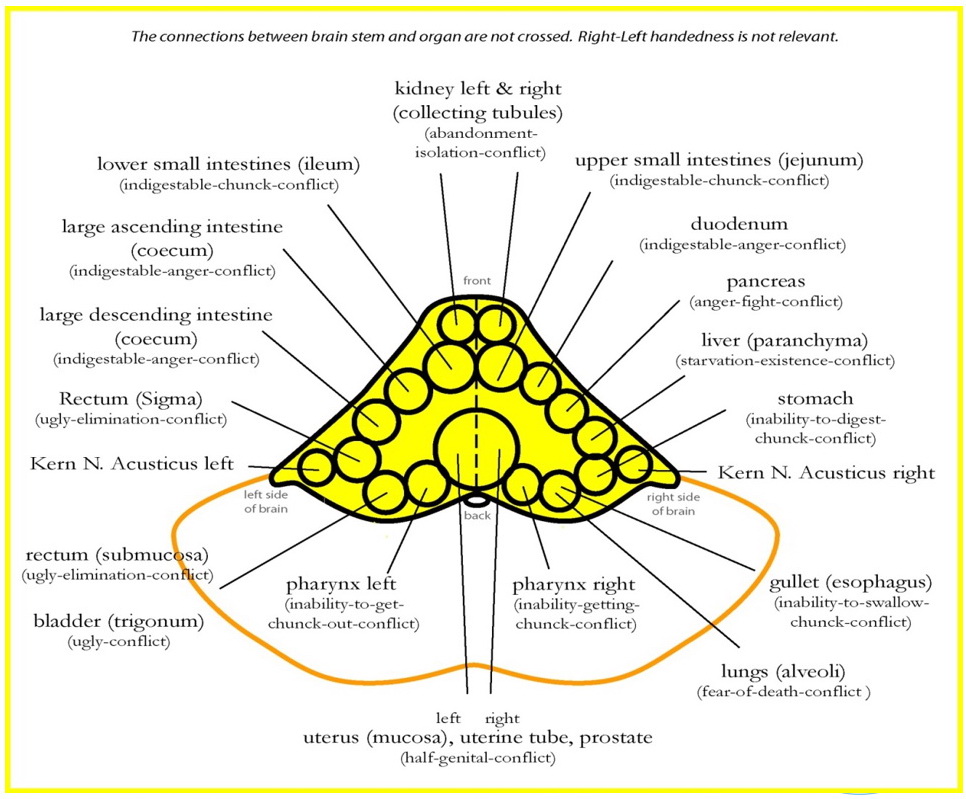
Brain Stem (+/-) right side, between duodenum & liver relays, for Exocrine Tissue
Cerebral Cortex (-/+) insular region mediolateral right side “4 o’clock” relay, for Pancreas Duct
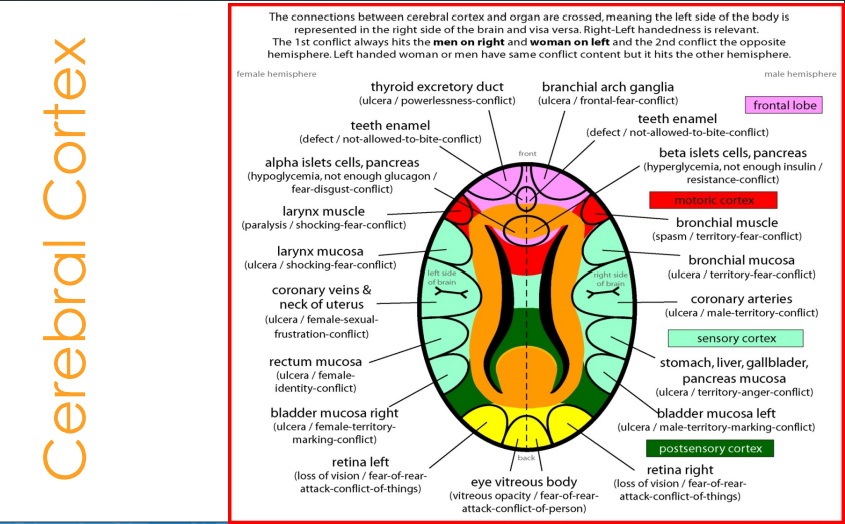
Cerebral Cortex (-/+) baso-central, diencephalon left, for Alpha Islet Cells (glucagon)
Cerebral Cortex (-/+) baso-central, diencephalon right, for Beta Islet Cells (insulin)