Lymphatic System
Overview
Lymph is the interstitial fluid. It consists of blood plasm, nutrients and enzymes, as well as particles and cells too large to be transported in the smaller blood vessels.
The lymphatic system can be broadly divided into the conducting system and the lymphoid tissue.
- The conducting system carries the lymph and consists of tubular vessels that include the lymph capillaries, the lymph vessels, and the right and left thoracic ducts.
- The lymphoid tissue is primarily involved in immune responses and consists of lymphocytes and other white blood cells enmeshed in connective tissue through which the lymph passes. Regions of the lymphoid tissue that are densely packed with lymphocytes are known as ”lymphoid follicles”. Lymphoid tissue can either be structurally well organized as lymph nodes or may consist of loosely organized lymphoid follicles known as the mucosa-associated lymphoid tissueMALT).
- The central or primary lymphoid organs generate lymphocytes from immature progenitor cells.
The thymus and the bone marrow constitute the primary lymphoid tissues involved in the production and early selection of lymphocyte tissues.
Secondary or peripheral lymphoid organs maintain mature naive lymphocytes and initiate an adaptive immune response. The peripheral lymphoid organs are the sites of lymphocyte activation by antigen. Activation leads to clonal expansion and affinity maturation. Mature lymphocytes recirculate between the blood and the peripheral lymphoid organs until they encounter their specific antigen.
Secondary lymphoid tissue provides the environment for the foreign or altered native molecules (antigens) to interact with the lymphocytes. It is exemplified by the lymph nodes, and the lymphoid follicles in tonsils, Peyer's patches, spleen, adenoids, skin, etc. that are associated with the mucosa-associated lymphoid tissue (MALT).
The lymphatic system has multiple interrelated functions: - It is responsible for the removal of interstitial fluid from tissues
- It absorbs and transports fatty acids and fats as chyle from the digestive system
- It transports white blood cells to and from the lymph nodes into the bones
- The lymph transports antigen-presenting cells (APCs), such as dendritic cells, to the lymph nodes where an immune response is stimulated.
graphic: wikipedia, Blausen.staff
In META-Health, we have a more integrative view of the immune system, as well as of microbes. We perceive the so called immune system as a powerful and comprehensive intracommunication of the organism, initiating and guiding it´s stress and regeneration reactions intelligently and making use of microbial work. To distinguish needed from unwanted substances and information (proteins), and to control the internal processes, we need cell memory and our immune (or perhaps:”identity integrity guarding”) system.
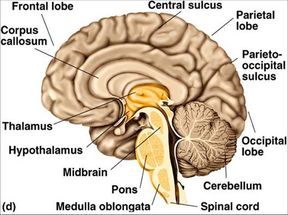
Brain
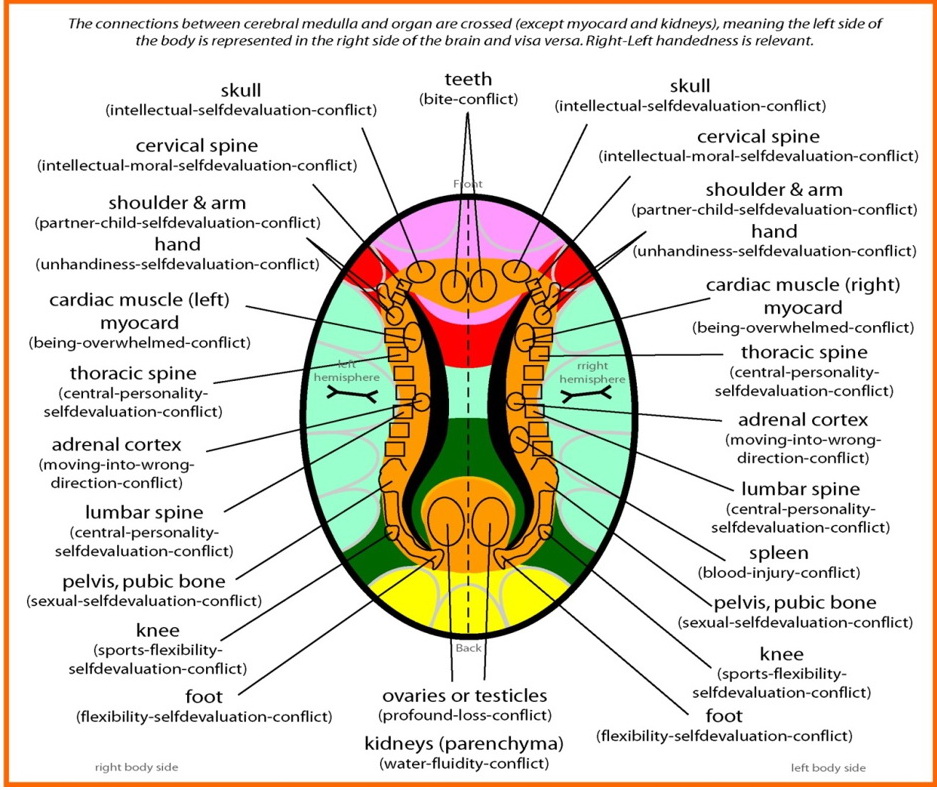
Cerebral Medulla (-/+) for lymph vessels, lymph nodes and spleen
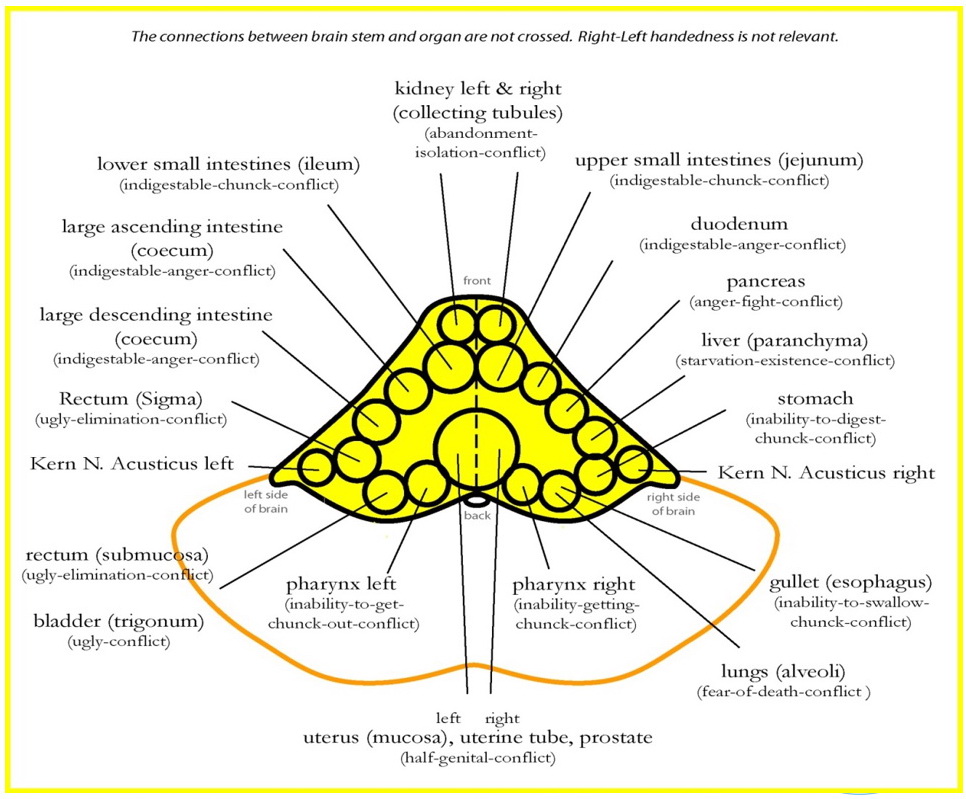
Midbrain (+/0) for smooth muscle layer in lymph vessels
compare Brain Stem
For tonsils, Peyer´s Patches and MALT, see “Digestive System”