Lymph – Vessels
Anatomy
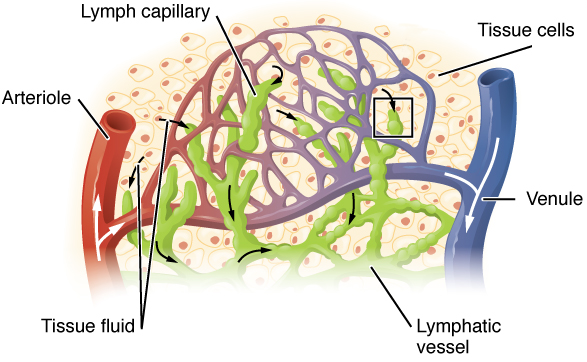
Lymph vessels are a part of the lymphatic system, which is are complementary to the cardiovascular system to collect blood plasma and substances in the interstitium, to filter it and lead it back into the bloodstream. Lymph vessels have thin walls lined by endothelial cells, and have a thin layer of smooth muscles, as well as valves that prevent backflow. Their adventitia binds the lymph vessels to the surrounding tissue. Lymph capillaries are slightly larger than their counterpart capillaries of the vascular system. They end blindly in the interstitium, from where lymph fluid is transported to a lymph node and on towards the heart. Smaller vessels lead into collecting ducts, which drain the lymph into one of the subclavian veins and thus return it to general circulation. The biggest vessels are the right lymphatic duct and the thoracic duct (whose lymph has a milky colour because it is enriched with fat from the intestines).
The lymph transport is, like the venous transport, depending on help by the muscle pump, i e intermittent resistance through breathing and the skeletal muscles.
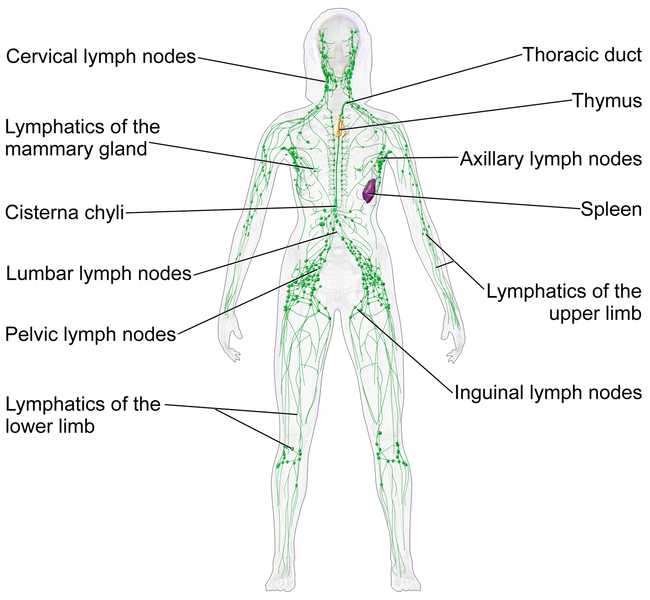
graphics: wikipedia, Blausen.staff
Brain
Relay
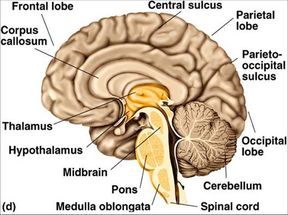
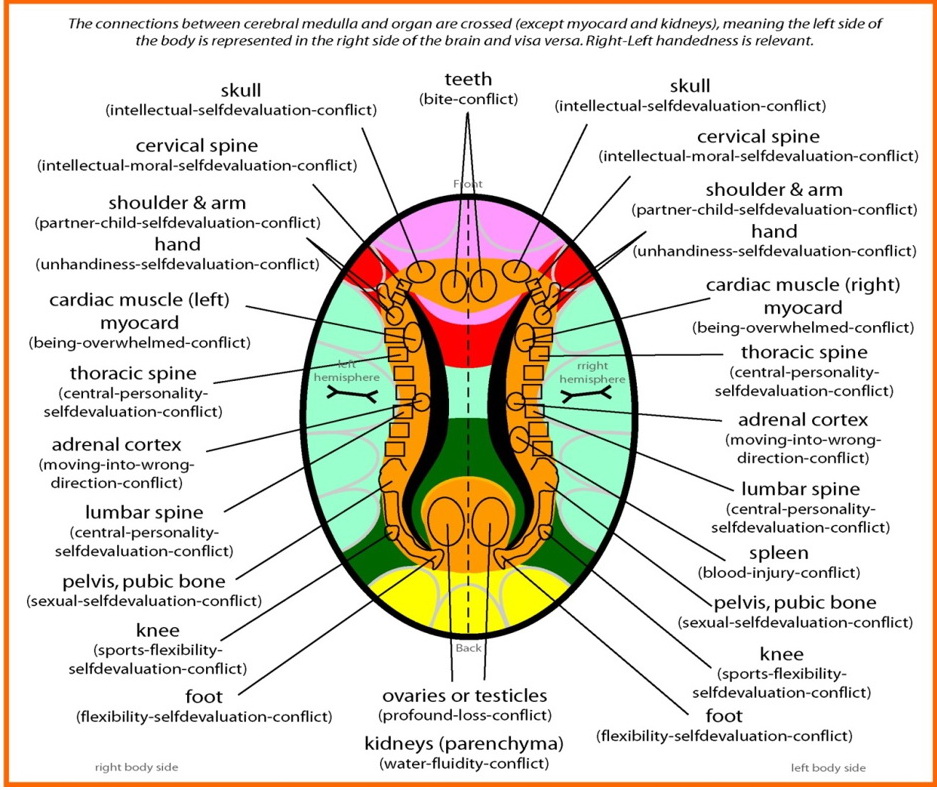
Cerebral Medulla ( – / + ) for intima and valves, relay reflecting location in the body/sides crossed
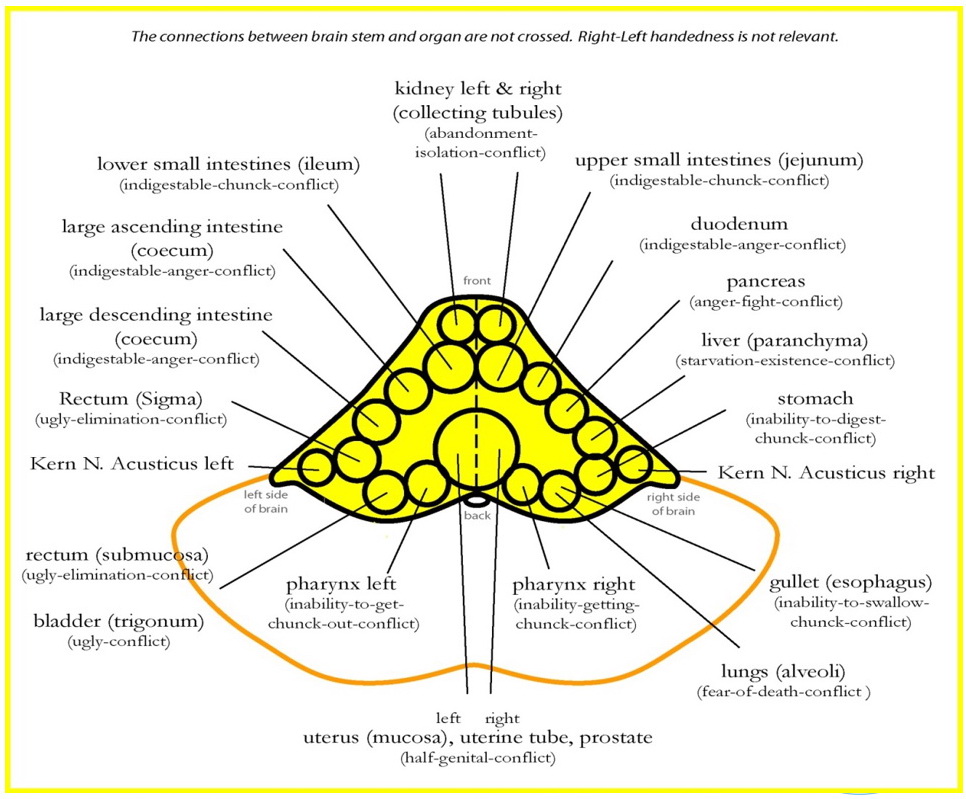
Midbrain (+/0) for smooth muscle layer, relay reflecting locationin the body/sides uncrossed
compare Brain Stem
Mind
Theme
- Self devaluation regarding the affected area and it´s associations
- Self-sustainability and self-healing ability
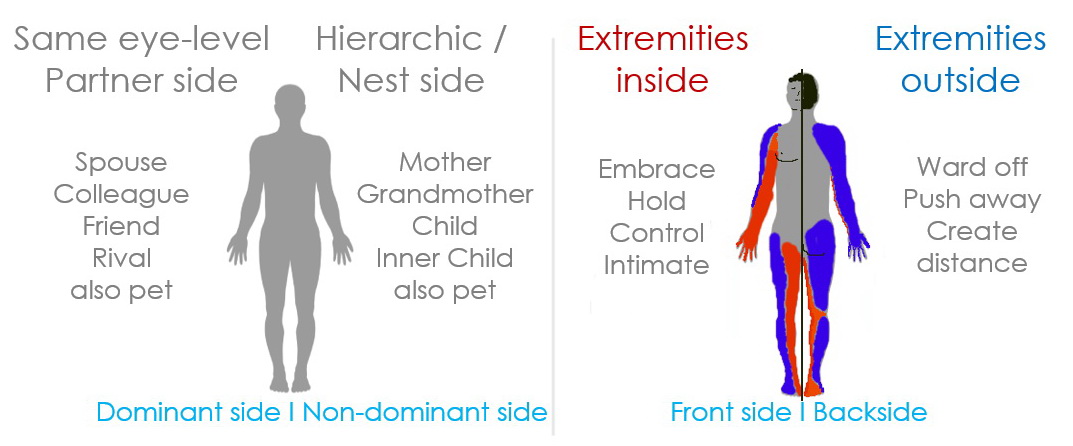
Association according to locality:
For further associations see Skeletal System
Emotions, Thoughts
Self-doubt, self-hate, self-abandonment
- I doubt that I can handle that.
- I doubt that I can heal.
- I feel blocked.
- I can´t rid myself of that and move on.
META-Meaning
- I handle everything life has for me fluently and with grace.
- Now, I can distinguish my resources from my ballast, and act accordingly.
Organ
Stress Phase Symptoms
Functional decrease, weakening and necrosis of the lymph vessel wall and valves, which the smooth muscle layer will try to compensate. The functional loss can lead to lymphedema (“hard” oedema because substances & proteins are not carried from the interstitium). At the same time, especially in more substantial conflicts, weakening in the structure of bones, joints and/or muscles can appear.
Regeneration Phase Symptoms
There are basically two different lymph regeneration programs:
1. In case of a common swelling of the lymph or the lymph node there is no cell proliferation (Mitosis) but a swelling and a bulking of the lymph vessels and -nodes. The lymphatics work at full power in order to process degraded tissue or wound healing in the affected area. This means that another tissue is in regeneration phase!
2. Repair of the vessel wall with help of cholesterol and cell proliferation initiated by inflammation (lymphangitis). In extreme cases, proliferation can be diagnosed as lymphangioma or lymphangiosarcoma. Typical symptoms are a dilatation of the lymph vessels, an insufficient lymphatic drainage and an intense swelling, especially when kidney tubules are stress-active simultaneously.
Biological Meaning
The biological meaning in processes governed by the Cerebral Medulla lies in the finished regeneration phase, leaving the affected tissue stronger than before.
Social
Examples
- A woman seems unable to terminate a relationship which is bad for her, and feels guilty for it.
- A man develops a lymphedema in the leg after a long healing process with thrombophlebitis. He had felt tied to a situation with fighting his way out of debts.
Additional Information
A primary lymphedema through inherent hypoplasia or aplasia of lymph vessels is much more common in women than in men. Possible reason is a conflict of the mother during pregnancy which was perceived as an own conflict by the fetus, sharing the mother´s feelings, signals and strategies. A female baby would probably identify even more with her mother than a male one.
Differential Diagnosis
Veins (Cerebral Medulla, -/+) vein insufficiency in the stress phase (feeling tied down) or after recurring conflicts can lead to edema and ulcus cruris, especially in the periphery.
Kidney Collecting Tubules (Brain Stem, +/-) stress phase causes water retention in the body by enhanced reabsorption of primary urine in the kidney, which usually enlarges other swelling processes.
Muscle Fascia (CB, MB +/-) in stress phase (protection) leads to muscle tension, which can create backlog of lymph and lead to adhesions because of fibrinogen reaction
Myocardium Right Ventricle (CM -/+) in stress phase (overwhelm regarding support) leads to backlog and oedema in feet & lower legs
In addition, malnutrition (protein deficiency) can lead to edema. Surgical lymphadenectomy or radiation can also lead to lymphedema.