Hair
Anatomy
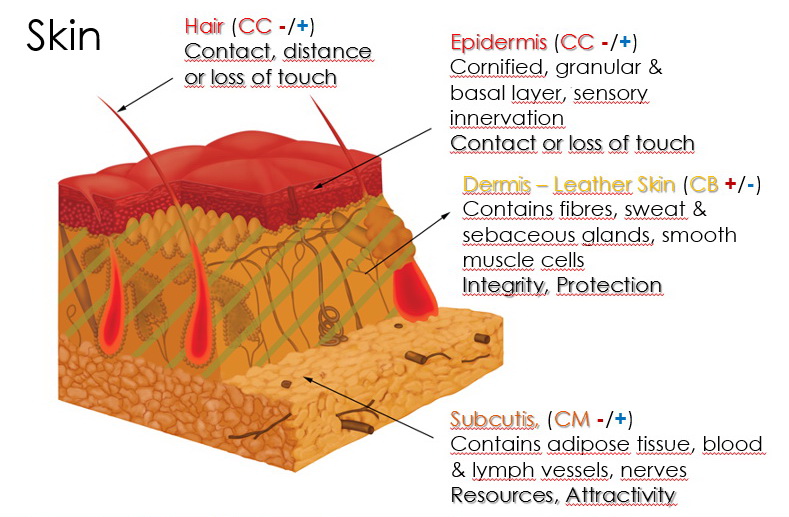
Hair is made of keratin, a tough protein. Each hair is anchored into the skin by a hair follicle with a hair bulb at it´s base. In the hair bulb, living epidermis cells divide and grow to build the hair shaft. Blood vessels nourish the cells in the hair bulb, and deliver hormones that modify hair growth and structure.
Hair growth occurs in cycles consisting of three phases:
- In the anagen phase, most hair is growing at any given time. Each hair spends several years in this phase.
- In the catagen (transitional) phase, hair growth slows and the hair follicle shrinks during some weeks.
- In the telogen (resting) phase, the hair growth stops and the old hair detaches from the hair follicle. A new hair begins the growth phase, pushing the old hair out.
Hair color is created by pigment cells producing melanin in the hair follicle. With aging, pigment cells die, and hair turns white.
{img fileID=”362″ thumb=”box”}
Graphic: wikipedia, authors Madhero88 and M.Komorniczak
Brain
Relay
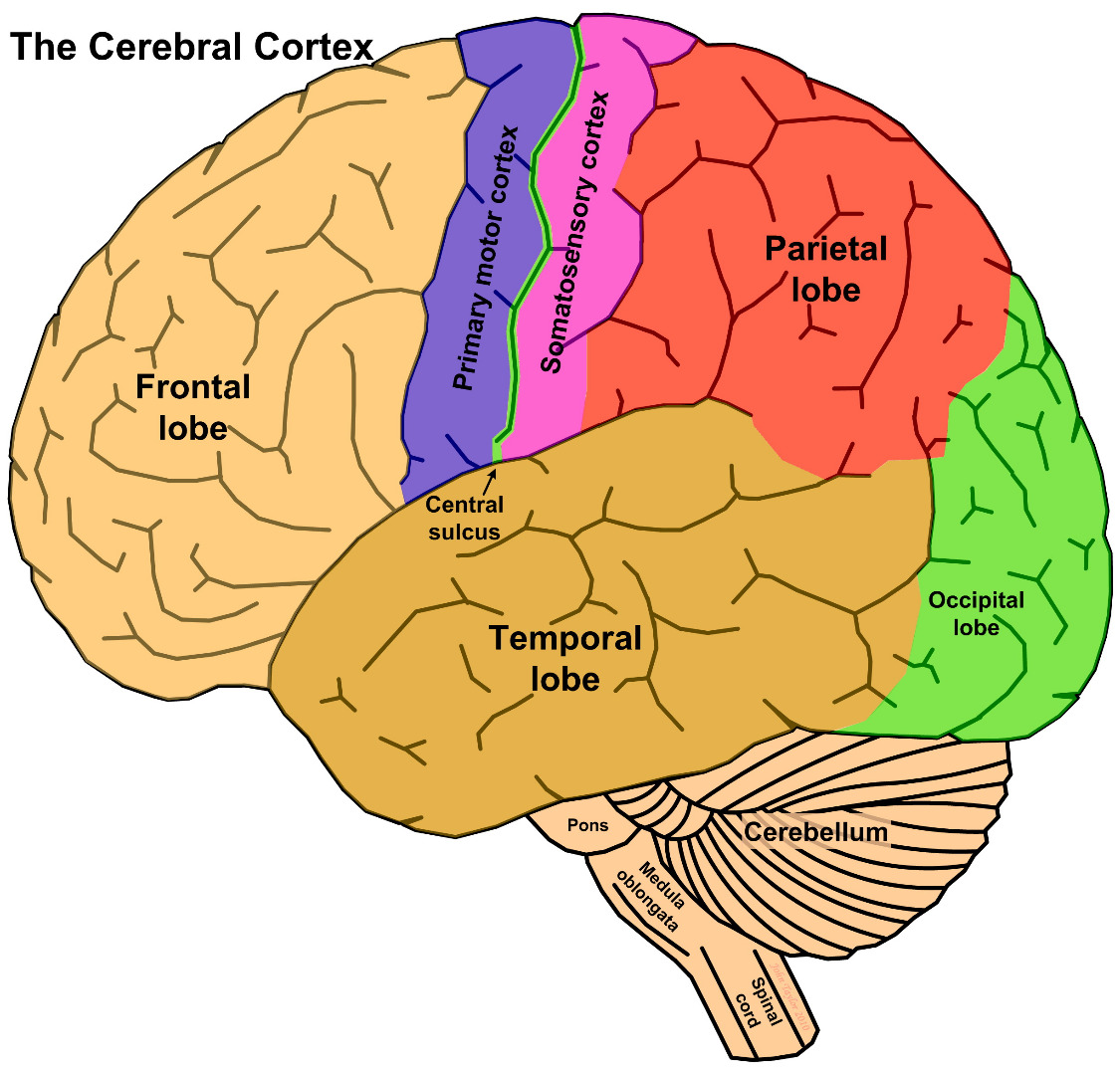
Cerebral Cortex ( – / + )
Mind
Theme
Separation, distance, Loss of touch
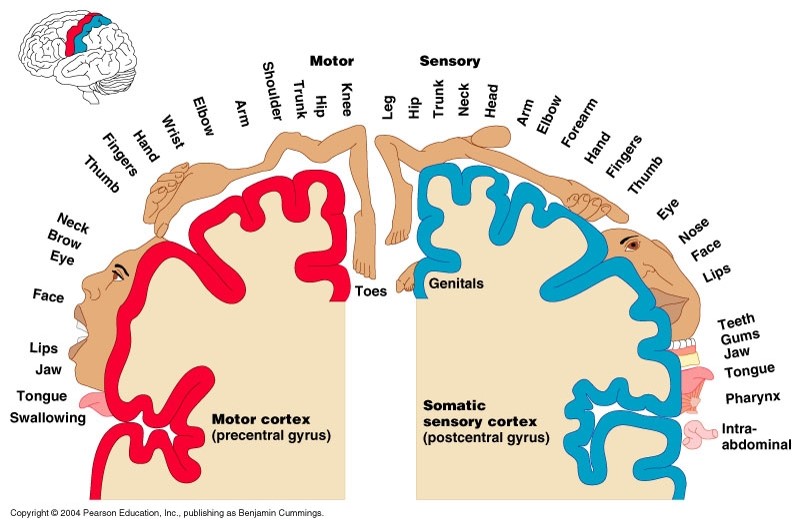
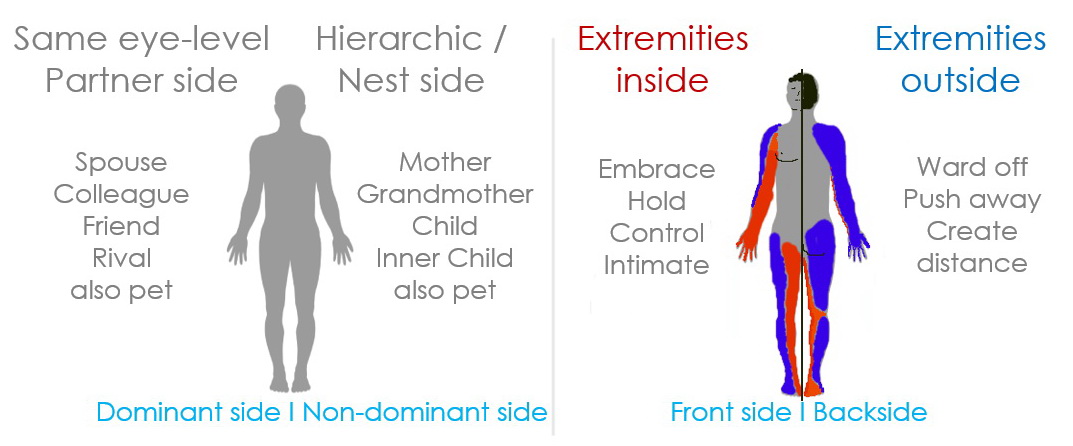
Location and side dominance association:
Emotions, Thoughts
Longing or resistance
- How I miss her caressing!
- He used to touch me there.
- I don´t want to feel that on my head!
- I want to be closer.
META-Meaning
My own thoughts decide how I perceive this contact. My head feels loved and well-protected.
Organ
Stress Phase Symptoms
Decreased trophic/nourishment, dry skin on the scalp, possibly dandruff, and the loss of hair papilla cells.The patient experiences a progressive hair loss either of small areas to a complete hairlessness (Alopecia androgenica).
Alopecia areata is a form of hair loss from areas of the body, usually from the scalp. Because it causes bald spots on the head, especially in the first stages, it is sometimes called spot baldness. Sometime the condition can spread to the entire scalp (Alopecia totalis) or to the entire epidermis (Alopecia universalis).
It also can happen that only the pubic hair or only the armpit hair is affected – usually due to hormonal changes..
Further symptoms of stress phase can be a decrease in sensitivity or short-term memory disorders. Also the decrease of hair pigment production can be related to a stress phase.
Regeneration Phase Symptoms
First there can be a very intense loss of hair, often by bundles, due to softening tissue around the hair root. Later there is a redness and possibly a hypersensitivity with itching of the scalp with a return of the hair growth.
Biological Meaning
Like in epidermis, reduced sensitivity makes the loss of contact less dramatic. Obvious baldness also promotes a special position in the community (compare babies, monks)
Social
Examples
- Woman has beautiful long blonde hair and when the loved partner leaves her is losing hair.
- Girl losses hair when the parents separated and her dad moves away.
- The typical male baldness can be traced back to a separation conflict (even though other unknown factors may contribute).
- The client got thin hair and hair loss after her adult son had left home. He used to touch her in the neck and hairline. After letting go of her attachment and finding new goals, the hair recovers. (Klapp)
Additional Information
Hair seems to mediate sensitivity just like antennae on several levels. Each hair root has a nerve. With covered hair, we protect our head but diminish the ability to sense and interprete subtle signs.
Differential Diagnosis:
Skin – Dermis(Cerebellum +/-): tissue reinforcement and increased functions (sweat and sebaceous glands) in stress phase (vulnerability), degeneration possibly with the help of fungi and mycobacteria in regeneration phase. Diagnosis can be Tinea Capitis.
Hair loss can also be caused by hormonalfactors, acidification, intoxications, radio-/chemotherapy or iron deficiency.