
Penis – Dermis & Sebaceous Glands
Anatomy
The dermis layer of the penis contains sebaceous glands. Especially the glans and inner part of the prepuce produce sebum that, together with degenerating cells and traces of urine, form smegma
Smegma helps keep the glans moist and facilitates sexual intercourse by acting as a lubricant. It was originally thought to be produced by sebaceous glands near the frenulum called Tyson’s glands; however, subsequent studies have failed to find these glands.
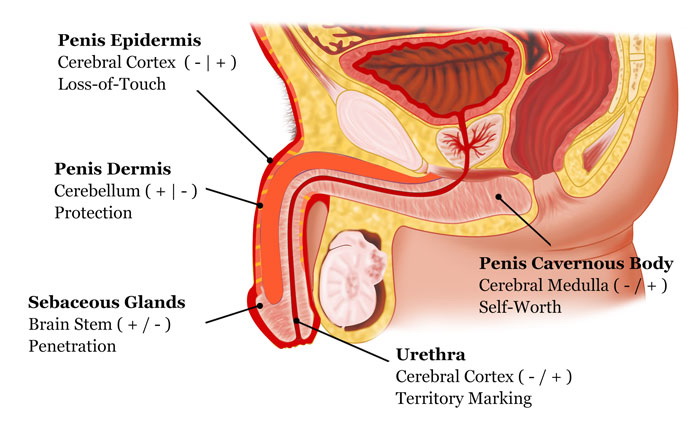
Brain
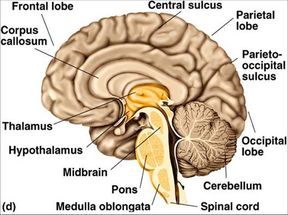
Relay:
Cerebellum ( + / – ) left side anterior on the border to the brain stem
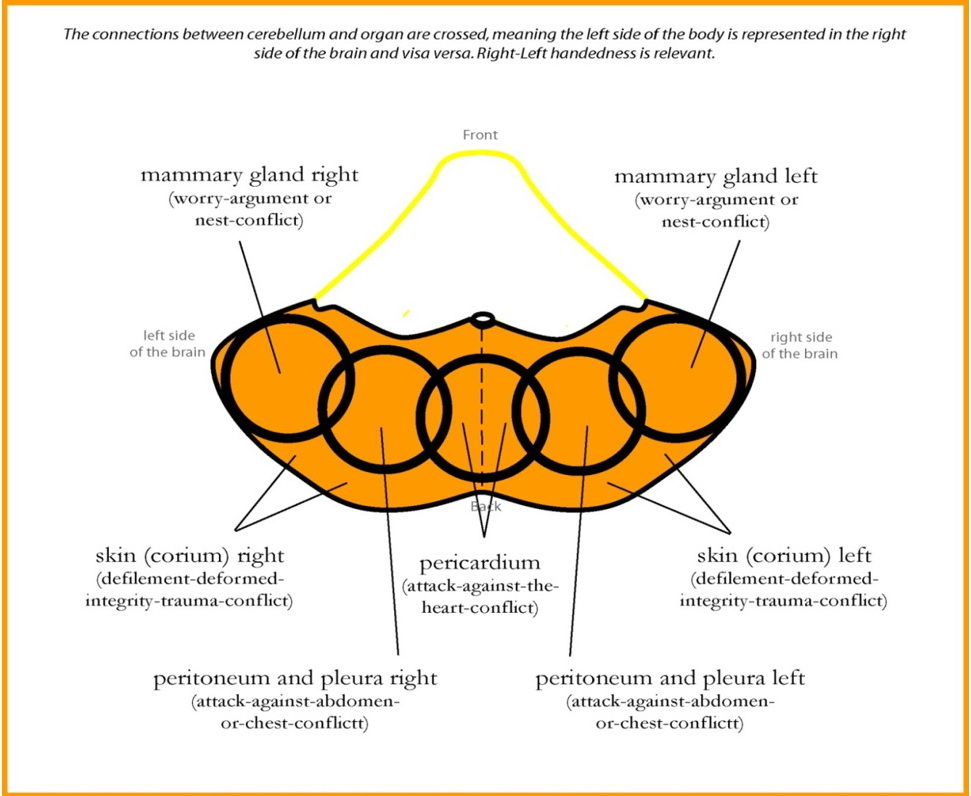
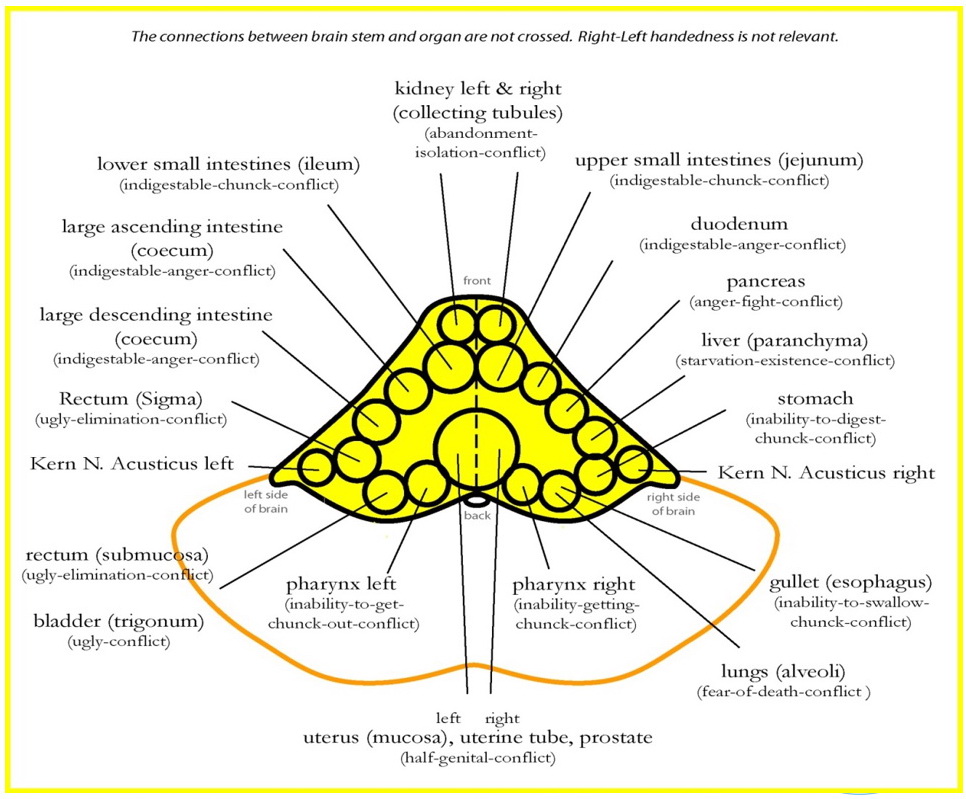
Mind
Theme:
Not being able to penetrate.
Protection of the glans and penis
Emotions and Thoughts:
Lust, pain
- I need to get in!
- I want to make love!
- Sex hurts!
- They attack my penis!
META-Meaning:
- My loving act is smooth and joyful!
- My penis is beautiful and brings pleasure.
Organ
Stress Phase Symptoms:
Functional improvement and/or cell growth on the mucous inside of the foreskin, resulting in an increased production of smegma.
Possible diagnoses: penis carcinoma, penis melanoma
Regeneration Phase Symptoms:
Inflammatory degradation of excess cells that can be painful especially at the glans. Purulent discharge from inside the prepuce, local nightly sweating possible.
Possible diagnoses: abscess, gonorrhea, tuberculosis of the penis
Biological Meaning:
Increased smegma production in stress phase helps to make the penis more slippery during sexual intercourse.
Social
- A man feels that his wife does not respond with sexual arousal to him anymore and that their intercourse is causing pain.
- Circumcision initiated a tuberculous process in a young man.
Additional Information
Circumcision of the foreskin can be therapy for phimosis (narrow foreskin), however it changes sensitivity and texture of the surface in cornification of the glans.
Constellations:
Cerebellum Constellation: reduced sensitivity (physical and emotional), “emotional burnout”
Compulsive Cleaning (together with Pancreas/Langerhans Alpha Cells): compulsive handwashing, extreme hygiene and fear of dirt and bacteria.
Differential Diagnosis:
Glans and Foreskin – epidermis (Cerebral Cortex, -/+) stress phase (sexual separation): reduced sensitivity and ulcerative tissue degeneration; regeneration phase: hyperesthesia and inflammatory growth stimulation, melanoma/basal cell carcinoma possible
Cavernous Body (Cerebral Medulla, -/+) stress phase (sexual self-devaluation): erectile dysfunction, impotency; Chronic: fibrous knots, penisdeviation, pain in erection.
Phimosis (narrowing of the foreskin by collagen) appears in stress phase or after recurring processes of the dermis (CB +/-) after vulnerability or defilement trauma, even as an inherited or learned belief about sexual integrity.
