Rectum Muscles – Anal Sphincters
Anatomy
At the anus there are two sphincters which control the exit of feces from the body:
- The involuntary inner sphincter (Sphincter ani internus) is a muscular ring made of circular fibers of the intestine wall. It is about 5 mm thick and surrounds about 2.5 cm of the anal canal. Its lower border is about 6 mm from the orifice of the anus. It helps the external sphincter to close the anus, and aids in the expulsion of feces.
- The voluntary external sphincter (Sphincter ani externus) consists of striated muscle and surrounds the inner sphincter. It is 8 to 10 cm long and has a superficial and a profound layer. It is embedded in the pelvic floor.
Both muscles are normally contracted and close the anus. By a stretch of the rectum before defecation, their tonus is inhibited and the anus opens. By voluntary effort, the outer sphincter can prevent opening.graphic: wikipedia
graphic source
Brain
Relay:
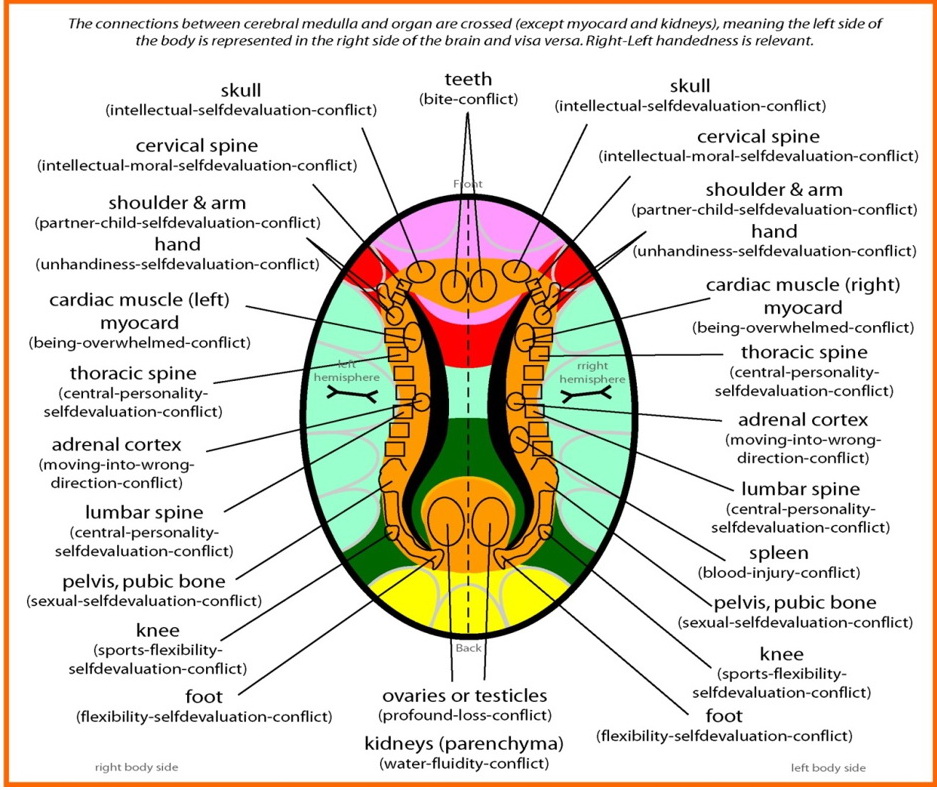
1. Cerebral Medulla ( – / + ) “pelvic area”, for External Sphincter & pelvic floor muscles
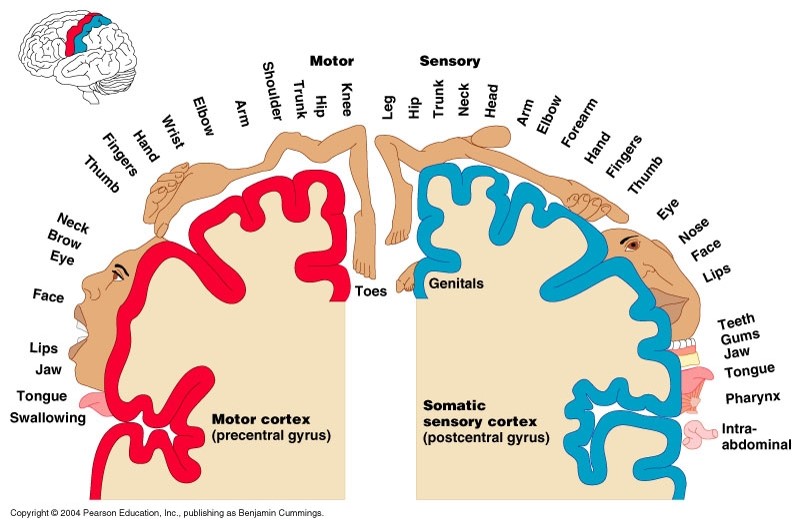
2. Motor Cortex (-/+) lateral sulcus, for innervation of striated muscle
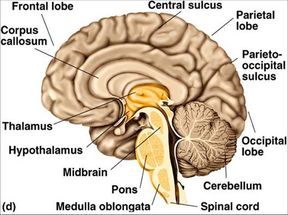
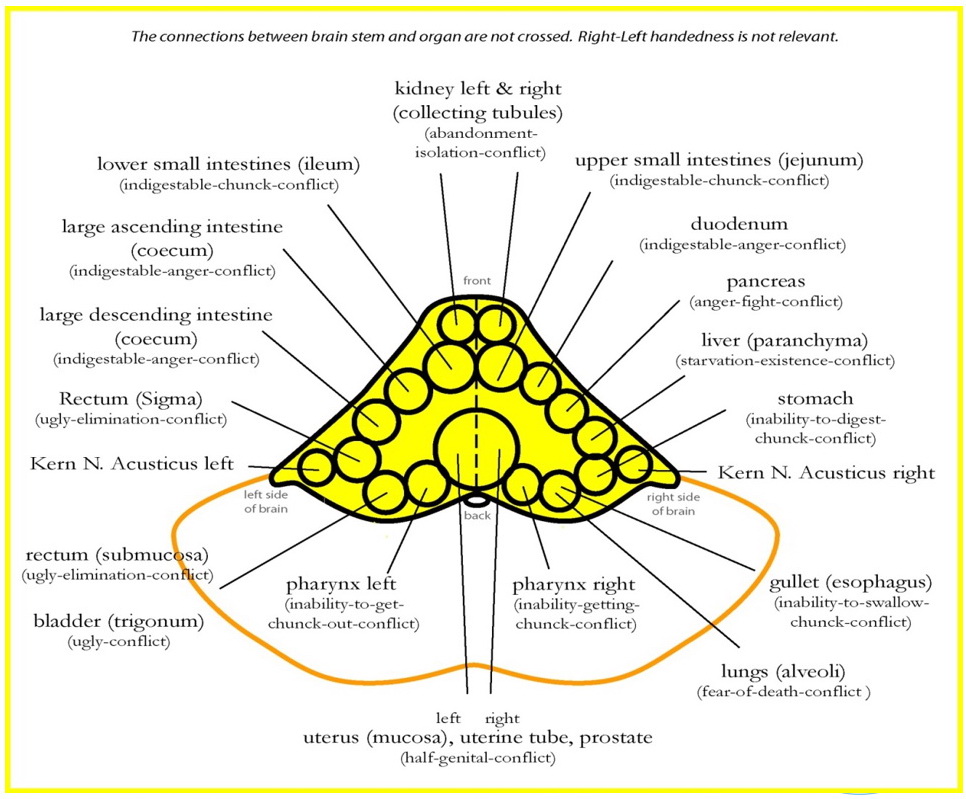
3. Midbrain (+/-) dorso-medial left, for Internal Sphincter with sympathetic innervation
compare Brain Stem
Mind
Theme:
1. Self-devaluation regarding sphincter function and territory-marking
2. Inability to mark territory and to find/show ons’s identity
3. To remove or hold back the waste
Emotions and Thoughts
1. Social Fear
- I can’t hold it!
- Where is my place here?
2. Anger or Uncertainty - I have to show them this is mine!
- Where is my place?
3. Pressure - I have to hold it!
- I’ll do it here.
META-Meaning:
1., 2. I find my own space, can set my boundaries and express myself clearly.
3. I feel my body’s signals and pay attention to them.
Organ
Stress Phase Symptoms:
1. Gradual weakening of the external sphincter, stool incontinence. No necrosis is observed in sphincter muscles!
2. In the stress phase the anal sphincter slackens. Stool incontinence with reduced sensitivity.
3. Increased tonus of the inner sphincter through sympathetic innervation, thereby faecal retention, constipation.
Regeneration Phase Symptoms:
1. Strengthening of the external sphincter
2. Regain of stool control, in the Healing Peak short slackening of the external sphincter.
3. Slackening of the inner sphincter and regular defaecation.
Biological Meaning:
The involuntary slackening of the sphincter in stress phase is meant to help marking out one´s territory.
Social
Examples:
- A boy who´s parents have been divorced has an unempathetic teacher and feels overwhelmed at school. He becomes incontinent without noticing it.
- An elderly person is moved from her house to the home for the elderly and can´t accept the new circumstances and limitations. She loses control over her defaecation.
Additional Information
Both sphincters fulfill the same function but with conflict theme nuances about needing to hold or to expel the waste (Brain stem), and not being allowed to mark boundaries (Cerebral Cortex). Not being able to hold or expel something creates a self-worth conflict (C. Medulla).
Sphincter muscles can react together with anal mucosa/epidermis (Cerebral Cortex -/+) in identity or territorial anger conflicts.
Constellations:
Charisma megalomania (marking of inner and outer territories): being accepted & taking one’s place everywhere.
Differential Diagnosis:
Intestine – affection resulting in diarrhea. Then, the stool is soft or liquid.
Rectum – Mucosa (Brain stem, +/-) with rectal polyps or adenoma in the stress phase (elimination), submucosal abscesses / haemorrhoids in the regeneration phase; possibly candidasis.
Rectum – Sensitive Anal Mucosa(Cortex, -/+) with painless ulceration and necroses in the stress phase (identity/rank), painful hemorrhoidal bleedings or rectum cancer in the regeneration phase.
Rectum – Smooth Intestine Muscle (Midbrain +/-): The smooth muscle often reacts together with the mucosa, theme being to forward the stool by peristalsis. In stress phase we see a functional increase with urge to defecate, leiomyoma growth is possible.