
Pharynx
Anatomy
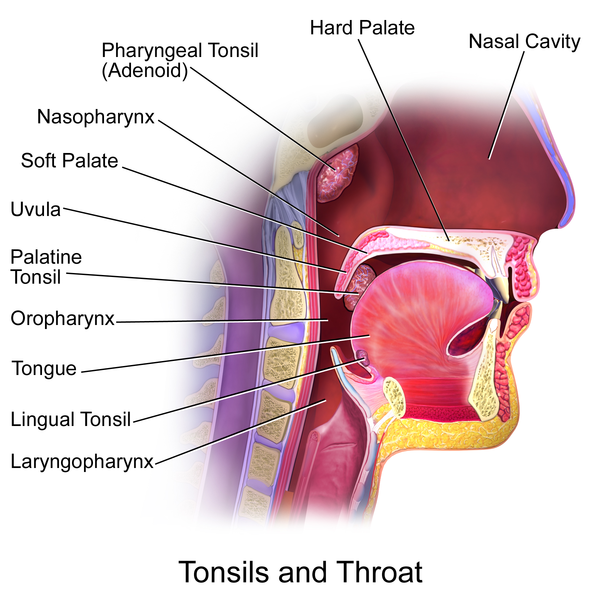
The pharynx is the part of the neck and throat situated immediately posterior to the mouth and nasal cavity and cranial or superior to the esophagus, larynx and trachea. It is part of the digestive system and respiratory system. The human pharynx is conventionally divided into three sections: Nasopharynx; Oropharynx; Hypopharynx.
It is lined with mucosa that has goblet cells for mucus production, as well as lymphatic tissue with immune functions. It has a layer of striated voluntary muscle for swallowing.
Brain
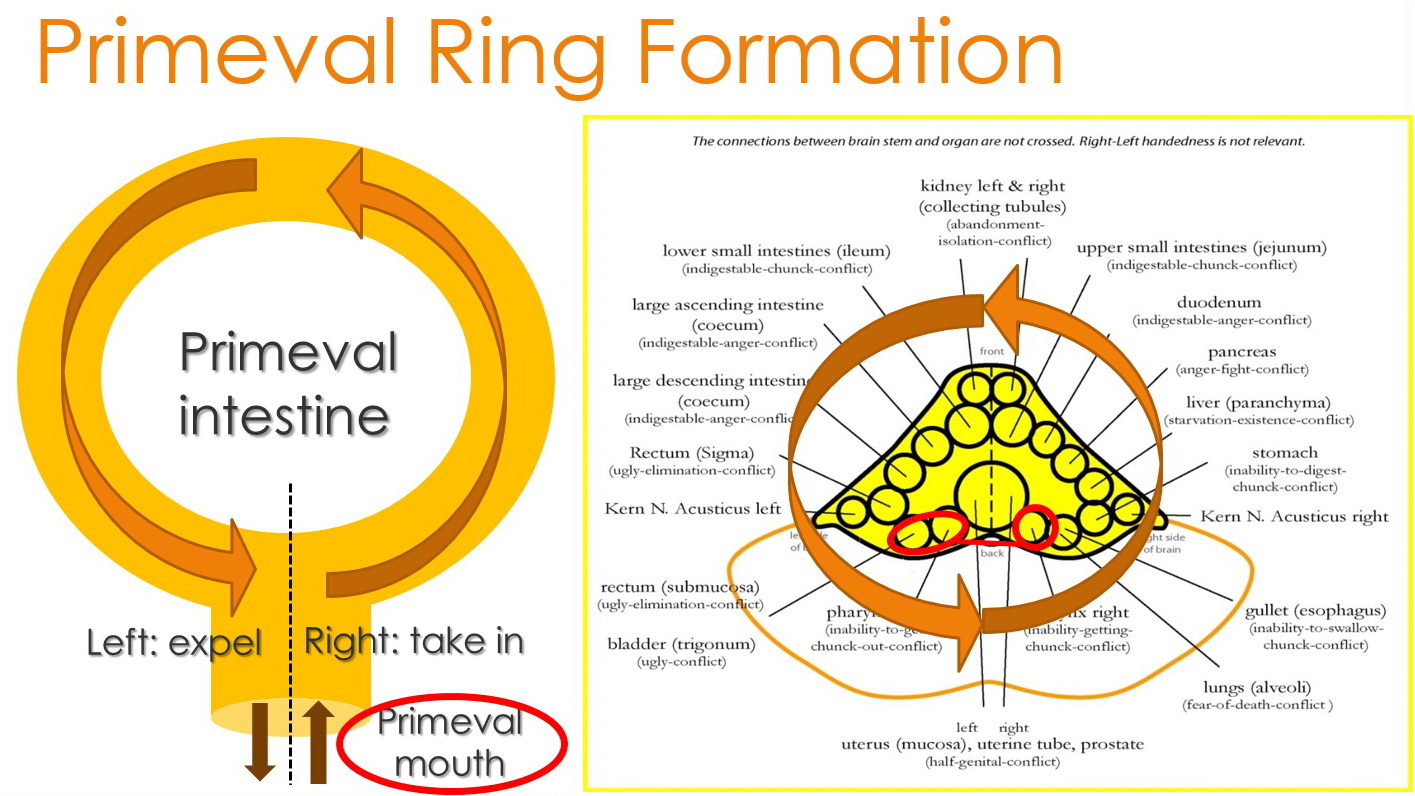
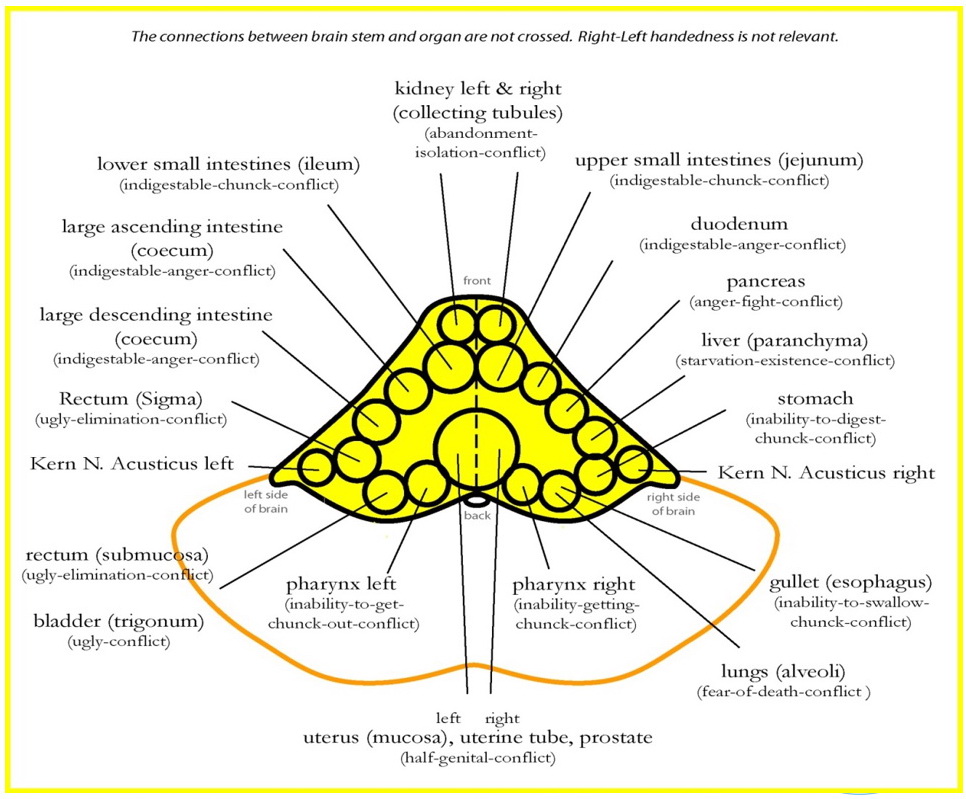
In the Brain Stem, the primeval ring structure is reflected: organ tissue relays with assimilative and digestive functions from oesophagus to small intestines are situated in the right brain stem, while excretory organs from caecum to rectum are relayed in the left brain stem. Medial on both sides are the relays of mouth/pharynx, middle ears and lacrimal glands, as well as the pineal and pituitary glands and the thyroid.
Relay:
1. Brain Stem (+/-)
dorso-medial left & right, next to Endometrium/Ovar relay
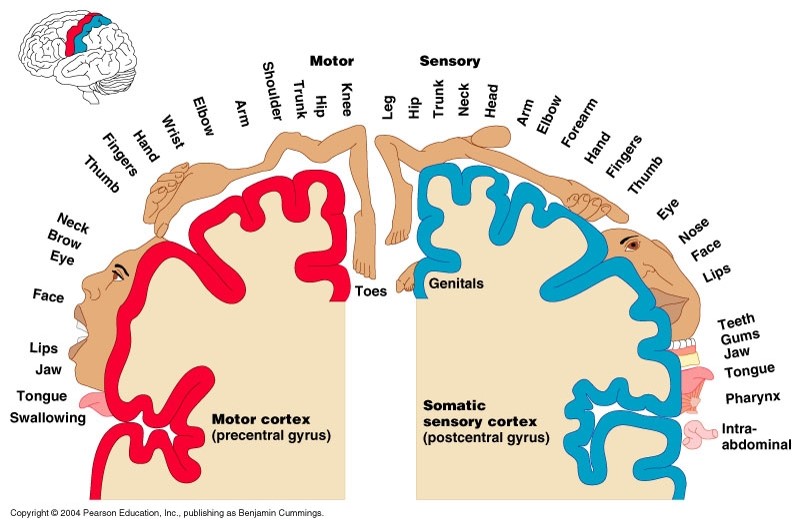
2. Cerebral Cortex (-/+)
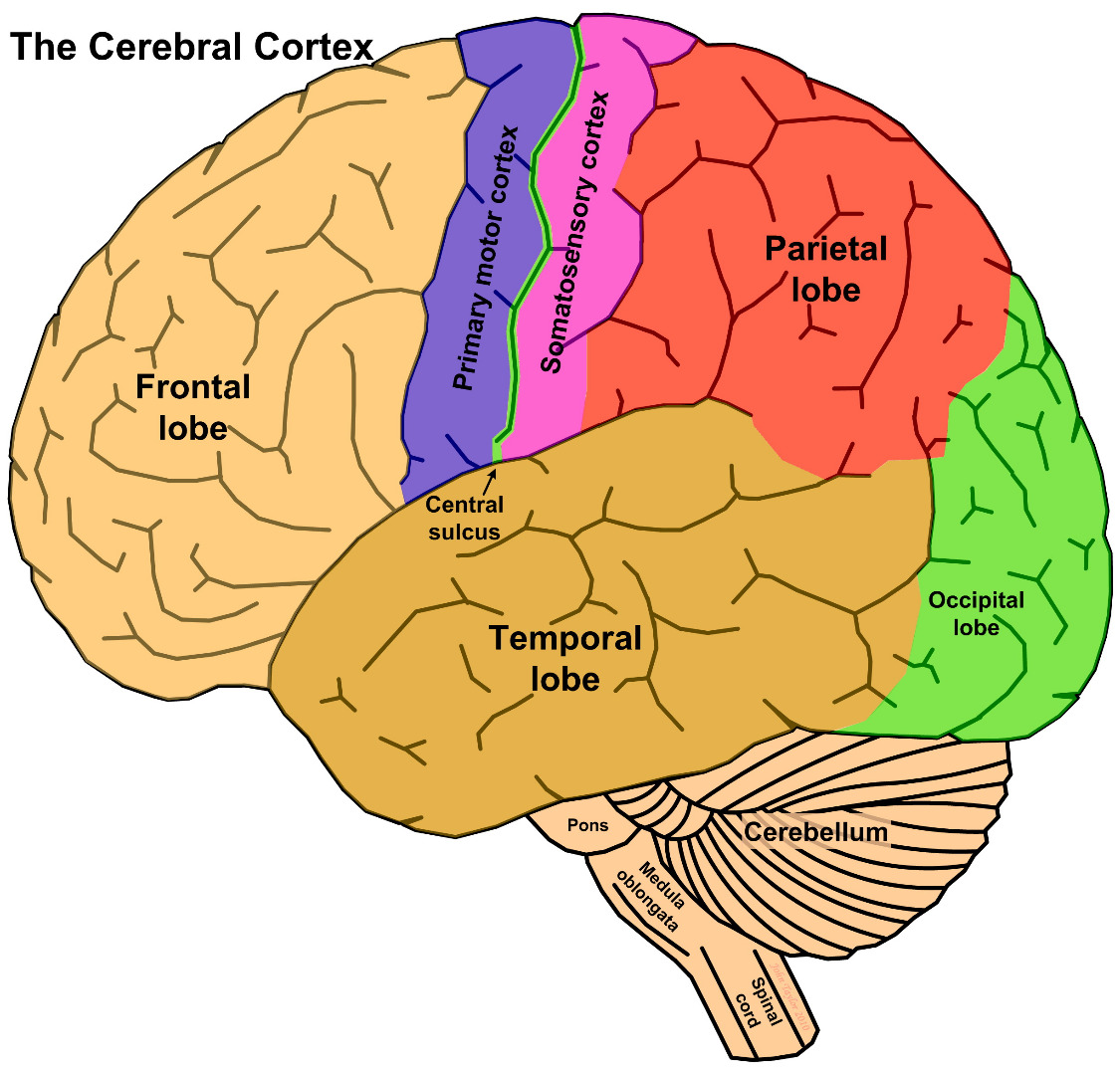
for sensitive ectodermal parts & muscle innervation
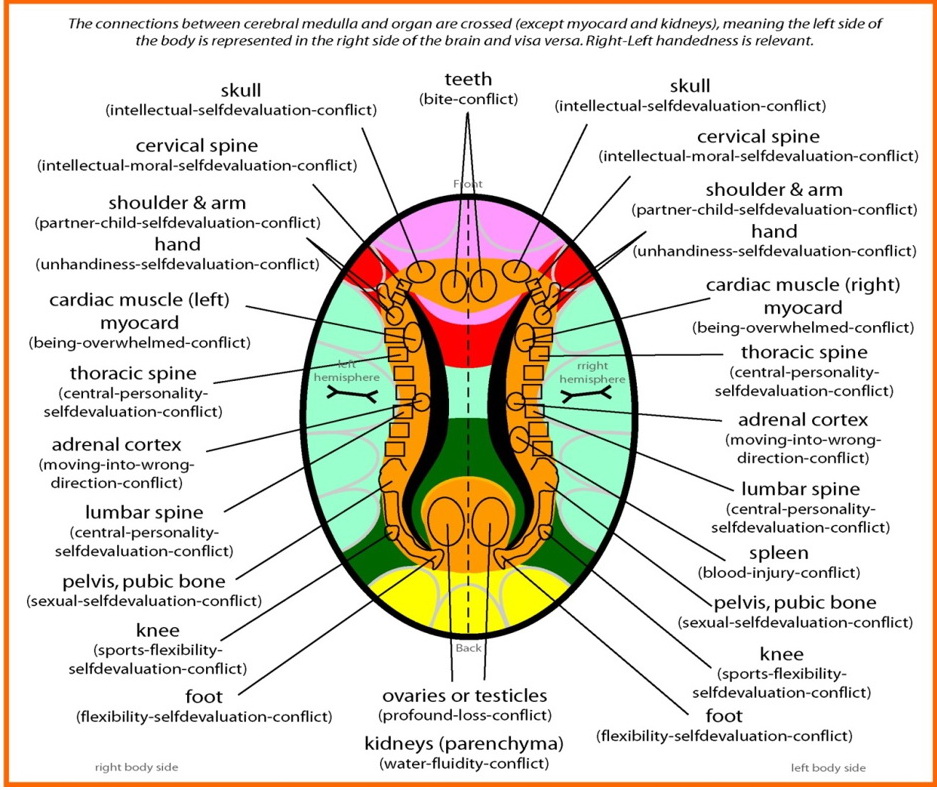
3. Cerebral Medulla (-/+) “Skull/Neck area” left & right
for lymphatic tissue & muscle layer
Mind
Theme:
1. (BS) Assimilation, swallowing down or spit out
2. (CC) Not want, can, or be allowed to swallow or spit out
3. (CM) Self-devaluation regarding assimilating, dismissing and decision
Emotions and Thoughts:
1. (BS) Attention, greed:
- I need to incorporate that!
- I need to get rid of that now!
2. (CC) Indignation, injustice, resistance - Why can’t I have that?
- I want what they have!
- I don’t want to eat/accept that!
- It chokes me!
3. (CM) Self-doubt, frustration - I can’t get rid of that!
- I can’t seem to acquire that.
- I’m not good enough to manage this.
META-Meaning:
I get everything I need, and don’t bother with the rest.
I can easily decide what is best for me, and communicate that clearly.
Organ
Stress Phase Symptoms:
1. (Endo) Increased function of mucus production, slow cell proliferation as compact or flat growing reabsorptive tumor of the pharynx. Possible diagnoses: Pharynx polyps, adenocarcinoma.
This can lead to penetration of the sensitive mucosa and will then be felt as canker sores and cracked skin inside the mouth, which are painful at the borders of the affection.
2. (Ecto) Hyperesthesia (ectodermal pharynx mucosa belongs to the “Inner Skin” Pattern), therefore irritation, harrumphing, coughing; painful ulceration without inflammation, motoric swallowing paralysis, choking.
Regeneration Phase Symptoms:
1. (Endo) Normalization of secretion and reabsorption, microbial decomposition of excess tissue with fungi, mycobacteria and lymphatic cells. Nightly sweat and light fever. Mouth odor and white or yellowish plaque. Productive foul-tasting cough with pus. Possible diagnoses: pharygitis, fungal infections of the throat (mycoses), diphteria.
2. (Ecto) Hypesthesia and tissue repair, possibly tumor formation when excessive. Possible diagnosis: pharynx carcinoma. Motoric: shovewise normalization.
Healing Peak:
1. (Endo) Chills, cough for hours
2. (Ecto) Short burst of coughing, absence possible
Biological Meaning:
1. (Endo) Due to the improved mucus production and reabsorption, the food can be easily assimilated and passed on.
2. (Ecto) Irritation, cough or muscle paralysis take over the decision and responsibility to accept or dismiss.
Social
Examples:
Survival:
- A boy gets his wish granted and visits the fair. After a day full of excitement and joy he gets pharyngitis.
- A family wants to buy a property, but the bank refused to give a loan and they have a long time of discussion. The woman develops candidosis in the pharynx.
Social: - The client shows constant harrumphing and coughing. He finds it hard to decide, has stress with officials and feels he is not taken seriously.
Additional Information
Endodermal tissue itself has no sensitive innervation and processes do not create pain unless they affect sensitive ectodermal tissue.
Constellations
1. (Endo) Brain Stem Constellation possible: perplexity, consternation, reduced movement. Purpose: new orientation
3. (Muscle, Lymph) Decisionmaking-Megalomania possible: manager, broker, quick and effective decisions
Differential Diagnosis:
Larynx Mucosa (Cerebral Cortex -/+) Regeneration phase (after social fear): hyperesthesia, dry cough, depression possible
Branchial Arches (Cerebral Cortex -/+) Stress phase (frontal fear/powerlessness): slight dragging pain in sides of the neck; Regeneration phase: cysts in the neck and mediastinum, may be diagnosed as Non-Hodgkin Lymphoma.
Tonsils (Brain Stem, Cerebral Medulla) Stress phase (assimilation, choice): Polyps or adenocarcinoma; Regeneration phase: Tonsillitis or adenopharyngitis
Respiratory Epithelium (BS +/-) Stress (assimilation and filtration of air and information): increased mucus production; Regeneration phase: purulent degradation, productive cough
