
Eyes – Conjunctiva
Anatomy
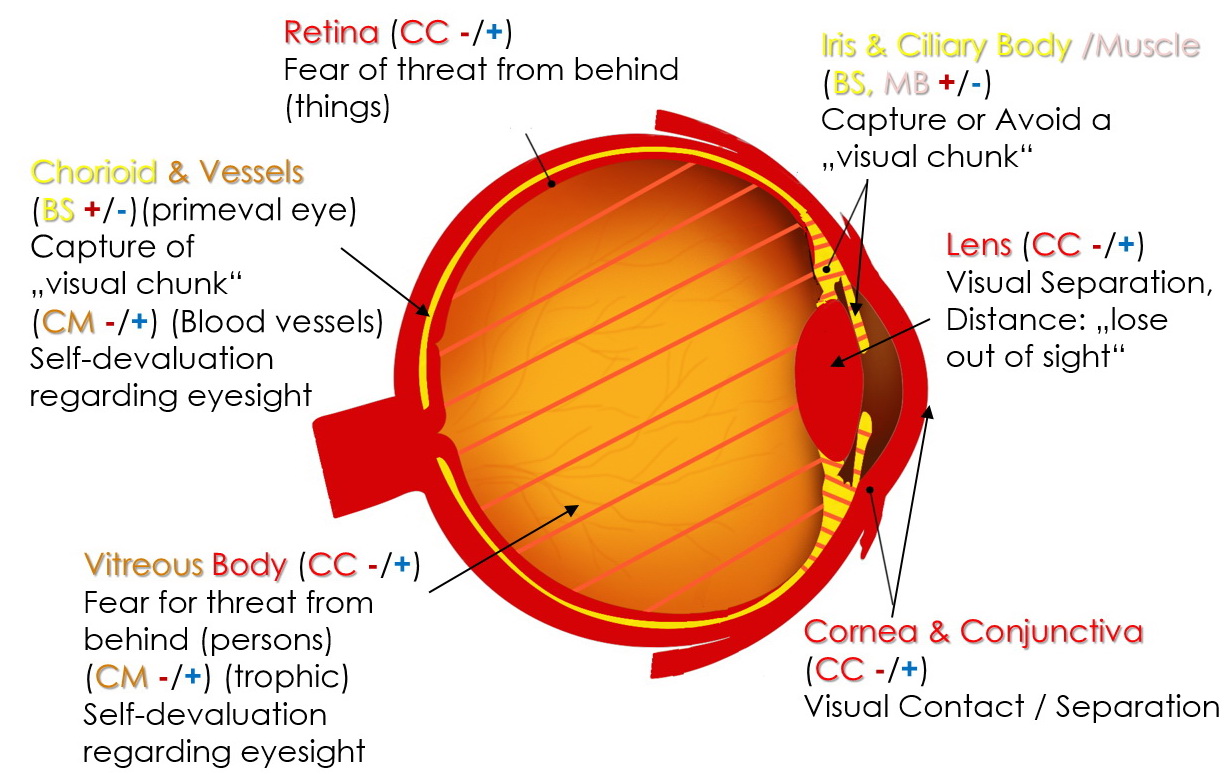
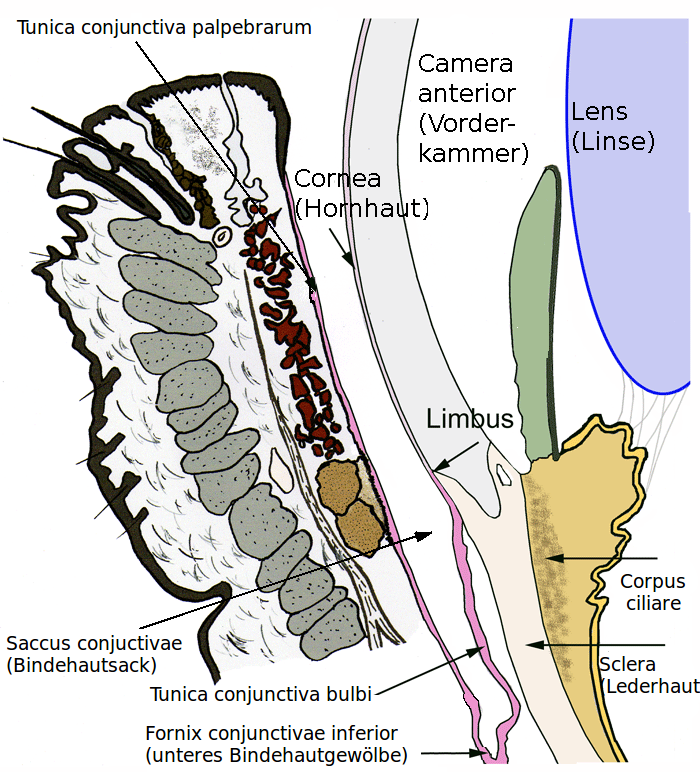
The conjunctiva is a mucous membrane that covers the sclera (white part of the eye) and lines the inside of the eyelids. On the inside it borders on the cornea, on the outside on the epidermis of the eyelid, hereby forming a cavity in which the lacrimal ducts discharge into. With every blink of the eyelid, the conjunctiva wipes the cornea and wets it with tear fluid.
Brain
Relay
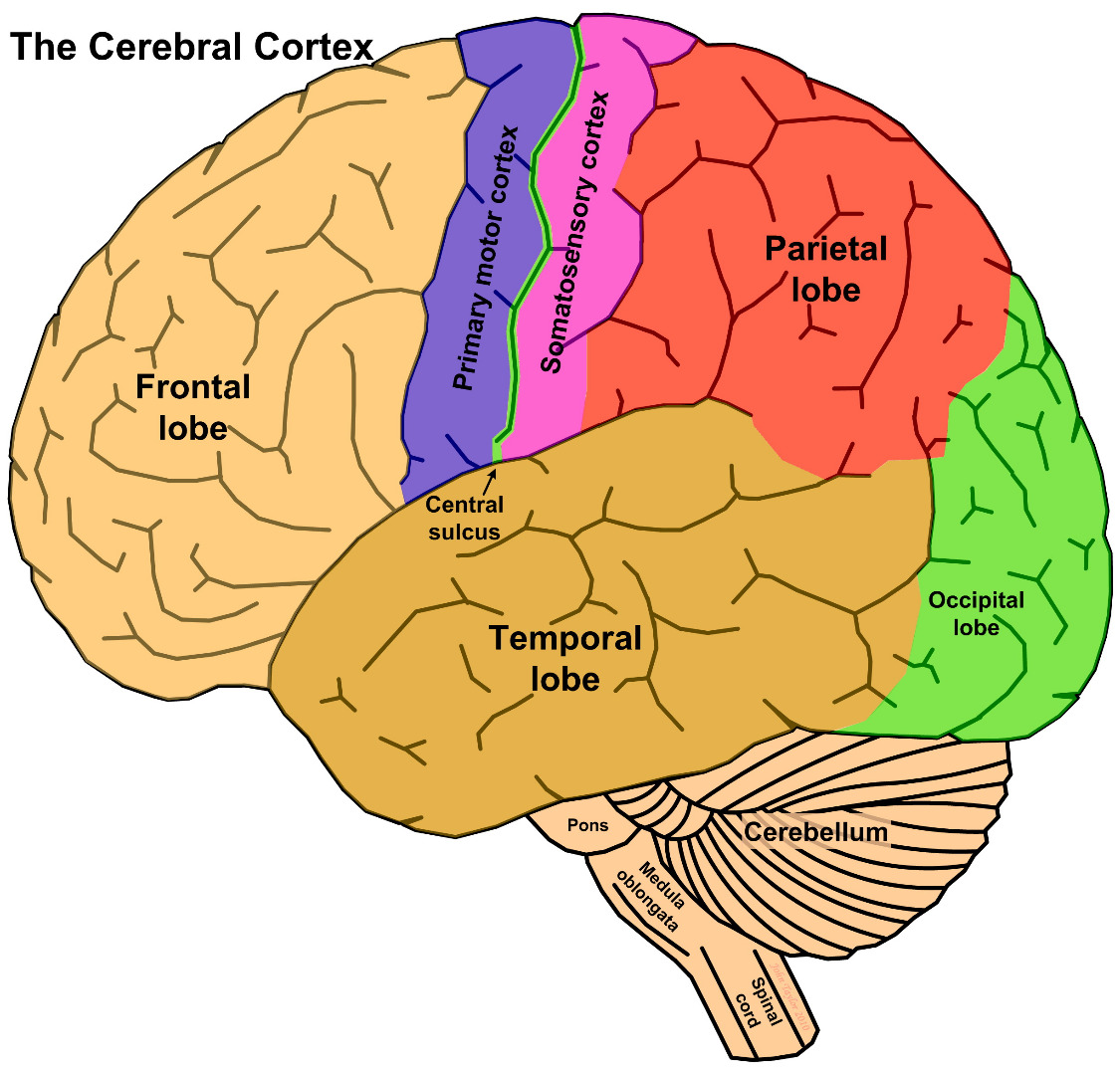
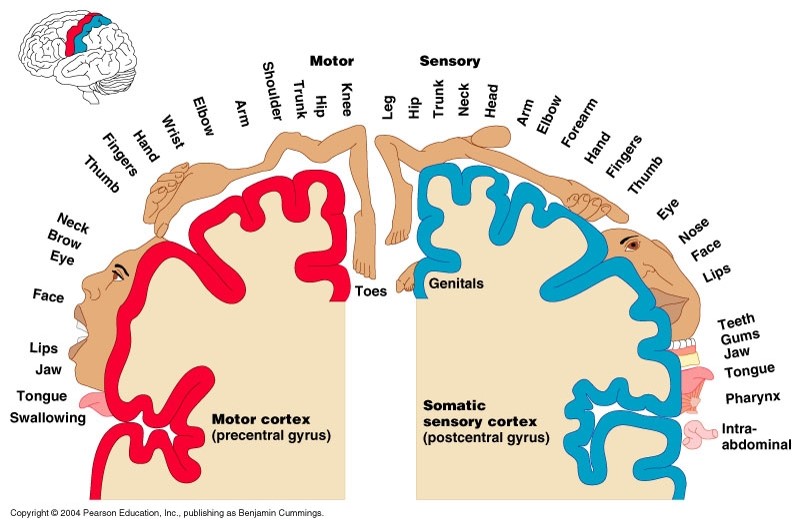
Cerebral Cortex ( – / + ) sensory area lateral left & right
Mind
Theme
Visual loss of Touch (attention)
Losing somebody/something out of sight because one didn’t pay attention
Emotions, Thoughts
Fear, grief, suppressed anger
- Where is she gone?
- That can’t be! I looked everywhere.
- I don’t trust my eyes.
- I am afraid of losing you!
- It is my fault that I don’t see him anymore.
META-Meaning
- I am emotionally independent and feel a deep connection with my loved ones.
- I can see everything that is important.
Organ
Sensitivity changes according to Outer Skin/epidermis reaction pattern with hyperesthesia in regeneration phase.
Stress Phase Symptoms
Reduction of sensitivity and tissue, usually unconspicious. In longer stress phases, pinguecula can develop, which is degenerative whitish tissue change in the conjunctiva..
Regeneration Phase Symptoms
Hypersensitivity, irritation, burning sensation like sand, itch, reddening and swelling.
Possible diagnoses: Conjunctivitis or blepharitis (inflammation of the eyelid). in purulent conjunctivitis, the connective tissue in the eyelid/conjunctiva is affected.
Biological Meaning
By the loss in sensitivity in stress phase, the concerned person can handle the visual separation more easily.
Social
Examples
- A traveller can’t find her passport and is devastated about having to announce this to the police in the foreign country. She is afraid that she won’t be allowed to fly home without passport. When a comrade finds it eventually hidden in her backpack, she gets tearful and inflamed eyes. (Klapp)
- A boy is sent to summer camp where he loses connection with his friends.From that time, he develops hay fever with nose and eyes reacting allergic to pollen (tears, redness, itching). When the old memory is renegotiated, the symptoms don’t return. (Klapp)
- On the trip to their vacation destination, a girl realizes that she left her doll at home. After arrival, she gets a conjunctivitis.
- A pregnant woman suddenly needs to go to the hospital. When they can visit her and find her well, both her partner and her son get conjunctivitis – the son on his left eye and the father on the right one. (Odum)
- Especially with animals like kittens often conjuctivitis (regeneration phase) appears when they have been separated from their mother.
Additional Information
If the connective tissue under the conjunctiva is affected as well, the visual separation leads to lower self-esteem and lack of drive.
Pterygium or Surfer’s Eye is characterized by elastotic degeneration of collagen and fibrovascular proliferation that affects the cornea and leads to astigmatism, refers to a chronic regeneration process.
Conjunctivochalasis (loose, excess conjunctiva) is a residual state after long stress phases or recurring processes.
Trachoma describes ecxessive proliferation and inclosures in the conjunctiva of the inner eyelid (due to extended or chronic regeneration processes). It leads to damage and scarring of the cornea.
Differential Diagnosis:
Cornea (Cerebral Cortex -/+): Trophical decrease and thinning in stress phase (visual separation), cell proliferation and tissue reinforcement in regeneration phase (rigidity, deformation possible after recurrences). In trachoma, the cornea is damaged and scarred by inclusions in the conjunctiva.
Lacrimal gland (Brain Stem +/-) An irritation of the conjunctiva or conjunctivitis can stem from dry eyes because of underproduction of tear fluid in regeneration phase of a “visual chunk” or protection of the eye. Also remnant after recurring processes.
Lacrimal ducts (Cerebral Cortex -/+) ) An irritation of the conjunctiva or conjunctivitis can stem from dry eyes because of obstruction of the lacrimal ducts with decreased or stopped flow of tear fluid in the beginning of the regeneration phase (attention conflict).
